
Walk into any Abbotsford kitchen that needs work and the same question comes up within five minutes: should I just do this myself? With full kitchen renovations here running $34,000–$72,000 in 2026, the temptation to skip the contractor and pocket the labour savings is completely understandable.
But there’s a big difference between a DIY backsplash and a DIY kitchen. Here’s the honest version — where DIY genuinely saves money, where it gets expensive fast, and how most Abbotsford homeowners land somewhere in the middle.
Disclaimer: Costs mentioned here are 2026 Abbotsford/Fraser Valley market ranges for planning purposes only, not a quote. Labour savings depend entirely on which tasks you take on and how well they go.
The Short Answer
Hire a contractor for the core renovation — plumbing, electrical, cabinet installation, structural work, and anything requiring a permit. DIY the low-skill finishing tasks — demolition, painting, hardware installation, and cosmetic updates — to shave thousands off the bill without taking on real risk.
That hybrid approach is what most experienced homeowners in the Fraser Valley end up doing, and it’s usually the best balance of savings and sanity. Here’s the full reasoning.
DIY vs Contractor: Side-by-Side Comparison
| Factor | DIY | Hiring a contractor |
|---|---|---|
| Total project cost | Lower — you save 25–30% on labour ($12,000–$14,400 on a typical $48,000 kitchen) | Higher, but the price includes professional labour, warranties, and trade coordination |
| Timeline | Much longer — evenings and weekends; a “three-week” DIY kitchen often stretches to 3–6 months | 6–12 weeks for a standard renovation, with trades scheduled back-to-back |
| Workmanship quality | Depends entirely on your skill; mistakes in tile, drywall, and cabinet levelling are visible for years | Consistent professional standard; issues are the contractor’s problem to fix |
| Plumbing & electrical | You can legally do your own plumbing and electrical in your own home in BC, but mistakes are expensive and dangerous | Licensed plumbers and electricians; work meets BC Building Code and Electrical Code |
| Permits & inspections | You’re responsible for pulling permits and passing inspections yourself (City of Abbotsford, 32315 S Fraser Way) | Contractor handles permits, schedules inspections, and owns the paperwork |
| Warranty | None — every fix is on you | Reputable contractors warranty their work (typically 1–2 years) |
| Resale & insurance | Unpermitted or substandard work can fail home inspections and complicate insurance claims | Documented, permitted work protects resale value and insurability |
| Stress level | High — you are the project manager, the labourer, and the person arguing with the plumbing at 11 p.m. | Lower — one point of contact, and someone else’s problem when a pipe leaks |
The Honest Case for DIY
Let’s start with where DIY genuinely works, because it isn’t nothing. If you’re handy and patient, there are real savings on the table.
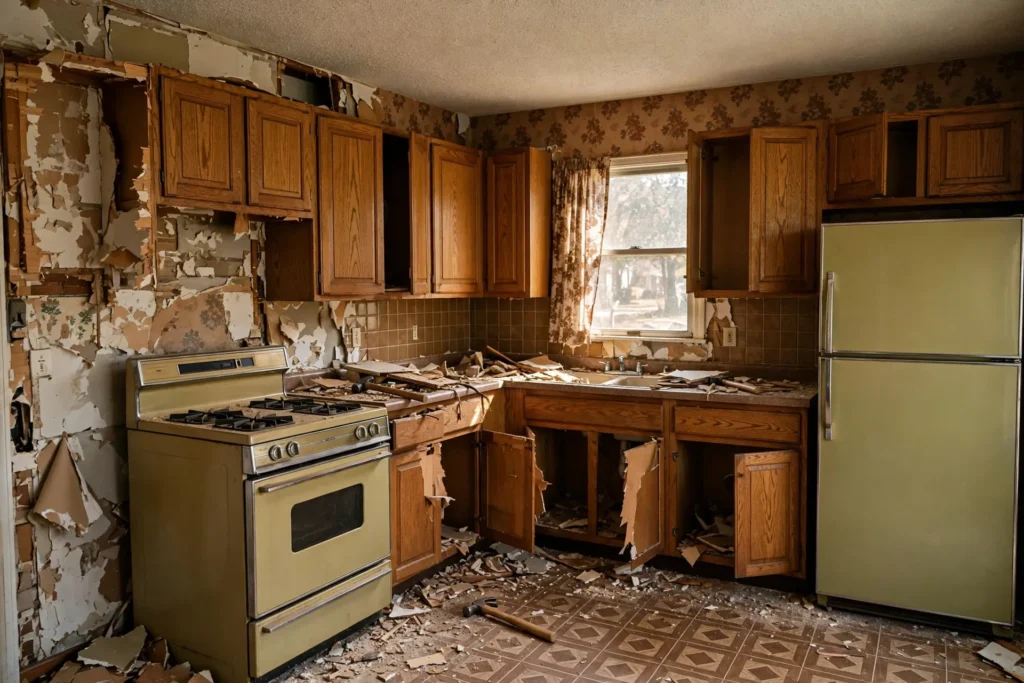
Demolition. Tearing out old cabinets, ripping up flooring, and removing a backsplash is unskilled labour you’re paying someone $40–$60/hour to do. Do it carefully (watch for pipes and wiring), rent a bin, and you’ve saved $1,000–$2,500. Just don’t touch anything structural or load-bearing, and in pre-1990 Abbotsford homes, get an asbestos test first — WorkSafeBC requires a hazardous-materials survey before demolition in older buildings, and this applies to you as a homeowner too.
Painting and finishing. A full kitchen paint job is one of the highest-margin tasks a contractor charges for and one of the easiest to do well yourself — budget a long weekend and save $1,500–$3,000. Same goes for installing cabinet hardware, swapping a faucet, or fitting a new light fixture: straightforward, low-risk work.
Backsplash tiling. The classic DIY stretch goal. A simple subway-tile backsplash is genuinely learnable in a weekend of practice, and it’s one of the few visible tasks where DIY results can look nearly professional.
The common thread: DIY the tasks where the worst-case outcome is cosmetic and fixable, not structural, flooded, or electrified.
The Honest Case Against DIY
Now the other side — and it’s longer, because kitchens are where DIY projects go to die.
Plumbing and electrical mistakes are expensive. A slow leak under a sink you installed yourself doesn’t announce itself — it shows up six months later as a swollen cabinet floor and black mould. And while BC homeowners can legally do their own electrical work, it still has to meet the BC Electrical Code and pass inspection. Recessed pot lights, new appliance circuits, moved outlets — all common DIY sources of failed inspections, rework, and delays. A failed inspection often means an electrician undoing and redoing your work at full price anyway.
Gas is non-negotiable. Anything involving a gas line — moving a gas range, capping a line — requires a licensed gas fitter in BC, full stop. No exceptions. This is a safety issue, not a suggestion.
Cabinet installation looks easy and isn’t. Cabinets need to be level, plumb, and anchored properly, in a room where the walls are almost certainly not square and the floor is almost certainly not level. A slightly-off cabinet run is visible forever, and it throws off the countertop fit, which throws off everything after it.
Project management is a full-time job. A kitchen renovation involves a demolition crew, a plumber, an electrician, a cabinet installer, a countertop templater and installer, a tiler, a drywaller, a painter, and an appliance delivery — in that order, mostly, with inspections in between. Coordinating that sequence as an amateur, while working your actual job, is why DIY kitchens take months. Contractors exist largely to keep this machine moving.
Older Abbotsford homes hide surprises. A huge share of the local housing stock dates to the 1960s–1980s, and behind the drywall you’ll commonly find galvanized plumbing, undersized electrical panels, and occasionally knob-and-tube wiring. A contractor who’s opened up fifty Fraser Valley kitchens knows what to expect. You get to discover it live, with your kitchen already demolished.
The Real Cost Comparison: DIY vs Contractor
Here’s what the numbers actually look like for a mid-range Abbotsford kitchen, based on 2026 local pricing:
| Project scope | DIY cost (materials only) | Contractor cost (materials + labour) | Your labour “savings” |
|---|---|---|---|
| Cosmetic refresh (reface, new counters, backsplash, paint) | $10,000–$18,000 | $18,000–$30,000 | $8,000–$12,000 — genuinely achievable |
| Mid-range full renovation | $28,000–$40,000 | $34,000–$55,000 | $6,000–$15,000 — but timeline stretches dramatically |
| Full renovation + layout change | Not recommended DIY | $55,000–$72,000+ | N/A — structural, plumbing, and gas work require pros |
A few honest caveats on the DIY column: tool costs are real — budget $1,000–$2,500 if you’re starting from a basic toolbox. Mistakes have a price — mentally add 10–20% to materials for do-overs. And your time has value: three months of evenings and weekends versus 6–12 weeks of a contractor’s crew. For many homeowners with full-time jobs and kids, the time cost dwarfs the money saved.
The Hybrid Approach: The Smart Money
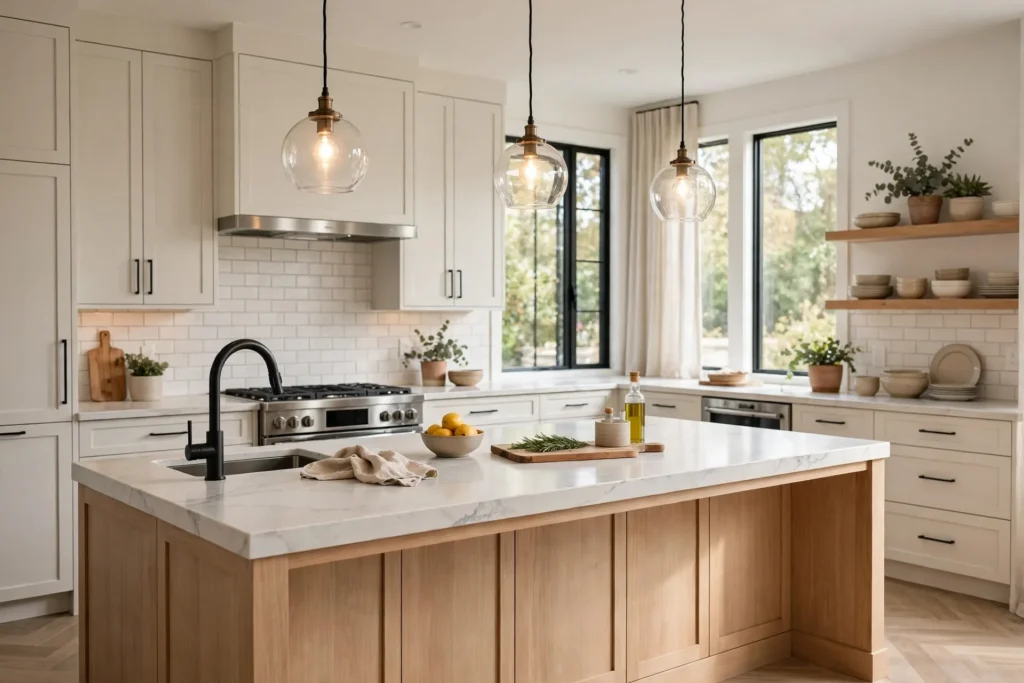
Most Abbotsford homeowners who DIY successfully don’t do the whole kitchen. They do the bookends:
- You handle demolition and prep. Save $1,000–$2,500. Just get the asbestos test first on older homes.
- The contractor handles the core build. Plumbing, electrical, drywall, cabinet installation, countertops, tile — the skilled middle of the project, permitted and inspected.
- You handle the finishing. Paint, hardware, light fixtures, maybe the backsplash. Save another $2,000–$4,000.
Combined, that’s $3,000–$6,500 in real savings with none of the structural, plumbing, or code risk. It’s also the arrangement most good contractors are happy with, because it keeps their schedule clean — they do the skilled work, you do the cosmetic work around it.
One rule: agree on the split in writing before the project starts. Nothing sours a contractor relationship faster than a homeowner jumping in mid-project to “help” with something that needs redoing.
When You Should Definitely Hire a Contractor
Skip the debate entirely and hire a pro if any of these apply:
- The renovation needs a permit (plumbing, electrical, or structural changes) — and in Abbotsford, the City of Abbotsford’s target for kitchen permits is about 3 weeks, but in practice you should allow 4–6 weeks or more, so factor that in.
- You’re moving plumbing, gas lines, or walls.
- Your home was built before 1990 and hasn’t been tested for asbestos.
- You’re on a deadline — selling the house, a new baby arriving, in-laws visiting for Christmas.
- You’ve never done a project of this scale before. A kitchen is a terrible place to learn project management.
- You want the work warrantied and documented for resale.
When DIY Makes Sense
DIY is a reasonable choice when:
- The project is cosmetic only: paint, hardware, backsplash, lighting swaps, faucet replacement.
- The layout stays exactly the same — no plumbing or electrical changes.
- You have genuine experience with the specific tasks (not just enthusiasm).
- Your timeline is flexible. The number-one DIY regret is underestimating how long everything takes.
- The house isn’t going on the market soon, so minor imperfections won’t cost you at the negotiating table.
DIY vs Contractor FAQ
How much can I save by DIYing my kitchen renovation in Abbotsford?
On a cosmetic refresh, DIY can realistically save $8,000–$12,000. On a full mid-range renovation, theoretical savings of $6,000–$15,000 get eroded by tool costs, mistakes, and your time. The best risk-adjusted return: DIY demolition and finishing only, saving about $3,000–$6,500 with minimal risk.
Can I legally do my own plumbing and electrical in BC?
Yes, in your own home — BC allows homeowners to do their own plumbing and electrical work, but it must still meet the BC Building Code and BC Electrical Code and pass inspection. Electrical work has extra limits: a homeowner may only do electrical work in a fully detached home that they own and live in, it requires an installation permit from Technical Safety BC with inspection before the work is covered up, and it is not allowed if the home contains a rental suite. Gas fitting is the exception: only a licensed gas fitter may work on gas lines, no exceptions. If you’re unsure about anything electrical, hire an electrician — failed inspections and rework usually cost more than the original quote would have.
Do I need a permit for a DIY kitchen renovation in Abbotsford?
Yes, if the work involves plumbing, electrical, or structural changes — the same rules apply whether you DIY or hire out. DIYers pull their own permits from the City of Abbotsford Building Department and schedule inspections. The City of Abbotsford’s target for renovation permits is about 3 weeks, but in practice you should allow 4–6 weeks or more for kitchen and bathroom permits to be issued.
How long does a DIY kitchen renovation take?
Plan on 3–6 months of evenings and weekends for anything beyond a cosmetic refresh. A contractor’s crew finishes a standard kitchen in 6–12 weeks because they work full days with trades scheduled back-to-back. The most common DIY mistake is assuming weekend work will compress to the same timeline. It won’t.
What’s the best hybrid approach for a kitchen renovation?
You do demolition and finishing; the contractor does everything in between. Demolish carefully (with an asbestos test first in pre-1990 homes), let licensed pros handle plumbing, electrical, cabinets, and countertops, then take it back for painting, hardware, and fixtures. Agree on the split in writing before work starts.
Still Deciding?
There’s no shame in either path — the only real mistake is choosing DIY for the wrong reasons (usually underestimating the plumbing and electrical) or hiring a contractor without getting proper itemized quotes. If you’re leaning toward professional help, take a look at our kitchen renovation services in Abbotsford to see what a full renovation includes, from design through finishing touches. And if you’re going the DIY route for parts of the project, our 2026 kitchen renovation cost guide will help you budget the materials side accurately.
Reminder: Prices in this guide are 2026 Abbotsford/Fraser Valley market ranges for planning purposes, not a quote. For an accurate figure for your kitchen, get itemized written quotes from local contractors based on your specific layout and material choices.