
Attic insulation cost BC homeowners keep Googling at midnight is not one tidy number. Not even close. It is a range. A stubbornly wide one. And the gap between low and high usually comes down to what is already up there in your attic, plus how much of it has gone flat, damp, or patchy over the years.
That old stuff matters more than the brand name on the new bags. Honestly. Most people picture fresh pink batts and price the job from that image alone. Then a contractor pops the hatch in an older Abbotsford house and finds six inches where there should be fourteen. Or a soggy patch near a bathroom fan that has vented into the attic for a decade. Suddenly the bill moves.
So here is the number most people want first. In BC in 2026, attic insulation, materials plus labour, usually lands between $2 and $7 per square foot. That is the planning range for this guide. Not a quote. A straightforward blown-in top-up in a clean attic sits near the bottom. A full strip-out and spray foam job pushes toward the top. Sometimes past it.
Attic insulation installation cost figures you see online often look lower. That is because a lot of them show materials only. No labour. No hatch work. No baffles. No cleanup. The installed price is the one that counts when you are budgeting for real.
Insulation Types Compared: The Cost Table That Decides Most Budgets
Here is the short version. Blown-in insulation is usually the cheapest way to top up an attic. Batt insulation costs a bit more and suits tidy, open joist bays. Spray foam costs the most by a wide margin, and it seals air as it insulates. That last point is not a footnote in the Fraser Valley. It is the whole ball game in a damp climate where warm, moist house air keeps sneaking upward.
| Insulation type | Materials per sq ft | Labour per sq ft | Installed range per sq ft |
|---|---|---|---|
| Blown-in cellulose | $0.80 to $1.60 | $0.80 to $1.80 | $2 to $3.50 |
| Blown-in fibreglass | $0.70 to $1.40 | $0.80 to $1.70 | $2 to $3.25 |
| Fibreglass batts | $1 to $2 | $1 to $2.25 | $2.50 to $4.50 |
| Mineral wool batts | $1.50 to $2.75 | $1.25 to $2.50 | $3.25 to $5.50 |
| Spray foam, open cell | $2.50 to $4 | $1.50 to $2.50 | $4.50 to $7 |
| Spray foam, closed cell | $3.50 to $5.50 | $2 to $3 | $6 to $9 |
Read that table twice. Blown-in wins on price because a crew can cover a big attic fast, with a hose and a machine parked in the driveway. Batts cost more because every piece gets cut and fitted by hand. Spray foam costs the most because the material is dear and the prep takes longer. A fast blown-in job done right still needs even depth, clear soffit vents, and a sealed hatch.
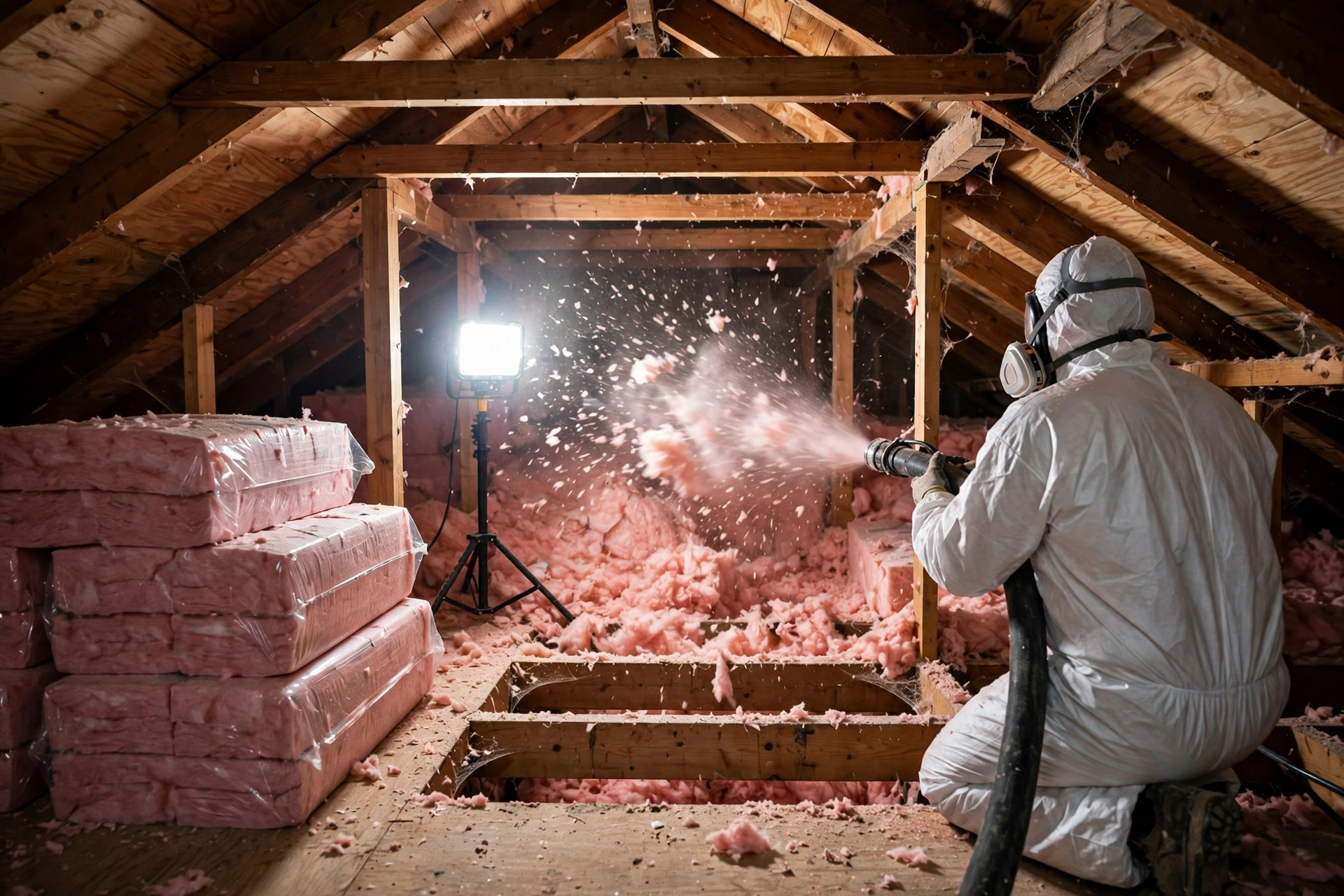
Attic Insulation Cost Per Square Foot, Broken Down Properly
Let us pull the per-square-foot number apart. Materials run $0.70 to $5.50 per square foot for the insulation itself. That spread covers loose blown-in fibreglass at the bottom and closed-cell spray foam at the top. Mid-range blown-in cellulose, the sweet spot for a lot of Fraser Valley top-ups, sits around $0.80 to $1.60 for materials alone. Ask what R-value the quoted depth actually delivers, and whether the price covers the full attic or just the easy middle.
Labour runs $0.80 to $3 per square foot. Blown-in sits at the lower end. Batt work sits in the middle. Spray foam sits at the higher end. Steep roofs, tight hatches, and attics you can only crawl through all push labour up.
Then the extras. Air sealing runs $300 to $1,200 for a typical attic. Baffles, those little chutes that keep insulation out of the soffit vents, run $5 to $12 each installed. A new insulated hatch cover runs $150 to $400. Bathroom fan venting fixes run $200 to $600 per fan. Old insulation removal runs $1 to $2.50 per square foot. Together the extras can add $1 to $3 per square foot. That is why two quotes for the same attic can differ by thousands. Compare line by line, not total by total.
A typical Abbotsford bungalow attic, say 1,000 to 1,200 square feet, often totals $2,500 to $5,000 for a blown-in top-up with basic air sealing. A larger two-storey home, 1,500 to 2,000 square feet of attic, often totals $4,000 to $8,000. A full spray foam job on that larger attic can run $9,000 to $15,000 or more. Those are planning ranges.
R-Value Explained Without the Jargon
R-value is just a measure of resistance to heat flow. Higher means better insulation. Lower means heat escapes faster. That is the whole idea. The tricky part is that R-value adds up with depth, so a thin layer of a high-performing material can match a thick layer of a cheaper one, at least on paper.
BC building guidance for attics in this region generally points toward R-40 to R-50 for a well-insulated attic, with some newer guidance aiming higher still. Check with your municipality or a licensed contractor for the figure that applies to your home, because requirements can vary by home age, renovation scope, and local rules.
What does R-40 look like in real material? Blown-in cellulose needs roughly 11 to 13 inches. Blown-in fibreglass needs roughly 13 to 16 inches. Batts need a layered stack, often two layers crossed over each other. Spray foam gets there thinner, roughly 6 to 7 inches of open-cell foam or 4 to 5 inches of closed-cell foam, because foam insulates better per inch. Thinner is not automatically better. Foam costs far more per square foot.
Depth is also where old attics quietly fail. Insulation settles. It really does. Cellulose can settle 10 to 20 percent over time. Fibreglass batts slump and gap at the edges. A 1980s Abbotsford attic that started at R-28 might perform closer to R-18 today, just from settling and storage boxes squashing the batts flat. Squashed insulation insulates less.
Air Sealing: The Add-On That Makes the Insulation Work
Here is the part that catches people out. Air sealing. It is boring. It is invisible once the insulation covers it. And it can be the difference between a warm house and one that still feels draughty after a $5,000 job. Warm air rises, finds every gap around lights, pipes, wiring, and the hatch, and leaks into the attic. Insulation slows heat through solid material. It does almost nothing to stop air through gaps.
A proper air sealing pass means a crew member in the attic, before any new insulation goes down, sealing every penetration with foam and caulk. Pot lights, especially older non-sealed ones, are notorious leakers. So are bathroom fan housings and chimney chases. The work is fiddly. It is dusty. It takes an hour or three. And it is worth every dollar.
Budget $300 to $1,200 for air sealing on a typical attic, as a 2026 planning range. Smaller, simpler attics sit near the bottom. Larger, older homes with dozens of penetrations sit near the top. Some contractors bundle a basic air sealing pass into the insulation price. Others list it separately. Either way, ask whether it is included.
Blown-In, Batt, or Spray Foam: Which One Fits Your Attic
Blown-in insulation is the default choice for most top-ups, and for good reason. A crew blows loose cellulose or fibreglass across the attic floor, filling every nook and reaching corners batts never could. It is fast, it is cheap, and it works well where some insulation is already in place. The catch is settling. Cellulose settles more than fibreglass, so a good crew over-blows slightly. Ask how they allow for it.
Batt insulation suits a different situation. If your attic is empty, the joists are exposed and regular, and the crew can lay batts cleanly without cutting around a maze of wires and ducts, batts give a tidy, predictable result. The catch is gaps. A batt cut a touch too narrow, or left with a gap at the edge, loses a big chunk of its rated R-value. Batts are only as good as the fitting.
Spray foam is the premium option, and it plays by different rules. Open-cell foam expands, seals air leaks as it goes, and sticks to the roof deck. Closed-cell foam does the same, with higher R-value per inch and better moisture resistance. Foam suits tricky spots, like a low-slope roof with almost no attic space, or a cathedral ceiling with nowhere to put batts. But it costs two to three times what blown-in costs, and it needs a specialist crew. This is not a weekend DIY material.

BC Moisture, Venting, and Why Fraser Valley Attics Are Different
BC’s Lower Mainland climate changes the insulation conversation in ways a prairie guide never will. Wet winters and long damp autumns mean attics here deal with moisture as much as cold. Warm, moist air from inside rises into a cold attic, hits the roof deck, and condenses. Over time that wets the insulation, stains the wood, and feeds mould. Nobody wants that, least of all in East Abbotsford or Clearbrook, where the rain seems to arrive in October and stay until April.
Venting is the unglamorous hero here. Soffit vents let cool, dry air in at the eaves. Ridge or roof vents let warm, moist air out at the top. That gentle airflow keeps the roof deck dry. When a blown-in crew buries the soffit vents under a foot of cellulose, that airflow stops. Baffles prevent exactly that, by holding a clear channel from the soffit vent up over the insulation. They cost little. They matter enormously. Ask whether your quote includes them.
Bathroom fans deserve a hard look too. In older Fraser Valley homes, more than a few fans still vent straight into the attic, not outside through the roof or a gable wall. Every shower then pumps warm steam into cold attic air. Fixing the venting, routing the duct outside properly, costs $200 to $600 per fan, and it should happen before new insulation buries the evidence.
Rebates and Saving Money: What to Check Before You Book
Rebates for insulation do exist in BC from time to time, through provincial programs, federal programs, and utility offers, but they change often, they come with conditions, and they may not apply to every home or every type of work. Some may require a pre-upgrade energy assessment or a licensed contractor from an approved list. The details shift year to year, and a guide written in one season can be out of date by the next.
So treat rebates as a bonus, not a budget line. Check the current program rules directly, through the official program website or your utility, before you book the work. Ask whether the paperwork needs to be filed before work starts. Starting work first and asking about a rebate second is a classic way to miss out. If a contractor guarantees you a rebate amount, verify it yourself.
How to keep the bill down without cutting corners? Get three quotes. Make sure each one lists materials, labour, air sealing, baffles, hatch work, venting fixes, removal, and disposal as separate lines. If a quote is a single number with no breakdown, ask for the breakdown. If it never comes, walk away. Compare the total installed cost and the finished R-value, not just the materials price.
One more saving, and it is the biggest one in the long run. Do not pay twice for the same attic. A cheap top-up that ignores air sealing, buries the vents, and leaves the bathroom fan dumping steam overhead will need redoing far sooner than a proper job done once. The cheapest insulation is the insulation you only buy once.
Frequently Asked Questions About Attic Insulation Cost BC
How much does attic insulation cost per square foot in BC in 2026?
Most BC attic jobs land between $2 and $7 per square foot installed, as a 2026 planning range. Blown-in usually sits at $2 to $3.50, batts at $2.50 to $4.50, and spray foam at $4.50 to $9, with air sealing and venting fixes adding to the total.
How much does it cost to insulate a typical Abbotsford attic?
A 1,000 to 1,200 square foot attic often totals $2,500 to $5,000 for a blown-in top-up with basic air sealing. A larger attic of 1,500 to 2,000 square feet often totals $4,000 to $8,000, while a full spray foam job on that larger attic can run $9,000 to $15,000 or more.
What R-value should attic insulation be in BC?
Guidance for attics in this region generally points toward R-40 to R-50, with some newer guidance aiming higher still. Check with your municipality or a licensed contractor for the figure that applies to your home.
Is blown-in insulation cheaper than batt insulation?
Yes, usually by $0.50 to $1.50 per square foot installed. Blown-in covers a big attic fast and fills awkward corners, which keeps labour down. Batts cost more because every piece is cut and fitted by hand, though they suit tidy, open attics with regular joists.
Do I need air sealing before adding attic insulation?
In most older homes, yes, and it is worth the $300 to $1,200 it usually adds. Insulation slows heat through solid material, but it does almost nothing to stop warm air leaking through gaps around lights, pipes, wiring, and the attic hatch. Sealing those gaps first makes the new insulation perform far better.
If you are weighing blown-in against foam, and the attic insulation cost BC quotes you have look vague on the air sealing line, step back and price the whole job, not just the bags of material. The insulation is the fluffy part. The sealing, the baffles, and the venting decide whether the house stays warm and dry through a Fraser Valley winter. When you are ready to talk it through, call (236) 613-0038 and ask for a line-by-line installed price for your attic.