
Here’s the number most Abbotsford homeowners want: a legal two-bedroom basement suite rents for about $1,200 a month in 2026, with the typical range across the city running $1,000 to $1,500 a month depending on size, finish, and location. That is gross income, though — the cheque your tenant writes, not what lands in your pocket after costs.
This guide walks through the full picture: what suites actually rent for across Abbotsford, the honest payback math on a $68,000 build, what pushes rent up (and what drags it down), and the costs landlords consistently underestimate. A basement suite is one of the best investments an Abbotsford homeowner can make. It is not magic money, and knowing the difference matters before you spend a dollar.
Disclaimer: All rent and cost figures in this guide are 2026 Abbotsford/Fraser Valley market ranges based on published local market data, plus general planning estimates where noted. Actual rents depend on your suite’s size, condition, and neighbourhood. This guide is for planning purposes, not financial advice.
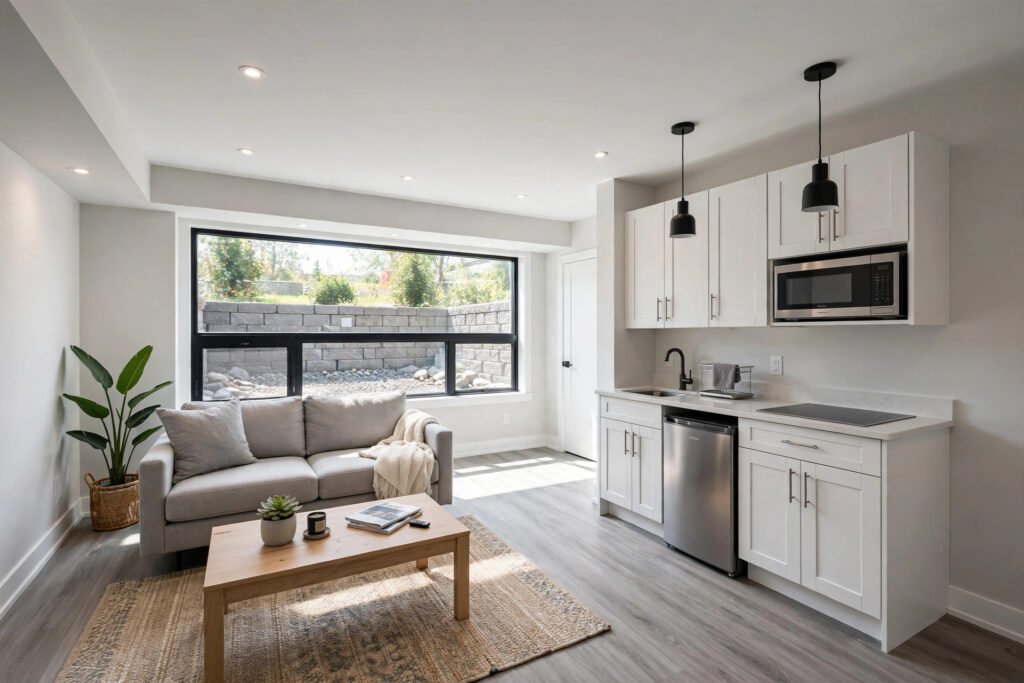
What Basement Suites Actually Rent For in Abbotsford
Abbotsford is one of the strongest basement-suite markets in BC. Steady demand from University of the Fraser Valley students, hospital staff, and young families priced out of the detached market keeps suites occupied — and legal, well-finished suites rent fast.
| Suite type | Typical Abbotsford rent (2026) | Notes |
|---|---|---|
| Bachelor / studio suite | $850–$1,050/month | Smallest tenant pool; slower to fill |
| 1-bedroom legal suite | $1,000–$1,250/month | Strong demand near UFV and the hospital |
| 2-bedroom legal suite | $1,200–$1,500/month | The Abbotsford sweet spot — most common build |
| 2-bedroom, non-legal suite | $1,000–$1,300/month | Rents 10–20% below comparable legal suites |
A few patterns worth knowing. Two-bedroom suites are the workhorse of the Abbotsford market: couples, small families, and pairs of students all compete for them. One-bedrooms rent well near the university and Abbotsford Regional Hospital, where single tenants cluster. Location inside the city matters less than you’d think — a clean, legal 2BR with its own entrance in Townline Hill rents about the same as one in West Abbotsford. What matters far more is the suite itself, which is where the next section comes in.
The Payback Math, Done Honestly
A legal basement suite in Abbotsford costs $52,000 to $98,000 to build, with $68,000 the typical figure (2026 Abbotsford-market data). Take the middle of both ranges and the simple math looks like this:
$68,000 build cost ÷ $1,200/month gross rent = about 57 months, or just under 5 years, to recoup the build.
That is the number most people stop at. Don’t. Gross rent is not profit. Here is the same calculation with the real costs factored in, using a typical 2BR legal suite:
| Monthly figure | Notes | |
|---|---|---|
| Gross rent | $1,200 | Typical 2BR legal suite |
| Vacancy allowance (planning estimate) | −$60 | Budget ~5% for turnover gaps |
| Maintenance reserve (planning estimate) | −$60 | Appliances, plumbing, wear and tear |
| Extra insurance + property tax increase (estimate) | −$50 | Suites raise both; confirm with your insurer and BC Assessment |
| Utilities you cover (if any) | −$0 to −$100 | $0 if tenants pay their own |
| Realistic net income | ~$930–$1,030/month |
At roughly $1,000 a month net, the honest payback stretches to about 68 months — five and a half to six years. After that, the suite is close to pure cash flow, minus ongoing maintenance. That is still an excellent return by almost any measure. It is just not the “paid off in four years” story some builders tell.
One more piece of the math people miss: the suite also adds to the home’s resale value. Appraisers and buyers in Abbotsford pay a clear premium for homes with legal, mortgage-helper suites — often well above the build cost in a strong market. The rental income is the monthly return; the added home value is the bonus at the end.
What Pushes Rent Toward $1,500 — and What Drags It to $1,000
Two legal 2BR suites on the same street can rent $300 apart. The difference is almost always in this list:
- A separate, private entrance. This is the single biggest rent lever. Tenants pay a real premium to come and go without passing through your living room.
- In-suite laundry. Shared laundry is the number-one complaint in basement suites. A stacked washer-dryer in the unit can justify $50–$100 more a month.
- Two real bedrooms vs. one bedroom plus den. A genuine second bedroom with a window and closet rents; a “den” doesn’t command the same price.
- Ceiling height and natural light. Basements with 8-foot ceilings and decent-sized windows feel like homes, not bunkers. Low ceilings and tiny hopper windows are the main reason some suites stall at $1,000.
- A dedicated parking spot. In neighbourhoods where street parking is tight, a driveway spot for the tenant is worth real money.
- How utilities are handled. Tenants prefer paying their own hydro through a separate meter (it feels fair and keeps your costs predictable). If you bundle utilities into rent, price it carefully — a tenant running electric heat all winter can erase your margin.
- Legal status. Legal suites rent 10–20% higher than comparable non-legal ones, fill faster, and attract more stable tenants. More on that below.
- Finish quality. You don’t need luxury. Clean, modern, and well-lit beats dated every time. Scuffed 1990s carpet and a tired bathroom are a $100/month penalty you pay forever.
The Costs That Eat Into That $1,200
Now the part most “suite income” articles skip. A basement suite creates real ongoing costs, and Abbotsford’s geography adds a few of its own:
- Moisture management. The Fraser Valley’s wet winters and high water table are the number-one enemy of basement suites. Proper drainage, a sump pump where needed, and good ventilation aren’t optional — budget for them in the build and for dehumidifier running costs after. A damp suite is an unrentable suite.
- Insurance. Tell your insurer about the suite. Rental activity changes your policy, and an undeclared suite can void a claim. The premium increase is usually modest — the risk of not declaring is not.
- Property tax. BC Assessment may reassess a home with a legal suite, nudging your taxes up. Factor in a few hundred dollars a year.
- Maintenance. Appliances fail, caulking fails, tenants are harder on plumbing than owners. Budgeting 5% of gross rent a year for maintenance is the standard planning rule, and basement suites run slightly hotter than that because of moisture-related wear.
- Vacancy and turnover. Abbotsford’s demand is strong, but every tenant change costs you: a week or two empty, cleaning, minor repairs, advertising. Budgeting 5% vacancy is realistic for a well-kept legal suite; non-legal suites in slow months can sit longer.
- Your time. Being a landlord is a part-time job. Showings, maintenance calls, annual inspections. Price your own hours at zero if you like — just don’t pretend they don’t exist.
None of this kills the investment. It just turns $1,200 of gross rent into roughly $1,000 of net income, which is the number your decisions should be based on.

Legal Suite vs. Non-Legal: The Trade-Off Worth Understanding
Here’s my honest take: if you’re spending $60,000+ building a suite anyway, build it legal. The permit process in Abbotsford takes 4–8 weeks and the code requirements (ceiling height, egress windows, separate heating, sound separation) add real cost. But a legal suite rents for 10–20% more, fills faster with better tenants, keeps your insurance valid, and — critically — a lender can count legal suite income toward your mortgage qualification, which non-legal income can’t touch.
The counter-argument is real: some homeowners build first and permit later (or never) to save $10,000–$15,000 upfront. In Abbotsford, where enforcement has tightened over the years, that’s a gamble with your insurance coverage and a future sale — buyers’ lenders increasingly ask for suite permits. Saving $12,000 now to risk a six-figure problem later is bad math dressed up as savings.
The one exception: if your home physically can’t meet code (ceilings too low, no way to add egress windows), a non-legal suite may be your only option. Just go in with open eyes about the rent discount and the risks.
7 Ways to Protect Your Basement Suite Income
- Build the separate entrance first in your budget. If money is tight, cut finishes before you cut the private entrance. It pays back in rent and tenant quality every single month.
- Put in-suite laundry in the plan from day one. Retrofitting it later costs triple. A stacked unit fits in a closet.
- Separate the hydro meter. It costs more upfront but ends every argument about utility bills and makes the suite easier to rent.
- Spend on soundproofing between floors. Footsteps are the number-one source of landlord-tenant friction in basement suites. Resilient channel and insulation during construction is cheap; regret afterwards is expensive.
- Screen tenants like it matters — because it does. Credit check, employment verification, references from previous landlords. One bad tenant costs more than a month of vacancy ever will.
- Write a proper tenancy agreement. BC’s Residential Tenancy Act governs the relationship whether you like it or not. Use the standard RTB agreement, document the condition of the suite with photos at move-in, and know the rules on deposits and rent increases before you need them.
- Keep a maintenance reserve fund. Set aside that 5% monthly, in a separate account, and don’t touch it. When the hot water tank dies in February, you’ll be glad you did.
Basement Suite Rental Income FAQs — Abbotsford (2026)
How much rent can a basement suite earn in Abbotsford?
A legal 2-bedroom basement suite in Abbotsford typically rents for $1,000–$1,500 a month in 2026, with about $1,200 the most common figure. One-bedroom suites run $1,000–$1,250, and bachelor suites $850–$1,050.
How much does it cost to build a legal basement suite in Abbotsford?
$52,000–$98,000, with $68,000 typical for a 2BR legal suite. Costs rise with separate entrances, laundry rough-ins, electrical panel upgrades, and any structural work. Permit approval takes 4–8 weeks through the City of Abbotsford.
How long until a basement suite pays for itself?
On gross rent, a typical $68,000 suite at $1,200/month pays back in about 57 months (under 5 years). After realistic costs — vacancy, maintenance, insurance, and tax increases — expect 5.5 to 6 years to recoup the build cost.
Do legal suites rent for more than non-legal suites?
Yes — typically 10–20% more. Legal suites also fill faster, attract more stable tenants, keep your home insurance valid, and let lenders count the income toward mortgage qualification.
Do basement suite tenants pay their own utilities?
It depends on how you set it up. A separate hydro meter is the cleanest arrangement — tenants pay their own and usage stays fair. If utilities are included in rent, price the rent higher to cover it, especially electric heat in winter.
What affects basement suite rent the most?
A private entrance, in-suite laundry, two real bedrooms, ceiling height and natural light, dedicated parking, and legal status. Finish quality matters too — a clean, modern suite consistently outrents a dated one on the same street.
Is Abbotsford a good city for a basement suite investment?
Yes — it’s one of BC’s strongest. Demand from UFV students, hospital workers, and young families keeps legal suites occupied, and Abbotsford’s relatively affordable detached prices (by Lower Mainland standards) make the build-cost-to-rent math work better here than in Vancouver.
Thinking About Adding a Basement Suite?
At roughly $1,000 a month in realistic net income and a payback under six years, a legal basement suite is one of the strongest investments an Abbotsford homeowner can make — as long as you build it right the first time. Moisture-proofing, sound separation, a private entrance, and proper permits are what separate the suites that print money from the ones that cause headaches.
If you’re weighing the project, take a look at our basement finishing services in Abbotsford to see what a full legal-suite build includes — from layout and permits to the finishing touches that command top rent. And when you’re ready to run the numbers on your own home, our guide to legal basement suite requirements walks through exactly what Abbotsford’s code asks for.
Reminder: Rent and cost figures in this guide are 2026 Abbotsford/Fraser Valley market ranges for planning purposes, not a quote or financial advice. Vacancy, maintenance, and insurance figures are general planning estimates. For build costs specific to your home, get itemized written quotes from local contractors.