
The honest answer to the best time of year to renovate a house BC is: it depends on where the work happens. Exterior projects fight weather; interior projects fight contractor availability. A roofer in August and a kitchen installer in February are solving opposite problems, and the family planning either job comes out ahead by timing the project to the condition it actually depends on — not by picking one magic month.
The seasonal trade-offs in one look
| Season | Best for | Availability | Pricing pressure |
|---|---|---|---|
| Spring (Mar–May) | Exterior starts, additions, decks | Filling fast | Rising |
| Summer (Jun–Aug) | Roofing, siding, windows, additions | Tightest of the year | Highest |
| Fall (Sep–Nov) | Finishing exteriors, interiors starting | Easing | Moderating |
| Winter (Dec–Feb) | Kitchens, bathrooms, flooring, basements | Most open | Most flexible |
Read the table the way a scheduler does. Summer’s high pricing pressure is not greed; it is arithmetic. Every exterior project in the Fraser Valley wants the same twelve dry weeks, so crews, supplier slots and inspector calendars all compress into that window. Winter interior work faces no such compression, because a bathroom does not care whether it rains — the constraint flips from weather to whoever books first.
The second timing truth is lead time. The best time to start a project and the best time to book it are different months entirely. A spring exterior start usually means a winter booking conversation. A summer roof means signing in spring. Families who begin the conversation in the month they want work to begin are choosing from whatever capacity is left, which is rarely the capacity they wanted.
Inside work plays by different rules
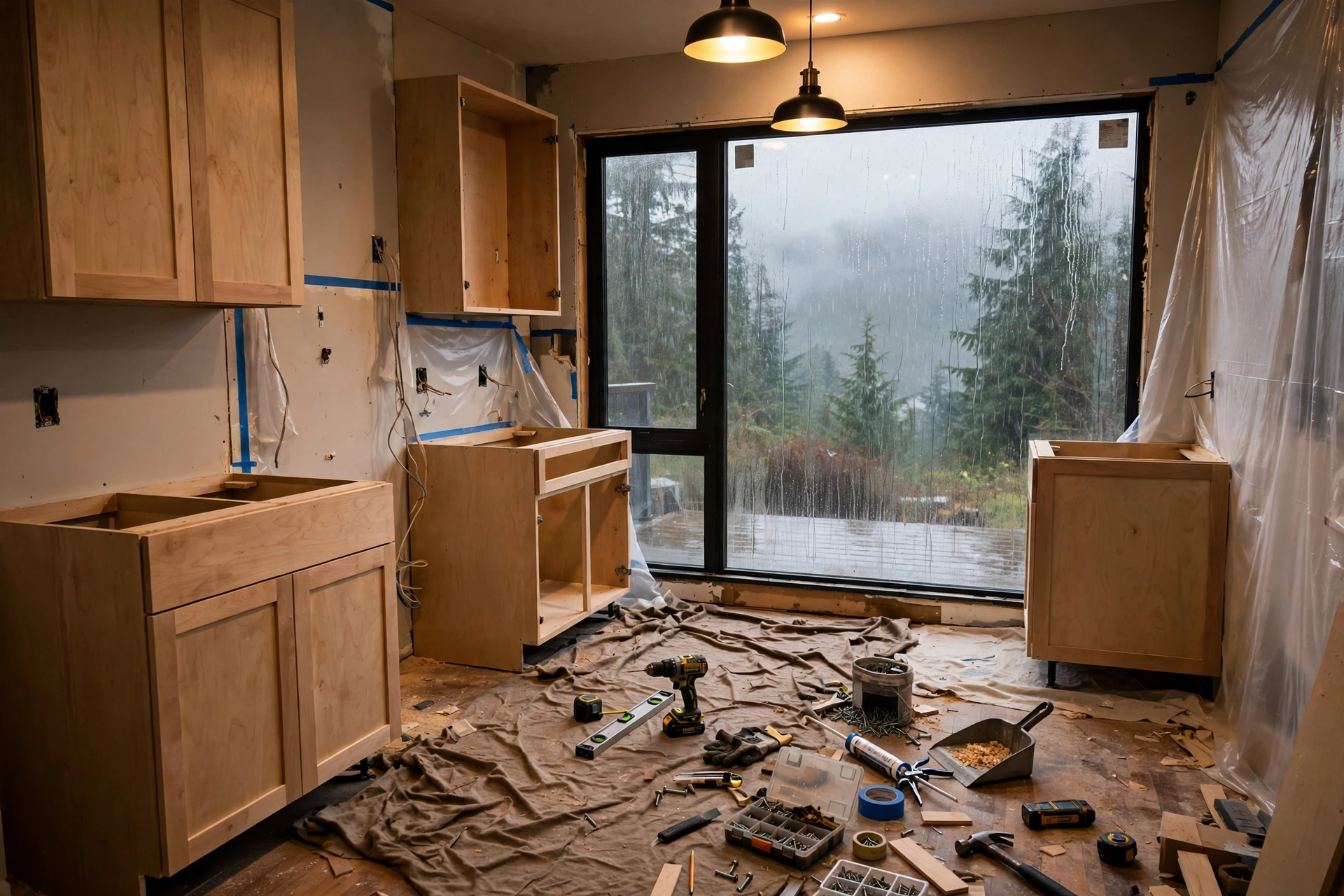
Kitchens and bathrooms run year-round, but winter is their quiet season. When exterior crews park their siding and roofing work, general contractors’ calendars open up, cabinet shops quote shorter lead times and tile setters return calls the same week. Nothing about interior work gets worse in January — unless the project needs a new window cut into an exterior wall or concrete poured for an addition, in which case it quietly became an exterior project.
Interior work also produces the one winter comfort question worth planning: your household living through it. A January kitchen renovation means cooking in the basement through the darkest weeks, and a single-bathroom home under renovation in February tests a family’s creativity. None of that blocks the work, but it belongs in the decision, especially for homes where everyone is home more in winter than in summer.
The flip side is spring exterior work, which rewards the early movers. A roof, siding job or deck booked in February for an April start gets the season’s first dry weeks and a crew that is fresh rather than mid-marathon. By the time most homeowners start calling in May, the good exterior crews are quoting July and August starts. Booking early for exteriors and booking opportunistically for interiors is, in one sentence, the whole strategy.
A word on winter exteriors
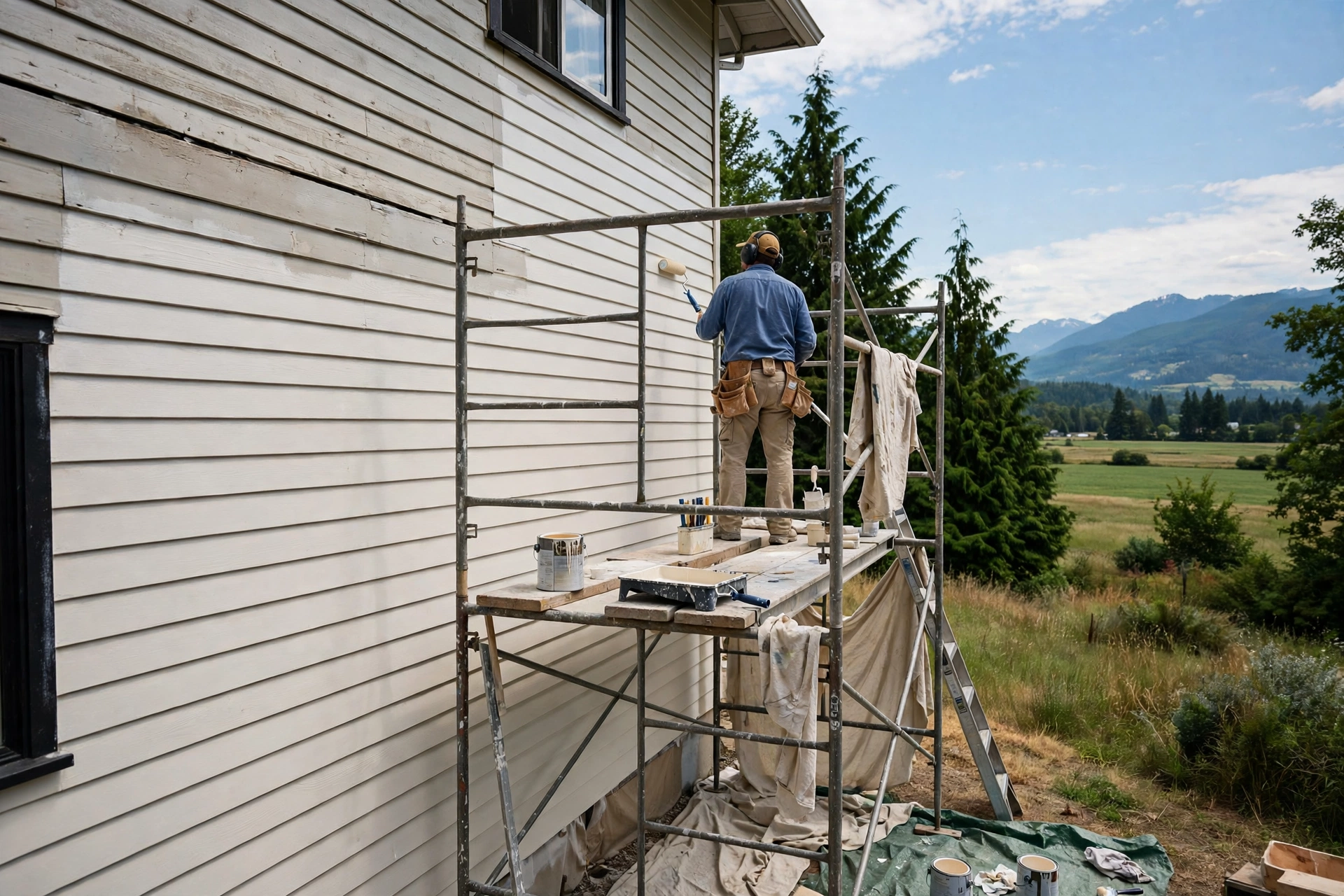
Can exterior work happen in a BC winter? Some of it, sometimes. Roofers work through winter on dry days between systems, and emergency work happens whenever it must. But production exterior renovation — full siding, window packages, additions — loses days to rain faster than it gains them, and materials like paint, caulking and stucco have temperature and moisture limits that a wet coast winter violates weekly. Contractors who promise a December siding schedule are usually promising December start, which is a different promise.
Rain is the Fraser Valley’s specific variable. Abbotsford’s heaviest rain months run roughly October through March, and a project scheduled into those months needs float built in — days the schedule expects to lose. Well-run exterior projects in shoulder season carry that float openly; the ones in trouble are the schedules that assume July weather in November.
So the practical answer: book interiors for winter, exteriors for spring through fall, and have the conversation one season before the work. If your project mixes both — a kitchen in an addition, say — phase it so the shell is weather-tight by fall and the interior finish runs through winter. That phasing is exactly what an experienced local contractor does automatically. If you are planning a project and want the timing read on your specific house, request a free consultation and quote and we will map it against the season honestly.
Signing the contract is the real deadline
Here’s the part nobody warns you about. The start date gets all the attention. The signing date matters more.
Signing and starting are different events. Weeks apart. Sometimes a full season. A signed contract is what holds your slot, because a contractor’s calendar is not a list of hopes — it’s a sequence, and once the spring sequence fills, the next real opening might not come until fall. A family that signs in February for a May start has choices. A family that starts shopping in May gets whatever is left.
Between the first call and the signing sits the unglamorous middle. Site visits. Measurements. Quotes that need comparing line by line, because the cheapest quote and the complete quote are rarely the same document. Then the selections — tile, flooring, fixtures, the small decisions that stall projects when they get left too late. None of it is construction. All of it eats calendar time, and it has to happen in the season before the season you actually want.
Good Fraser Valley contractors book out in a pattern. Their spring and summer slots start filling during the winter, often with clients who did their design work back in the fall. It is not a locked wall, exactly. Cancellations happen. Small jobs slide into the gaps between big ones. But the reliable route to a good crew in a good month is boring: decide early, sign early, and let the start date take care of itself.
Signing early protects more than the slot, too. It locks the scope while everyone still remembers the conversation. It gives the contractor time to flag the awkward corner of your house before demolition day instead of during it. And it leaves room for the permit and the materials to arrive, which matters, because those two run on calendars nobody negotiates with.
Permits and materials run on their own clocks
Two other calendars sit underneath the contractor’s. The permit office’s. And the suppliers’. Neither one cares about your preferred start date.
A permit application lands in a queue. Heading into the busy building season, that queue grows, because every spring project in the valley was submitted by somebody who read the seasons the same way you did. Submitting while the design is still being finalised, rather than the week before demolition, is the difference between a permit that shows up as a formality and one that holds a crew hostage. Inspections work the same way once the job is running. Each stage that needs a sign-off needs a booking, and a missed inspection slot can idle a project that was otherwise moving nicely.
Materials are the quieter trap. Stock items are easy. The trouble lives in the made-to-order list — cabinets built to your kitchen’s measurements, windows sized to your openings, doors, specialty tile, anything picked from a catalogue instead of pulled off a shelf. Those orders go in early or the whole project waits on them, and a house already opened up, sitting there waiting on a delivery, is an expensive kind of patience. Experienced contractors order the long-lead pieces right after signing. Sometimes before the permit is even back.
Then there is storing it all. A pallet of tile needs a dry corner of the garage. Cabinets need somewhere flat, dry, and out of the traffic. Ordering ahead of the season only works if the materials have somewhere to sit when they land, and that is worth sorting out before the truck is backing into the driveway, not while.
Put the three calendars together and the logic of this whole guide snaps into focus. You book the contractor a season ahead partly because the permit and the materials need that same season to come together. The start month is just where the three of them happen to meet.
Frequently asked questions
What is the best month to start a renovation in BC?
For exterior work, April and May starts get the best combination of dry weather and crew freshness; book them in winter. For interior work, January starts face the most open contractor calendars of the year; book in fall.
Is it cheaper to renovate in winter?
For interior projects, often somewhat — not because trades slash rates, but because scheduling flexibility, shorter waits and occasionally off-season supplier pricing all lean your way. Exterior work forced into winter rarely saves money once weather delays are priced in.
Can you renovate a house in winter in BC?
Yes — interior renovations run all winter without weather risk, and it is the best season for contractor availability. Exterior work is limited to dry-day windows and emergency jobs, and most production exterior projects wait for spring.
How far ahead should I book a contractor in BC?
For peak-season exterior work, three to six months. For interior work in winter, four to eight weeks is often enough. The bigger the project, the more the booking lead time matters more than the start month.
Does BC rain really affect renovation schedules that much?
Yes, for anything involving open walls, roofing, paint or concrete. The Fraser Valley’s October-to-March rain can consume a quarter or more of working days on an exterior project, which is why schedules in those months need explicit weather float.