
Central air conditioning installation cost in BC used to be a niche question.
For decades, the Lower Mainland’s mild summers made whole-home cooling a luxury, something for the handful of houses with big west-facing glass. Then came the heat dome summers, the weeks of smoke and 35-degree days, and the question changed. Now it ranks among the most common HVAC quotes anywhere in the Valley. The twist catches most homeowners off guard, though. Bring up central AC in BC, and contractors answer with a question of their own: “have you considered a heat pump instead?”
This guide covers both. Ductwork, contractors, budget: the two systems fight over all three. Your house decides. Your heating system decides. Existing ducts decide the whole thing.
Short version: existing ductwork puts installed central AC at $5,500–$9,500 in 2026. Need all-new ductwork? The project jumps to $12,000–$18,000+. A ducted heat pump, one machine handling heating and cooling both, runs $8,000–$15,000. Ductwork is the variable that dwarfs all others.
Central Air Conditioning Installation Cost in BC vs Heat Pump
| Factor | Central AC | Ducted heat pump |
|---|---|---|
| Installed cost, ducts existing | $5,500–$9,500 | $8,000–$13,000 |
| Installed cost, new ducts needed | $12,000–$18,000+ | $13,000–$20,000+ |
| Heats the house too | No | Yes, down to cold temperatures |
| Summer operating cost | Moderate | Lower, higher efficiency |
| Winter operating cost | N/A, furnace runs | Lower than gas or baseboards in mild cold |
| Lifespan | 15–20 years | 15–20 years |
| Best for | Homes with a newer furnace | Homes with aging heat or no AC |
Upfront, the heat pump costs more. It does two jobs. East of the Rockies, winter bites hard. In BC, it rarely does. One modern cold-climate unit covers both jobs, heating through most of the season and cooling all summer on the same ducts. Furnace past fifteen and still no cooling? The heat pump often wins the lifetime math. Five-year-old furnace, bedrooms just need to be cool in August? Straight AC is the simpler buy.
Rebates around heat pumps in BC shift year to year. And they can move the math meaningfully. Check current programs before you decide. The numbers change, and the eligibility rules have fine print. Our heat pump installation cost guide for BC goes deeper on that side of the decision.
Ductwork: The Question That Decides the Budget
Everything about central air conditioning installation cost in BC hinges on one fact about your house. Ducts, or no ducts.
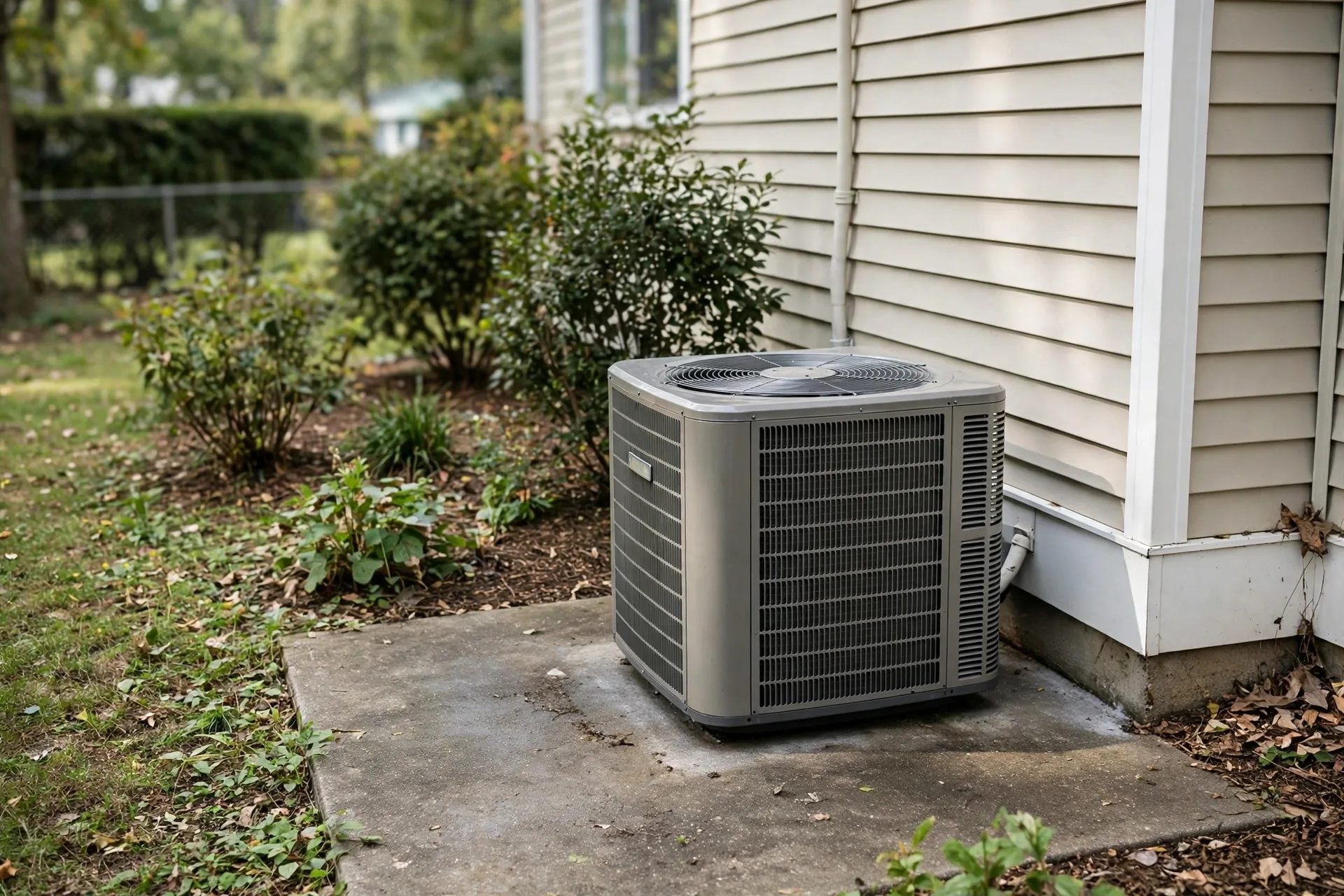
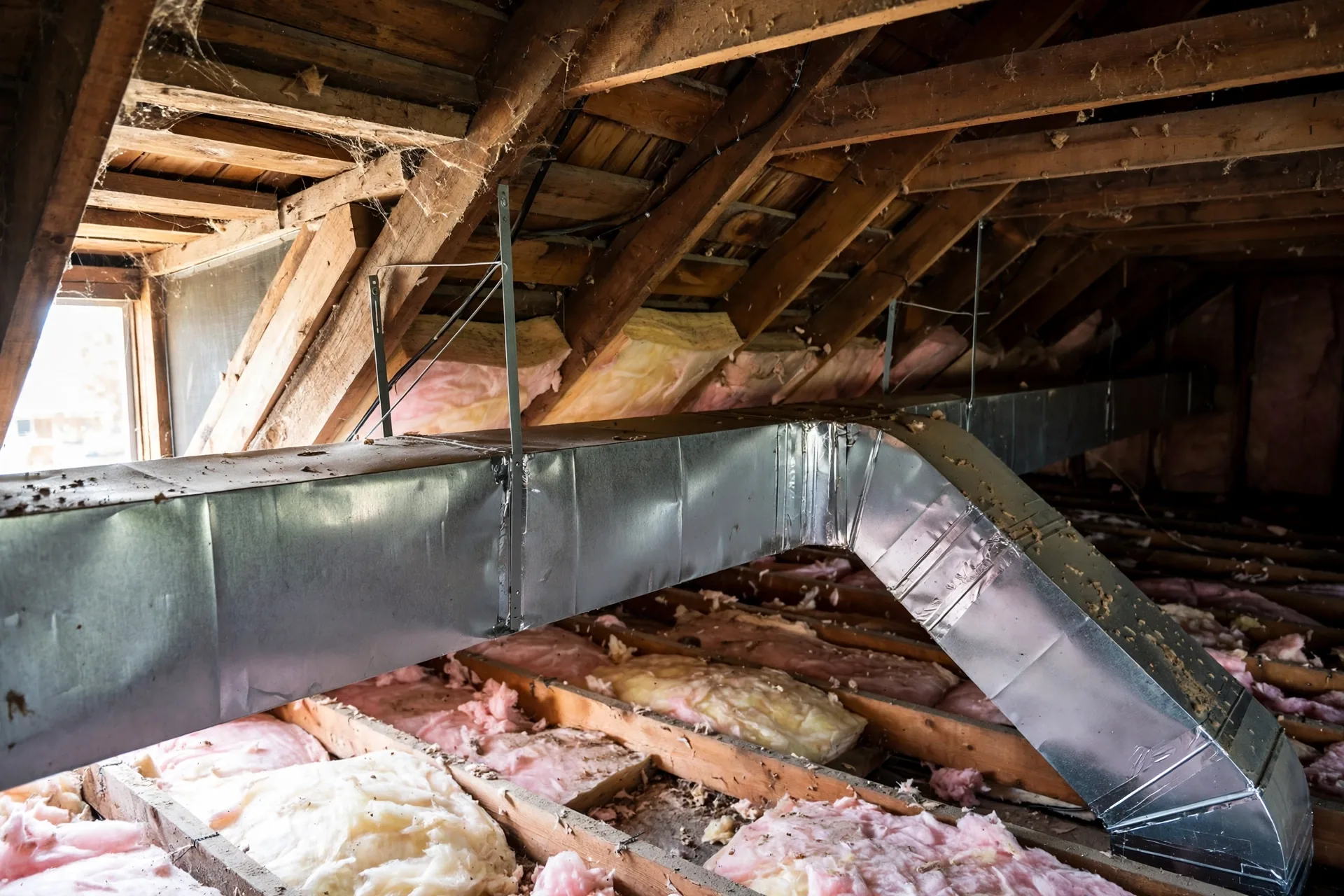
Ducts exist and are in good shape. Easy case. Common in houses with forced-air gas furnaces. What goes in: an outdoor condenser unit. An indoor evaporator coil at the furnace. Refrigerant lines between them. A condensate drain. Electrical. Existing ducts get inspected, sealed where leaky, sometimes modified. That is a few hundred to a couple thousand dollars of ductwork touch-up. Total: $5,500–$9,500 in most Valley homes.
Ducts exist but are tired. In 1970s and 80s Valley homes, older ductwork causes real trouble. Runs undersized for cooling. Leaking at every joint. And the upstairs bedrooms starve for air. Surprises people, but cooling demands more airflow than heating does. A system that heated adequately can cool inadequately through the same ducts. Sealing, insulating and rebalancing runs $1,500–$4,000. Partial duct replacement in accessible areas costs more. A good contractor measures airflow room by room rather than assuming.
No ducts at all. Baseboard-heated homes are everywhere in the Valley. Not one of them has ductwork you can reuse. A full duct system means walls and ceilings opened up, or exposed runs snaking through closets and bulkheads. It roughly doubles the project. The $12,000–$18,000+ column, in other words. Many homeowners here choose ductless mini-splits instead. They cool room by room with zero ducts. A legitimate alternative, worth pricing. Want true central air, though? The ducts have to come from somewhere. That somewhere is your walls.
One more thing: the condensate drain. Every summer day, the AC wrings litres of water from humid air. That water needs a drain to somewhere sensible. Routing the condensate line in a retrofit is a small detail. It is also what separates a clean install from a future ceiling stain. Find out from your contractor where that water goes.
Sizing and Tonnage, Explained Without the Jargon
Tons. That is how air conditioners are sized. A ton is 12,000 BTU of cooling per hour. That covers roughly 500–600 square feet in a typical Valley home. Exactly as rough as it sounds, yes. Most 2,000-square-foot houses land around 3 to 3.5 tons. Usually. Bigger size, higher equipment cost. Not dramatically. The expensive mistake is not buying too small or too big by half a ton. It is buying badly sized in a way that ruins comfort.
Oversized is the common sin. A too-big AC blasts cold air, satisfies the thermostat in minutes, shuts off. Before it has dehumidified anything. The result: a cold, clammy house. Thermostat reads 21. Feels wrong. And the short-cycling wears the system out years early. Rule-of-thumb sizing causes this constantly. Reputable contractors do a proper load calculation instead. Windows, insulation, orientation, air leakage, measured room by room, before any size gets recommended.
Undersized is rarer and more obvious. The system runs all afternoon on the hottest days and never quite catches up. In the Valley’s climate, a correctly sized system should run long and steady through heat waves, which is also when it dehumidifies best and costs least to operate. Long runtimes? A feature. Not a flaw.
Two-stage and variable-speed systems forgive sizing mistakes gracefully. Instead of full-blast or off, they modulate, running low and long most of the time. They cost $1,500–$3,000 more than single-stage equivalents. In return: noticeably better comfort and humidity control. The cooling season here is short but intense. The comfort difference is real.
Fraser Valley cooling loads have quirks. Raise them with your contractor. Big west-facing windows can dominate the load calculation for those rooms. Plenty of Valley homes face the evening sun across the fields. Vaulted ceilings pile on extra volume. Tonnage has to cover that too. And a house that bakes all afternoon needs its ducts and returns balanced for it, not just a bigger box outside.
The Electrical Side
Central AC needs a dedicated 220-volt circuit, panel to outdoor unit, plus control wiring. In most homes this is a half-day of an electrician’s time, a few hundred dollars within the project. Two situations complicate it.
First, the panel. Many Valley homes still run older 100-amp panels, and those panels are often full. No spare breaker space for a new 30-amp AC circuit. A panel upgrade to 200 amps runs $2,500–$4,500. Suddenly your cooling project is an electrical project. Ask your contractor to check panel capacity during the quote visit. Nobody wants that discovery on installation day.
Second, the location of the outdoor unit. It needs a level pad or brackets, clearance on all sides for airflow, and consideration for noise. Condensers hum. Place one under a bedroom window and you will know it every August night. Side yards, away from windows and neighbours’ windows, are the usual answer. Refrigerant line sets run between the indoor and outdoor units, and longer runs cost more and perform slightly worse, so closer is better within reason.
Permits for AC installation in BC municipalities? Typically straightforward. Often a mechanical or electrical permit. Reputable contractors pull them as a matter of course. A quote that is notably cheaper and says nothing about permits or inspections? Not a bargain. That is a risk with a discount applied.
Operating Costs and the Furnace Question
A central AC adds to the summer electricity bill, plainly. For a typical Valley home, expect $30–$80 per month during the cooling season depending on the heat waves, the thermostat setting and the system’s efficiency. Higher-efficiency units, measured in SEER2 ratings, cost more upfront and less every summer. The payback on premium efficiency in BC’s short cooling season is slow, so most homeowners land in the mid-efficiency range and spend the savings on a variable-speed blower instead, which is where the comfort lives.
The furnace question comes up in every quote visit. If the furnace is over fifteen years old, replacing it at the same time as adding AC is worth pricing. The labour overlaps, the coil and furnace are matched as a system, and our furnace replacement cost guide for BC covers that budget. Pair a new furnace with a variable-speed blower, and AC comfort transforms. The blower does the moving. An old single-speed unit moves it like a blunt instrument.
Nobody calls maintenance glamorous. It is non-negotiable anyway. Swap the filter on schedule, and keep the outdoor unit clear of plants and debris. Book a yearly service visit. Neglect it, and efficiency bleeds away every year until the unit dies young. A maintained one hums along for two decades. A service visit costs a fraction of a repair call. A fraction.
Frequently Asked Questions
How much does central air conditioning installation cost in BC? For 2026: $5,500–$9,500 with existing ductwork in good shape. $12,000–$18,000+ once a full new duct system enters the picture. A ducted heat pump that heats too runs $8,000–$15,000, depending on the ductwork. Need an electrical panel upgrade? Add $2,500–$4,500. Planning ranges for 2026 BC, not quotes.
Is a heat pump cheaper than central AC in BC? Upfront, no. A ducted heat pump costs more installed than straight AC. Over its lifetime in BC’s mild climate, it often costs less, because it replaces furnace heating for much of the winter at lower operating cost while providing the same cooling. With an aging furnace, the heat pump usually wins. With a newer furnace, straight AC is the simpler buy.
What size air conditioner do I need? Rough rule of thumb: one ton per 500–600 square feet. So figure 3 to 3.5 tons for a 2,000-square-foot Valley home. Windows, insulation, ceiling height, sun exposure: all of them move that number. Demand a proper room-by-room load calculation. No rule-of-thumb guessing. Oversize it: fast cooling, poor dehumidifying, early wear.
Can central AC be added to a house with no ductwork? Yes. But a full duct system roughly doubles the project cost. And it means opening up walls and ceilings. Many baseboard-heated Valley homes go ductless mini-split instead. No ducts needed at all. Price both before deciding. The right answer depends on the house layout.
How long does central AC installation take? One to two days with existing ductwork. Assuming the electrical is straightforward. New ductwork stretches things to a week or more. Panel upgrades add time. Summer is peak season for Valley HVAC contractors. Spring quotes get better scheduling.
Cooling a Fraser Valley Home?
Start with the ductwork question. It decides the budget band more than any equipment choice. Get a proper load calculation, not a guess. Check your electrical panel capacity during the quote visit. Compare the heat pump alternative honestly against your furnace’s age. Check current rebates before deciding. And think about where the outdoor unit will sit and hum. Want a realistic read on central air conditioning installation cost in BC for your specific house? Call us at (236) 613-0038. We will talk through the ducts, the sizing, the panel and an honest budget range.