
Every contractor in the Fraser Valley has a story about the job that went sideways — and almost every time, the root cause was decided before demolition started. Not bad luck. Not a difficult house. A preventable mistake in planning, budgeting, or hiring.
This isn’t a lecture. It’s the stuff local renovators wish every homeowner knew going in, because the same seven mistakes account for the vast majority of blown budgets, stalled projects, and resale headaches in Abbotsford. Each one comes with a real price tag.
Disclaimer: Cost figures in this article are 2026 Abbotsford/Fraser Valley market ranges for planning purposes only, not quotes. Every project is different.
Mistake #1: Skipping the Building Permit
This is the big one, and it’s more common than you’d think. A homeowner in East Abbotsford finishes a basement suite without permits to “save time.” Everything looks great — until they sell, and the buyer’s lawyer asks for the occupancy permit. Or until a neighbour complains about construction noise and a city inspector shows up.
What it costs you:
– Stop-work orders from the City of Abbotsford, with work frozen until permits are retroactively obtained — often requiring opened walls for inspection of work that’s already been covered up.
– Retroactive permit fees at a premium over doing it right the first time.
– Resale damage. Unpermitted square footage — especially basement suites — routinely gets excluded from appraisals or flagged by buyers’ inspectors, costing far more at the negotiating table than the permit ever would have.
– Insurance risk. Damage connected to unpermitted work can give your insurer grounds to deny a claim.
The fix is simple: if your project touches plumbing, electrical, or structure, get the permit. Kitchen and bathroom permits in Abbotsford take about 2–4 weeks through the Building Department at 32315 S Fraser Way, and the fees are a few hundred dollars — a rounding error on a $34,000–$72,000 kitchen renovation. Any contractor who suggests skipping permits is telling you exactly who they are. Find another contractor.
Mistake #2: No Contingency Budget
Here’s the sentence that sinks more Fraser Valley renovations than any other: “The quote was $48,000, so I budgeted $48,000.”
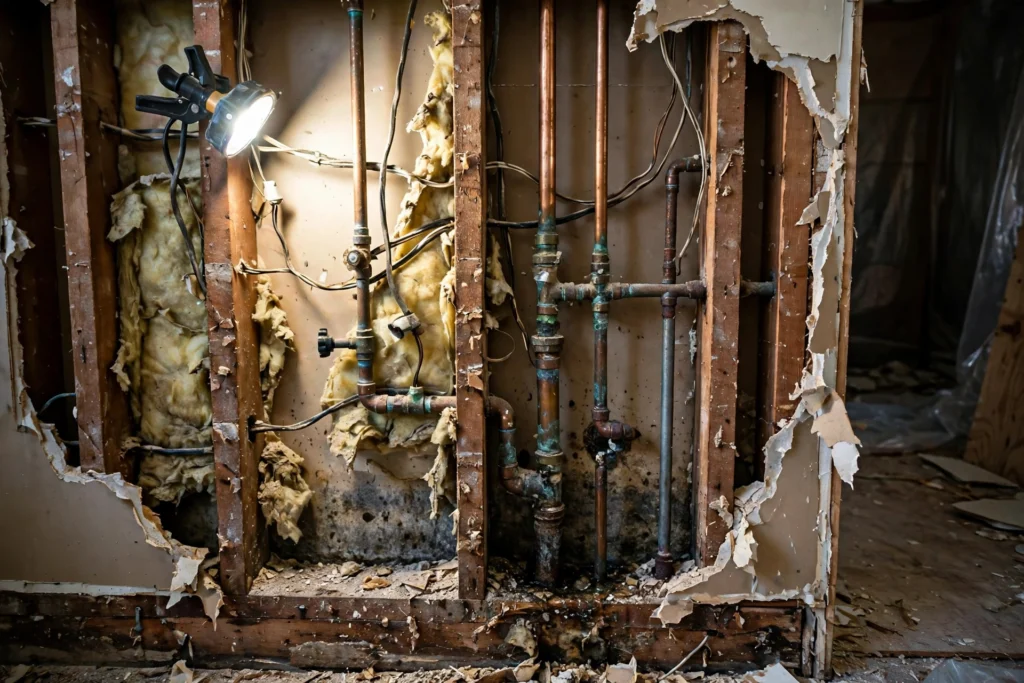
Abbotsford’s housing stock is old. Ranchers in West Abbotsford, split-levels around Townline Hill, 1970s subdivisions in Clearbrook — behind the drywall, contractors routinely find galvanized plumbing that should be replaced while walls are open, electrical panels that need a 200-amp upgrade, and water damage around old windows that nobody knew about. None of this is the contractor’s fault, and none of it is free.
Budget 10–15% above your quote as a contingency — on a typical $48,000 kitchen, that’s $5,000–$7,000 sitting in reserve. If you don’t need it, congratulations: it’s a head start on the next project. If you do need it and don’t have it, you’re choosing between stopping mid-renovation or financing the overrun on a credit card.
The homeowners who sleep well during renovations aren’t the ones with the lowest quotes. They’re the ones with a contingency.
Mistake #3: Hiring the Cheapest Quote
Three itemized quotes for your kitchen: $52,000, $48,000, and $34,000. The $34,000 bid feels like a gift. It’s usually a trap.
When quotes differ by more than 15–20%, the scopes aren’t the same. The cheap bid is almost always missing things the others included — flooring, paint, permits, disposal, or the electrical panel upgrade everyone else flagged. Sometimes the contractor simply doesn’t know what the job costs, which is worse: they’ll figure it out halfway through, at your expense, via change orders.
And then there’s the version of this mistake that’s purely about price-shopping with no verification: no insurance check, no WorkSafeBC lookup, no references. BC doesn’t license general renovation contractors, so the cheapest quote with no due diligence is how homeowners end up with abandoned jobs and liens on their property.
How to avoid it: get three itemized quotes, compare them line by line, and throw out any bid you can’t reconcile with the others. Then verify insurance, WorkSafeBC coverage, and references before signing anything. Our checklist of questions to ask a renovation contractor walks through exactly how.
Mistake #4: Skipping Asbestos Testing in Older Homes
A huge share of Abbotsford homes were built before 1990 — and in homes of that era, asbestos can be present in drywall joint compound, vinyl flooring, insulation, ceiling texture, and pipe wrap. WorkSafeBC requires a hazardous-materials survey before demolition work in older buildings, and disturbing asbestos without proper procedures is both a health hazard and a legal liability.
The testing itself costs a few hundred dollars. Professional abatement, if asbestos is found, costs more — but it’s a known, manageable cost when planned for. What isn’t manageable is the alternative: a homeowner or contractor tearing into suspect materials, a WorkSafeBC stop-work order, and a decontamination bill that dwarfs what testing and proper abatement would have cost.
The rule is simple: pre-1990 home + any demolition = test first. No exceptions, no “it looks fine.” This applies whether you’re DIYing the demo or hiring it out — make sure your contractor does it too.
Mistake #5: Renovating Without a Finalized Design
“While you’re at it, can we move the island six inches?” — the most expensive sentence in renovation after “I budgeted exactly the quote.”
Every change made after demolition starts costs more than it would have in the original plan — sometimes dramatically more. Moving a cabinet run after plumbing rough-in means reopening walls. Changing tile after it’s ordered means restocking fees and delays. Changing your mind about the countertop after templating means starting over.
Change orders are the number-one source of budget overruns industry-wide, and they’re almost entirely preventable. Finalize everything before demolition starts: cabinets, countertops, fixtures, tile, paint colours, appliance models. All of it. Put selections in writing as part of the contract, and agree with your contractor on a written change-order process — priced and signed before any extra work happens — for the changes you can’t foresee.
A week of indecision at the planning stage is free. A day of indecision mid-renovation can cost thousands.
Mistake #6: Over-Improving for the Neighbourhood
This one hurts at resale. You put a $72,000 custom kitchen with waterfall quartz and pro-style appliances into a neighbourhood of $700,000 homes where every comparable has a $40,000 kitchen. You will not get that money back — appraisers and buyers value your home against the neighbourhood, not against your receipts.
Abbotsford has real price stratification between areas — what’s appropriate in Auguston or Clayburn isn’t what’s appropriate in an older pocket of Clearbrook or near the Matsqui Prairie flats. Before committing to a high-end renovation, look at what renovated homes on your street actually sell for. A good local realtor can tell you in ten minutes where the ceiling is.
The sweet spot for most Abbotsford homes is the mid-range renovation done well: new semi-custom cabinets, quartz counters, quality appliances, professional finishes. It photographs beautifully, appraises cleanly, and doesn’t overshoot the neighbourhood. Save the custom millwork for the forever home in the neighbourhood that supports it.
This applies to bathroom renovations and basement finishing too — match the investment to the street, not to the showroom.
Mistake #7: Treating the Basement Suite as a “Simple” Project
Abbotsford is arguably BC’s basement-suite capital — the rental income (typically $1,000–$1,500/month for a legal suite) makes finishing a basement one of the highest-ROI projects in the Fraser Valley. Which is exactly why so many homeowners rush it.
A legal secondary suite in Abbotsford is not a weekend project. It requires a building permit (allow 4–8 weeks for suite permits), and must meet BC Building Code requirements for ceiling height, egress windows, smoke separation, sound transmission, and separate heating controls — plus zoning, parking, and (in some areas) septic considerations. An illegal suite can be ordered removed, fined, and — critically — excluded from your home’s appraised value when you sell or refinance.
The math still works beautifully: at $68,000 typical cost and $1,200/month rent, a legal suite pays for itself in under five years. But only if it’s legal. Get the suite permit, build to code, and register the suite properly. The rental income from a legal suite is worth more than the permit hassle costs, every single time.
The Mistakes at a Glance — and What Each One Costs
| Mistake | Typical cost of getting it wrong |
|---|---|
| Skipping the building permit | Stop-work orders, retroactive fees, resale discounts — often $5,000–$20,000+ |
| No contingency budget | Mid-project financing stress; credit-card overruns at 20% interest |
| Hiring the cheapest quote | Change-order blowouts; abandoned jobs; liens — $10,000+ over the “savings” |
| Skipping asbestos testing (pre-1990 homes) | Stop-work orders and decontamination — thousands beyond planned abatement |
| Unfinalized design / scope creep | Change orders at 1.5–2× the planned cost of each change |
| Over-improving for the neighbourhood | Tens of thousands in unrecoverable spend at resale |
| Illegal basement suite | Removal orders, fines, lost rental income, appraisal exclusions |
Renovation Mistakes FAQ
What is the biggest mistake homeowners make when renovating?
Skipping permits and hiring on price alone are the two costliest patterns. Unpermitted work creates resale, insurance, and legal exposure that dwarfs the permit fee, while the cheapest quote routinely becomes the most expensive project through change orders and missing scope. Both are decided before demolition starts — which means both are avoidable.
How much contingency should I budget for a renovation in Abbotsford?
10–15% above your contractor’s quote. On a typical $48,000 Abbotsford kitchen, that’s $5,000–$7,000 in reserve. Older homes (1960s–1980s, common across Abbotsford) are more likely to need it — galvanized plumbing, panel upgrades, and hidden water damage are the usual surprises.
Do I really need an asbestos test before renovating?
Yes, if your home was built before 1990 and you’re doing any demolition. WorkSafeBC requires a hazardous-materials survey before demo work in older buildings. Testing costs a few hundred dollars; skipping it risks stop-work orders, health exposure, and decontamination bills far beyond the cost of testing and proper abatement.
Can I sell a house in Abbotsford with unpermitted renovations?
You can, but expect it to cost you. Buyers’ inspectors flag unpermitted work, lenders and appraisers may exclude unpermitted square footage (especially basement suites), and you’ll often face demands for price reductions or retroactive permits before closing. Permitted, documented work sells cleanly; unpermitted work sells at a discount.
How do I avoid going over budget on a renovation?
Four things: finalize the design completely before demolition, keep a 10–15% contingency, insist on a written change-order process (priced and signed before extra work), and compare itemized quotes rather than bottom-line prices. Most overruns come from indecision and vague contracts, not from bad luck.
For more guides and project planning help, visit Home Renovation Abbotsford, where we publish 2026 cost breakdowns for kitchens, bathrooms, basements and whole-home projects across the Fraser Valley.
Renovate Like You’ve Done It Before
Every mistake on this list is one somebody in Abbotsford has already paid for — sometimes dearly. The homeowners with smooth renovations aren’t luckier; they permitted the work, budgeted a contingency, verified their contractor, finalized the design, and matched the investment to the neighbourhood.
If you’re planning a kitchen project, start with our 2026 kitchen renovation cost guide for Abbotsford to build a realistic budget — then use our contractor hiring checklist before you sign anything. The cheapest part of any renovation is the planning. It’s also the part that matters most.
Reminder: Cost figures in this article are 2026 Abbotsford/Fraser Valley market ranges for planning purposes, not quotes. For an accurate figure for your project, get itemized written quotes from local contractors.
One Response