
The question came from a couple in Clayburn, standing in a kitchen they had already stopped cooking in, and they asked it the way everyone asks it, as if there were one number, and there is not one number, because how long does a whole home renovation take BC homeowners always want answered in weeks, and the honest answer is a range, and the range is wide, and the width of it is the whole story, because a cosmetic refresh of a rancher in East Abbotsford is not the same job as a gut renovation of a two-storey in West Abbotsford, and the two jobs can differ by eight months, and the difference is scope, and scope is the first thing to pin down, before anyone talks about dates.
Four months. That is the floor for a real whole home renovation, the kind where every room gets touched, and twelve months is the ceiling for most houses that are not heritage homes or structural rebuilds, and between those two numbers sits almost every Abbotsford whole home job, and the number that applies to your house is decided by how much of the house is being opened up, how much is being moved, and how long the permits take, which is the part of the timeline that nobody budgets, and the part that surprises people most, because the permit clock runs before the first wall comes down.
How Long Does a Whole Home Renovation Take BC: The Short Answer by Scope Band
A whole home renovation is not one job. It is three jobs wearing the same name, and the timeline follows the scope band, and the band is decided by what is being changed, not by the size of the house alone, because a big house with a light touch can finish faster than a small house with a heavy one.
| Scope band | Typical duration | What it covers |
|---|---|---|
| Cosmetic refresh | 2 to 4 months | Paint, flooring, fixtures, kitchen and bath surfaces, no walls moved |
| Mid-range renovation | 4 to 7 months | Kitchen and baths rebuilt, some walls moved, new flooring throughout |
| Full gut renovation | 7 to 12 months | Down to the studs, new electrical and plumbing, layout changed, structure touched |
| Major renovation with addition | 9 to 14 months | Gut plus new floor area, new roofline or foundation work |
The cosmetic refresh is the fastest whole home job, and it is also the one people confuse with a renovation, because it changes how the house looks without changing how it works, and the work is finishes, and finishes are fast, and the trades are few, and the inspections are few, and two to four months covers most of them, even on a house of 2,000 square feet, because the walls stay shut, and the wiring stays put, and the plumbing stays where it is.
The mid-range renovation is the common one in Abbotsford, a kitchen rebuilt, two bathrooms rebuilt, flooring through the main floor, a wall or two moved to open the plan, and four to seven months is the honest range for it, and the range is wide because the kitchen alone can take six to eight weeks once the cabinets are ordered, and the cabinet lead time is the quiet driver of the whole schedule, because cabinets are not bought off a shelf, they are built to order, and the order takes four to eight weeks in 2026, and the kitchen cannot be finished until they arrive.
The full gut renovation is the long one, seven to twelve months, and it earns every week of that, because the house goes back to the studs, and the electrical is new, and the plumbing is new, and the layout changes, and the inspections stack up, and the work moves room by room through the trades, and there is no shortcut through the sequence, because the drywall cannot go up before the rough-ins are inspected, and the rough-ins cannot be inspected before the framing is inspected, and the sequence is the schedule, and the schedule is the sequence.
The Phases, in Order, With Real Durations
A whole home renovation runs in phases, and the phases run in order, and the order is not negotiable, because each phase needs the one before it, and the timeline is the sum of the phases plus the gaps between them, and the gaps are where the schedule usually slips.
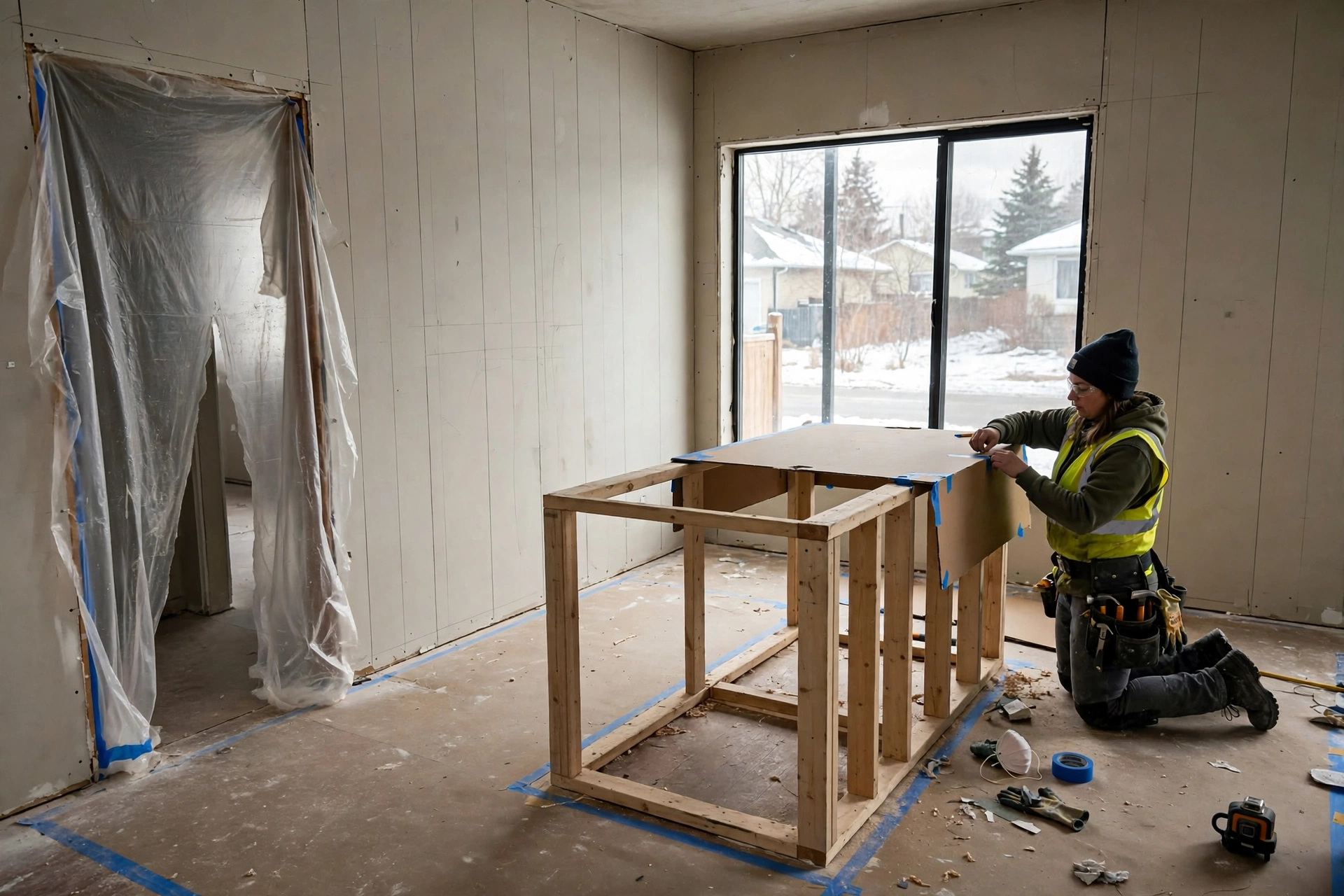
Demolition and stripping takes one to three weeks, depending on how much is coming out, and a cosmetic job strips in days, and a gut job strips in weeks, and the stripping is the loudest phase, and the messiest, and the one where the surprises appear, because the walls open and the house tells the truth about itself, and the truth is sometimes rot, or a beam where the drawings said there was none, and each surprise is a decision, and each decision is time.
Framing and structural work takes two to six weeks, and this is where walls move, and beams go in, and the new layout takes shape, and the work is slower than it looks, because the structure has to be right before anything else can proceed, and an engineer can need to sign off on a beam, and a sign-off is a visit, and a visit is a date, and the date is not always this week.
Rough-ins, the electrical, plumbing, and heating, take three to six weeks, and the three trades work in sequence, not at once, because the plumber needs the framing done, and the electrician needs the plumber done, or at least out of the way, and each trade needs an inspection, and the inspections are booked with the city, and the city books days ahead, not hours, and a failed inspection is a rework and a rebooking, and that is a week gone.
Insulation, drywall, and taping take two to four weeks, and this is the phase where the house starts looking like a house again, and the drywall goes up fast, and the taping and mudding take the time, because the compound has to dry between coats, and the drying takes days, and the days cannot be rushed, because wet compound under paint is a bubble waiting to happen, and a rushed finish is a finish that gets redone.
Finishes take six to twelve weeks, and this is the longest single phase, and it covers flooring, cabinets, countertops, tile, trim, doors, and paint, and the trades crowd in, and the crowding is the problem, because the floor installer cannot work while the painter is working in the same room, and the tile setter cannot work while the plumber is fitting fixtures, and a good sequence saves weeks, and a bad one costs them.
The punch list takes one to three weeks, and it is the phase everyone forgets, and it is where the small things get fixed, a door that sticks, a paint touch-up, a caulk line, a fixture that needs adjusting, and the homeowner should not move back in, or make the final payment, until the list is done, or at least written down with dates.
Permits: The Time Nobody Budgets
The permit clock runs before the work starts, and it runs on its own schedule, and the schedule is not the contractor’s, and it is not yours, and in Abbotsford a building permit for a whole home renovation can take four to twelve weeks from a complete application, and a complete application is the key phrase, because an incomplete application is not a slow application, it is a stopped one, and the city will ask for the missing piece, and the clock will restart, and the restart is the delay that turns a spring start into a summer start.
A cosmetic refresh usually needs no building permit, and that is one reason it is fast, because the permit clock never starts, and a mid-range renovation with a wall moved, or a bathroom added, usually needs one, and a full gut renovation always does, and the permit application needs drawings, and the drawings need a designer or an architect, and the drawings take two to six weeks to prepare, and the preparation time is part of the timeline too, and it is the part that happens before the permit clock even starts, which is why the honest answer to how long the job takes begins with the drawings, not with the demolition.
Our guide to the building permit timeline in BC walks through the permit steps and the waiting times in detail, and it is worth reading before you set a start date, because a start date set without the permit is a date that will move, and a date that moves twice stops being a plan.
What Stretches the Schedule
Change orders stretch the schedule more than anything else, and a change order is any decision made after the work has started, and the work has to stop while the change is priced, and the materials are reordered, and the trade is rescheduled, and a single change order can cost a week, and three change orders can cost a month, and the defence is to make the decisions before the demolition, every finish, every fixture, every colour, because a decision made in a showroom in March is free, and the same decision made on site in June is a week.
Material lead times stretch the schedule too, and the worst offenders in 2026 are custom cabinets, at four to eight weeks, and windows, at six to ten weeks, and specialty tile, at three to six weeks, and anything ordered from overseas, which can take longer, and the fix is to order the long-lead items before the demolition starts, because a kitchen with no cabinets is a kitchen that cannot be finished.
The Fraser Valley rain stretches the schedule, and the rain is not a surprise, it is the climate, and the wet months from October to March slow exterior work, and slow deliveries, and slow concrete, and a job that starts in November will move slower than the same job starting in May, and the homeowner who plans a winter start should add a month to the estimate, not because the contractor is slow, but because the weather is wet, and wet work is slow work.
Trade availability stretches the schedule as well, and the good trades in Abbotsford book weeks ahead, and a contractor who has to wait for a tile setter, or an electrician, or a drywall crew, is a contractor whose schedule has gaps in it, and the gaps are not anyone’s fault, they are the market, and the way to shrink them is to book the contractor early, and to ask, before signing, which trades are already lined up, and which are still to be booked, because a lined-up trade is a date, and a trade to be booked is a hope.
How to Keep the Timeline Honest
The single best defence against a blown timeline is a written schedule, and the schedule should name the phases, and the dates, and the trades, and the inspections, and it should be updated weekly, and the update should be a conversation, not a document, because a schedule that is never discussed is a schedule that is never followed.
The second defence is a contingency, and the contingency is time, not money, although money helps too, and a homeowner should add four to six weeks to any timeline they are given, not because the contractor is lying, but because the timeline is a plan, and plans meet reality, and reality is rot in a wall, and a back-ordered window, and a week of rain, and a job that finishes inside its contingency is a job that finished on time.
The third defence is decisions, and the decisions should be made before the work starts, and the finishes should be chosen, and the fixtures should be ordered, and the colours should be picked, and the homeowner who chooses a tile in the showroom, calmly, in March, is a homeowner who will not be choosing a tile on site, hurriedly, in June, while the tile setter waits.
Our guide to whole home renovation cost in Abbotsford covers the money side of the same job, and the cost and the timeline belong together, because the cost is the money, and the timeline is the time, and the two together are the plan, and a plan that names both is a plan that can be held to.
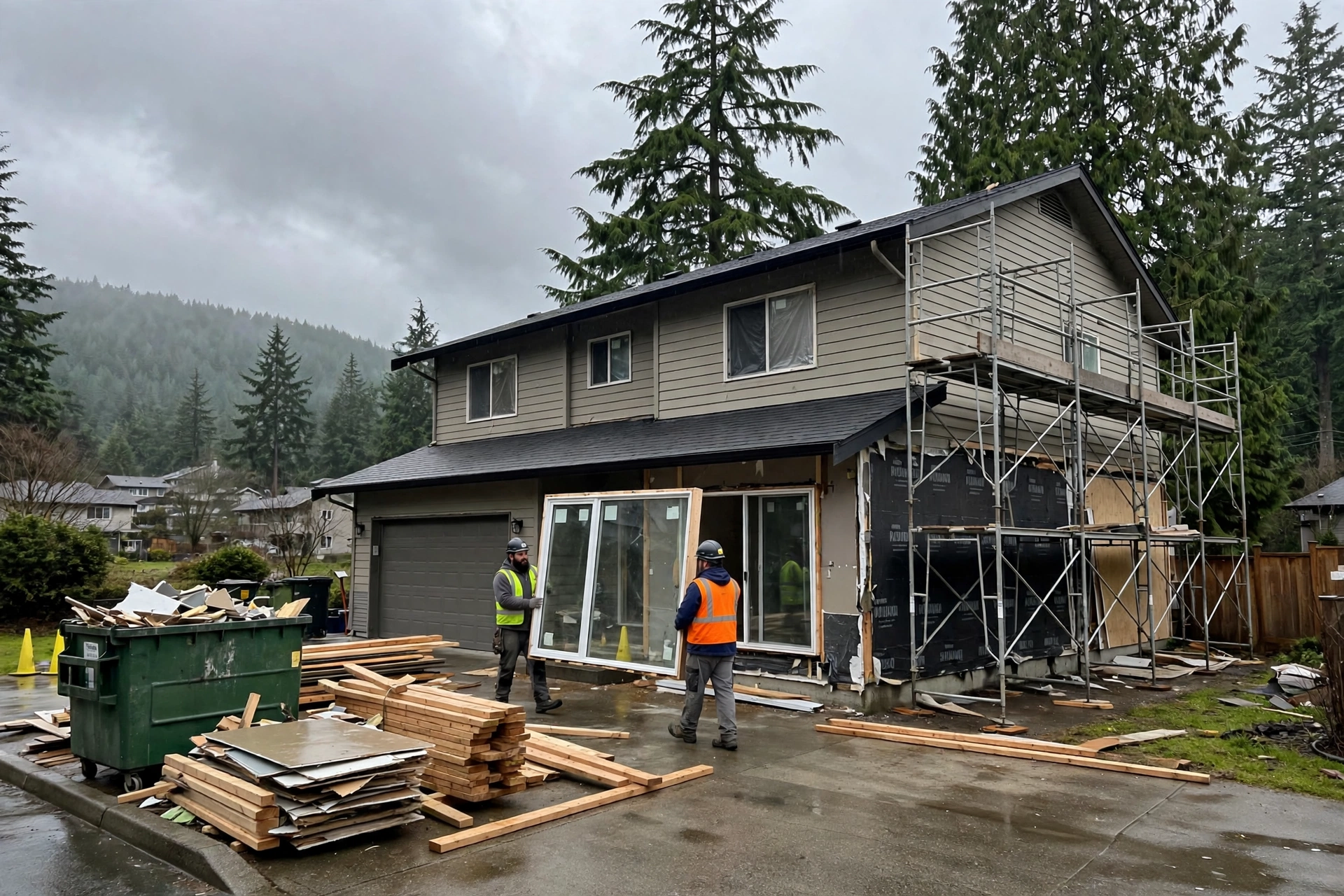
How long does a whole home renovation take BC homeowners should plan for. Four to seven months for a mid-range job, seven to twelve for a full gut, two to four for a cosmetic refresh, and nine to fourteen where an addition is involved, and all of it plus the permit time, which runs four to twelve weeks before the work starts, and plus a contingency of four to six weeks, because the walls will hide something, and the materials will be late, and the rain will come, and the job that is planned with those truths in it is a job that finishes close to its plan.
Questions about a whole home renovation timeline, or the permit steps behind it, can be raised with a local renovation professional before work starts, and general guidance on Abbotsford renovation costs is available by phone at (236) 613-0038.
Frequently Asked Questions About How Long a Whole Home Renovation Takes in BC
How long does a whole home renovation take in BC? A mid-range whole home renovation takes 4 to 7 months, a full gut renovation takes 7 to 12 months, and a cosmetic refresh takes 2 to 4 months. Add 4 to 12 weeks for the building permit before work starts, and a contingency of 4 to 6 weeks, because surprises, material delays and inspections all add time.
How long does a major renovation take if walls are being moved? Moving walls puts the job in the mid-range or gut band, 4 to 12 months depending on how much structure changes. A wall that carries load needs a beam, and a beam can need an engineer’s sign-off, which adds a visit and a date to the schedule. Ask the contractor which walls are structural before the timeline is set.
What part of a whole home renovation takes the longest? Finishes take the longest single stretch, 6 to 12 weeks, because flooring, cabinets, countertops, tile, trim and paint all run in sequence and the trades cannot crowd one room. Cabinet lead times of 4 to 8 weeks and window lead times of 6 to 10 weeks often set the pace before the finishes even begin.
Does a building permit add time to a renovation timeline? Yes, and it is the time most people forget. A building permit in Abbotsford can take 4 to 12 weeks from a complete application, and the drawings take 2 to 6 weeks to prepare before the application is even filed. A cosmetic refresh usually needs no permit, while a gut renovation always does.
Can a whole home renovation be done in three months? A cosmetic refresh can, at 2 to 4 months, if no walls move and no permit is needed. A mid-range or gut renovation cannot be done well in three months, because the phases run in order, the inspections need booking, and the finishes need their drying and curing time. A contractor who promises a gut job in three months is promising a shortcut somewhere.