
The kitchen island is the most wanted and least understood line in a kitchen budget. People picture a slab and some cabinets; the invoice shows cabinetry, countertop, a plumber, an electrician, possibly a gas fitter, and a flooring repair where the old layout changed. None of that is padding — an island is a small piece of architecture that sits in the middle of your kitchen’s busiest traffic, and the useful ones carry plumbing, power and seating with them. Here is what island installation actually costs in BC in 2026, and what each upgrade does to the number.
The short version: a basic prefab or flat-pack island installs for $1,500–$4,000, a semi-custom island built from cabinet lines runs $4,000–$10,000, and a fully custom island lands at $10,000–$25,000+ in BC in 2026. Adding a sink costs an extra $1,500–$3,500 in plumbing; adding a cooktop or the outlets an island requires costs $800–$2,500 in electrical. A simple island with no services is furniture. An island with water and power is a construction project — budget it like one.
1. Kitchen Island Costs at a Glance
Installed planning ranges for a typical 6–8 foot island, 2026 BC figures (countertop included unless noted):
| Island type | Installed cost | What you get |
|---|---|---|
| Prefab / flat-pack | $1,500–$4,000 | Stock sizes, limited finishes, basic storage, laminate or butcher block top |
| Semi-custom | $4,000–$10,000 | Cabinet-line boxes in your kitchen’s finish, drawers and features, stone top option |
| Custom | $10,000–$25,000+ | Any size, furniture-grade millwork, integrated appliances, premium stone, waterfall edges |
On top of the island itself: plumbing for a sink island adds $1,500–$3,500, and electrical for outlets or a cooktop adds $800–$2,500. Seating, a second dishwasher or a wine fridge each move you further up the bands.
2. The Three Ways to Buy an Island
Prefab and flat-pack islands come from big-box and furniture retailers in fixed sizes. They are the right answer for a rental-grade kitchen or a simple work surface with storage, and at $1,500–$4,000 installed (assembly, levelling, anchoring and a basic top) they are genuinely good value. The limits are size, finish matching, and durability — they will not match your cabinets exactly, and they are not built to carry a sink.
Semi-custom islands are built from the same cabinet lines as the rest of your kitchen, so doors, colour and hardware match perfectly. You choose the configuration: deep drawers, a microwave shelf, pull-out garbage, seating overhang. Most BC kitchen renovations land here, at $4,000–$10,000 depending on length, features and countertop.
Custom islands are millwork: a cabinetmaker builds exactly what the room wants, including curved or angled shapes, furniture details, integrated appliance panels and oversized formats. At $10,000–$25,000+ this is where an island becomes the centrepiece of a high-end kitchen — often as part of a full kitchen renovation, where the island shares design and installation costs with the rest of the project.
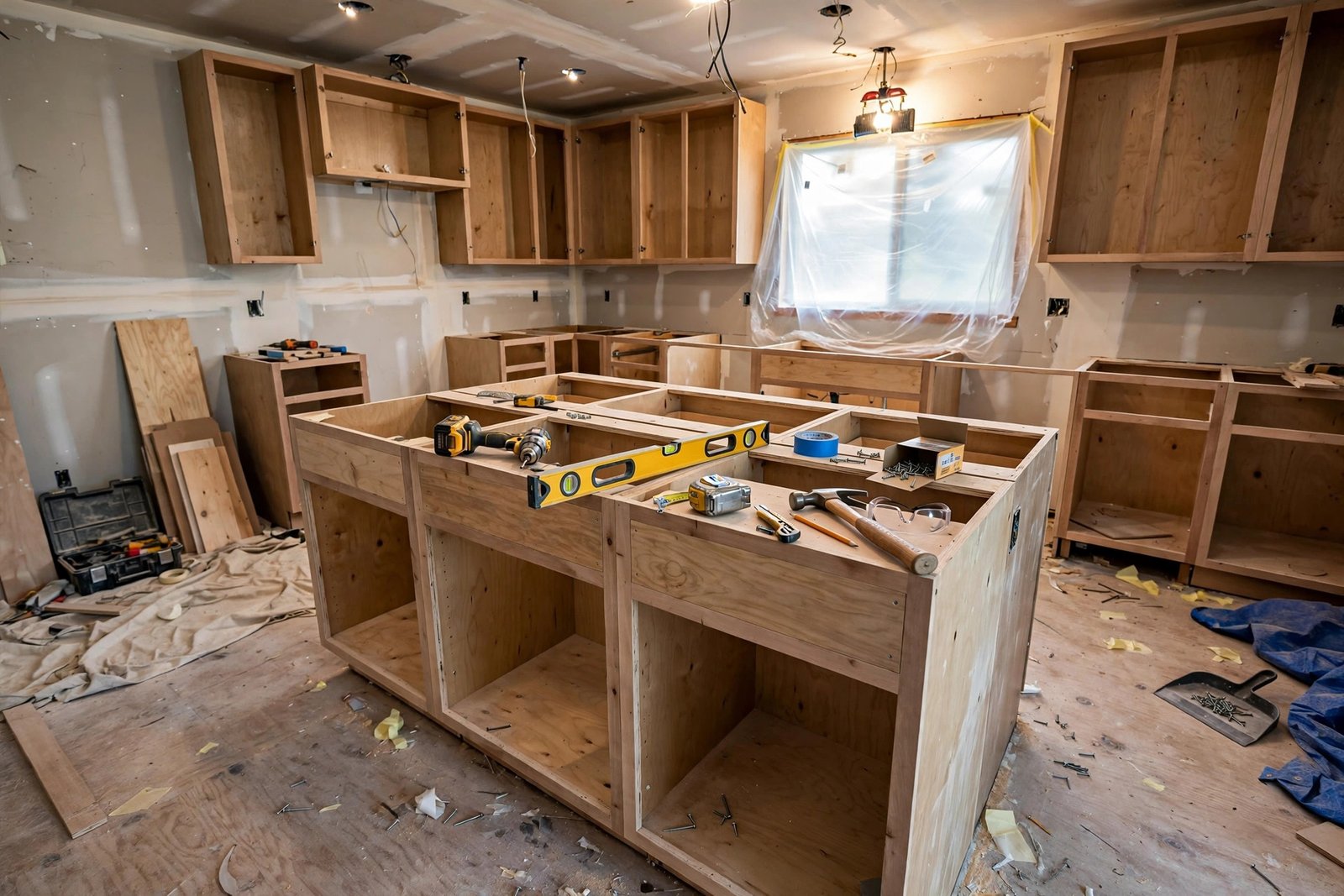
3. Adding a Sink or Cooktop: The Plumbing and Electrical Bill
This is where island quotes separate. An island with no services needs no trades beyond the installer. Add water or a burner and you have opened the floor.
Plumbing ($1,500–$3,500). A sink island needs supply lines and, harder, a drain — and drains need venting. Because an island sink cannot vent straight up through a wall, plumbers use an island fixture vent (a loop vent built inside the cabinet) or an approved air admittance setup, and the drainage usually runs through the floor to the nearest wall. If your kitchen is over a finished basement or on a slab, the access work costs more. A prep sink is cheaper to feed than a main sink, but the venting challenge is the same.
Electrical ($800–$2,500). Canadian electrical code requires receptacles on islands of any real size — you cannot legally run an island with no power and an extension cord lifestyle. Circuits are run through the floor or from below, and many owners add pop-up outlets to keep the stone clean. A cooktop island needs a dedicated high-amperage circuit, and an induction or gas cooktop also needs ventilation: a downdraft system or a ceiling-mounted hood, which can add $1,000–$3,000 on its own. Gas, where it is even practical, adds a gas fitter and permit to the list.
Both trades need permits and inspections in BC, and both are far cheaper to rough in during a full renovation than as a standalone island project with a finished kitchen around it.
4. Countertops, Seating and the Finishing Layer
The island top is usually priced with the rest of the kitchen’s counters, but it deserves its own look because islands use big, visible slabs. Our quartz vs granite vs laminate comparison breaks down the materials; the island-specific costs are the upgrades: a waterfall edge (stone wrapping down the side) typically adds $1,500–$3,500 in material and fabrication, and seating overhangs need corbel or steel support once they pass about 12 inches, adding a few hundred dollars in hardware and labour. Budget stools separately — four decent counter stools run $400–$1,200 and are never in the contractor’s number.
5. Making Room: Clearances, Floors and Walls
An island only works if the kitchen can hold it. The planning rules tilers and designers actually use:
- 36 inches of clearance minimum on working sides, 42 inches is comfortable, and 44–48 inches if two cooks pass each other or a dishwasher door opens into the walkway.
- Seating needs knee space: about 12 inches of overhang at counter height, plus roughly 24 inches of width per person.
- Flooring: if the island changes the room’s footprint, the floor under and around it may need patching or the whole floor re-done — a common surprise cost when an island replaces a peninsula or a wall comes out.
That last point is why islands so often pair with opening up the kitchen. If your plan includes removing a wall to make room, our open-concept kitchen cost guide covers what the structural work adds on top of the island itself.
6. How Long Does Island Installation Take?
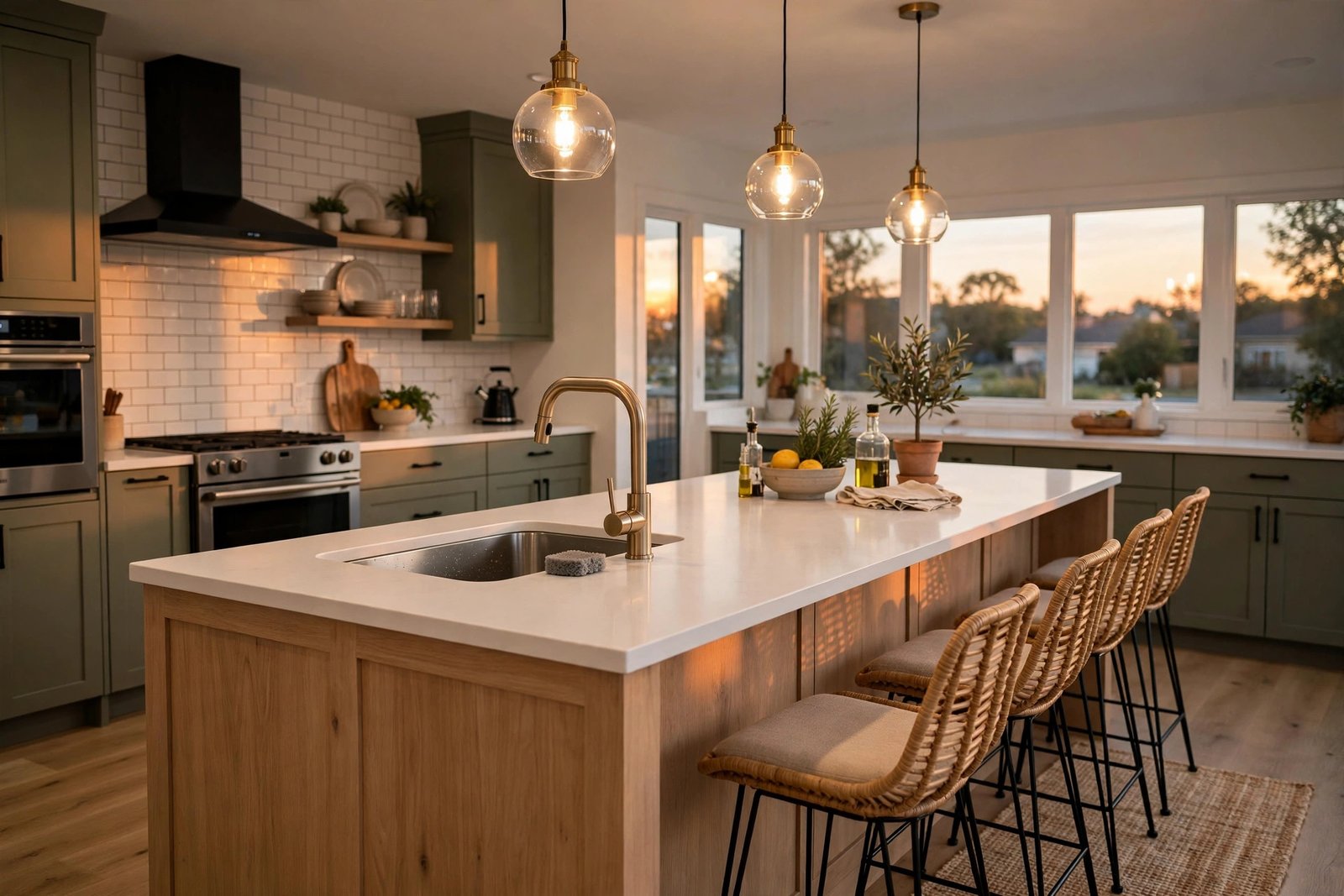
The island itself is rarely the slow part — the schedule around it is. A prefab island is an afternoon: delivery, assembly, levelling and anchoring, done the same day. A semi-custom island installs in one to three days once the cabinets arrive, but cabinet orders typically run four to eight weeks from deposit, and the countertop cannot be templated until the island boxes are set, which adds another two to three weeks for fabrication and installation. A custom island is millwork: expect three to six weeks of shop time before a two to four day install. Layer in the trades — plumbing and electrical rough-in before the island is fixed, hookups after the countertop — and a services island inside a full kitchen renovation usually adds a few days of critical path, not weeks. The mistake is ordering the island late: it should be designed and ordered with the rest of the cabinetry, never as an afterthought once the kitchen is underway.
7. Frequently Asked Questions
How much does it cost to install a kitchen island in BC? Plan on $1,500–$4,000 installed for a prefab island, $4,000–$10,000 for a semi-custom island built from cabinet lines, and $10,000–$25,000 or more for a fully custom island in 2026. Adding a sink typically adds $1,500–$3,500 in plumbing, and electrical for outlets or a cooktop adds $800–$2,500. These are planning ranges, not quotes.
How much does it cost to put a sink in a kitchen island? The plumbing for an island sink typically adds $1,500–$3,500 on top of the island itself. The drain has to run through or under the floor and needs an island vent arrangement, which is more involved than a wall sink. The sink, faucet and any garbage disposal or dishwasher connection add to that.
Do I need a permit for a kitchen island in BC? An island with no plumbing or electrical usually needs no permit — it is cabinetry. The moment you add a sink, a dishwasher or a cooktop, plumbing and electrical permits and inspections apply in BC, and a gas cooktop adds a gas permit as well. Your contractor or the trades pull these.
How much space do you need around a kitchen island? Plan for at least 36 inches of clear walkway on every working side, 42 inches if you can get it, and more where appliance doors open into the path. Kitchens smaller than about 7 by 12 feet of open floor usually do better with a peninsula than an island.
Is a kitchen island worth the money? For most households, yes — an island adds prep space, storage and the seating everyone actually uses, and it is one of the features Fraser Valley buyers consistently look for. The value case is strongest for semi-custom islands inside a planned renovation; a custom island priced like furniture in a mid-range kitchen is where the payback gets thin.
Planning a Kitchen Island in BC?
The island decision touches cabinets, counters, plumbing, electrical and the floor — in that order. If you would like help working out which type fits your kitchen and what the full installed number looks like for your layout, call us at (236) 613-0038. We will walk through the options straight, including when a peninsula is honestly the better buy.