
The range hood is the appliance nobody budgets and everybody smells.
Literally, in the end. A kitchen without proper ventilation fills the house with cooking odour, grease film and moisture. The film on the cabinets above the stove is the signature: sticky and grey. In the Fraser Valley’s damp winters the extra moisture matters too, because a house that already fights condensation does not need a wok adding to it. Yet the hood is usually the last appliance chosen, bought with leftover budget. Exactly backwards, because ventilation is the one appliance choice that changes the ductwork, the cabinetry, and sometimes the electrical plan.
Range hood installation cost in BC in 2026: really two different projects wearing one name. Ducted and ductless. The hood itself: the smaller number. The venting: the bigger one. And the one that surprises people.
The short version: replacing a hood on existing ducting runs $700–$2,000 installed in 2026. A ductless install runs $500–$1,500. Adding brand-new ducted venting where none exists runs $2,000–$5,000+, depending on the route the duct has to take.
Ducted vs Ductless: The 2026 Cost Split
| Install type | What is involved | 2026 planning range |
|---|---|---|
| Ductless replacement | Swap the hood, recirculating filters, no new ductwork | $500–$1,500 |
| Ducted replacement (ducting exists) | Swap the hood onto the existing vent run | $700–$2,000 |
| New duct run, short and easy | Straight run through one wall or up into an accessible attic | $2,000–$3,500 |
| New duct run, long or complex | Across the kitchen, through finished ceilings, out a distant wall | $3,000–$5,000+ |
| Range hood chimney / island hood with new ducting | Duct runs up through the ceiling to the roof or a high wall cap | $3,500–$6,000+ |
The gap between the rows is the ductwork.
A ductless hood recirculates air through charcoal filters, back into the kitchen. Cheap to install, sometimes just an afternoon. Better than nothing, genuinely. But it does not remove moisture or heat. And the filters need replacing every few months at $30–$80 a set, a small recurring tax most people forget about until the hood stops working and the filters are the reason. In a rental or a condo where ducting is impossible, ductless is the answer. In a detached house in the Valley, it is a compromise you should only accept if the duct route is truly awful.
Ducted hoods move the problem outside. Grease, smoke, steam, odour: out of the building. The cost is the duct. Rigid metal (never flexible foil, which traps grease and is a fire concern). A wall or roof cap with a damper. And the labour of threading it through the house. Every elbow adds resistance. That is why the short straight run costs half what the zigzag costs: the installer is not charging for the extra three metres of duct. They are charging for opening ceilings, working around joists, and making the long run still perform.
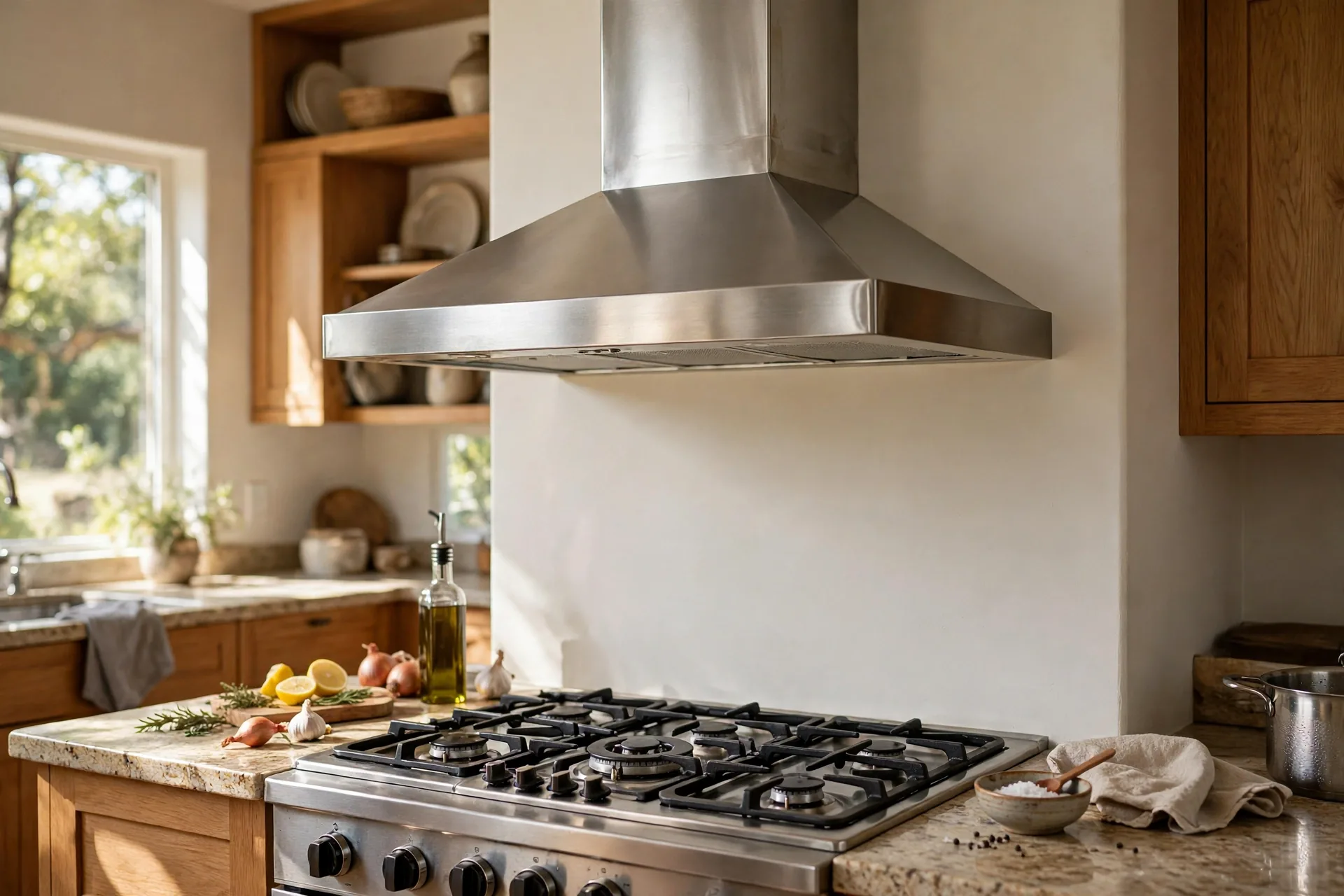
Island hoods: the expensive case everyone asks about. The duct has to go up through the ceiling, across to an exterior wall or the roof, and out. And with no cabinets to hide it, the visible chimney section has to look finished. Part appliance. Part custom sheet metal. Part drywall work. Planning an island cooktop? Budget the hood as a $3,500-plus line item from the start, not a $900 appliance with a $400 install.
CFM, Makeup Air and the 400 CFM Line
CFM, cubic feet per minute, the measure of how much air the hood moves: that is where kitchen range hood installation cost meets building code. And the part most DIY planners miss entirely.
The rule of thumb: a hood should move roughly 100 CFM for every 10,000 BTU of cooktop. Or about 100 CFM per linear foot of range width. A standard 30-inch gas range: 300–450 CFM. A 36-inch pro-style range with a big burner layout: 600–1,200 CFM. Bigger is not automatically better, though. Because of the number that changes the project.
Four hundred CFM.
In BC, hoods rated above 400 CFM generally require makeup air. A dedicated intake replacing the air the hood throws outside. The logic is blunt. A powerful hood in a tight modern house creates negative pressure. Negative pressure does ugly things. It backdrafts furnaces and water heaters. It pulls cold air through every crack in the envelope. In the worst cases it pulls combustion gases back down the flue. So the code asks for a makeup-air system. A damper. A duct to outside. Controls that open it when the hood runs.
Makeup air adds $800–$2,000 to the job. Sometimes more if the intake route is difficult. This is the single most common reason a “simple hood swap” doubles in price. The old hood was a 250-CFM builder special that needed nothing. The new one is a 600-CFM beauty that triggers the makeup-air requirement. Before falling in love with a high-CFM hood, check whether your house already has makeup air. Many newer Valley homes do. Price the addition if it does not. The quiet tragedy of range hood shopping: the person who discovers the 400 CFM rule at the permit counter.
For most family cooking, weeknight dinners, not restaurant service, a 300–400 CFM ducted hood is the sweet spot. Strong enough to clear real cooking. Just under the makeup-air threshold. And installable without a mechanical engineer’s involvement.
Cabinet Modification: The Quiet Budget Line
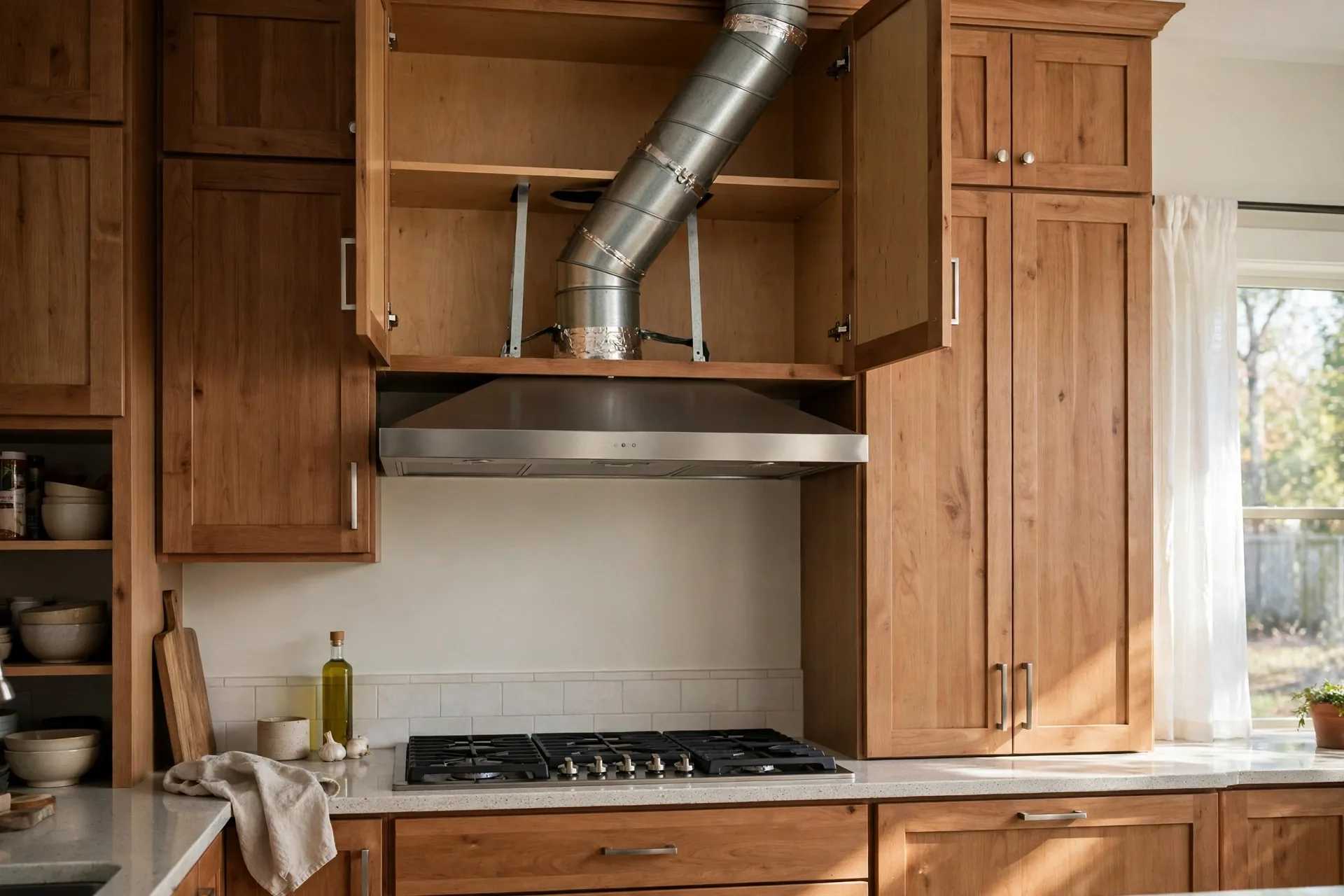
Hoods live in cabinets. Cabinets were not built for the hood you want now.
Standard scenario: replacing an under-cabinet microwave-hood combo or an old under-cabinet hood with a new one. Cabinet above the stove is the standard 30 inches wide and the new hood is 30 inches? Life is simple. A swap. Some shimming. Done. Cabinet modification cost: near zero.
The complications arrive fast, though. Going from a 30-inch to a 36-inch hood means modifying or replacing the cabinet. Upper cabinets around a range are often structural to the run: you cannot just cut one in half and hope. Converting to a chimney-style hood means removing the cabinet entirely. Finishing the wall behind it. Drywall, paint, possibly moving the electrical. Going from an over-the-range microwave to a real hood: the cabinet that held the microwave has to go, and the space it leaves needs finishing.
Budget $200–$800 for cabinet modification in a straightforward case. $1,000–$2,500+ when cabinets are removed, rebuilt or refinished as part of the change. In a full kitchen renovation the cabinet work is already in the plan and the hood is just a detail. One more reason to decide the hood during the design phase, not after the cabinets are hung. Our kitchen renovation cost guide for Abbotsford covers how early appliance decisions keep the whole project cheaper.
Electrical is the other quiet line. Most hoods need a dedicated or shared 15-amp circuit. Older kitchens sometimes have the hood sharing a circuit it should not share. Running a new circuit from the panel: $300–$700 in a typical Valley home. More if the panel is full or the run is long. Gas ranges converted to electric (or dual-fuel upgrades planned later) change this math entirely. So say the whole plan out loud to the electrician before anyone wires anything.
Venting Routes in Real Fraser Valley Houses
The cheapest vent route: the one you can see. Straight out the wall behind the range. One hole, one cap, done. This works when the range sits on an exterior wall, which is true in maybe half of Valley kitchens.
The next cheapest is straight up. If the range is on an interior wall but there is an accessible attic above, the duct goes up through the ceiling, across a short attic run, and out through the roof or a gable wall. Roof penetrations in the Valley’s rain need proper flashing: a sloppy roof cap is a leak that shows up in November, four months after the install, and everyone blames the roof. A good installer flashes the cap like it matters. Because it does.
The expensive routes cross finished space. Down through the floor and out the basement rim joist. Or across the kitchen soffit and out a distant wall. Each means opening finished ceilings or walls. Running the duct. Closing everything up again: drywall, tape, texture, paint. The duct itself is $200 of material. The surgery is the rest.
One more Valley-specific note. Range hoods vented into the attic or the soffit are a deficiency, not a quirk. Moist kitchen air dumped into a cold attic condenses on the sheathing. The Valley’s winter temperature swings make that condensation reliable. Home inspection flagged a hood venting into the attic? Fixing it properly, duct to outside with a real cap, is a $1,500–$3,000 job that also protects the roof assembly. Worth doing. Not optional, really.
What the Hood Itself Costs (So You Can Read a Quote)
Separating the appliance from the install helps quotes make sense:
- Under-cabinet ducted hood, basic: $200–$600 for the unit
- Under-cabinet, mid-range: $500–$1,200
- Chimney wall-mount, mid-range: $800–$2,500
- Chimney, premium or pro-style: $2,000–$5,000+
- Island hood: $1,500–$4,000+ for the unit, before the expensive install
- Insert (for a custom wood hood surround): $600–$2,000 for the insert, plus the surround
The appliance-package math matters when you are buying the whole kitchen at once. A coordinated suite, range, hood, fridge, dishwasher, from one brand, often prices better than four separate purchases. The kitchen appliance package cost guide breaks down how those bundles price in 2026.
Frequently Asked Questions
How much does it cost to install a range hood in BC?
For 2026: a ductless swap runs $500–$1,500 installed. A ducted replacement on existing ducting runs $700–$2,000. Adding brand-new ducted venting runs $2,000–$5,000 or more depending on the duct route. Island hoods with new ceiling ducting: around $3,500 installed, to start. 2026 BC planning ranges, not quotes.
Is a ducted or ductless range hood cheaper to install?
Ductless is cheaper to install, sometimes half the price. No ductwork. No wall or roof penetration. No flashing. Ducted costs more upfront but actually removes moisture, heat and odour from the house instead of recirculating them. And it has no filter-replacement costs. In a detached home where ducting is possible, ducted wins the long-term spend.
Do I need makeup air for my range hood in BC?
Generally yes, if the hood is rated above 400 CFM. BC practice requires a makeup-air intake so the hood does not create negative pressure that backdrafts furnaces or water heaters. Adding makeup air: typically $800–$2,000. A 300–400 CFM hood suits most family cooking and stays under the threshold. One more reason to size the hood to your actual cooking rather than the showroom’s biggest model.
Can I replace a range hood myself?
A like-for-like ductless swap is reasonable DIY. If you are comfortable with basic electrical and the mounting. Anything involving new ductwork, a roof or wall penetration, a new circuit, or a hood over 400 CFM should go to a professional. The venting, flashing and makeup-air work is where DIY hood installs fail. A roof leak in November is an expensive lesson. Confirm permit requirements with your municipality before work starts.
How long does range hood installation take?
Half a day for a straightforward replacement on existing ducting. A new duct run through finished space: one to three days, plus drywall and paint repair. Cabinet modification or a new electrical circuit involved? Add another day or two. Island hoods with ceiling ducting take the longest. Typically three to five days of trade time spread over a week or two.
Planning a Range Hood Install in the Valley?
Decide ducted or ductless before you shop, and check the CFM number before you fall in love.
Those two decisions, the venting route and the 400 CFM line, set the budget. More than the brand on the box. Get quotes that separate the hood, the ductwork, the electrical and any cabinet work into their own lines. Ask how the roof or wall cap will be flashed for Valley rain. Confirm permit needs with your municipality before work starts. Want a realistic read on range hood installation cost in BC for your kitchen? Call us at (236) 613-0038. We will talk through the venting route, the CFM question and an honest budget range.