
What a Kitchen Renovation Costs in Langley in 2026
Langley does not price kitchens with one ruler. Take a 1970s rancher over in Langley City. Or a family place out in Willoughby, built in 2015. Or an older character house in Fort Langley. On paper they’ve all got the same stuff. Stove. Sink. Cabinets along the wall. But what’s hiding behind those cabinets? Completely different jobs, every time. That difference shows up fast in the quotes.
Here is the quick picture for 2026. Just freshening things up? Layout stays where it is. That kind of light refresh lands at $15,000–$30,000. Most people land in the middle. New cabinets. Quartz counters. New appliances, all inside the footprint you’ve already got. That runs $35,000–$80,000, and most bills settle around $50,000–$55,000. Then there’s the gut job. Different money altogether. Walls come out. Plumbing and electrical get moved. For the bigger ones you’re starting at $80,000–$140,000+.
Don’t treat those numbers as gospel. They’re planning ranges. Pulled from published 2026 Fraser Valley project data, nothing more. Really they’re just a starting point for the budget talk. Nobody’s promising your address will land there. Scope matters. Finish choices matter. Age matters too. A lot. An older Langley house? It’ll need work behind the walls. A newer Willoughby build just doesn’t ask for that. You’ll hit one local quirk again and again in this guide. Langley isn’t a single place for permits. It’s two. The City handles its own. The Township does too, completely separate. Where your house sits? That decides which counter you apply at.
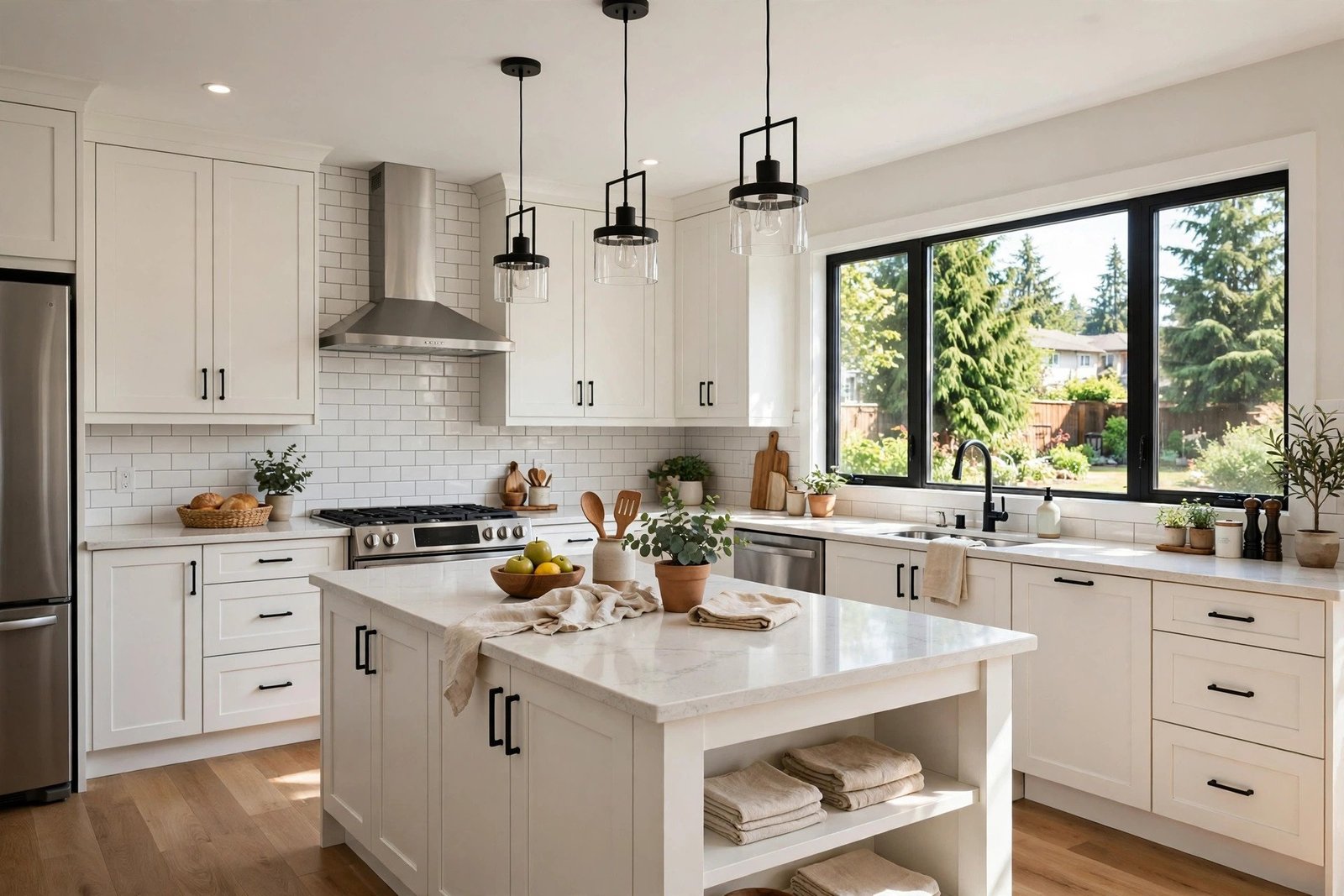
Langley Kitchen Costs at a Glance
Split the market into three bands and decisions get easier. Most people already know their camp anyway. Refreshing a room? Or rebuilding it outright?
| Scope | What it includes | 2026 planning range |
|---|---|---|
| Refresh | Refacing or new doors, laminate or quartz counters, fresh hardware, paint | $15,000–$30,000 |
| Mid-range full renovation | New semi-custom cabinets, quartz counters, tile backsplash, new appliances, updated lighting | $35,000–$80,000 |
| High-end or gut renovation | Layout changes, custom cabinets, premium stone, structural work, plumbing moves | $80,000–$140,000 |
Head east and it drops a bit. The kitchen renovation cost guide for Abbotsford puts typical projects there at $34,000–$72,000, so use that as your comparison point. Langley just sits a touch above it. Labour is part of the reason, since rates here lean closer to the Vancouver side of the region. Size is the other part. Kitchens in the Township’s newer subdivisions often start out larger, and a larger room needs more cabinets, more counter material, and more flooring before anyone talks about upgrades.
Where does your own project fit? Begin by looking at the layout. Sink stays put? Range too? Walls aren’t moving? Then yeah, you’re probably in the first two bands. But pull a wall out? Move a sink across the room? Now the third band’s your honest starting point.
Where the Money Goes
A mid-range Langley budget divides up in a fairly predictable pattern, even though no two invoices ever match line for line.
| Item | Typical share or range |
|---|---|
| Cabinetry | $10,000–$30,000 |
| Countertops, quartz and installed | $4,000–$10,000 |
| Appliances | $5,000–$15,000 |
| Labour and trades, covering carpentry, plumbing, and electrical | $10,000–$25,000 |
| Flooring, when it forms part of the project | $3,000–$8,000 |
| Backsplash, lighting, fixtures, and paint | $3,000–$7,000 |
| Permits, design, and disposal | $1,500–$4,000 |
Cabinets sit right at the top. And there’s a good reason for that. Nothing else comes close. It’s the biggest line you’ve got, and it swings wider than anything else here. Go stock and that number drops. Big-box stuff? It’ll drag the cabinet figure down fast. Custom’s the opposite. A local shop builds it all and that figure shoots up just as fast. Semi-custom sits in the middle. Standard box sizes, that’s the base. But door styles? Finishes? You actually get to pick those. Around Langley, that’s where most projects land. It pays off at resale too. Buyers walk in and it looks tailored, properly finished. But you haven’t paid luxury-listing money to get it there, and buyers can tell the difference.
Counters deserve a second look while you are budgeting. Quartz has become the default ask in this market, and its installed cost lands in a fairly tight band compared with cabinets. Appliances are another thing altogether. With those, it’s basically all taste. Pick a solid mainstream package or go premium, doesn’t matter for the footprint. They’ll both fit the exact same kitchen. And yet they’ll land thousands of dollars apart. Day to day? The room works exactly the same either way.
One habit helps before any ordering starts. Cost out the whole list. Don’t stop at the pretty parts. Here’s where people get caught. They’ll budget cabinets carefully. Counters too. Then permits land. Design, disposal, the line they never priced. And suddenly they’re cutting corners at the end, right where cuts show most.
Why Langley Quotes Vary So Much
Three local factors move a Langley quote further than most finish selections do, and all three connect back to the housing stock itself.
Age comes first. Take the older City stock. Houses from the 1960s, the 1970s, the 1980s. Open the drywall and you’re usually into electrical work. Plumbing too. You’ll still run into knob-and-tube wiring in those houses. And you’ll find galvanized pipe in there too. You won’t spot either problem on a walk-through. They hide. Then the walls come open and suddenly you’re paying for both. Willoughby’s different. Walnut Grove too. Built in the 1990s and later, mostly, so that hidden work just isn’t there as much. Their budgets climb for a different reason, since their kitchens tend to be bigger and more open, which raises the quantity on nearly every line in the breakdown above.
Layout changes come second. Cheapest call you can make? Don’t move anything. Sink stays where it is today. Range too. Nothing beats that on price. Try dragging plumbing across a slab, though. That’ll cost you. Real money, not pocket change. A load-bearing wall’s worse again. Take a wall like that out and you’re paying for more than labour. Engineering comes in. Permits come in. Neither move is wrong. Both moves need to be priced with open eyes rather than discovered halfway through a quote comparison.
The third factor applies to a growing slice of the city. Townhomes and low-rise condos now make up a large share of Langley housing, and strata buildings bring their own layer of logistics. Approval has to come from the strata. Elevators need booking for deliveries. Work hours get restricted to set windows. Every detail like that drags the schedule out. And a dragged-out schedule costs you labour. That’s just what it is. Don’t leave the strata stuff till later. Sort it early. Approval in writing, in your hands. Only then does anybody order cabinets.
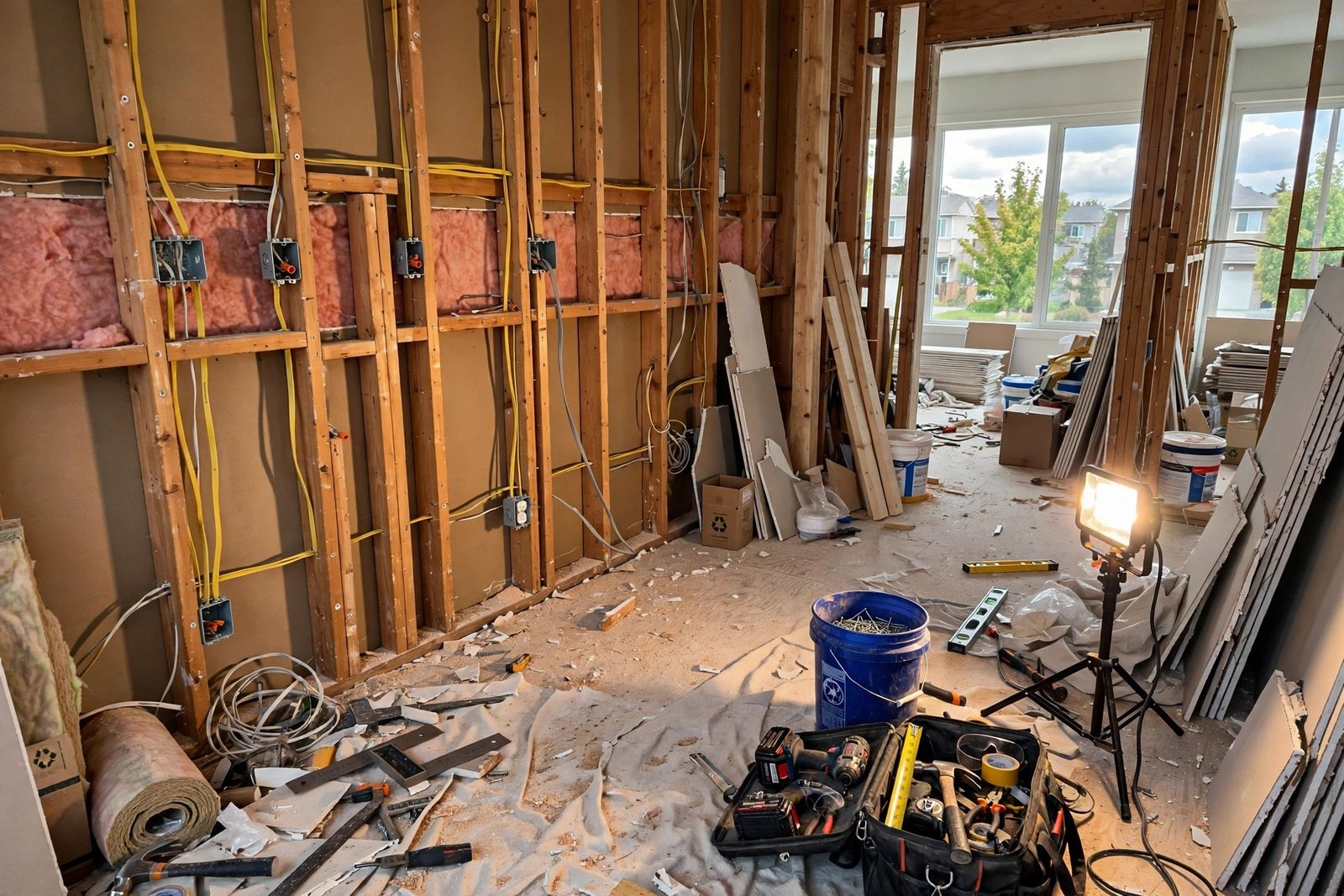
The Permit Question: Two Langleys, Two Building Departments
Most people only learn this late. Their contractor asks which Langley they’re in. Blank stare back. No idea. Your address just says Langley. That tells you nothing. You could be in the City of Langley. Or out in the Township of Langley instead. The two are separate municipalities. Each one runs its own building department, uses its own application process, and sets its own fee schedule.
That split isn’t just on paper, either. You feel it in practice. The two departments don’t even ask for the same things. Processing differs too. Don’t hire anybody yet. Don’t apply for anything yet either. Just check which municipality your home actually sits in. Get that confirmed. Guessing wrong costs weeks.
Past that line, though, the rules aren’t so different. Both sides work much the same. If it’s purely cosmetic, you generally don’t need a permit at all. Painting counts. Swapping cabinet doors counts. New counters in the same layout, hardware changes, all that counts too. Touch the structure and it’s a different story. Same if you’re into the plumbing. Or the electrical. Moving a wall triggers it. Relocating a sink triggers it. Alter a window opening and you’ve triggered it too. Adding circuits does the same thing. Change the structure and you need a building permit. Plumbing gets its own trade permit on top. Electrical does too.
Timing belongs in your plan from day one. Permits don’t come back fast here. Processing commonly takes several weeks. Local contractors usually allow roughly 3–5 weeks for kitchen permits. Bathrooms too. Build that wait into your start date. That 5 weeks goes in upfront, not tacked on at the end after the cabinets are already ordered. And treat one claim as a warning sign wherever you hear it. A contractor who insists that a renovation involving layout changes requires no permits at all is waving a red flag, in the City and in the Township alike.
How Langley Homeowners Keep Costs Under Control
Good budgets in this market rarely come from one big saving. What works is four or five smaller calls. Made early. Back when changing your mind still costs nothing.
Hold the footprint. Same sink. Same range. Same walls. That choice alone saves you real money. You’re keeping $10,000 or more in your pocket with it. Why? Plumbers stay out of the floor. Structural work never even gets onto the quote.
Before you price a full cabinet replacement, stop. Look hard at refacing instead. Properly look at it. Are the boxes solid? Layout already work? Then don’t rip them out. New doors change the whole room. Drawer fronts too. Fresh veneer, far less than new cabinetry, and it looks transformed. Not sure if yours qualify? The cabinet refacing vs replacing guide shows you how to judge. And in BC you’ll commonly pay $4,000–$12,000 for it. A fraction of a full cabinet package.
Spend it where people actually gather. Don’t spread it everywhere. An island earns it. Put a premium surface on there and you’ll use it every day. Breakfast. Homework. Guests standing around it with a drink, because that’s where everybody ends up. The perimeter doesn’t need that. Durable mid-range stuff runs fine there, and nobody feels shortchanged. Spending this way protects the room’s focal point while trimming the total in places nobody studies closely.
Protect the plan with a contingency, and size it to the house. A reserve of 10–15% is the standard advice in this guide, and older City of Langley homes are exactly why that advice exists. Older than the newer subdivisions? Then don’t go low on it. Lean right up to a full 15% instead. You just can’t see behind a wall. Not until somebody opens it. And the oldest houses? They’re the ones that surprise you.
Planning the Job Before the Quotes Arrive
Langley pricing stops feeling mysterious once three decisions are locked. Decide the scope. Sort the cabinets out next. And the layout. Does it move or stay? Get those answers locked in and quotes stop scattering. They land close together, comparable, instead of tens of thousands apart. And permits? That stops being a mid-project scramble. It’s just a quick check. Which Langley are you actually in?
Want a second pair of eyes on scope? Get them before you collect quotes. You can reach the team at (236) 613-0038. Have those three decisions ready when you call. The conversation gets useful much faster that way.
Frequently Asked Questions
How much does a kitchen renovation cost in Langley, BC in 2026?
Most full Langley jobs? They fall between $35,000 and $80,000. A typical mid-range project lands near $50,000–$55,000, that’s the number you’ll hear most. Keep the layout you’ve got and do a refresh instead? That’s $15,000–$30,000. Gut it and move the layout around and you’re starting at about $80,000. Add premium finishes into that picture and you can climb past $140,000, easily.
Is a kitchen renovation cheaper in Langley or Abbotsford?
Abbotsford usually comes in a little lower. A mid-range kitchen there runs roughly $34,000–$72,000. Langley’s typical range sits higher. Blame the labour. It drifts up toward Vancouver rates as you head west through the Fraser Valley.
Do I need a permit for a kitchen renovation in Langley?
Same layout, purely cosmetic? Cabinets, counters, doors, paint? You generally don’t need a permit for any of that. Move a wall, though, and it’s permits. Relocate the plumbing, add electrical circuits, same thing. And you don’t apply to just anywhere. It’s either the City of Langley or the Township of Langley, whichever municipality your home actually sits in.
How long does a kitchen renovation take in Langley?
A mid-range Langley kitchen typically needs 6–10 weeks of construction after permits are issued and materials are on site. Permit processing comes before that clock starts and commonly adds 3–5 weeks, so the calendar from application to finished kitchen is longer than the build time alone.
What is the cheapest way to update a Langley kitchen?
Sound boxes? Layout works? Then reface, don’t replace. New counters on top of that and you’ve got the biggest change you can buy for the least spend. Refacing itself commonly runs $4,000–$12,000. Pair it with quartz counters and most refresh jobs stay under $20,000 in total. No renovation permit needed. And the dust? Nothing like a full renovation, not even close.