
Almost every basement suite, every garage conversion, and every “we should add a bathroom downstairs” conversation runs into the same question early: what does it cost just to get the pipes in? Not the tile, not the vanity — the rough-in: the drains, vents, and water lines hidden in the walls and under the floor that everything else depends on.
Rough-in pricing confuses people because plumbers quote it three different ways — per fixture, per bathroom, or as part of a whole project. Here is the 2026 BC math in all three, plus the basement-specific costs that catch suite builders off guard.
1. What “Rough-In” Actually Includes
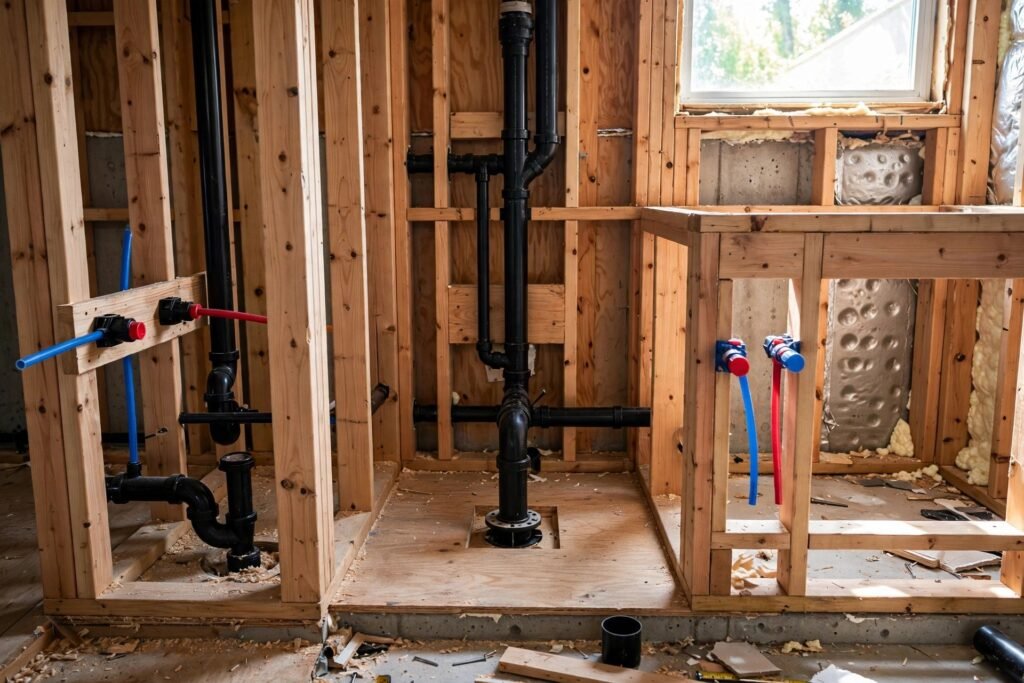
The rough-in is everything that happens before fixtures exist:
- Drain lines (ABS in most BC homes) run from each fixture to the main stack or sewer, sloped so gravity does the work — typically a quarter inch of fall per foot on smaller lines.
- Vent lines up through the roof or tied into an existing vent, so drains flow without gurgling or siphoning traps dry.
- Water supply lines (usually PEX) brought to each fixture and capped.
- The inspection. The municipality inspects and approves the work before walls or floors are closed over it.
It does not include fixtures, faucets, or setting them — that is the finish (or trim-out) stage, priced separately. When you compare quotes, the first question is always whether the number is rough-in only or rough-in plus finish.
2. The 2026 BC Price Ranges
| Scope | 2026 planning range | Notes |
|---|---|---|
| Per fixture, open access (new framing) | $1,000–$1,500 per fixture | Toilet, vanity, tub/shower each count as one |
| Per fixture, renovation conditions | $1,200–$1,800 per fixture | Working around finished structure costs more |
| 3-piece bathroom, above grade, near existing plumbing | $3,500–$6,500 | The friendly scenario |
| 3-piece bathroom, basement | $5,000–$9,000 | Concrete cutting + ejector usually included in the spread |
| Sewage ejector pump system (if required) | $1,500–$3,500 | Basin, pump, vent, check valve, install |
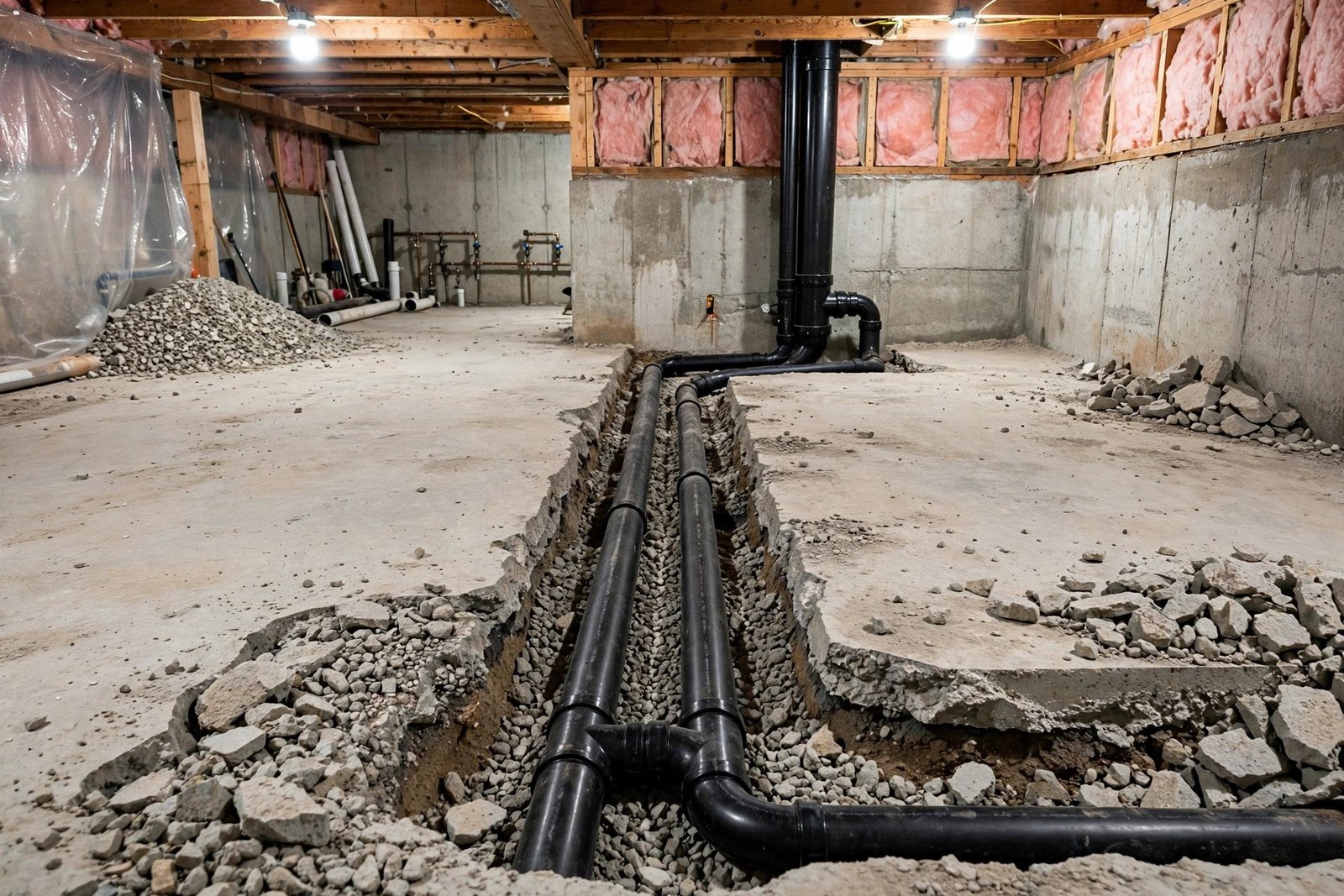
| Concrete cutting and trenching to the stack | $800–$2,000 | By distance and slab conditions |
| Municipal plumbing permit | $200–$500 | Varies by city; your plumber usually pulls it |
The single biggest cost driver is distance. A bathroom roughed in against the wall that already carries the main stack is a modest job. The same bathroom on the opposite side of the basement — 25 feet of trenched drain line away — is not. Plumbers are not being vague when they say “it depends”; the pipe run is the price.
3. The Basement Problem: When the Sewer Is Higher Than Your Bathroom
Gravity drainage needs the fixture drains to sit above the line they drain into. On an upper floor, that is automatic. In a basement, it depends on how deep your sewer leaves the house — and in many Abbotsford homes, the basement floor sits close to or below that line.
Three scenarios, cheapest to priciest:
- The sewer is deep enough. Drains are trenched under the slab with proper slope straight to the main line. Standard pricing, plus the concrete work.
- The sewer is too shallow for a toilet, but fine for gravity on some fixtures. Solutions get creative — raised platforms exist, but they are a compromise most people regret.
- An ejector system is required. A sealed basin set into the floor collects waste, and a sewage ejector pump lifts it up to the main line. Budget $1,500–$3,500 for the system installed, plus a bit of ongoing reality: pumps have a lifespan (often 7–10 years), they need a vent and a check valve done right, and they make a brief noise doing their job.
A fourth option exists where trenching is brutal: a macerating toilet system that grinds and pumps waste through a small line. It avoids breaking the slab and typically costs less than a full ejector installation, at the price of a specialty fixture with its own maintenance. For a rental suite bathroom that will see tenant use for decades, most plumbers steer you to the conventional ejector or gravity setup instead.
If you are pricing a suite, this is the line item to nail down first — it swings the whole basement renovation budget by thousands.
4. Permits and Inspections in BC
Plumbing rough-in work in BC requires a municipal plumbing permit and a passed rough-in inspection before anything is covered. A few specifics worth knowing:
- In most BC municipalities, the permit for this work is pulled by a licensed plumber. Their licence number rides on the job, which is exactly what you want.
- Technical Safety BC does not regulate plumbing — it handles gas and electrical. Plumbing is your city’s building department, which for Abbotsford projects means the City’s permits and inspections process.
- Adding a bathroom to a legal suite layers the plumbing onto the suite’s own permit requirements. The rough-in is one inspection inside a bigger approval — our basement suite permit guide walks the sequence, and the legal suite requirements guide covers what makes the finished suite compliant.
- Inspectors check slope, venting, pipe sizing, and support. Failed rough-in inspections are almost always venting or slope — both are layout decisions, which is why a plumber who has roughed in a hundred basement bathrooms prices differently from one who has done three.
Budget the 10–20% contingency every experienced renovator carries on plumbing: opening a slab or a wall in an older home regularly reveals corroded cast iron, a surprise junction, or drains that were never right to begin with.
5. Rough-In Is Not the Bathroom: Total Plumbing Budget
To keep expectations straight, a new basement bathroom’s total plumbing spend usually looks like:
- Rough-in: $5,000–$9,000 (this article)
- Fixtures (toilet, vanity faucet, tub/shower and valve): $800–$3,000+ depending on taste
- Finish plumbing (setting fixtures, connecting, testing): $1,200–$2,500
That is plumbing alone, before framing, waterproofing, tile, and electrical. It is also why the rough-in decision — where the bathroom goes relative to the stack — is the most consequential money decision in a basement project. Moving a planned bathroom six feet closer to the stack can save more than any fixture negotiation ever will.
6. Getting Quotes That Compare Properly
Ask each plumber for the same breakdown: per-fixture or per-bathroom price, whether concrete cutting and slab patching are included, whether the ejector (if needed) is in the number and which model, permit handling, and whether finish plumbing is quoted or separate. Three quotes in that format will cluster — and the outlier, high or low, will explain itself.
Frequently Asked Questions
How much does plumbing rough-in cost in BC in 2026?
Plan on $1,200–$1,800 per fixture under renovation conditions, or $3,500–$6,500 for a 3-piece bathroom above grade near existing plumbing. A basement bathroom runs $5,000–$9,000 once concrete cutting and, where needed, an ejector pump system are counted. Distance from the main stack is the biggest variable. All figures are 2026 planning ranges.
What is a sewage ejector pump and do I need one?
An ejector pump lifts basement wastewater up to a sewer line that sits too high for gravity drainage. Whether you need one depends on the depth of your home’s sewer relative to the basement floor — your plumber confirms it by checking the existing cleanout and stack. If required, budget $1,500–$3,500 installed. It is standard, proven equipment in BC basement suites, with a typical service life of 7–10 years.
Do I need a permit for a plumbing rough-in in BC?
Yes — a municipal plumbing permit, with a rough-in inspection before walls or floors are closed. In most BC cities the permit is pulled by a licensed plumber. Plumbing is regulated municipally; Technical Safety BC covers gas and electrical instead. Skipping the permit is especially risky in a suite, where unpermitted plumbing can unravel the suite’s legal status at sale or inspection.
Can I do my own plumbing rough-in in BC?
Homeowners can do some plumbing work on their own single-family home under a homeowner permit in some municipalities, but roughing in a new bathroom — especially below grade, especially in a suite — is where DIY stops making sense. The inspection bar is the same for everyone, slope and venting errors get buried under concrete, and a suite’s legality depends on documented, permitted work. Spend DIY effort on demolition and slab patching instead, under your plumber’s direction.
Why is a basement bathroom rough-in so much more than an upstairs one?
Three reasons: the floor is concrete, the sewer may be too high, and everything is farther from the stack. Upstairs, drains drop through open joist space. In a basement, the slab is cut and trenched, runs are longer, and an ejector system is often part of the answer. The $2,000–$3,000 spread between the two scenarios is mostly concrete and gravity, not markup.
Does rough-in cost include the fixtures?
No. Rough-in covers drains, vents, and supply lines, capped and inspected. Fixtures and the finish-stage labour to set them are separate — typically $800–$3,000+ for fixtures and $1,200–$2,500 for finish plumbing on a 3-piece bathroom. When a quote seems to include everything at a rough-in price, read it twice.
Put the Bathroom Near the Stack
The whole economics of adding a bathroom come down to one layout decision: how far the new fixtures sit from the plumbing that already exists. Get that right, choose gravity over a pump when the sewer depth allows it, permit it properly, and the rough-in is a predictable line item instead of the project’s surprise. Everything else in the bathroom — tile, vanity, fixtures — is a choice. The pipes are physics.
If this bathroom is part of a suite, read the legal basement suite requirements before the layout is finalized — ceiling heights, egress, and fire separation all interact with where the plumbing can go.
All costs in this article are 2026 BC planning ranges, not quotes. Plumbing work requires a municipal permit and inspection — confirm requirements with your city’s building department and use a licensed plumber.