
Start outside. On a wet Tuesday in November.
That’s when this choice stops being theoretical.
If you’re weighing vinyl vs fiber cement siding BC options for an Abbotsford house, you’re not really choosing a colour first. Or a profile. You’re choosing how your walls will handle months of driven rain. Damp shade. The odd freeze after a soak.
Vinyl costs less up front. Fibre cement feels more solid. It lasts longer on paper, too.
But paper isn’t the wall.
Installation details matter here. Flashing matters. And the north side of the house matters most of all, the side that never quite dries out in January. So this guide goes through cost. Lifespan. Upkeep. Rain performance, side by side. Then a plain verdict. By house type. By budget.
First, What You Are Actually Buying
Vinyl siding is a PVC panel. It clips over the wall.
It’s light. Fast to install. Coloured all the way through.
It expands and contracts with temperature, which is why installers leave room at the trim. They don’t drive fasteners tight, either. Get that wrong and panels can ripple. Buckle, even. Especially on a hot south wall.
Fibre cement is different. Cement, sand and cellulose fibre. Pressed into boards.
You may hear it called Hardie board. And hardie board vs vinyl siding cost comes up a lot. It’s heavier. Slower to cut. It needs painted or factory applied colour on the surface.
But it holds a crisp edge. It doesn’t melt back from a barbecue placed too close. Knock on it and it feels closer to painted wood.
Neither product fixes rot underneath, either.
Good installers strip first. Inspect. Repair. Then they add house wrap and flashing. If a quote skips that conversation, ask why.
Vinyl vs Fiber Cement Siding BC: The Numbers Side by Side
Money first. For most households it decides the shortlist.
For 2026 planning, allow $6 to $11 per square foot installed for vinyl. And $10 to $17 per square foot installed for fibre cement in BC. Those are planning ranges only. Not quotes. Removal of old siding can move the total. So can repairs. Trim detail, too.
| Factor | Vinyl siding | Fibre cement siding |
|---|---|---|
| Installed cost per sq ft, 2026 BC planning range | $6 to $11 | $10 to $17 |
| Typical lifespan | 25 to 40 years | 30 to 50 years |
| Routine maintenance | Wash once or twice a year, check caulking and trim | Wash yearly, check paint and caulked joints |
| Rain performance | Sheds water well if lapped and flashed right, but driven rain can get behind loose joints | Very stable in wet weather, but cut edges and joints need sealing and paint upkeep |
| Repaint needs | Almost never repainted, colour is through the panel | Can be repainted, factory colour often lasts 10 to 15 years |
| Impact and heat | Can crack in a hard cold impact and can warp near intense heat | Resists impact and heat better, but a board can crack if handled or fastened poorly |
| Weight and install speed | Light and fast, lower labour share | Heavy and slower, higher labour share and dust control needed when cutting |
Look at the gap honestly.
On a 1,500 square foot wall area, that per foot gap can mean roughly $6,000 to $9,000 more for fibre cement. Before extras.
Some owners get that back in longer life. Others would rather bank the difference. It depends, really. How long do you plan to stay?
Rain Is the Real Test Here
Forget showroom samples for a minute.
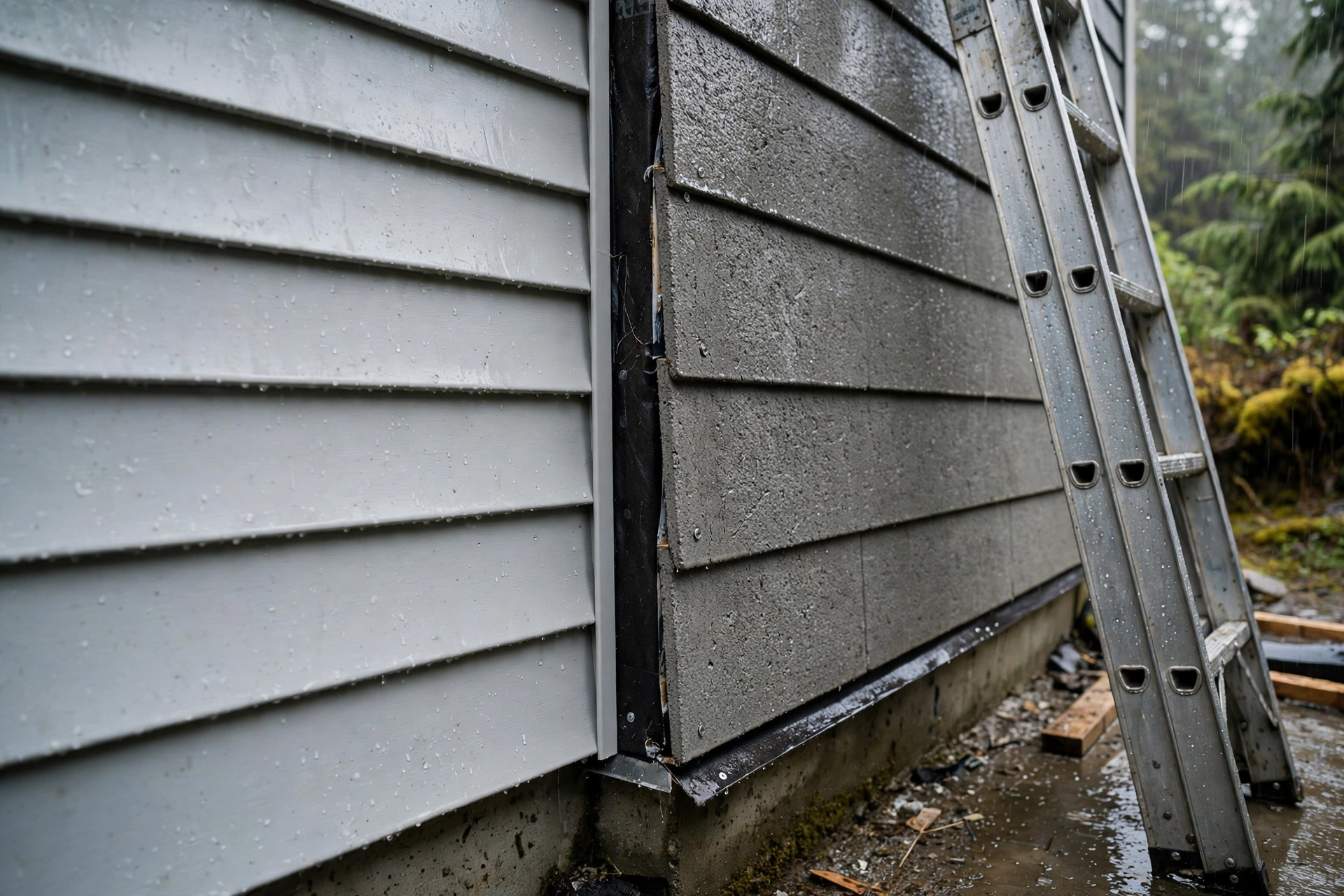
Picture rain hitting a wall sideways. In the Fraser Valley that’s not rare.
Autumn storms push water up under laps. Into joints around windows. Behind trim that looked fine in August. So the best siding for BC climate isn’t just a material. It’s a system. Laps. Flashings. House wrap. Kick out flashing where a roof meets a wall. And a small gap at the bottom so water can get out.
Vinyl does well when it’s installed loose enough to move. And tight enough in its laps to shed bulk water.
Its weakness isn’t the panel face. Water rarely goes through the panel itself.
Trouble starts at openings. At J channel that funnels water the wrong way. At spots where a panel has been cut short.
Fibre cement handles wet weather differently. The board itself is dense. Stable. It doesn’t rot the way wood does, and it holds paint in damp shade better than many owners expect.
But cut ends drink water if they’re not sealed. Caulked joints need watching.
If paint peels and a joint opens up on that shaded north wall, the board can take on moisture at the edge. Start to soften, over seasons. It forgives neglect for a while. Not forever.
Shade changes things too.
Green algae loves a damp vinyl wall that never gets sun. A gentle wash fixes it. Fibre cement in the same spot can grow mildew on tired paint, which is often a sign the paint film is near the end.
Pay attention to the wall you can’t see from the road. That’s usually the honest one.
Upkeep You Will Actually Do
Be realistic about yourself here.
Will you wash the house each spring? Check caulk lines every couple of years? Your answer should steer the pick as much as the price does.
Vinyl asks little.
A soft brush. Mild soap. A garden hose once or twice a year. And a walk around after big storms to spot a loose panel. No painting. No scraping.
But when the colour fades after a couple of decades, changing it is mostly a replacement decision.
Fibre cement asks more. It gives more back, though.
You still wash it. You still check joints. And every 10 to 15 years or so, depending on exposure and the original finish, you plan for paint. That’s a cost, yes. It’s also a chance to change colour completely. Fix tired caulking as part of the prep. Make a 20 year old wall look current again.
For the full breakdown of wall area, removal and trim costs behind either option, work through our siding replacement cost guide for BC before you compare quotes line by line. Prep is where wet climate jobs succeed or fail.
Painting Changes the Math More Than People Think
This is the part of the fibre cement siding vs vinyl debate that brochures gloss over.
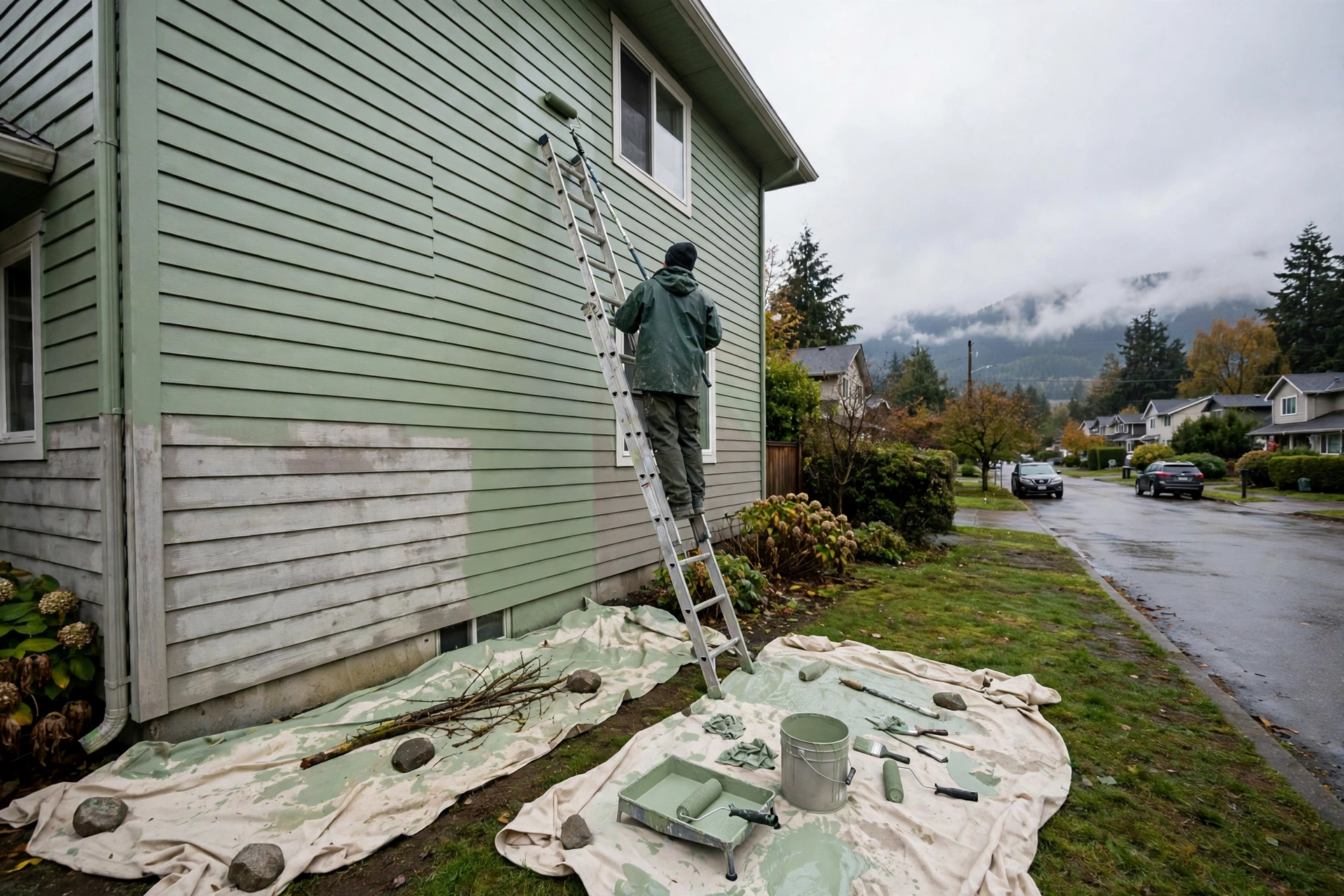
Vinyl isn’t designed to be painted.
Specialist products exist. But adhesion is unreliable as the panel moves with heat and cold. Dark paint can overheat it, too. Treat vinyl as a colour you commit to on day one.
Fibre cement is the opposite.
It arrives either primed for site paint or with a factory colour. Both routes can be repainted later. That means the lifetime cost picture includes at least one repaint. It also means you’re not locked in.
If you’re budgeting that future work, our exterior house painting cost guide for Abbotsford sets out current planning ranges for prep, paint and access. Add that figure to your spreadsheet now. Not as a surprise in year twelve.
Does painting erase the cost gap? No.
But you get a house that can be refreshed instead of replaced. When tastes change.
A Verdict by House and Budget
If you need the shortest honest answer, it’s this.
Tight budget? A rental? A house you expect to sell within ten years? Vinyl makes sense.
Lower install cost. Almost no upkeep. And buyers in that window rarely pay a premium for the board underneath the colour. Choose a mid tone that won’t show fade badly. Insist on careful flashing.
Staying put for 20 years or more? Fibre cement earns its keep.
The higher install bill is spread across 30 to 50 years. The wall feels more substantial. Looks it, too. And the repaint option keeps the house current without a full re-side.
Corner cases count.
A south wall that reflects heat off a nearby window may punish vinyl. Tricky access may narrow the price gap, because both products need the same scaffolding.
So pick based on years you’ll own the house. Whether you want a future colour change. How much upkeep you’ll truly do. Those three answers point to the right wall almost every time.
Siding Questions: Frequently Asked Questions
Is fibre cement worth the extra cost over vinyl in BC? For owners staying 15 to 20 years or more, it often is. The longer lifespan spreads the higher install cost over more years. The repaint option helps, too. For a short hold or a tight budget, vinyl usually gives better value.
Which siding handles Fraser Valley rain better? Both shed rain well when flashing, house wrap and laps are done properly. Fibre cement is more stable. More solid in wet weather. But its cut edges and joints need sealing and paint upkeep. Vinyl sheds water on its face, yet loose joints and poor trim work can let driven rain behind it.
Can you paint vinyl siding if you get tired of the colour? It’s possible with specialist products. But it’s not a reliable long term plan. Dark colours can cause heat problems for the panel, too. Most owners should treat vinyl colour as permanent for the life of the siding. If a future colour change matters to you, fibre cement is the safer pick.
How long will each type last on a house in Abbotsford? Plan on 25 to 40 years for vinyl. And 30 to 50 years for fibre cement. That’s assuming sound installation and basic upkeep. Shaded damp walls shorten both figures. So do failed caulking and ignored flashing.
Does fibre cement need a lot of maintenance? Not a lot. But more than vinyl. Expect a yearly wash. Checks of caulked joints. A repaint roughly every 10 to 15 years, depending on exposure and finish. That repaint also refreshes the whole exterior.
Ready to Price Your Walls? Start With the Prep List
Before you ask for any number, walk the house. Phone camera in hand.
Photograph soft trim. Cracked panels. Every spot where a roof line meets a wall. Note which walls stay damp. That record makes quotes more comparable. It keeps the focus on prep.
If you’re still sorting through vinyl vs fiber cement siding BC choices after that walk, a quick call can help you sort budget, timing and which product fits your years in the house. Call (236) 613-0038 to talk through your siding plans and the next step for your home.