
Fraser Valley weather is hard on siding. Wind-driven rain for months. Damp winters. The odd windstorm. It all works into every seam. After 20 or 30 years the wall shows it, too. Warped vinyl. Cracked stucco. Paint peeling off fibre cement. Replacing siding is one of the bigger exterior jobs a homeowner takes on. It touches the whole building envelope. And in BC it comes with a rule most homeowners have never heard of — the rainscreen requirement. What follows: what full siding replacement costs in BC in 2026, how the three common materials compare, and what’s on the invoice beyond the siding itself.
The short version: installed, expect roughly $6–$12 per square foot for vinyl, $10–$18 per square foot for fibre cement, and $9–$16 per square foot for stucco in BC in 2026. For a typical detached home with 1,500–2,000 square feet of wall area, that puts full replacement around $10,000–$20,000 (vinyl), $18,000–$32,000 (fibre cement), or $16,000–$28,000 (stucco) — before extras like tear-off, trim, and scaffolding.
1. Siding Replacement Costs at a Glance
All-in installed prices per square foot of wall area (material + labour), 2026 BC planning ranges:
| Material | Installed per sq ft | Typical house total (1,500–2,000 sq ft wall) | Installed lifespan |
|---|---|---|---|
| Vinyl siding | $6–$12 | $10,000–$20,000 | 25–40 years |
| Fibre cement (Hardie-style) | $10–$18 | $18,000–$32,000 | 40–50+ years |
| Stucco (over rainscreen) | $9–$16 | $16,000–$28,000 | 40–50+ years with maintenance |
The ranges are wide. Why? The same product, installed simply or installed properly, is a different job. Two-storey homes cost more per square foot than ranchers. Scaffolding adds up. So does fall protection. Houses with lots of corners are pricier than boxy ones, too. Gables. Bump-outs. Every corner means cutting, flashing, and finishing time.
One number to keep in mind. Your contractor prices by wall area. Not floor area. Take a 2,000 sq ft two-storey home. Once windows and doors come out, it usually has roughly 1,800–2,200 sq ft of wall. And a quote built on a suspiciously low square footage? It’s usually quoting floor area. Or materials only. Ask.
2. Vinyl vs Fibre Cement vs Stucco: The Honest Comparison
Vinyl siding is the most common replacement choice in the Fraser Valley. Mostly, it’s the price. Modern vinyl looks considerably better than the thin, chalky stuff from the 1990s. Thicker panels now (0.046″ and up). Deeper shadow lines. Board-and-batten profiles that read as wood from the street. It never needs painting. It washes clean with a hose. And it goes up fast, which keeps labour down. The trade-offs are real, though. Dark colours can fade in the sun. Cheap thin vinyl warps, and it looks exactly as cheap as it is. It dents, too, under impacts like stones thrown from a mower. Already have vinyl? If it lasted 25 years, replacing it with good-quality vinyl is a reasonable, honest choice.
Fibre cement is the premium mainstream choice. James Hardie is the brand most people know. There are others. The board itself is cement and fibre, and it resists rot. Insects, too. Fire as well — and that fire rating matters more as Valley summers get drier and wildfire smoke becomes a regular season. Pre-finished (ColorPlus-style) boards arrive with a factory paint job. It typically outlasts field painting by years. Primed boards are different. They need painting every 10–15 years. The board is heavier than vinyl. Slower to cut. It produces silica dust when cut, so labour runs noticeably higher. It also takes impact better than vinyl. And it holds paint longer than wood. Ask most contractors and they’ll tell you the same thing. If you plan to stay in the house, it’s the best long-term value going.
Stucco has a different look. Cement-based stucco over a rainscreen, that is — not the face-sealed product of the leaky-condo era. A smooth, plastered finish. It suits certain house styles. Some strata developments, too. The work is labour-intensive. Metal lath. Scratch and brown coats. A finish coat. Cure times between each. It needs repainting roughly every 10 years to keep the surface sealed. Hairline cracking? Normal. Mostly cosmetic. Its real vulnerability is moisture behind the system. That’s why the rainscreen cavity (section 3) is non-negotiable.
For most Fraser Valley homes, the decision really comes down to vinyl and fibre cement. Vinyl? Budget, speed, low maintenance. Fibre cement? Lifespan. Fire resistance. How it holds paint. Stucco enters the picture when the house style calls for it. And only over a proper rainscreen.
3. The Rainscreen Rule: Why BC Siding Jobs Cost More Than You’d Expect
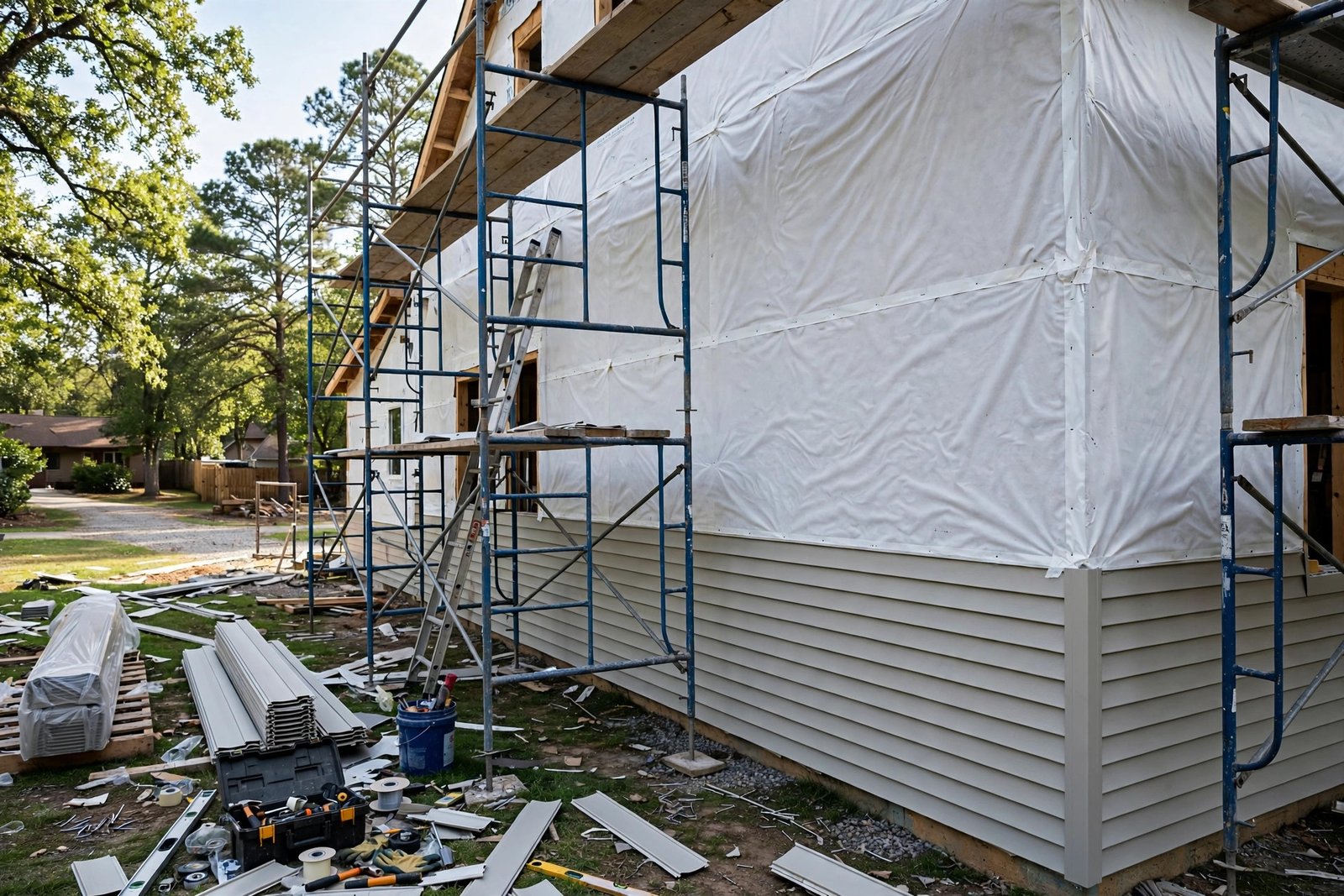
This section explains a chunk of your quote. Back in the 1980s and 90s, BC went through a wave of building-envelope failures. The “leaky condo” crisis. Face-sealed cladding trapped moisture against the structure. The structure rotted from behind. The response to all that changed how siding goes on houses in this province.
The BC Building Code now generally requires a rainscreen cavity behind cladding on residential buildings in high-exposure areas, which includes most of the Fraser Valley: strapping that holds the siding off the sheathing, creating a drained and vented air gap. Rain gets behind the siding? It drains down and out. It doesn’t soak into your wall. Behind the cavity sits the house wrap — the weather-resistant barrier, or WRB. That’s the second line of defence.
Put plainly: your siding quote includes building a proper wall assembly. Not just nailing boards to a wall:
- House wrap (WRB): roughly $1–$2.50 per square foot installed — taped and lapped so wind-driven rain sheds down and out.
- Rainscreen strapping: roughly $1–$2.50 per square foot installed — the cavity itself.
- Flashing at every window, door, deck ledger, and roof junction: included in a good quote, skipped in a bad one. Failed flashing is the number-one source of envelope leaks.
If a quote does not mention the rainscreen cavity or the weather barrier, that is not a bargain — it is a missing chunk of the job. Confirm your wall assembly requirements with your municipality, since code application can vary by project. This is also why you should be cautious about installing new siding directly over old: in most cases the old cladding comes off so the WRB and cavity can be inspected and rebuilt properly.
4. What Is on the Invoice Beyond the Siding
The siding itself is usually about half the invoice. Here is the rest:
| Line item | 2026 planning range |
|---|---|
| Tear-off and disposal of old siding | $1,500–$4,000 for a typical home |
| House wrap + rainscreen strapping | $2–$5 per sq ft of wall combined |
| Trim: corner boards, window/door casings, belly bands | $3,000–$8,000 |
| Soffit and fascia replacement (often done at the same time) | $3,000–$9,000 |
| Scaffolding / two-storey access | $1,000–$3,000 |
| Paint (for primed fibre cement or stucco finish) | $4,000–$9,000 |
| Permits | $200–$800, varies by municipality |
Trim is where the finish quality lives. New siding against tired 30-year-old window trim? It looks unfinished. Most good crews replace or wrap the trim as part of the job. Around windows and doors, the common approach is aluminium or PVC trim wrap. It never needs painting. It cleans up the look.
Do the windows at the same time if they are due. Siding comes off right to the sheathing. That’s the ideal moment to replace windows. The new flanges flash into the WRB properly. The trim goes on once. Do the windows two years after the siding instead? You’re cutting into a finished wall. If your windows are nearing the end of their life, read our window replacement cost guide before you book the siding crew. The roof follows the same logic. Near its end? Coordinate the projects. Don’t tear into fresh flashing a year later. Our roof replacement cost guide covers what that costs.
5. Permits, Timing, and Choosing a Contractor
Permits: most Fraser Valley municipalities treat full siding replacement as a project that needs a building permit. Particularly when it changes the wall assembly. Or the exterior appearance. Requirements vary by city. Confirm with your municipality before work begins. Don’t assume it’s cosmetic.
Timing: a full siding replacement on a typical detached home takes roughly 2–4 weeks of construction once materials are on site. Weather permitting, that is. Rain doesn’t stop the job entirely. It slows the critical stages, though — the WRB and flashing work. Most crews won’t wrap a wall in a downpour. Spring and early fall are the sweet spots. Late fall and winter? Doable. Slower.
Contractor red flags, specific to siding work:
- No mention of the rainscreen cavity or WRB in the quote — see section 3.
- Quoting by floor area instead of wall area, or quoting materials-only without labour.
- Planning to install new siding over old without opening the wall — you lose the WRB inspection and the rainscreen, and trapped moisture is how walls rot.
- No plan for window and door flashing details — the most common envelope failure point.
- A quote dramatically below the others. Siding is labour-heavy; a quote 30% under the pack is missing labour, not finding efficiency.
Get three quotes. Ask each contractor to walk the wall with you. Have them name what’s behind the current siding. The one who brings up flashing, WRB, and the rainscreen before you ask? Usually the one you want.
Frequently Asked Questions
How much does siding replacement cost in BC in 2026?
Plan on $6–$12 per square foot installed for vinyl. Fibre cement runs $10–$18. Stucco, $9–$16. Take a typical detached home with 1,500–2,000 sq ft of wall area. The totals land at roughly $10,000–$20,000 for vinyl and $18,000–$32,000 for fibre cement. Stucco comes in at $16,000–$28,000. All before trim, soffit/fascia, and tear-off extras.
Which siding lasts longest in the Fraser Valley?
Fibre cement and properly installed stucco both outlast vinyl. Think 40–50+ years, against 25–40 for vinyl. Where’s fibre cement’s edge? Rot resistance. Insect resistance. A factory finish that holds up. Stucco’s edge is different. A continuous, seam-free surface. Vinyl’s case isn’t lifespan at all. It’s price. And zero painting.
Is fibre cement worth the extra cost over vinyl?
Usually, yes — if you plan to stay in the home 15+ years. The installed price runs roughly 50–80% more than vinyl. What do you get for it? A longer lifespan. Better fire resistance. A finish that holds paint far longer than primed alternatives. Selling in five years instead? Mid-range vinyl is the more rational spend. Buyers price the look. Not the material.
Do I need a permit to replace siding in BC?
In most Fraser Valley municipalities, yes. At least a building permit application. Full siding replacement typically triggers a permit. Especially when the wall assembly changes. Requirements and fees vary by city, so confirm with your municipality before the old siding comes off. One more thing. Work that changes exterior appearance can raise strata or development-permit questions in some areas.
Can new siding go over the old siding?
Not recommended in BC. Often not allowed by the installer, either. The old cladding should come off. That way the house wrap gets inspected. The rainscreen cavity gets installed. Any damaged sheathing gets repaired. Install over old siding and you skip the weather barrier rebuild. The very layer that protects your wall. You hide problems instead of fixing them. Tear-off and disposal typically adds $1,500–$4,000 to a typical home.
Should I repaint instead of replacing my siding?
Repainting is the right call when the siding is sound and the problem is cosmetic. A fresh exterior paint job runs a fraction of replacement cost. Our exterior painting cost guide has the ranges. Replace when the siding is warped. Cracked. Rotting. Letting water in. Or when the weather barrier behind it has failed. Paint fixes looks. Replacement fixes the wall.
What is a rainscreen, in plain terms?
A vented air gap between your siding and your wall. Strapping holds the cladding off the sheathing. Water gets behind the siding? It drains down and out. It doesn’t soak into the structure. The BC Building Code generally requires this cavity behind cladding in high-exposure areas like the Fraser Valley. A direct response, that requirement, to the leaky-condo building failures of the 1990s. It’s the single most important part of a siding job. And you’ll never see it once the boards are on.
Look at the Wall, Not Just the Board
The material choice gets all the attention. The wall assembly decides whether the job lasts. A vinyl job with proper WRB, flashing, and a rainscreen cavity will outlast a fibre cement job slapped over a compromised wall. Every time. Get three quotes. Make the rainscreen part of the conversation. And coordinate windows and roof while the wall is open.
Building code and permit requirements vary by municipality — confirm your project’s wall assembly and permit requirements with your city before work begins.