
A roof is the most expensive maintenance item on a BC house. It’s also the one Fraser Valley weather attacks hardest. Two hundred days of rain a year. Wind-driven storms off the valley floor. Moss that treats north-facing slopes like a garden. Our roofs live rougher lives than the national averages assume. Here’s what a replacement actually costs in BC in 2026 — by material, by roof size. Plus the local decisions that matter. Whether to convert an old cedar roof. And why your attic insulation is part of the roofing conversation.
The short version: architectural asphalt shingles — what most Abbotsford homes get — run $5–$9 per square foot of roof area, installed. Tear-off of the old roof included. A typical Fraser Valley home? 1,800–2,200 sq ft of roof. It lands at $10,000–$20,000 all-in.
1. Roof Replacement Costs by Material
Prices are per square foot of actual roof area (not floor area — pitch and overhangs make the roof bigger than the house), installed, including removal of one existing layer:
| Material | Per sq ft, installed | Realistic lifespan in the Fraser Valley |
|---|---|---|
| Architectural asphalt shingles | $5–$9 | 20–25 years |
| Premium/designer asphalt shingles | $7–$11 | 25–30 years |
| Cedar shakes / shingles (new) | $9–$14 | 25–30 years, with regular maintenance |
| Metal (standing seam) | $12–$20 | 40+ years |
| Torch-on / flat-roof membrane | $7–$12 | 20–25 years |
Basic three-tab shingles cost less. They’ve largely disappeared from BC replacements anyway. Architectural (laminate) shingles handle our wind and rain better. They’re the baseline every local roofer quotes.
2. What That Means by Roof Size
| Roof area | Asphalt (architectural) | Cedar (new) | Metal (standing seam) |
|---|---|---|---|
| 1,500 sq ft (smaller rancher) | $8,000–$13,500 | $13,500–$21,000 | $18,000–$30,000 |
| 2,000 sq ft (typical two-storey) | $10,000–$18,000 | $18,000–$28,000 | $24,000–$40,000 |
| 2,500 sq ft (larger home) | $12,500–$22,500 | $22,500–$35,000 | $30,000–$50,000 |
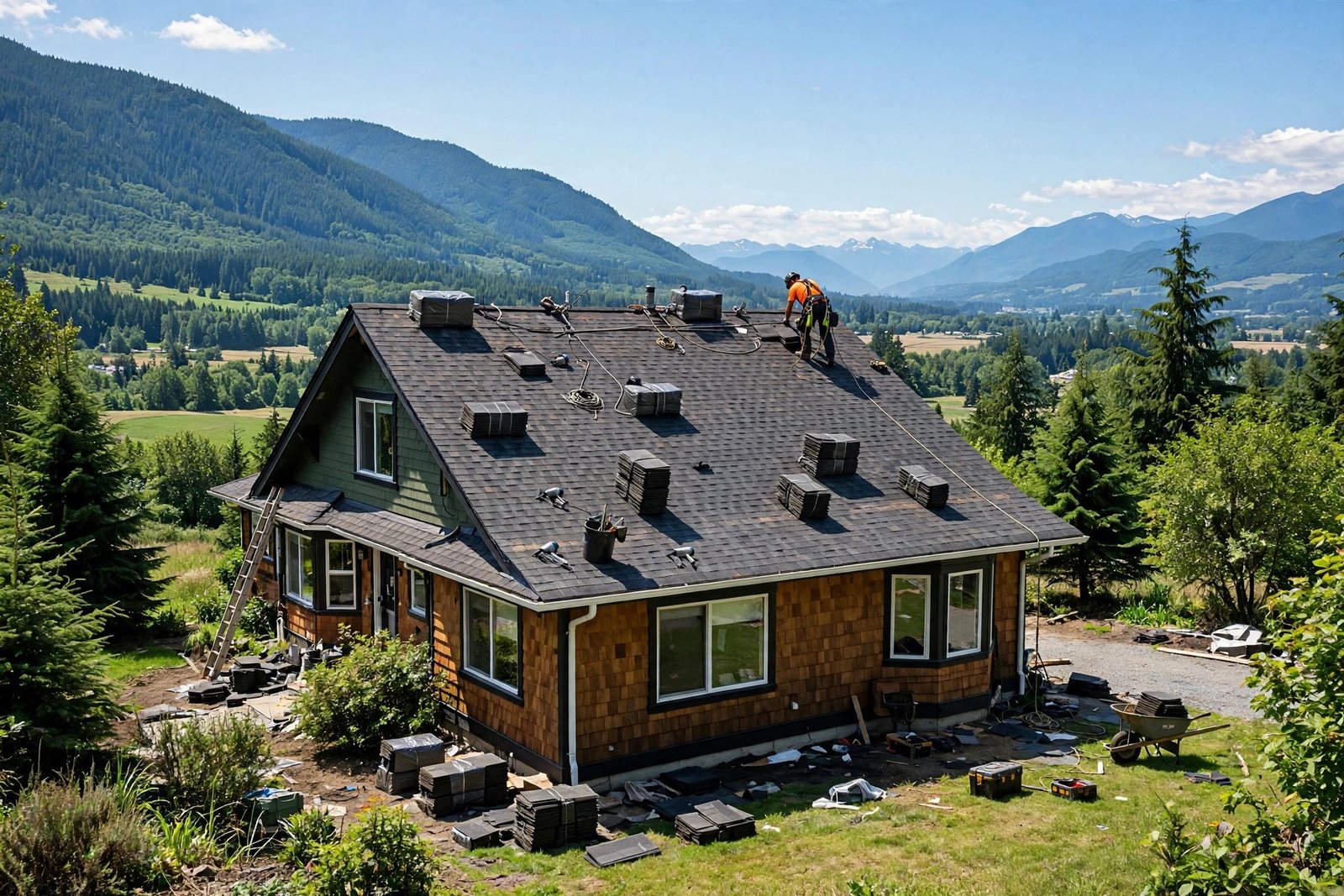
What’s inside a proper quote? Tear-off and disposal of the old roof. New underlayment. Ice-and-water shield at the eaves. Drip edge, flashing at chimneys and walls, ridge venting — and the shingles themselves. Decking repairs are the wildcard. Rotten plywood sheets turn up at tear-off and usually get charged per sheet, on top of the base price. On older Fraser Valley homes there are almost always a few.
3. The Fraser Valley Problem: Water, Moss, and Lifespan
Manufacturer ratings assume a kinder climate than ours. A shingle rated for 30 years? Here it commonly delivers 20–25 years in the Fraser Valley. Less on shaded, tree-covered lots — in Mission, in the hillside areas of Abbotsford. The mechanisms:
- Moss and algae. Moss doesn’t just sit there. Its roots pry up shingle edges. Moisture gets held against the roof. North and east slopes under tree cover go first. Spend slightly more on algae-resistant shingles — the copper or zinc-treated kind. Worth it here.
- Ventilation shortfalls. A poorly vented attic cooks shingles from below all summer. Come winter, it traps condensation instead. A good roofer checks soffit and ridge venting as part of the quote — skipping it shortens the new roof’s life.
- Debris and gutters. Cedar and fir debris holds moisture in valleys. Valley metal and clean gutters are cheap lifespan insurance.
Budget for a moss treatment every 2–3 years on shaded roofs. It is a few hundred dollars against a five-figure replacement.
4. Cedar-to-Asphalt Conversion: The Older Abbotsford Question
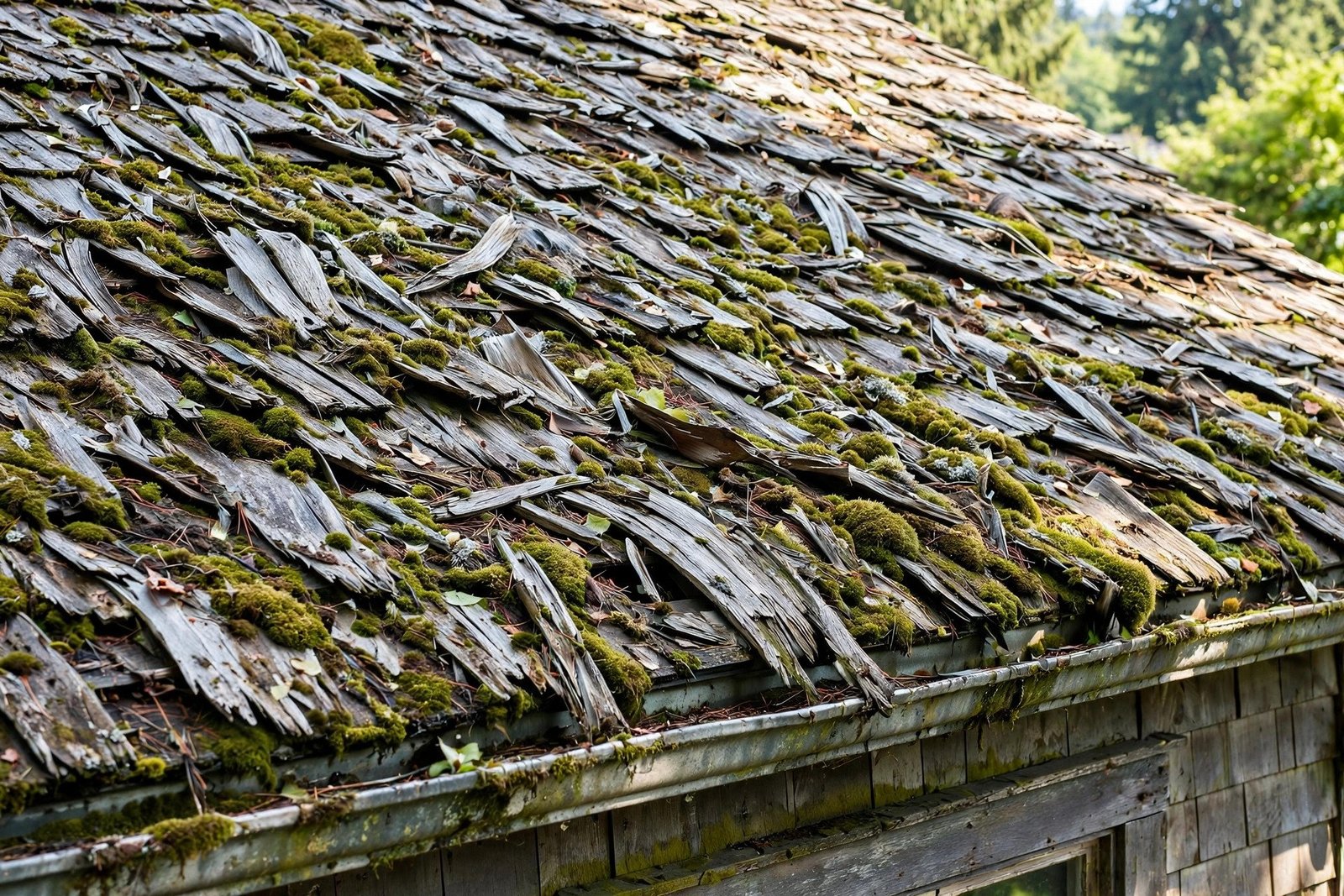
Drive the older neighbourhoods of Abbotsford — Clearbrook, the streets around Mill Lake — and you will see the last generation of cedar shake roofs reaching the end. Most owners convert to asphalt instead of re-shaking. Cost is the big reason — a new cedar roof runs roughly double the asphalt price. Maintenance is another. Cedar needs periodic cleaning and treatment in our climate. Then there’s insurance. Some insurers charge more for older cedar roofs. Some decline them outright.
A conversion is not quite a standard replacement:
- Tear-off is heavier. Old shakes come off in greater volume, and disposal costs more.
- The deck may need work. Cedar was often installed over spaced strapping rather than solid plywood. Asphalt shingles need a solid deck, so conversion can add plywood sheathing across the whole roof — a real line item, sometimes $2,000–$5,000 on an average home.
- Ventilation gets fixed at the same time. Many cedar-era attics are under-vented; conversion is the moment to correct it.
For a typical home, plan on $12,000–$22,000 for the full cedar-to-asphalt conversion. Heavier tear-off included. Possible re-decking too. And get the sheathing question answered in the quote. Not discovered on tear-off day.
5. Your Roof and Your Insulation Are One System
A roof replacement is the easiest moment to fix the attic below it. The crew already has the roof open. And a thin attic does real damage up there — heat escapes, frost melts unevenly, condensation builds, shingle life shortens. So before the new roof goes on, check two things. Attic insulation levels. Bathroom fan ducting. (Fans venting into the attic instead of outside are a classic Fraser Valley moisture source.) Our insulation cost guide for BC covers what an attic top-up costs and the CleanBC insulation rebates that can apply. That work pairs naturally with a re-roof — and with the broader upgrades in our energy-efficient home upgrades guide.
Frequently Asked Questions
How much does it cost to replace a roof in BC in 2026?
Most BC homeowners pay $10,000–$20,000. That’s a full asphalt shingle replacement on a typical home — 1,800–2,200 sq ft of roof area, $5–$9 per square foot installed, tear-off included. Same house in cedar? $18,000–$28,000. Standing-seam metal runs $24,000–$40,000.
How long does an asphalt roof last in the Fraser Valley?
Plan on 20–25 years for architectural shingles here. The package might say 30. Believe the smaller number. Why? Constant moisture. Moss pressure. Shaded lots. It all shortens service life compared to drier regions. What helps a roof reach the top of its range: algae-resistant shingles, good attic ventilation, and a moss treatment every few years.
Is it cheaper to convert a cedar roof to asphalt?
Yes — usually by a wide margin. A cedar-to-asphalt conversion on an average home typically runs $12,000–$22,000 all-in. Replacing cedar with cedar? $18,000–$28,000. One catch. The conversion may need solid plywood decking laid over the old spaced strapping. That’s included in the range — but confirm it line by line in your quote.
Do I need a permit to replace my roof in BC?
Like-for-like re-roofing generally does not require a building permit. Not in most BC municipalities, Abbotsford included. No structural change is being made — that’s the logic. Structural repairs are a different matter. So are changes to the roof structure, or adding living space below it. And rules vary by municipality. A quick call to your building department before work starts is worthwhile.
Should I repair or replace my roof?
Replace when the roof is near the end of its service life. Shingles curling? Granules washing off across whole slopes? Leaks showing up from more than one source? That’s replacement territory. Repair is for local damage. A failed flashing. One storm-damaged slope. A single leak at a penetration. If the rest of the roof has years left, fix the spot. A roofer who recommends repair on an old roof is telling you something good about themselves.
Can a new roof go over the old shingles?
It is legal in some cases but rarely wise in the Fraser Valley. A second layer hides deck rot (common here), adds weight, traps moisture, and shortens the new roof’s life. It also saves less than people expect, since tear-off is a modest share of the total. For a roof you plan to keep 20-plus years, tear off and inspect the deck.
Compare Quotes Line by Line
Roofing quotes differ mostly in what’s quietly excluded. Compare them properly. Tear-off layers included. Underlayment type. Ice-and-water shield coverage. Flashing — replaced or reused? Ventilation work. The per-sheet price for decking repairs. The lowest total with the decking question left open is rarely the lowest final bill.
Roofing prices vary with pitch, access, and deck condition — get itemized quotes from local roofers before committing.