
Of all the ways to spend money on a house in the Fraser Valley, insulation is the one nobody photographs. It is also, dollar for dollar, usually the best-performing upgrade in the building. It lowers heating bills every month. It makes the cold bedroom over the garage livable. And right now? BC’s rebate programs will pay a meaningful slice of the bill.
This guide is insulation only — what each material costs installed per square foot, what the typical whole jobs run in Abbotsford-area homes, and exactly what the CleanBC, BC Hydro and FortisBC rebates pay in 2026 so you can net the numbers out.
1. Cost Per Square Foot by Material and Location
Installed prices vary by material first. Location second. A square foot of attic floor is cheap to cover. A square foot of finished wall is not — because the wall has to be opened. Or drilled and patched.
| Location & material | 2026 planning range (per sq ft, installed) | Typical target |
|---|---|---|
| Attic — blown-in fibreglass/cellulose top-up | $2.00–$3.50 | Bring total to about R-50 |
| Attic — new batts (open attic, reno) | $1.50–$3.00 | R-40 to R-50 |
| Exterior walls — dense-pack (drill & fill) | $3.50–$5.50 | Fill cavity, ~R-13–15 |
| Exterior walls — batts (walls open in a reno) | $1.50–$3.00 | R-20+ in 2×6 walls |
| Basement walls — rigid board or framed batts | $3.00–$6.00 | R-12 to R-20 |
| Closed-cell spray foam | $4.50–$7.00 | Rim joists, crawlspaces, tricky cavities |
| Open-cell spray foam | $2.50–$4.00 | Interior walls, sound + thermal |
And the jobs those numbers build into:
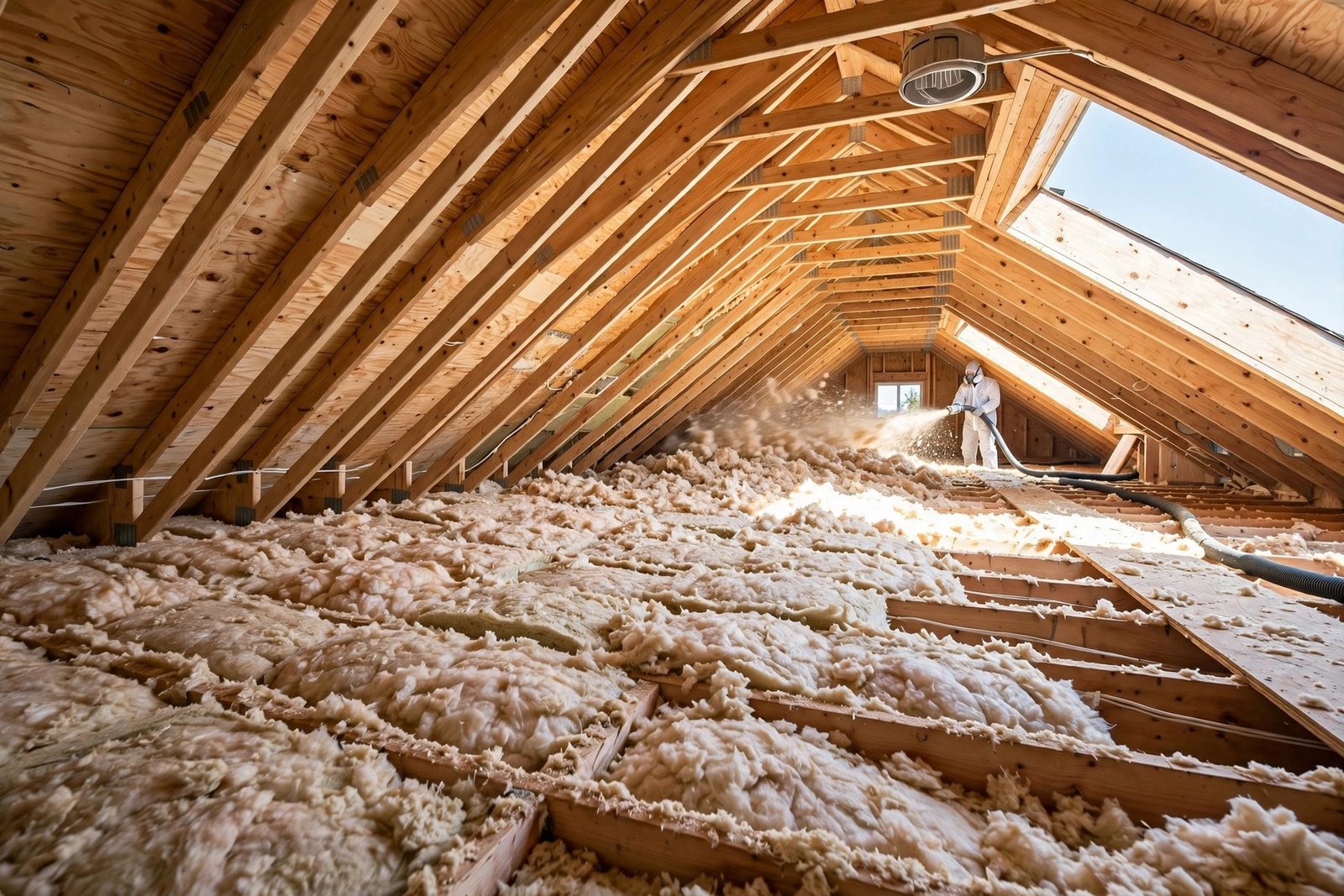
- Attic top-up, typical Abbotsford home (~1,000 sq ft attic): $2,000–$3,500
- Basement wall insulation, full perimeter: $3,000–$7,000
- Rim joist spray foam (the band where the house meets the foundation): $800–$1,800
- Air sealing package (attic plane, penetrations, hatch): $300–$800 — do this before or with any attic work
Two add-ons to budget for on attic jobs: removing old, damaged insulation runs $0.75–$1.50 per sq ft when it is needed, and adding soffit baffles or fixing bathroom fan venting that dumps into the attic is routinely discovered — and worth doing — while the crew is up there.
2. The Rebates: What CleanBC, BC Hydro and FortisBC Actually Pay (2026)
Insulation rebates in BC run through the Home Renovation Rebate Program and CleanBC Home Efficiency Rebates. BC Hydro and FortisBC administer them. Three conditions matter. Your home must be heated by one of the participating utilities — electricity, natural gas, propane or oil. The new insulation must add at least the minimum R-value listed for each location. And the application goes in within 6 months of the invoice date. Current per-location rates for insulation:
| Location | Rebate rate | Minimum R-value added | Maximum rebate |
|---|---|---|---|
| Attic (flat or cathedral ceiling) | $0.02 per sq ft | R-12 | $900 |
| Exterior wall cavities | $0.09 per sq ft | R-12 | $1,200 |
| Exterior wall sheathing | $0.09 per sq ft | R-3.8 | $1,200 |
| Basement / crawlspace walls | $0.09 per sq ft | R-10 | $1,200 |
| Exposed floor / floor over crawlspace / basement header | $0.07 per sq ft | R-20 | $1,000 |
Each location that earns at least $500 counts as one upgrade toward the program’s bonus for completing multiple upgrades — one more reason to pair an attic top-up with basement walls rather than doing them years apart.
Income-qualified households get substantially more. Under the CleanBC Better Homes Energy Savings Program, insulation rebates run up to $2,000 per location. Attic, wall cavities, wall sheathing, basement walls, exposed floors — each qualifies. That can cover most of a typical attic job. All of it, sometimes. Household income anywhere near the middle of the scale? Check eligibility at betterhomesbc.ca. Do not assume the standard rates are your ceiling.
Practical notes that decide whether a rebate actually lands:
- Rebates are calculated on R-value added, not R-value achieved — topping up from R-20 to R-50 earns on the R-30 difference.
- Pest damage or rodent tunnelling in the upgrade area must be dealt with first; applications stall until it is resolved.
- Keep the paid-in-full invoice, itemized with R-values and areas installed — the program requires it.
- Insulation for soundproofing or in outbuildings does not qualify — the upgrade has to reduce heat loss.
3. Where the Money Goes First: Priority Order
Budget covers one location this year? Spend it in this order:
- Attic. Heat rises. Access is easy. Cost per square foot is the lowest of any location. And most Fraser Valley homes built before 2000 sit at R-20 or less up there. The closest thing insulation has to a guaranteed win.
- Air sealing. Not insulation itself. It is the $300–$800 that makes insulation perform — sealing pot-light penetrations, plumbing stacks, and the attic hatch. And remember this: warm air leaking out carries moisture with it. That is how attics grow mould.
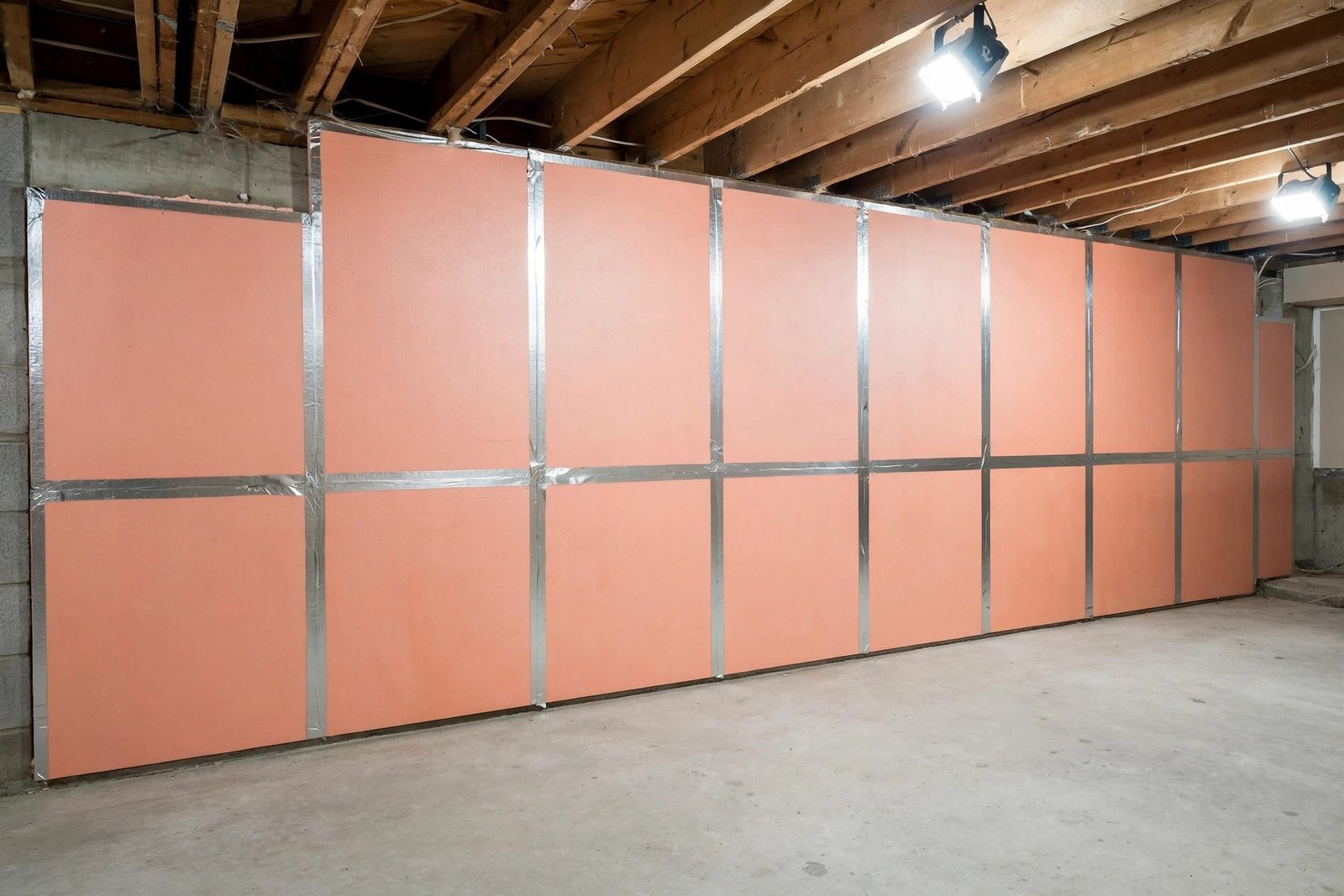
- Basement and crawlspace walls. Bare concrete is roughly R-1 — an uninsulated basement wall is a radiator running in reverse all winter. This upgrade is also what makes a finished basement feel finished, and it stacks with the work in our broader energy-efficient home upgrades guide.
- Rim joists. Small area, outsized draft source. Spray foam here is a half-day job with an immediate comfort effect on main-floor floors.
- Exterior walls. The most disruptive per dollar — best done when walls are already open in a renovation, or by drill-and-fill when they are not.
4. Material Choices, Briefly
- Blown-in (fibreglass or cellulose): the attic standard. It fills around trusses. Around obstructions, too. Cheapest per R-value, full stop. Cellulose packs denser. Fibreglass? Lighter over weak ceilings.
- Batts: cheapest to buy, most sensitive to installation quality. Gaps and compression gut their real-world performance — fine in an open wall when fitted properly.
- Rigid board: the basement and exterior-sheathing choice. What you get is continuous coverage. Coverage that interrupts thermal bridging through studs.
- Spray foam: the problem-solver. Closed-cell adds structure. A vapour barrier, too. And the highest R per inch of anything on this list. It earns its cost at rim joists, crawlspaces, and cathedral ceilings — and is usually overkill across a whole simple attic.
While crews are in the attic, check the roof from below. Worth it. Stained decking changes the plan. So does daylight at the eaves. Our roof replacement cost guide covers that end of the assembly, for when the news is not good.
5. What It Saves
Savings depend on how under-insulated the house started. But take a typical pre-2000 Fraser Valley home. Top the attic up to R-50. Insulate the basement walls. It commonly trims 10–20% off heating costs — and the comfort change is the part owners mention first. Now the payback. Against a net cost after rebates of roughly $1,500–$3,000 on the attic job, simple payback usually lands in the 4–8 year range. Shorter for electrically heated homes. Treat those as planning estimates, not promises.
Frequently Asked Questions
How much does attic insulation cost in BC in 2026?
A blown-in top-up runs $2.00–$3.50 per square foot installed, so a typical 1,000 sq ft attic costs $2,000–$3,500 including baffles and hatch work. Air sealing? It adds $300–$800. Worth every dollar. The standard rebate on that job is up to $900, and income-qualified households can receive up to $2,000 for the attic under the CleanBC Energy Savings Program.
How much insulation rebate can I get in BC?
Under the standard Home Renovation Rebate Program: up to $900 for the attic, $1,200 each for wall cavities, wall sheathing and basement/crawlspace walls, and $1,000 for exposed floors — each with minimum added R-values (R-12 attic and walls, R-10 basement, R-20 floors). Locations earning $500+ count toward a multi-upgrade bonus. Income-qualified households are a different story — under the CleanBC Energy Savings Program they can get up to $2,000 per location.
What R-value should my attic be in the Fraser Valley?
About R-50 is the working target for retrofits here, and it is what rebate-supported top-ups typically aim for. Many older Abbotsford homes sit at R-12 to R-20, so the top-up is substantial — blown-in depth of roughly 40–50 cm total, depending on material. Depth gauges fix that — your installer will mark them in the attic, so the application can be verified.
Is spray foam worth the extra cost?
In specific places, yes: rim joists, crawlspaces, and cathedral ceilings. Places where its air-sealing and high R-per-inch solve problems other materials cannot touch. Across a whole flat attic? Blown-in delivers the same R-value for roughly half the price. Spend the foam budget where the geometry is nasty.
Does the rebate require a specific contractor?
The programs require the work to meet their installation standards and documentation rules, and the invoice must show the R-values added and areas covered — which in practice means using a contractor familiar with the program’s paperwork. So confirm it before the job starts: will your installer supply a rebate-ready invoice? Retrofitting documentation after the fact is where applications die.
Can I top up insulation myself and still claim the rebate?
DIY installations generally do not meet the program’s documentation and installation requirements. The savings are thinner than they look, too — once rental blower logistics get counted, anyway. Most homeowners get better value a different way. Hire the attic out, rebate intact. Then spend your own effort on air sealing and the attic hatch, where the standards are simpler.
Start at the Top of the House
Insulation is unglamorous. Invisible, too. But once rebates are netted out, it is one of the few renovation spends that pays you back monthly. For decades. So top up the attic. Seal the leaks. Insulate the basement walls. Let the programs cover their share. And if the water heater is next on the mechanical list, our hot water tank replacement cost guide has the installed prices and its own rebate notes.
Rebate rates, caps and eligibility are as published in the Home Renovation Rebate Program and CleanBC Better Homes program terms verified in October 2026 — programs change, so confirm current details at betterhomesbc.ca before committing.