
Hot water tanks rarely fail at a convenient time. They fail on a Sunday, in winter, usually by leaking across the utility room floor — and the price spread between a like-for-like tank swap and a tankless conversion is big enough that it pays to know the numbers before you are standing in a puddle.
Here is what each option costs installed in BC in 2026, what drives the quote up, and how to decide whether to repair, replace like-for-like, or switch technology entirely.
1. 2026 Installed Prices by Type
These are installed prices — unit, labour, basic fittings, and removal of the old tank — for typical Fraser Valley and Metro Vancouver homes:
| Water heater type | 2026 planning range (installed) | Typical lifespan |
|---|---|---|
| Standard electric tank (40–60 gal) | $1,700–$2,800 | 8–12 years |
| Standard gas tank | $2,200–$3,600 | 8–12 years |
| Power-vent gas tank | $3,000–$4,500 | 8–12 years |
| Tankless (on-demand) gas | $4,000–$8,000 | ~20 years |
| Heat pump water heater | $3,500–$6,000 before rebates | 10–15 years |
A straightforward tank swap in the same spot, same fuel, same venting sits at the low end of its band. Everything in the next section pushes toward the top.
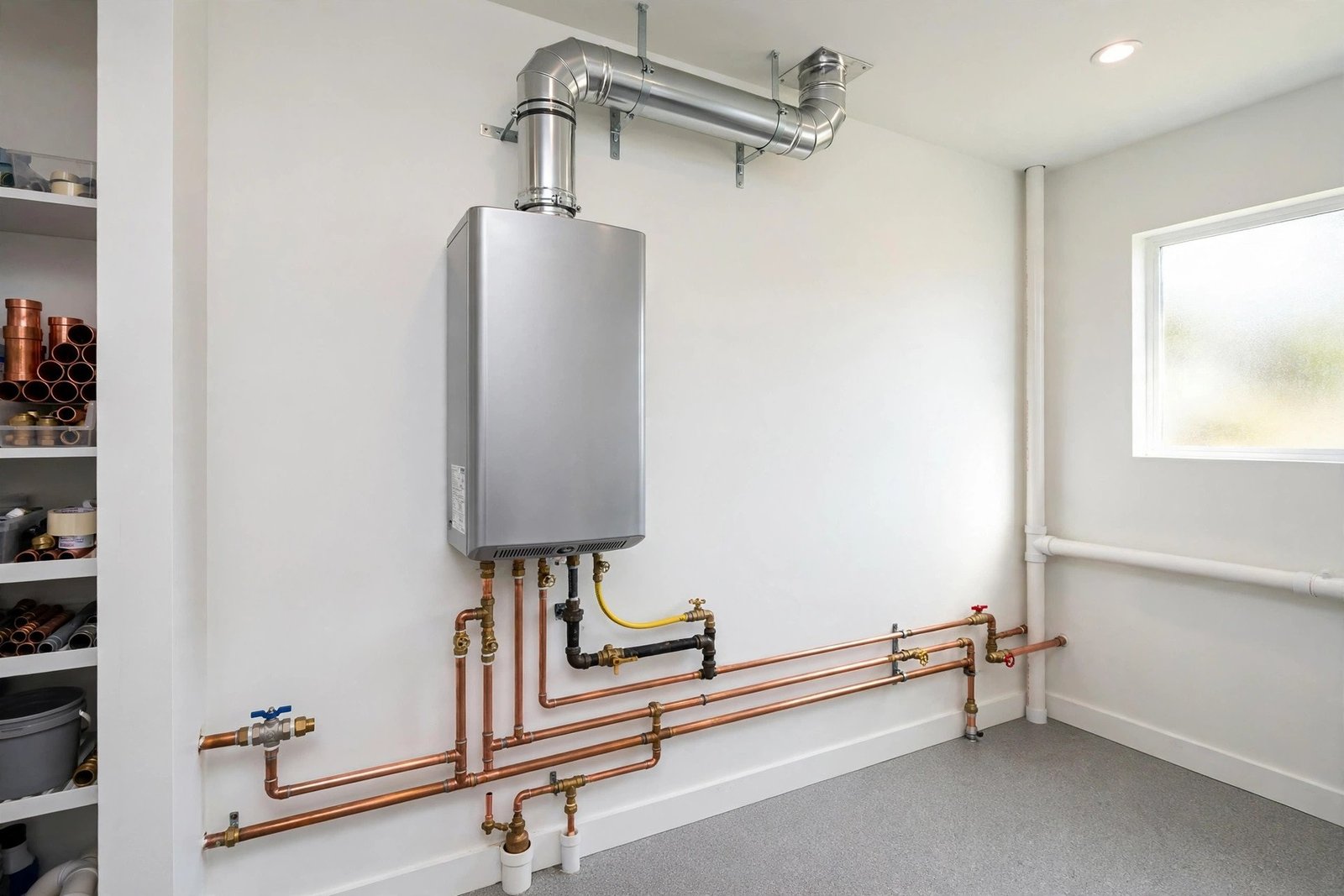
For tankless, replacing an existing unit with a similar one usually lands around $5,500–$7,500, while a first-time conversion runs wider — $4,000–$8,000 — because the venting and gas line work starts from scratch.
2. What Drives the Quote Up
- Venting changes. Older atmospheric gas tanks vent up a chimney. High-efficiency and power-vent units vent through a wall with plastic pipe. Converting between the two adds real labour, and it is the single most common reason a quote jumps.
- Gas line upsizing. A tankless unit fires far more gas at once than a tank does. If your existing gas line cannot feed it, upsizing the line adds roughly $400–$1,800 depending on the run.
- Relocating the unit. Moving a water heater across the basement means new water lines, venting, and possibly electrical — budget $800–$2,000 extra.
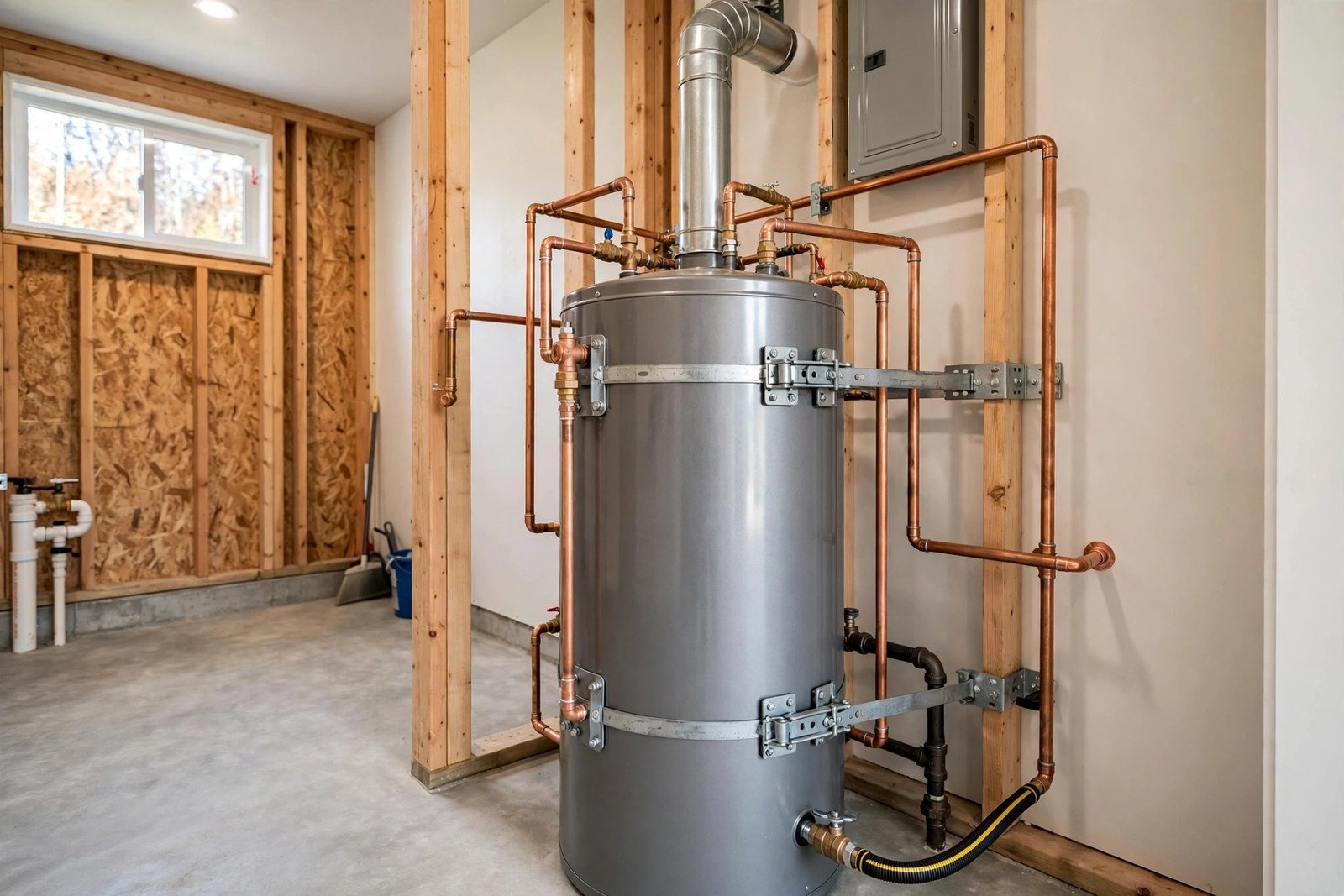
- Code upgrades on older installs. A new installation has to meet current code, even if the old one did not: expansion tanks, drain pans, and seismic strapping get added to the scope. In BC’s seismic zones, tanks are strapped or restrained as part of a compliant install — a small line item and a genuine safety feature in earthquake country.
- Emergency timing. After-hours and weekend replacements carry premiums. If your tank is old but still working, replacing it on a weekday by appointment is the cheapest version of this project there is.
3. Tank vs Tankless vs Heat Pump: Which Fits Your House
Standard tank. Cheapest to buy, cheapest to install, and the right answer for smaller households, homes being sold soon, and emergency replacements where the budget rules. The costs are standby heat loss — the tank keeps 150+ litres hot around the clock — and a replacement cycle of roughly a decade.
Tankless. Heats water only when a tap opens, so it never runs out during back-to-back showers, and typically lasts about twice as long as a tank. It costs roughly double installed. The math favours tankless in busy households staying a decade or more, and it frees up floor space — a real benefit in a finished basement or suite. One maintenance note: tankless units need periodic descaling, usually an annual service visit.
Heat pump water heater. The efficiency champion — it moves heat from the surrounding air instead of making it, cutting water-heating energy use substantially. It needs a reasonably warm, reasonably large space to draw air from (a garage or utility room works; a tiny closet does not), and it cools that space slightly as it runs. It also carries the strongest rebate support, covered below.
Whichever way you go, size it honestly. An undersized tank in a house with teenagers is a daily argument; an oversized tankless is money spent on capacity you will never draw.
4. Permits, Gas Rules and Rebates in BC
Water heater work sits at the junction of three trades, and the rules follow the fuel:
- Gas appliances must be installed by a licensed gas fitter, and gas work in BC is regulated by Technical Safety BC under permit. This is not a DIY category — an unpermitted gas installation can void home insurance and create a genuine carbon monoxide risk.
- Electrical connections for electric tanks and heat pump units fall under electrical permit rules when circuits are added or changed.
- Plumbing permits are municipal. A like-for-like swap is often handled under the installing contractor’s permits and notifications — your installer will tell you what your city requires.
On rebates: high-efficiency water heating is a standing target of BC’s rebate programs. FortisBC has offered rebates on qualifying high-efficiency gas water heaters and tankless units, and heat pump water heaters carry the largest support — including up to $3,500 under the income-qualified CleanBC Better Homes Energy Savings Program. Amounts and eligibility change, so check the current figures at betterhomesbc.ca and with your utility before you buy, and keep the invoice — applications are made after installation with documentation. Pairing a water heater upgrade with other work in our energy-efficient home upgrades guide can stack bonuses under the same programs.
5. Repair or Replace? The Decision Rules
Replace, rather than repair, when:
- The tank itself is leaking. A leaking tank body cannot be repaired. This is a replacement, full stop.
- The unit is 10+ years old and needs a significant part. Putting a $600 part into a 12-year-old tank buys time on a unit statistically near the end of its life.
- Rusty water or rumbling persists after a flush — both point to internal corrosion and sediment damage.
Repair makes sense when the tank is under 8 years old and the fault is a replaceable part: an element, a thermostat, a pressure relief valve, or a gas control. Those repairs typically run $200–$600 and can add years to a sound tank.
Two habits extend any tank’s life: flushing sediment annually, and replacing the anode rod every few years. Both are cheap, and both are skipped by almost everyone.
Before you sign, get the quote to state: unit model and capacity, whether venting or gas line changes are included, who pulls permits, whether old tank disposal is included (ask — it is not always), and the warranty split between unit and labour. A quote that is $400 lower because it quietly excludes the venting conversion is not lower.
Frequently Asked Questions
How much does it cost to replace a hot water tank in BC in 2026?
A standard tank replacement runs $1,700–$3,600 installed, depending on fuel type — electric tanks at the low end, gas tanks higher, power-vent models $3,000–$4,500. Tankless conversions run $4,000–$8,000, and heat pump water heaters $3,500–$6,000 before rebates. Venting changes, gas line upsizing, and relocation are the extras that move a quote within its range. All figures are 2026 planning ranges.
How long does a hot water tank last in BC?
8–12 years for a conventional tank, and around 20 years for a tankless unit with regular descaling. Fraser Valley water is relatively soft, which is kind to tanks, but sediment still builds up. If your tank is past 10 years and showing rust, rumbling, or inconsistent temperatures, budget for replacement rather than waiting for the leak.
Do I need a permit to replace a water heater in BC?
Gas installations require a licensed gas fitter and fall under Technical Safety BC’s permit system. Electrical changes need electrical permits, and plumbing work is permitted through your municipality. A like-for-like replacement is routine work for a licensed installer, who will handle the applicable permits as part of the job — confirm that in the quote rather than assuming it.
Are there rebates for water heaters in BC?
Yes, for high-efficiency equipment. FortisBC offers rebates on qualifying gas models, and heat pump water heaters qualify for the strongest support — up to $3,500 under the income-qualified CleanBC Better Homes Energy Savings Program, with standard CleanBC Better Homes rebates also available for eligible units. Program amounts change; verify the current figures at betterhomesbc.ca before purchasing, since the model you buy must be on the eligible list.
Is tankless worth it for a basement suite?
Often, yes. A suite plus a main household can drain a shared tank fast, and a tankless unit ends the scheduling problem while freeing floor space in a small mechanical room. If the suite has its own water heater instead, a compact tank usually pencils out better. Our plumbing rough-in cost guide covers what adding suite plumbing involves if you are planning that route.
Why is my replacement quote so much higher than my neighbour’s?
Almost always the venting or the gas line. A same-spot, same-style swap is the floor price. Homes converting from a chimney-vented tank to a power-vent or tankless unit pay for new venting, and tankless conversions frequently need a larger gas line. Ask the contractor to itemize — the difference should be explainable line by line.
Decide Before It Decides for You
If your tank is past the ten-year mark, the cheapest replacement is the planned one: weekday appointment, quotes compared, rebate-eligible model chosen on purpose. Pick the tank for simplicity and low upfront cost, tankless for capacity and lifespan, and a heat pump unit when the space suits it and the rebates stack. Any of the three, installed by a licensed contractor under the right permits, beats the emergency version of the same purchase.
Planning a broader efficiency upgrade? Start with our energy-efficient home upgrades guide for BC, then check our insulation cost guide — the attic is usually the cheaper win before the mechanical room.
All costs in this article are 2026 BC planning ranges, not quotes. Rebate amounts and eligibility change — confirm current programs at betterhomesbc.ca and with FortisBC or BC Hydro before purchasing equipment.