
Midnight. Contractor waiting. You’re typing how long does a building permit take BC into a search bar.
You’re not alone in that.
It’s the question that sets every other date. Demolition. When does it start? The plumber. When do you book him? Even the in-laws. When do you tell them their visit has to move?
Here’s the honest answer. Up front.
For a simple residential renovation, a lot of homeowners in smaller Fraser Valley cities plan around two to six weeks. That’s for permit review. Complex work is different. So is a busy stretch. Then you’re looking at four to ten weeks. Or longer.
And those numbers? They’re typical planning ranges. Not promises.
They shift. Application volume shifts them. Your drawings shift them too, how complete they are. And if your project touches zoning? Or engineering? Or a suite? That shifts them again.
Anyone who gives you an exact date before seeing your plans is guessing. Plain and simple.
So don’t treat the permit like paperwork. Don’t squeeze it in before the project starts. It is the first phase. Treat it that way. And confirm current processing times with your own city. Do it before you lock in trades. Queues change. Month to month, they change.
The Permit Process, Step by Step
Most waiting doesn’t happen during the steps. It happens between them.
- Pre-application checks. Zoning first. Lot rules. And a basic question. Do you need only a building permit, or something bigger first? A quick call at city hall can save weeks here. It really can. Strata owners, listen. Get your approval letter started now. Not later.
- Drawings and documents. Floor plans. Details. Prepared by you or your designer. They have to show how the work meets the BC Building Code. Structural changes? Those may need an engineer. Suites need more again. Fire separation. Life safety details. All of it.
- Submission and fees. You file. You pay the fees. You get a file number. Simple enough. Except this. An incomplete package often sits. It sits before a reviewer even sees it. So complete paperwork quietly buys you time.
- Review rounds. City staff check the plans. Sometimes across several departments. Something missing? They issue corrections. Now your speed matters. As much as theirs. Return a revision in two days and you keep momentum. Return it in three weeks and you don’t.
- Approval and pickup. Corrections clear. Then the permit is issued. Only then can work legally start. Not before. Keep the approved drawings on site, too. Inspectors will compare the build against them.
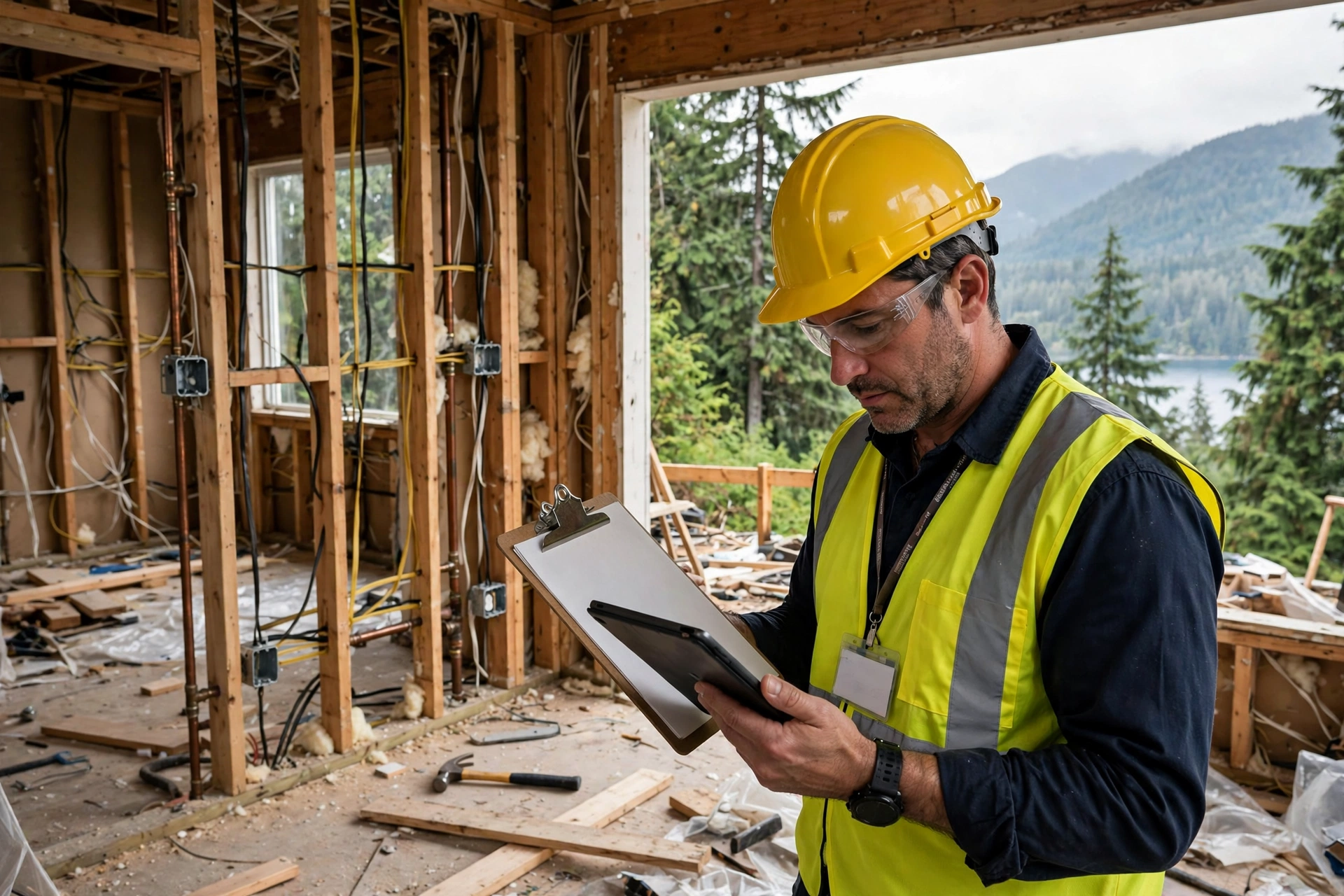
- Inspections during the build. The permit stays open now. Inspections happen at set stages. After framing, say. Or rough-in plumbing. And again at completion. Miss a booking and a crew can stall. Just as surely as a slow review stalled you earlier.
For the Abbotsford specific forms, fees, and submission details that sit inside this sequence, work through our Abbotsford building permit guide alongside this timeline, since each city runs its own intake process.
How Long Does a Building Permit Take BC: City by City Timelines
Cities don’t move at the same pace.
A timeline quoted for one Fraser Valley community may not hold in the next. It just may not.
The table below gives soft, typical planning ranges. They’re for straightforward residential renovation permits. Read them as starting points. Then confirm the current picture with the city directly. Staffing moves these numbers. Seasonal volume moves them too.
| City | Simple renovation permit, typical planning range | Complex or suite related work, typical planning range | Notes that affect timing |
|---|---|---|---|
| Abbotsford | About 3 to 6 weeks | About 6 to 10 or more weeks | Larger city volume, so complete drawings and quick revision replies matter a lot |
| Mission | About 2 to 5 weeks | About 5 to 8 or more weeks | Smaller intake can move faster in quiet periods, but volume spikes still slow review |
| Chilliwack | About 2 to 6 weeks | About 6 to 10 or more weeks | Growth keeps application volume high, so ranges widen in busy building seasons |
| Langley | About 4 to 8 weeks | About 8 or more weeks | City and Township are separate municipalities, so confirm which one your address falls in first |
Look at what the table is really telling you.
The city name matters less. The complexity column matters more. A lot more.
A bathroom update with no plumbing moves? Light file. Anywhere. A basement suite? Heavy file. Everywhere. Because it pulls in fire. And egress. And parking. And sometimes development review on top of that.
And the two Langleys. A word on them, because this trips people up.
The City of Langley and the Township of Langley are different governments. Different queues. So your neighbour’s timeline only helps if your neighbour lives under the same city hall as you do. If he doesn’t, it tells you almost nothing.
What Actually Slows an Application Down
Some delays belong to the city.
Plenty don’t. Plenty belong to the application itself.
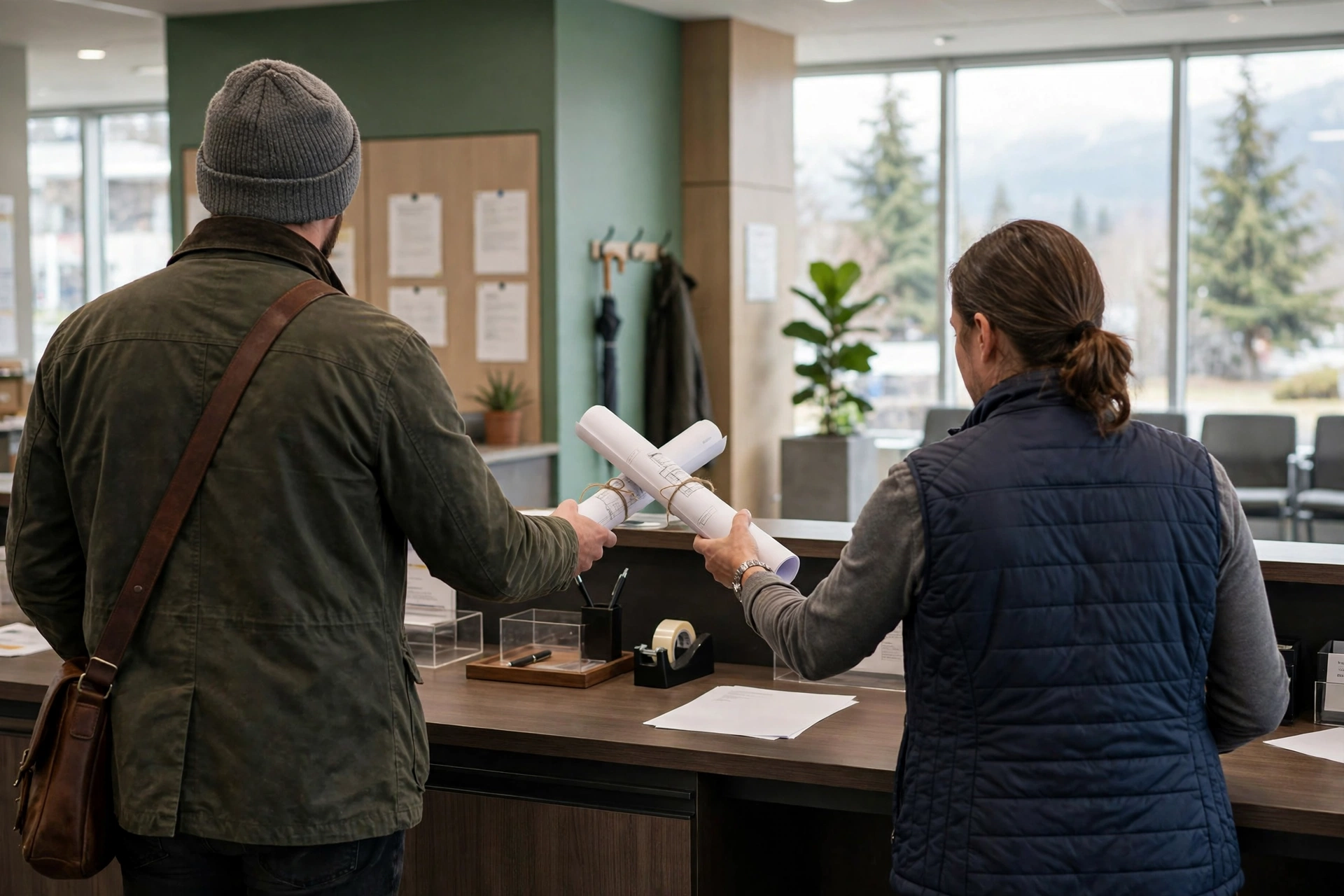
Incomplete drawings top the list. A floor plan with no dimensions. No window sizes. No detail on a beam. That’s not a small omission. It stops the review. It generates a correction letter. And every round adds its own wait. On both ends.
But here’s the part homeowners underestimate.
The clock doesn’t pause while your file waits for you. Other files keep moving. Complete files. They don’t wait.
Missing engineering is next.
Removing a load bearing wall? Building a suite? The city may need stamped engineered drawings. If you find an engineer after the city asks, you’re joining that engineer’s queue. Mid project. Line one up early. Do it if your scope even hints at structure.
Strata approvals catch people too.
In a strata property in Abbotsford or Langley, you may need an approval letter. You may need it before the city process can finish smoothly. Suite work brings other questions as well. Parking. Servicing. Nothing to do with your drawings. Everything to do with your lot.
Then there are the quiet killers.
An old open permit. From a previous owner’s project. A deck built years ago without permits that now shows up in your new application. An address in a floodplain, which can add environmental review.
None of these make approval impossible.
All of them make the fast timeline you heard at a barbecue irrelevant.
Which Renovations Often Do Not Need a Building Permit
General guidance only here. Not legal advice. Your city makes the final call.
But the pattern across BC municipalities is fairly consistent.
Cosmetic work often doesn’t need a building permit. Painting. Replacing cabinets with the same layout. Swapping flooring. Changing fixtures in the same locations. That usually falls on the cosmetic side. You’re refreshing surfaces. You’re not altering building systems.
Work that changes systems is different. Or structure. That usually does need one.
Moving plumbing. Removing load bearing walls. Finishing a basement. Adding a suite. Building an addition. All of it sits firmly on the permit side. Electrical and plumbing work can need their own trade permits too. Even when a building permit isn’t involved.
Bathrooms sit right on this border, which is why they cause confusion. Check the specifics in our guide to whether a bathroom renovation needs a permit in BC before you assume either way. And when you are unsure, ask the city before you start. A five minute question is cheap. Unpermitted work discovered at resale is not.
One more category deserves a mention.
Development permits. Rezoning. Variances. Those are separate land use processes. They run much longer. Often many months. If your project needs one first, the building permit timeline doesn’t start. It only starts after that process ends.
Planning Backwards From Your Start Date
Work backwards.
It’s the simplest habit there is. And it separates calm renovations from frantic ones.
Say you want construction to begin in early June.
Count back. Use your city’s typical range. Then add a buffer. For at least one revision round. Because assuming zero corrections isn’t planning. It’s optimism.
That puts your submission in spring. Which means drawings need to be underway in late winter. Suite involved? Engineering involved? Push every date earlier again.
Build the buffer honestly.
Two extra weeks of float costs you nothing. Not on paper. Two missing weeks in real life costs you plenty. A rescheduled crew. Possibly a trade who gives your slot to someone else. Fraser Valley contractors book up fast once spring opens. Your permit date is the key that unlocks their calendar.
While you wait, use the time well.
Finalize tile. Fixtures. Finishes. So nothing on site waits on a shopping decision. Confirm long lead items. Confirm delivery dates too. The waiting period feels dead only if you let it sit idle. Treated properly, it’s free preparation time.
And keep one small discipline.
Keep a single folder. Your application in it. Drawings. Correction letters. And the permit. Inspectors may ask for pieces of it. Trades may ask. Future buyers may ask. Future you will be grateful.
Building Permit Questions: Frequently Asked Questions
Can I start demolition while my permit is being reviewed? Generally, no. You shouldn’t start work that needs a permit until the permit is issued. Demolition tied to that work usually counts. Start early and you can get stop work orders. Or you can end up redoing work for inspection. Ask your city what’s allowed before issuance. And get that answer in writing.
What happens if the city asks for revisions to my drawings? You correct the items listed. Or your designer does. Then you resubmit. The file goes back into review. One revision round is common. It’s not a sign your project is in trouble. Return clean corrections quickly, though. It’s one of the best ways to protect your start date.
Do permit timelines include weekends and holidays? It depends how the city quotes them. Processing times are usually discussed in business days. Or calendar weeks. Review work happens on business days. So a four week range over a holiday stretch will feel longer in real life. It will. Ask whether the city is quoting business or calendar time. Then you’ll plan with the right clock.
How long is a building permit valid once it is issued? Validity periods vary by municipality. Permits can lapse, too. If work doesn’t start. Or inspections aren’t called within set periods. Check the conditions with your issued permit. Note the key dates. And if your project stalls, contact the city before the permit expires. Not after.
Can a contractor apply for the permit on my behalf? Yes. Contractors commonly submit applications for homeowners. Designers do too. Often with a letter of authorization from the owner. You should still know your file number, though. See the approved drawings. Keep copies of everything. The permit is tied to your property. So the paperwork belongs in your hands too.
Your Next Step: Apply Early, Apply Complete
If there’s one takeaway, it’s this.
When people ask how long does a building permit take BC timelines reward the applications that arrive complete, with drawings, engineering, and approvals already lined up. File early, answer revisions fast, and your project spends its time in construction instead of in a queue.
If you want help sanity checking your timeline before you submit, call (236) 613-0038 and walk through your project scope, your city, and your target start date. A realistic plan built backwards from that date will save you more stress than any shortcut promised at the start.