
One question stalls more Abbotsford bathroom projects than any other. The tile is picked. The contractor is booked. Then someone asks: do we need a permit for this? The honest answer is that most bathroom renovations sit on one side or the other of a clear line. And the line isn’t about money. It’s not how much you’re spending. It’s what you’re touching.
Swap a vanity in the same spot? Typically no permit. Move the toilet across the room? That’s a plumbing permit — plus the inspection that comes with it. This guide lays out the 2026 rules for bathrooms in BC. When a permit is required. When it isn’t. What the Abbotsford process actually involves, and what the inspection covers. The point: plan the project around the paperwork. Don’t discover it mid-demolition.
The short version: in BC, cosmetic bathroom work — paint, tile, fixtures in the same locations — typically needs no permit. The bigger stuff is different. Moving or adding plumbing, changing the layout, structural work, or adding a new bathroom usually requires a plumbing and/or building permit from the City of Abbotsford. In doubt? Call the Building Department before you start. That call is free.
Planning note: Permit rules, fees, and timelines change. The information below reflects 2026 guidance for Abbotsford, BC, based on publicly available municipal information and local market data. Always confirm current requirements with the City of Abbotsford Building Department before starting work. This guide is for planning purposes only, not legal advice.
1. The 30-Second Answer
| Project | Permit? |
|---|---|
| Repainting, new tile, new flooring | Typically no |
| Vanity, toilet, or faucet swapped in the same location | Typically no |
| New tub or shower in the same footprint, same drain | Typically no |
| Moving a toilet, sink, tub, or shower to a new spot | Yes — plumbing permit |
| Adding a bathroom where none existed | Yes — building + plumbing permits |
| Moving or removing walls | Yes — building permit |
| New electrical circuits, in-floor heat, new lighting runs | Yes — electrical permit (Technical Safety BC) |
| Converting a tub to a shower with a moved or new drain | Usually yes — plumbing permit |
The pattern is simple enough. Touch the plumbing, the wiring, or the structure? Permit. Change only the finishes? Usually no permit. Here’s the proof. A $25,000 bathroom can be completely permit-free — if every fixture stays in its original location. Meanwhile a $6,000 refresh needs a plumbing permit the moment it moves the toilet drain two feet.
2. When a Bathroom Renovation Needs a Permit
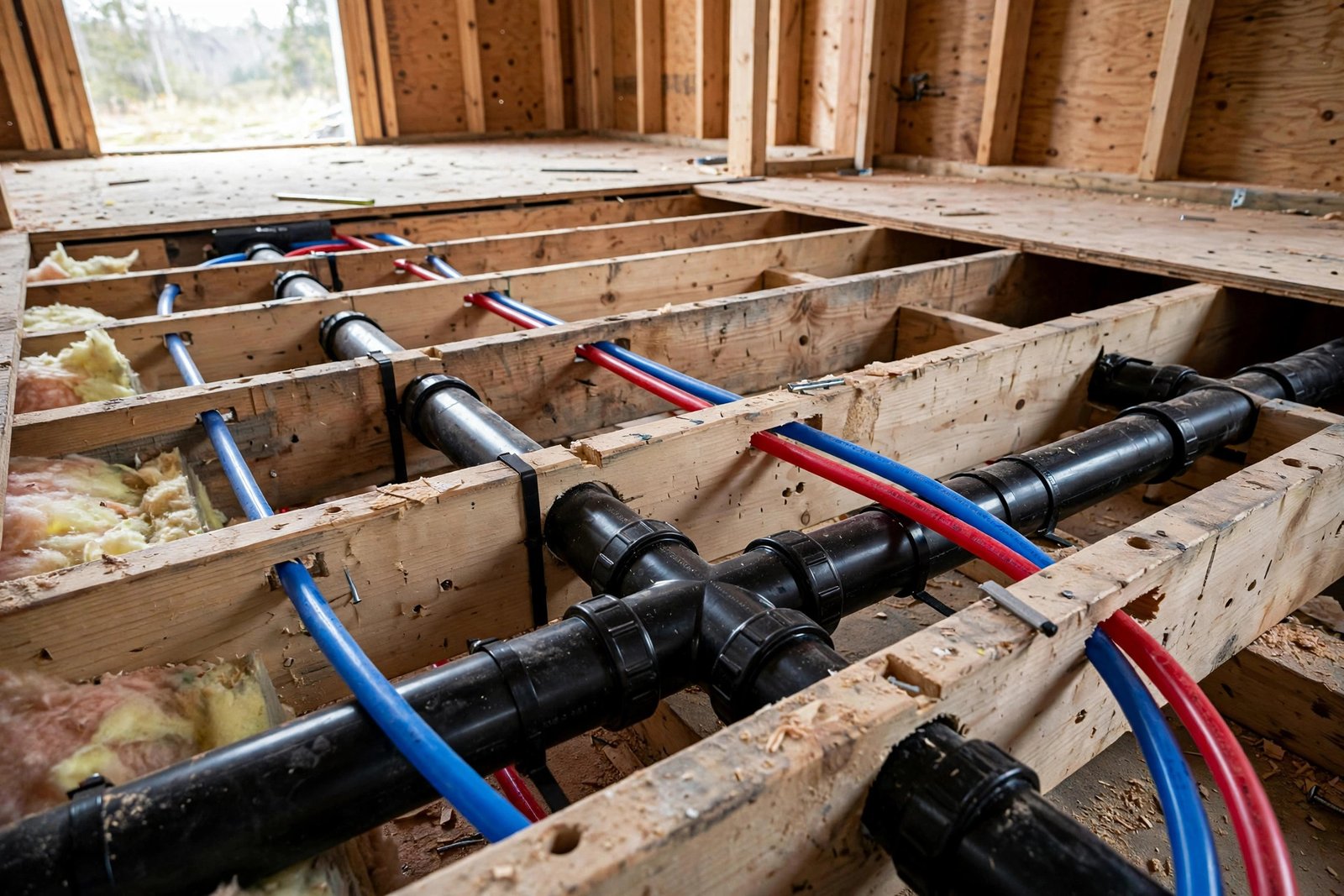
Moving or adding plumbing fixtures. This is the big one. The drain, waste, and vent system isn’t guesswork — it’s sized and sloped to code. A quarter inch of fall per foot on smaller drain lines. Traps that stay sealed. Vents that keep everything flowing. Move a toilet and you’re cutting into the drain line, then re-venting it. Move a shower drain and the pan waste needs re-sloping. All of it needs a plumbing permit in Abbotsford. And the municipality inspects it — before the walls close, not after. Our plumbing rough-in cost guide breaks down what that work runs. Permit fees? They typically land in the $200–$500 range.
Adding a new bathroom. Basement bathroom. An ensuite carved out of a bedroom. A powder room tucked under the stairs. Different projects — same answer: a building permit plus a plumbing permit. The city wants the layout. Fixture clearances. Ventilation. And a clear picture of how the new drains tie into the existing system. Part of a legal secondary suite? Then the suite rules layer on top — ceiling height, egress, separation requirements, all covered in our basement suite guides.
Layout and structural changes. Take down the wall between the toilet room and the vanity area. Widen a doorway. Open the bathroom into an adjacent closet. Any of those changes the building’s structure — and that needs a building permit. Even a non-load-bearing wall usually triggers one. Why? The city wants confirmation that it really is non-load-bearing.
Electrical changes beyond like-for-like. In-floor heating. New pot lights. A heated towel rail on a new circuit. An exhaust fan where none existed. Each one needs an electrical permit. And in Abbotsford, that permit doesn’t come from the city — it goes through Technical Safety BC. Separate application. Separate inspector. Swapping a light fixture in the existing box? That’s maintenance. No permit.
Tub-to-shower conversions with drain changes. A straight tub swap in the same footprint? Cosmetic. But most conversions aren’t straight swaps. The drain moves. Or the drain type changes. Or the waterproofing assembly gets altered. That’s plumbing work. Keep the drain exactly where it is and you’re usually in the clear. Move it, and a plumbing permit goes on the plan.
3. When You Typically Don’t Need One
The cosmetic tier — work that changes how the bathroom looks without touching its systems:
- Painting walls and ceilings.
- Re-tiling floors and walls, including a full re-tile of a shower in the same footprint.
- Replacing the vanity, toilet, or faucets in the same locations, on the existing rough-in.
- Swapping a tub for a new tub (or a shower unit for a like-for-like shower unit) on the existing drain.
- New mirrors, lighting fixtures in existing boxes, towel bars, accessories.
- Re-caulking, re-grouting, refinishing a tub or tile.
Two cautions. First, “same location” has a specific meaning: the drain and supply connections stay where they are. Extend a supply line six inches to reach a deeper vanity? Same connection. Still fine. Relocate the drain across the room? Different story entirely. Second, strata buildings are a separate authority. Many Abbotsford condo and townhouse stratas demand written approval for any bathroom work. Cosmetic work included. Waterproofing and noise are the reasons. So check your bylaws — even when the city needs nothing from you.
4. The Abbotsford Process: What Applying Actually Looks Like
For a bathroom that needs a permit, the process in Abbotsford is straightforward — and much faster than the suite permits that dominate the city’s permit counter:
- Describe the scope to the Building Department. Usually, a simple drawing is enough for a bathroom-level plumbing permit. Existing layout on it. Proposed layout. Fixture locations marked. Your plumber or contractor typically prepares it — and pulls the permit.
- Pay the fee. For bathroom-scope work, plumbing permit fees in the $200–$500 range are typical. A building permit costs more — it covers larger projects, structural changes, a new bathroom — and it scales with the declared construction value. Current fee schedules are on the city’s website.
- Wait for issuance. Straightforward bathroom and plumbing permits in Abbotsford are currently issued in roughly 2–4 weeks. That matches the timelines in our Abbotsford building permit guide — which covers the full application walkthrough, what to submit, and what happens if you skip the process.
- Book inspections at the right stages. One matters more than the rest: the rough-in inspection. That’s when the inspector sees the drains, the vents, the water lines — while they’re still visible, before insulation and drywall bury them. A final inspection typically follows, once fixtures are set.
The most common scheduling mistake? Closing the walls before the rough-in inspection. If the inspector can’t see the plumbing, the walls come back open. On your dime. So build the inspection into the schedule from the start. Planned properly, it costs a day or two of waiting. It is not a project-killer.
5. What the Inspection Actually Covers
Homeowners sometimes picture the inspector hunting for reasons to fail the job. In practice, the bathroom rough-in inspection checks a short, predictable list — and knowing it in advance is half the value of pulling the permit:
- Drain slope and sizing. Waste lines need consistent fall toward the stack, and each fixture needs the right pipe diameter. Flat spots and bellies are the classic fails.
- Venting. Every trap needs a vent within code distance so drains flow without siphoning. Island sinks and relocated fixtures are where venting goes wrong.
- Water lines. PEX or copper runs secured properly, shut-off valves accessible, pressure test holding.
- Shower pan flood test. The pan gets filled and the water level must hold — the same test any careful DIYer should run, now witnessed.
- Fixture clearances and ventilation. Toilet and vanity clearances from walls and doors, and a working exhaust fan vented to the exterior (not into the attic) — a detail the BC Building Code is specific about in bathrooms.
A licensed plumber who pulls their own permits passes these inspections routinely. So listen carefully when a contractor suggests skipping the permit to “save time.” What they’re really suggesting is skipping the one independent check on the work. The work you will never see again — not once the tile goes up.
6. What Skipping a Required Permit Costs
The enforcement side, briefly, because it changes the math on that “save time” suggestion:
- Stop-work orders. The city can halt the project mid-renovation until permits and inspections are complete. The delay costs more than the permit ever would.
- Tear-out. Work done without inspection may need to be opened up for inspection after the fact — tile removed, drywall cut — or redone entirely if it does not meet code.
- Resale and insurance exposure. Unpermitted plumbing is a disclosure problem when you sell and a coverage question if a leak causes damage. A $300 plumbing permit is cheap documentation that the work was done to code.
- Strata and warranty issues. In strata buildings, unapproved bathroom work can trigger fines and forced remediation. And manufacturer warranties on waterproofing systems generally assume the installation met code — unpermitted work muddies any claim.
None of this applies to cosmetic work that never needed a permit. It applies the moment drains move.
Frequently Asked Questions
Do I need a permit to remodel a bathroom in BC?
It depends on the scope. Cosmetic work — paint, tile, fixtures replaced in the same locations — typically needs no permit. Anything bigger is different. Moving plumbing fixtures. Adding them. Changing the layout. Structural work. A whole new bathroom. Those usually require a plumbing and/or building permit from your municipality. In Abbotsford? Confirm with the Building Department before you start. Not after.
Do I need a permit to replace a toilet or vanity?
No, if they stay in the same location on the existing plumbing. Like-for-like fixture swaps are maintenance, not construction. But move the toilet or vanity — even a few feet — and things change. The drain has to move with it. Possibly the vent, too. Now it’s plumbing work. And plumbing work requires a permit.
How much does a bathroom renovation permit cost in Abbotsford?
Plan on $200–$500 for a plumbing permit covering fixture moves or a drain relocation. Bigger project? Structural changes, a whole new bathroom — the building permit costs more. It scales with the construction value. Check the city’s current fee schedule for the exact number. Electrical permits for new circuits go through Technical Safety BC separately.
How long does it take to get a bathroom permit in Abbotsford?
Roughly 2–4 weeks for straightforward bathroom and plumbing permits, based on current issuance timelines. Complex project? Longer. Adding a bathroom as part of a secondary suite, for instance, stretches the timeline well past that. So apply before demolition. Not after. And build the rough-in inspection into your project schedule from day one.
What happens if I renovate my bathroom without a permit?
Plenty. If the work needed a permit, the city can shut you down with a stop-work order. It can make you open finished walls for inspection. It can even require non-compliant work to be redone. Then come the quieter problems. Unpermitted plumbing follows you to resale — it’s a disclosure issue. And if a leak causes damage, it becomes an insurance question too. Cosmetic work is different. Work that never needed a permit stays unaffected.
Does a tub-to-shower conversion need a permit?
Usually yes, if the drain moves or the drain type changes — and most conversions do exactly that. A straight tub swap is the exception. Same footprint, existing drain, nothing relocated: that’s typically cosmetic. But relocate the drain, or change the waterproofing assembly, and you’re planning on two things — a plumbing permit and a flood-tested pan inspection.
Do I need strata approval for a bathroom renovation in a condo?
Often yes, even when the city needs nothing. Waterproofing and noise are why — many stratas require written approval for bathroom work before anyone picks up a tool. Some go further. Restricted work hours. Licensed contractors only. So read your strata bylaws before booking anything. Strata approval and a city permit are two separate requirements, and one never replaces the other.
Plan the Paperwork With the Project
The permit question feels like red tape. Until you frame it correctly. A $200–$500 plumbing permit buys an independent inspection of the work you will never see again — the drains, the vents, the water lines inside your walls. Cosmetic refresh? Skip the permit. Check the strata bylaws. Enjoy the new tile. Moving fixtures? Different playbook. Pull the permit. Book the rough-in inspection before the walls close. And build the two-to-four-week issuance into your timeline from day one. Our bathroom renovation cost guide has the full project budget to plan around. The Abbotsford building permit guide walks through the application itself.
Permit rules, fees, and timelines change — confirm current requirements with the City of Abbotsford Building Department before starting work.