
A sunroom is a bet against the BC climate. Nine months of grey. And you build a room made of windows. It sounds perverse. Until you sit in one on a February afternoon. Sun finally out. Rain hammering the roof. Warm enough inside to read in a t-shirt. That feeling is the product. Sunroom addition cost BC figures are the price of manufacturing it reliably, in a climate that tests every seal and every pane.
For 2026, the numbers sort neatly by type. Three types, three price bands. A three-season sunroom runs $25,000–$55,000. That’s the entry point. A four-season sunroom runs $55,000–$110,000. Roughly double. A solarium, the all-glass roof version, runs $80,000–$150,000+. The dream option. The type you choose decides the budget before a single quote is written. So choose the type deliberately.
Sunroom Addition Cost BC: Three-Season vs Four-Season vs Solarium
These are genuinely different buildings. Not marketing tiers.
| Type | What it is | Usable season in BC | 2026 planning range |
|---|---|---|---|
| Three-season sunroom | Insulated walls, single-pane or basic double-pane glass, no dedicated heat | April–October | $25,000–$55,000 |
| Four-season sunroom | Fully insulated, double or triple-pane glass, tied into home heating | Year-round | $55,000–$110,000 |
| Solarium | Glass walls and glass roof, minimal framing | Year-round (with heat) | $80,000–$150,000+ |
| Enclosed patio conversion | Existing covered patio glazed in | Extends patio season | $15,000–$35,000 |
The three-season room is the honest budget option, and in the Fraser Valley it’s usable more of the year than the name suggests. A well-oriented three-season room, facing south or west, picks up solar gain on clear winter days and stays comfortable into November and from March. It won’t hold heat overnight, and January is out, but seven or eight months of use for $25,000–$55,000 is a reasonable trade for many households.
The four-season room is a different animal. Insulated floor. Insulated knee walls. High-performance glazing. And its own heat source, tied into the house system or standalone. It costs roughly double because it has to perform like a house wall that happens to be mostly window. In our climate, with driving rain eight months a year and real cold snaps, the four-season build quality isn’t luxury. It’s the minimum for year-round use.
The solarium is the dream and the budget-buster. A glass roof changes everything. Structural engineering for snow load, yes, even in the Valley, where the wet snow of a bad February is heavier than it looks. Specialized glazing. Shading systems. Because a glass roof in July is a greenhouse in the punishing sense. Expensive to build. Expensive to cool. Worth it only if the all-glass experience is specifically what you want.
The enclosed patio conversion deserves its row. It’s the value play hiding in plain sight. Already have a covered patio with a solid roof? Glazing the open sides, with windows or even high-quality vinyl enclosures, creates a three-season-ish room for a fraction of new construction. The roof already exists. The slab already exists. Often the structure does too. You’re buying glass and framing, not a building.
Foundations: The Part Nobody Photographs
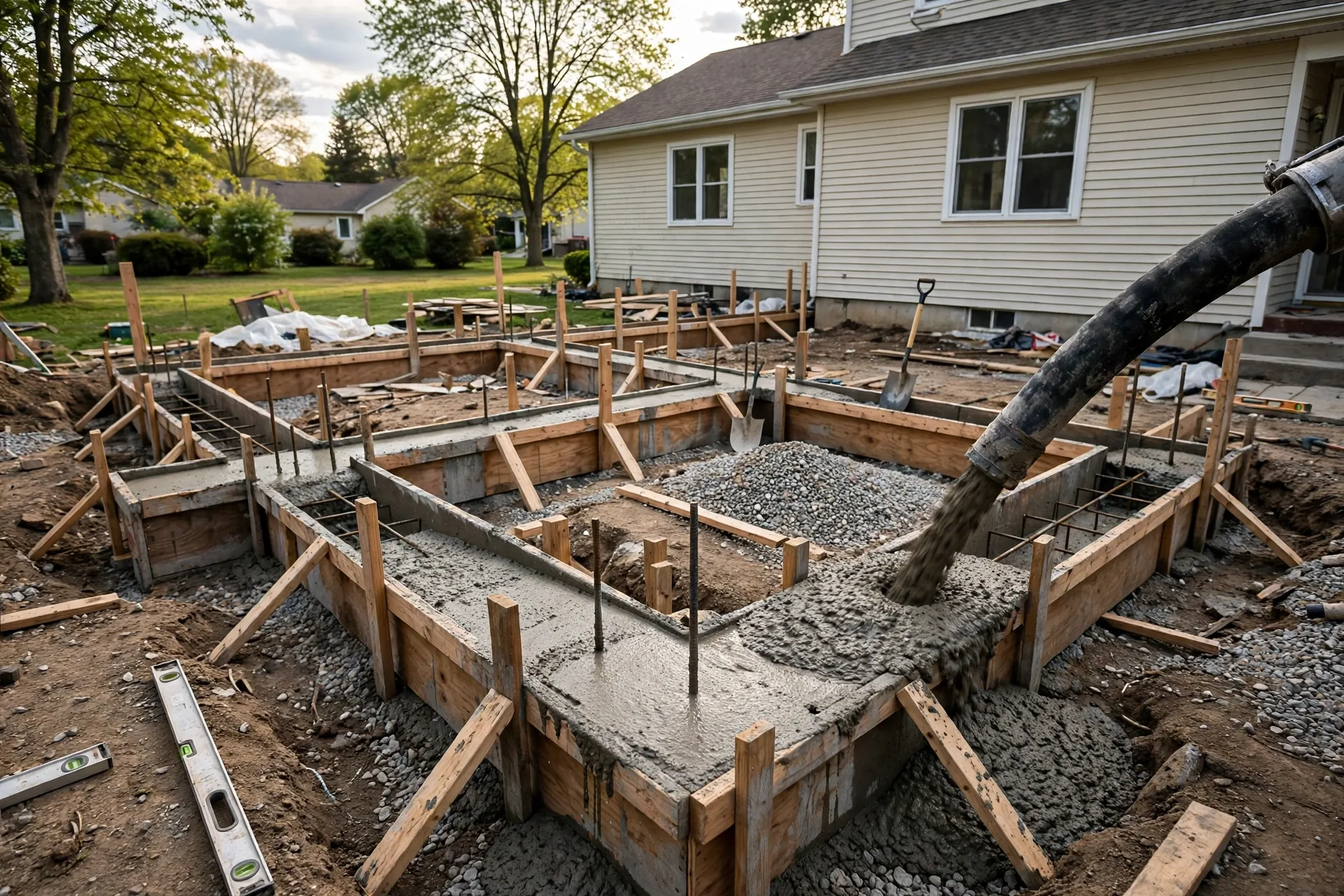
Every sunroom needs something to sit on, and the foundation choice moves the budget by five figures.
A proper concrete foundation or frost-protected slab runs $8,000–$20,000 for a typical 200–300 square foot sunroom. And it’s what a four-season room requires. The insulation goes under and around it. The floor stays warm. The structure doesn’t move. In the Valley’s wet winters, with freeze-thaw cycles working on everything, this is the foundation that lasts.
A pier or post foundation, where the room sits on concrete piers with a framed floor, runs $4,000–$10,000 and suits three-season rooms and lighter structures. It’s faster and cheaper, and perfectly adequate for a room that doesn’t need to hold heat through January. What it doesn’t do well is keep the floor warm, which is fine for a three-season room and a dealbreaker for a four-season one.
Here’s the mistake to avoid: building a four-season room on a three-season foundation. The room will be cold at the floor, condensation will form where warm meets cold, and no amount of glass quality fixes a floor that’s thermally disconnected from the plan. Match the foundation to the ambition. Always. If the budget only stretches to piers, build the three-season room honestly. And enjoy it for what it is.
Existing decks complicate the picture. A sunroom can’t just sit on a standard deck. The deck wasn’t engineered for an enclosed structure’s loads, wind uplift and snow. Some decks can be reinforced. Many need partial rebuild or replacement of the support structure. If your plan starts with “we’ll enclose the deck,” get an engineer or an experienced contractor to assess the deck structure first. Before anything else. Our deck building cost guide for Abbotsford covers what proper deck structure costs, which is the baseline your sunroom foundation has to beat.
Permits: Yes, You Need One
Short version: sunroom additions need building permits in BC municipalities. The room attaches to the house, alters the building envelope, and usually adds electrical. That’s permit territory everywhere in the province.
The permit package typically includes site plans showing setbacks, structural drawings (especially for the roof connection and foundation), and energy compliance for four-season rooms under the BC Energy Step Code. Setbacks deserve attention early: the sunroom has to sit inside your lot’s required side and rear setbacks, and on smaller Valley lots, a 12-foot-deep sunroom can eat the entire rear setback. Check with your municipality before falling in love with a footprint.
Three-season rooms sometimes sit in a grey area in homeowners’ minds, but the structure still needs a permit in most municipalities. The “it’s just glass” argument doesn’t survive the plan checker’s desk. Confirm the requirements with your municipality before work starts, and budget 6–12 weeks for permit review on a straightforward sunroom.
If the project is growing toward a full addition with plumbing and year-round living space, the comparison shifts. Our home addition cost guide for Abbotsford covers conventional additions, which are worth pricing against a high-end four-season sunroom, since the costs start to overlap.
The Heating Bill: BC Rain Meets All That Glass
This is the operating cost nobody puts in the brochure, and in BC it matters.
A sunroom is the least energy-efficient room in the house per square foot. Glass, even triple-pane, insulates far worse than a wall. In a four-season sunroom used year-round, expect the heating cost for that room alone to run $50–$150 per month through the heating season, depending on size, glazing quality and how warm you keep it. Over a winter, that’s $300–$900 just to keep the glass room comfortable.
Three mitigations, in order of impact:
Orientation. South and west facing rooms gain the most solar heat, which in the Valley’s shoulder seasons does real work. North-facing sunrooms get the light without the gain, and they’re the coldest rooms to heat. If you have a choice of which wall gets the sunroom, the sun decides.
Glazing quality. Double-pane low-E is the minimum for four-season. Triple-pane or double-pane with argon fill and warm-edge spacers performs noticeably better. The upgrade cost ($2,000–$5,000 on a typical room) pays back in comfort if not strictly in dollars. Low-E coatings also cut summer overheating. The kind that turns a south-facing sunroom into a sauna by July.
Shading and ventilation. Every sunroom needs a summer strategy: operable windows or vents up high to dump hot air, plus shades, blinds or an overhang that blocks high summer sun while admitting low winter sun. A sunroom without a cooling strategy gets used from October to May and abandoned all summer, which is a strange return on $80,000.
The rain angle is pure BC. Driving rain finds every weak seal, and a sunroom has more linear feet of seal than any other room. Proper flashing where the sunroom roof meets the house wall is the single most important waterproofing detail. It’s also the one most often done badly on budget jobs. Ask your contractor specifically how they flash the house connection. Demand specifics. The answer should be immediate and detailed. Hesitation here is a red flag worth heeding.
Prefab Kits vs Custom Builds
Sunrooms come two ways, and the choice affects cost, timeline and how the room looks against your house.
Prefab sunroom kits, from manufacturers who ship engineered aluminum or vinyl systems, run $20,000–$45,000 installed for three-season and $50,000–$85,000 for four-season. They’re faster (often installed in 1–3 weeks once the foundation is ready), the engineering is done, and the weathertightness is tested. The tradeoff is aesthetic: the room looks like a sunroom system, with chunkier framing profiles than site-built, and matching it to your house’s architecture takes care.
Custom site-built sunrooms, framed by a contractor to match the house, run $40,000–$70,000 for three-season and $70,000–$120,000+ for four-season. They take longer (6–12 weeks of construction), but the roofline, siding and trim can blend with the existing house until the addition looks original. On character homes and higher-value properties, that integration matters for resale.
Neither is universally better. It depends on the house and the budget. Kits win on speed, tested engineering and cost. Custom wins on integration and aesthetics. The wrong choice is the kit slapped on a heritage home, where it looks like a greenhouse crashed into the house. Or the custom build on a tight budget that runs out of money at the glazing stage.
Frequently Asked Questions
How much does a sunroom addition cost in BC? For 2026, three-season sunrooms run $25,000–$55,000. Four-season sunrooms run $55,000–$110,000. Solariums with glass roofs run $80,000–$150,000 or more. Enclosing an existing covered patio is the budget route. $15,000–$35,000. Foundations add $4,000–$20,000, depending on type. These are planning ranges, not quotes. And the room type decides the budget before any contractor is involved.
What is the difference between a three-season and four-season sunroom? A three-season room has lighter insulation, basic glazing and no dedicated heat. That makes it comfortable roughly April through October in the Fraser Valley. A four-season room is fully insulated with high-performance glass and its own heat source, usable year-round. It costs roughly double, because it has to perform like a house wall made of windows. The foundation differs too. Four-season rooms need insulated concrete foundations. Three-season rooms can sit on piers.
Do I need a permit for a sunroom in BC? In most cases, yes. No way around it. Sunroom additions attach to the house, alter the building envelope and usually add electrical. That puts them in permit territory in BC municipalities. Expect to provide site plans and structural drawings. Energy compliance too, for four-season rooms. Setbacks are the early check, since the room must fit inside required side and rear setbacks. Confirm requirements with your municipality before work starts, and allow 6–12 weeks for review.
How much does it cost to heat a sunroom in winter? A four-season sunroom used year-round typically adds $50–$150 per month to heating costs through the heating season, or $300–$900 over a winter, depending on size, glazing quality and thermostat setting. South or west orientation with good solar gain cuts this noticeably. Orientation is free. Triple-pane or argon-filled glazing ($2,000–$5,000 upgrade) improves comfort. And every sunroom needs a summer shading and ventilation strategy to avoid overheating.
Can I build a sunroom on my existing deck? Not directly. Standard decks aren’t engineered for an enclosed structure’s loads. Wind uplift. Snow. So the deck structure usually needs assessment first, and often reinforcement or partial rebuild. Have an engineer or experienced contractor evaluate the deck before you plan around it. In many cases, the cost of upgrading the deck structure narrows the gap with building a proper foundation. So price both paths before deciding.
Adding a Sunroom in the Fraser Valley?
Pick the room type before you pick the contractor. Three-season, four-season and solarium are different buildings at different prices. And match the foundation to the ambition, so a four-season dream doesn’t sit on a three-season floor. Check setbacks with your municipality early. Ask hard questions about the roof-to-house flashing. And plan the summer shading as seriously as the winter heating. Want an honest read on sunroom addition cost BC for your house and orientation? Call us at (236) 613-0038. We’ll talk through the type, the foundation and what the real number looks like.