
November rain in Abbotsford does not only fall on the roof. It fills the pipes under the street too, and when the city main surcharges, the water looks for the lowest opening it can find. Sometimes that opening is your basement floor drain. A homeowner in Clearbrook found out the hard way one wet Saturday. Grey water bubbling up through the floor drain in the laundry room. Not a flood from the sky. A backup from below. The carpet went first. Then the drywall at the base of the wall. Then the smell, which lingered long after the water was gone. Backwater valve installation cost BC — that is the search that follows, usually typed while the shop vac is still running. And the answer is a range, not a single number, because where the valve goes decides most of the price, and no two basements hide their sewer line in the same place.
Here is the number to hold in your head first. In BC in 2026, a backwater valve installed on a main sewer line usually lands between $1,500 and $3,500 for most homes. That is the planning range for this guide. Not a quote. A valve fitted onto an exposed pipe in an unfinished basement sits near the bottom. A valve buried under a finished basement floor, which means cutting concrete and digging through clay, pushes toward the top. Sometimes past it.
What a Backwater Valve Actually Does
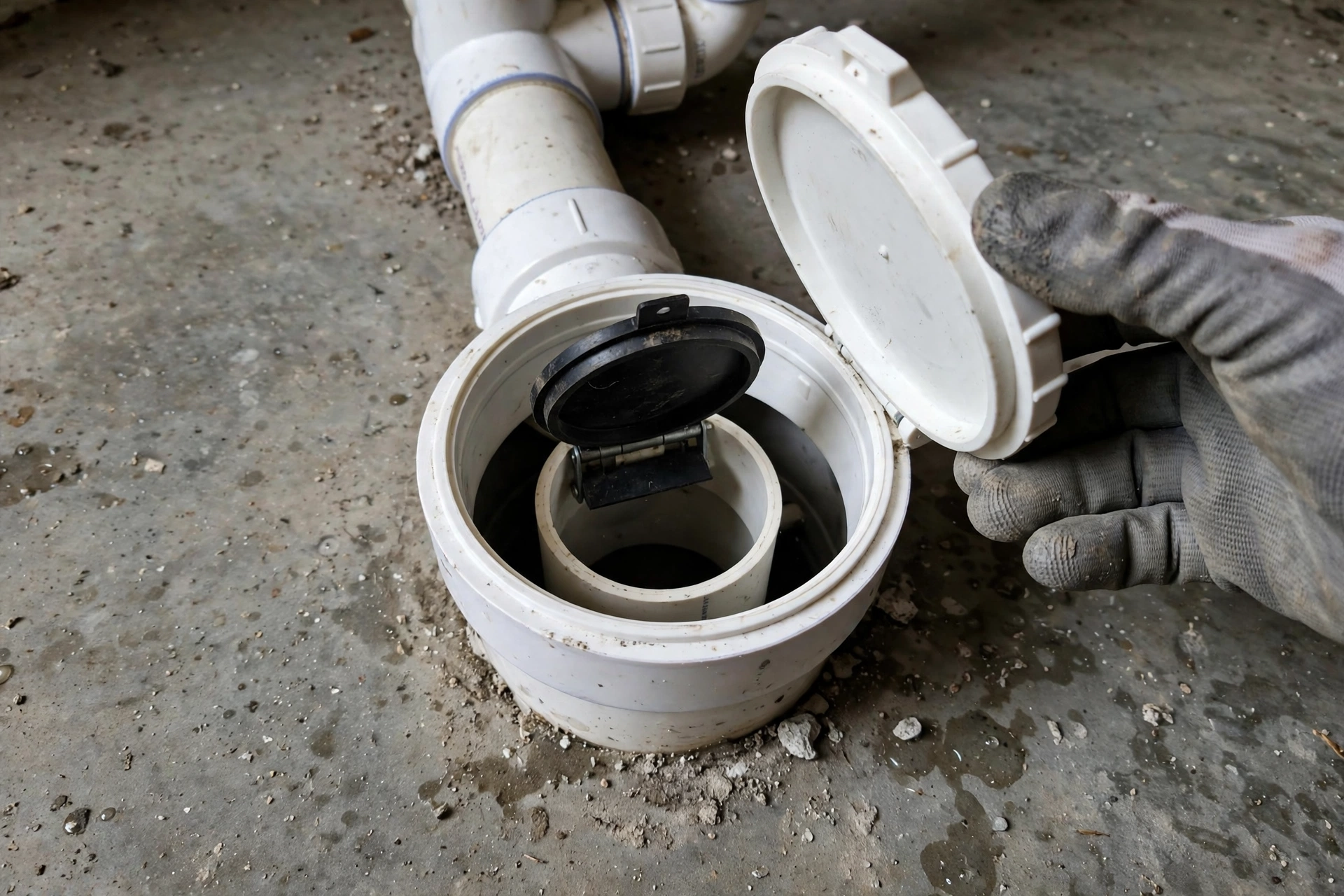
A backwater valve is a one-way gate for your sewer line. Simple idea. Clever little device. Inside a short section of pipe sits a flapper, a hinged flap that swings open when wastewater flows out of your house toward the street, and slams shut when water tries to flow the other way. Normal days, you never notice it. Your shower drains. Your toilet flushes. The flap stays open and out of the way. Storm day, the city main surcharges, sewage pushes back up your lateral, and the flap closes. The backup stops at the valve instead of arriving in your laundry room.
That is the whole job. One flap. One direction. It does not pump anything. It does not clean anything. It just refuses to let the street’s problem become your basement’s problem, and for a house at the bottom of a slope in Auguston, or a low-lying lot near Sumas Prairie where the water table already sits high in winter, that refusal is worth more than the valve costs. Our guide to basement waterproofing BC covers the full picture of keeping a basement dry, and the valve is one piece of it. The drain, the grading, the sump pump — they all matter. The valve is the piece that stops a backup specifically, and nothing else in the basement does that job.
Backwater Valve Installation Cost BC: The Table That Decides Your Budget
Start with the valve type, because the type decides the hardware price, and the location decides the labour. The table below shows installed ranges, including the valve, fittings, labour, and the access work the location needs. Permits sit outside these numbers. They come later.
| Valve setup | Where it sits | 2026 planning range (installed) |
|---|---|---|
| Normally-open flapper valve, 4-inch main line | Exposed pipe in an unfinished basement | $1,500 to $2,500 |
| Normally-closed valve, branch line | Floor drain or laundry branch line | $1,200 to $2,200 |
| Combination valve with backwater alarm | Main line, with an alarm on the flap | $2,000 to $3,500 |
| Exterior inline valve in an access chamber | Outside, buried chamber near the property line | $3,000 to $5,500 |
| Valve plus sump pump tie-in | Main line with a pump for the lowest fixtures | $3,500 to $6,000 |
Read that table with your basement in mind. A valve on an exposed pipe in an unfinished laundry room at $1,800 is one job. The same valve under a finished basement floor, where the crew cuts a square of concrete, digs down through clay, fits the valve, pours the concrete back, and redoes the flooring, is a different job. Same valve. Different bill. The concrete is the difference, and it is a big one.
What Is Actually in the Price
A backwater valve looks small in a photograph. A short length of pipe with a cap on top. The price is in everything around it. First the valve itself. A 4-inch normally-open flapper valve, the common choice for a main line, usually runs $200 to $600 for the unit alone, depending on the brand and the size of your line. A normally-closed valve costs a little more. An alarm-equipped unit costs more again, because it adds a sensor and a small alarm panel inside the house. The valve is the cheap part. Remember that. The rest of the bill is access and labour.
Second the access. If your sewer line runs exposed along a basement wall, the plumber cuts in the valve in half a day and the job is straightforward. If the line runs under the slab, the crew cuts the concrete with a saw, breaks it out, digs down to the pipe, and that is a day of noisy, dusty work before the valve even comes out of the box. Concrete cutting alone generally adds $500 to $1,500 to a job, and in Abbotsford clay the digging is slow work in November. Wet clay sticks to everything. It doubles the weight of every shovelful.
Third the labour. In 2026 a licensed plumber in the Fraser Valley generally charges $110 to $170 per hour, and a two-person crew is common on a valve job that involves concrete, so the labour line is two people at once. A simple exposed-pipe install takes half a day. A concrete-cut install takes a full day, sometimes two if the line is deep or the access is tight. Multiply it out and labour is often half the total. That is normal. It is not padding. It is the digging and the cutting.
Fourth the extras that quietly join the bill. A cleanout, so the valve can be reached and serviced later, usually adds $150 to $400. A backwater alarm, which beeps inside the house when the flap closes so you know a backup is trying to happen, adds $150 to $400 for the unit and the wiring. A permit, where the city requires one, adds $100 to $300, and the rules vary by city. Ask your municipality before work starts, since Abbotsford’s answer is not Langley’s.

Where the Valve Goes, and Why It Matters
Here is the fork in the road. Nearly every valve quote splits here — inside or outside — and that fork decides the price, the mess, and how you service the thing for the next twenty years. An inside valve sits on the main line in the basement, usually where the sewer leaves the house, and the plumber reaches it by standing in your laundry room. It is the cheaper install. It is also the one you can check yourself, twice a year, by lifting the access cap and looking at the flap. That matters more than people think, because a valve nobody checks is a valve that fails quietly.
An outside valve sits in a buried chamber between the house and the street, usually near the property line, and the crew digs a hole to reach the line. It costs more, because excavation is excavation, and in a front yard with a driveway or a prize garden bed over the line, the restore work adds up. The advantage is distance. The backup stops outside the house entirely, and the valve never takes up space in a finished basement. Some homeowners pick it for exactly that reason. The disadvantage is access. Servicing an outside valve means opening a buried chamber, which nobody does as often as they should.
Which does your house need — inside, outside, or a branch valve on one fixture? Most homes need the main-line valve inside, on the exposed pipe, and that is the cheapest honest answer. A house with a finished basement and no exposed pipe needs the concrete-cut version, or the outside chamber. A house where only the floor drain backs up, and the toilets never do, might only need a branch valve on that one line. A quote that prices a valve without asking which fixtures back up is not a full quote. Ask which line it covers. Ask it plainly. The answer tells you more about the final bill than the valve price does.
What Pushes the Price Up
A few things move a valve quote fast, and they are worth knowing before the crew arrives. Depth is the first. A sewer line three feet down costs more to reach than a line two feet down, because every extra foot is more digging, more soil to haul, and a deeper hole to work in. Concrete is the second. Cutting a finished basement floor, then pouring it back and redoing the flooring, adds $500 to $2,000, and the flooring is the part nobody budgets for. A vinyl plank floor goes back easily. Tile does not. Access is the third. A valve job through a wide side gate with a machine is cheap. Hand digging through a narrow side yard, carrying every bucket of clay out by wheelbarrow, is not. Landscaping restore is the fourth. A valve in a front yard under a new interlocking driveway costs more to restore than the same valve under plain lawn. And the fifth is the surprise underground. Old concrete, buried rubble, a forgotten oil tank, a gas line nobody marked. A good plumber calls BC 1 Call before digging. A bad one finds the gas line with a shovel.
Insurance, Rebates, and the Softened Truth
This is the part where most guides overpromise, so here is the careful version. Some home insurers look kindly on a backwater valve. Some do not change anything at all. A few offer a small break on a sewer backup rider, and a few simply note it on the file. Ask your own insurer before you spend the money, and get the answer in writing. A verbal maybe from a call centre is not a discount. It is a maybe.
Rebates are the same story. Some BC municipalities have offered backwater valve rebates in the past, usually a few hundred dollars, and some have not. No province-wide rebate is assumed in the ranges in this guide, and a quote that bakes in a rebate you have not confirmed is selling you a discount that may not exist. Check your city’s current programs before work starts. If one is running, it helps. If it is not, the valve still does its job, and the job is the point.
Maintenance: The Valve Nobody Checks
A backwater valve is not a fit-and-forget device. It is a fit-and-check device, and the checking is the part that gets skipped. The flap sits in wastewater. Debris collects on it. A bit of grease, a bit of grit, a small stone, and one day the flap does not close all the way. That is the failure mode, and it is quiet. No alarm. No warning. Just a backup that walks past a flap that should have stopped it.
Check it twice a year. Spring and fall, same as the gutters. Lift the access cap, look at the flap, wipe it clean, make sure it swings freely and seats flat. Five minutes. A plumber will do it as part of a maintenance visit if you ask, usually for the cost of the visit, and some homeowners fold it into their annual plumbing check. A valve with an alarm helps here, because the alarm tells you when the flap has closed, which means a backup tried to happen, which means it is time to look. Without the alarm, the calendar is your reminder. Set it. A valve that gets checked lasts twenty years or more. A valve that never gets checked lasts until the first backup it fails to stop.
DIY or Hire It Out
A branch valve on an exposed floor drain line is a job a confident homeowner can do, with the right fittings and a free afternoon, and plenty of people do it. A main-line valve is not. Cutting into your home’s main sewer line means the house cannot drain while the work happens, and a mistake means sewage in the basement, not a dripping tap. The work should be done by a licensed plumber, and in most BC cities a plumbing permit is part of the job, which a homeowner pulling their own permit still has to arrange. Hire the main line out. Do the twice-a-year check yourself. That split keeps the money where it matters, and it keeps the sewage where it belongs.
Frequently Asked Questions About Backwater Valve Installation Cost in BC
How much does a backwater valve cost in BC in 2026? Most homes land between $1,500 and $3,500 installed, as a 2026 planning range. A valve on an exposed pipe in an unfinished basement sits near $1,500 to $2,500, while a valve under a finished basement floor, with concrete cutting, runs $2,500 to $4,500. An exterior valve in a buried chamber runs $3,000 to $5,500. The valve unit itself is only $200 to $600. Access and labour are the rest of the bill.
Will a backwater valve stop all sewer backups? It stops backups coming in from the street main, which is the common storm-surge backup. It does not stop a backup caused by a blockage inside your own house, past the valve, or a flooded floor drain fed by a branch the valve does not protect. It also does nothing for water coming through the foundation wall or up through the floor slab. Those need waterproofing or a different fix, and a plumber who names the water source before quoting is the one to trust.
Where is a backwater valve installed? On the main sewer line, either inside the basement where the line leaves the house, or outside in a buried access chamber near the property line. Inside is cheaper and easier to service. Outside stops the backup before it reaches the house at all. A branch valve can also protect a single fixture, like a basement floor drain or a laundry standpipe, when only that fixture backs up.
Do I need a permit for a backwater valve in Abbotsford? A main-line valve usually needs a plumbing permit, and the work should be done by a licensed plumber. The rules vary by city, so check with your municipality before work starts, since Abbotsford’s answer is not Langley’s. A small branch valve on an exposed line may not need one. Ask first. The permit is the cheap part of the job.
How often should a backwater valve be checked or cleaned? Twice a year, spring and fall. Lift the access cap, look at the flap, wipe off any debris, and make sure it swings freely and seats flat. Five minutes. A valve with an alarm tells you when the flap has closed, which is your signal to check it. A valve that never gets checked can fail quietly, and the first sign is the backup it was supposed to stop.
A backwater valve is a small gate with a big job, and the price is the valve plus the ground it sits in. Get the backed-up fixtures named first, pick the location that lets you check the flap twice a year, and then pay for the valve that matches the actual problem, not the biggest one on the quote. Backwater valve installation cost BC rewards the same habit as every other renovation in this valley. Price the access and the concrete, not just the valve in the box, because the digging moves the number. Our guide to sump pump installation cost BC covers the pump side, for the lowest fixtures that need lifting as well as blocking. Want a straight answer for your own basement, measured against your line, not a showroom price? Call (236) 613-0038 and talk it through before you order anything, so the quote fits your house and your ground.