
Every October, the rain comes back to the Fraser Valley, and somewhere in Abbotsford a homeowner discovers water where it shouldn’t be. A damp patch on the basement carpet. A musty smell that wasn’t there in August. A thin sheet of water creeping in along the foundation wall after three days of steady rain.
Basements leak in BC for reasons baked into the place itself. Months of sustained rain. A winter water table that climbs up through the valley floor. Clay-heavy soils that hold water against your foundation instead of letting it drain away. Around here, waterproofing isn’t a luxury upgrade. It’s the difference between a basement you can finish and actually use — and one you quietly avoid.
Why Fraser Valley Basements Are Prone to Leaking
Abbotsford sits on a valley floor. The water table rises through the wet season. Much of the local soil carries significant clay content too — it drains slowly, and when it saturates it expands, pressing water and pressure alike against foundation walls. Throw in the region’s long rainy season and foundations here spend months of every year sitting in damp soil.
Older homes carry extra risk. Take a 1970s or 80s foundation in Clearbrook or central Abbotsford. It went in before modern drainage membranes were standard. The exterior weeping tile from that era? Often clogged with silt by now. Or crushed by soil movement — 40+ years of it. And the concrete itself may have picked up hairline cracks from decades of minor settling. None of this means the house is failing. It means the waterproofing system has reached the end of its working life.
Newer homes aren’t immune either. Poor grading causes a surprising share of leaks in houses under 20 years old. So do disconnected downspouts. So does landscaping that funnels water toward the foundation. And before you spend a dollar on waterproofing systems, do this: walk your property in heavy rain. Watch where the water goes.
Warning Signs Your Basement Needs Waterproofing
Water problems rarely start with a flood. Quiet is how they start. And the earlier you catch them, the cheaper the fix gets:
- Efflorescence — white, chalky mineral deposits on concrete walls or floors. What you’re looking at is residue. Water moves through the concrete, evaporates, and leaves it behind. On its own it’s cosmetic. But it’s proof — water is travelling through your foundation.
- Musty smell — a persistent damp odour, worst in corners or behind stored items. It usually means two things at once: moisture, and poor air circulation. Exactly the two ingredients mould needs.
- Staining — brown or rust-coloured marks on walls, floors, or the bottom of drywall. Water leaves a signature. Follow it back to the entry point.
- Spalling or flaking concrete — surface concrete breaking away in patches, often with dampness behind it.
- Water after heavy rain — any visible water counts — even a small puddle that dries up. It means the system is overwhelmed at least some of the time.
- Sump pump running constantly — or a sump pit with no pump at all in a home that clearly needs one.
One sign alone might be minor. Two or more together? That’s when it’s time for a professional assessment. And most waterproofing contractors in the Lower Mainland offer free inspections. Take them up on it — before you plan any basement finishing work.
Interior vs Exterior Waterproofing: How They Compare
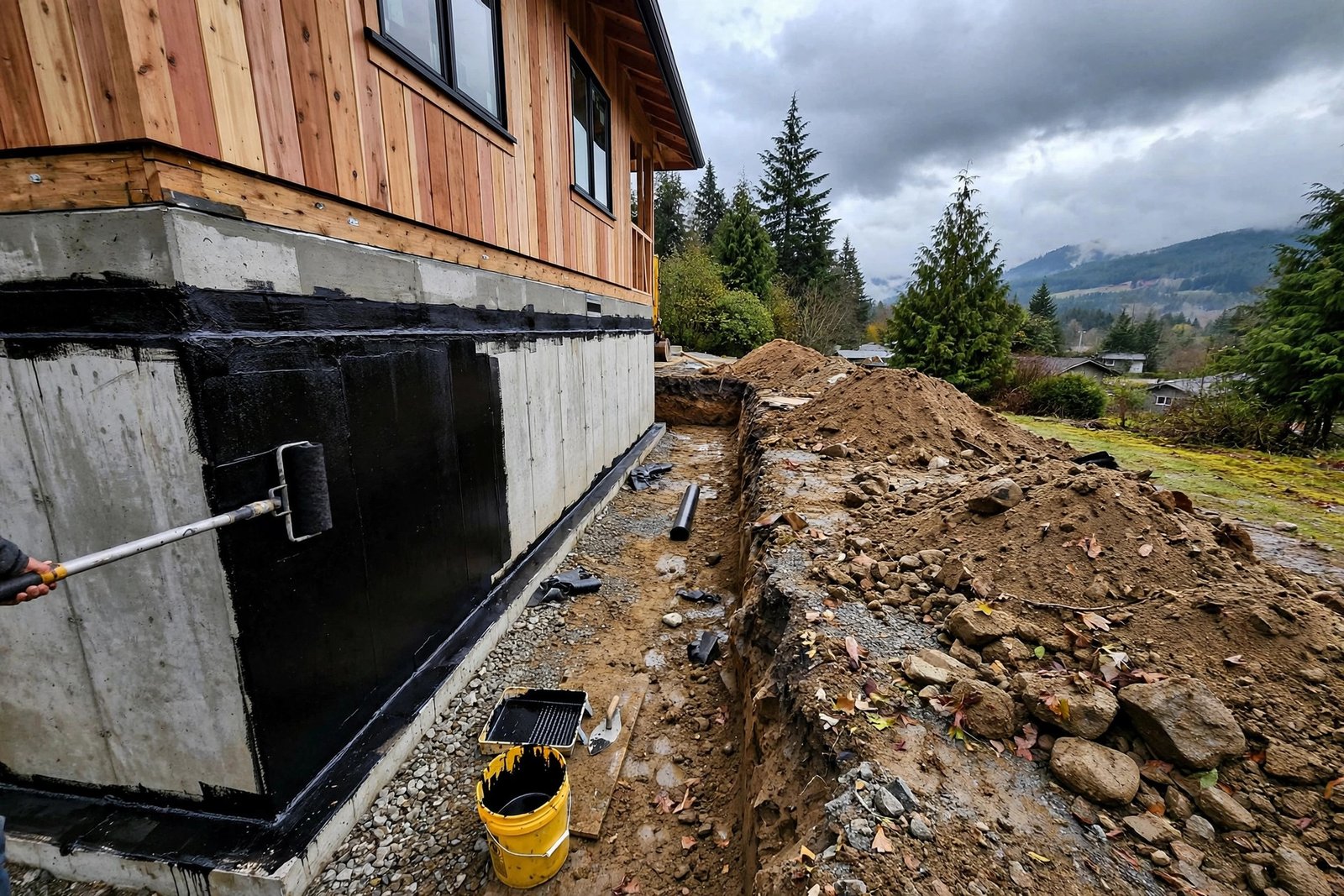
This is the central decision in any waterproofing project. Same problem. Opposite sides of the wall. That’s how the two approaches differ.
Interior waterproofing manages water after it gets in. Crews install a perimeter drainage channel — interior weeping tile — along the inside of the foundation footings. That usually means breaking out a strip of the basement floor. Water seeps through the walls or up through the floor joint, the channel captures it, and it runs to a sump pit, where a pump discharges it outside. All the work happens inside. Controlled conditions. Whatever the weather is doing.
Exterior waterproofing stops water before it ever reaches the foundation. The soil comes out — excavated down to the footings around the affected walls. Then the wall gets cleaned and repaired. A waterproof membrane goes on, plus drainage board. New exterior weeping tile gets installed. Then everything is backfilled. It’s the more complete fix — but it involves heavy equipment, torn-up landscaping, and weather dependence.
| Interior Waterproofing | Exterior Waterproofing | |
|---|---|---|
| How it works | Captures water inside, pumps it out | Blocks water outside the foundation |
| Typical BC cost | $75–$100 per linear foot | $90–$280 per linear foot |
| Full perimeter, typical home | $7,000–$15,000 | $15,000–$35,000+ |
| Disruption | Inside the basement; floor broken along walls | Excavation around the house; landscaping destroyed |
| Timeline | Days | 1–3 weeks |
| Best for | Moderate seepage, finished basements, limited exterior access | Severe/recurring leaks, structural cracks, failed exterior tile |
| Limitation | Water still enters the wall; doesn’t relieve exterior pressure | Expensive; impossible where lot lines or structures block access |
Costs are 2026 planning ranges for BC, not quotes — every foundation and soil condition differs.
For most Abbotsford homes with moderate seepage, interior systems are the practical choice. Less disruptive. More predictable pricing. And effective against the kind of seasonal water pressure the valley produces. Exterior work earns its higher price when the problem turns severe — repeated flooding, structural cracking, or exterior drainage that has completely failed.
Sump Pumps: The Heart of an Interior System
An interior drainage system without a sump pump is just a moat. The pump does the actual removing. Of every component in the system, it’s the one most worth understanding.
A sump pump sits in a pit — the sump basin — at the lowest point of the drainage system. Water collects in the pit. A float switch kicks the pump on. Out goes the water, through a pipe to the exterior — ideally well away from the foundation. Not just dumped onto the soil beside the house.
What to know before you buy or replace one:
- Submersible vs pedestal. Submersible pumps sit inside the pit. They run quieter. They handle higher volumes too — the right choice for most Fraser Valley homes. Pedestal pumps are cheaper, but noisier and less powerful.
- Battery backup is not optional here. The heaviest rains often arrive with power outages. That’s exactly when you need the system running. A battery backup pump keeps it working when the grid doesn’t.
- Test it twice a year. Pour a bucket of water into the pit each spring. Again in the fall. If the pump doesn’t kick on, replace it before the rainy season. Not during it.
- Typical cost: sump pump installation runs $550–$3,650 in BC, with battery backup at the higher end.
Foundation Crack Repair: When a Crack Is Just a Crack
Not every foundation crack is a crisis. As concrete cures, it shrinks. Most poured foundations develop hairline shrinkage cracks because of it — and structurally, they’re harmless. The question is always the same one: is water coming through?
Cracks you can usually monitor: thin ones. Under 2mm. Vertical, dry, stable over time. Mark the ends with a pencil. Check again in six months. Nothing changed? It’s cosmetic.
Cracks that need professional repair: any crack that’s actively leaking. Horizontal cracks count too — they can indicate lateral soil pressure, so get a structural opinion. So do stair-step cracks in block foundations. And any crack that is widening.
The standard repair for a leaking non-structural crack is epoxy or polyurethane injection. The crack gets sealed from the inside, with a flexible resin. It bonds the concrete. It blocks the water. Typical BC cost: $1,500–$3,300, depending on crack length and access. It’s a targeted fix — not a whole-basement solution. For isolated leaks, it works well.
And if a contractor recommends full-perimeter waterproofing over a single dry hairline crack? Get a second opinion.
What Basement Waterproofing Costs in BC (2026 Planning Ranges)
Pulling the numbers together: here’s what Fraser Valley homeowners should budget. Treat these as planning ranges. Soil conditions move every project. So do access, foundation depth, and how far the problem has spread:
- Interior perimeter drainage + sump pump: $7,000–$15,000 for a typical home
- Exterior waterproofing, one or two walls: $8,000–$20,000
- Exterior waterproofing, full perimeter: $15,000–$35,000+
- Foundation crack injection: $1,500–$3,300 per crack
- Sump pump install or replacement: $550–$3,650
- Dehumidifier (good supplement, not a fix): $300–$800 for a proper basement unit
For most homes needing waterproofing as part of a basement project, budget $1,500–$8,000 for the moisture work. That’s real money. But compare it with the alternative — finishing over an unresolved leak, then redoing drywall, flooring, and framing two years later.
All figures are 2026 planning ranges for BC, not quotes. Get 2–3 written estimates from waterproofing specialists — most offer free inspections.
Waterproof Before You Finish: The Order That Saves Thousands
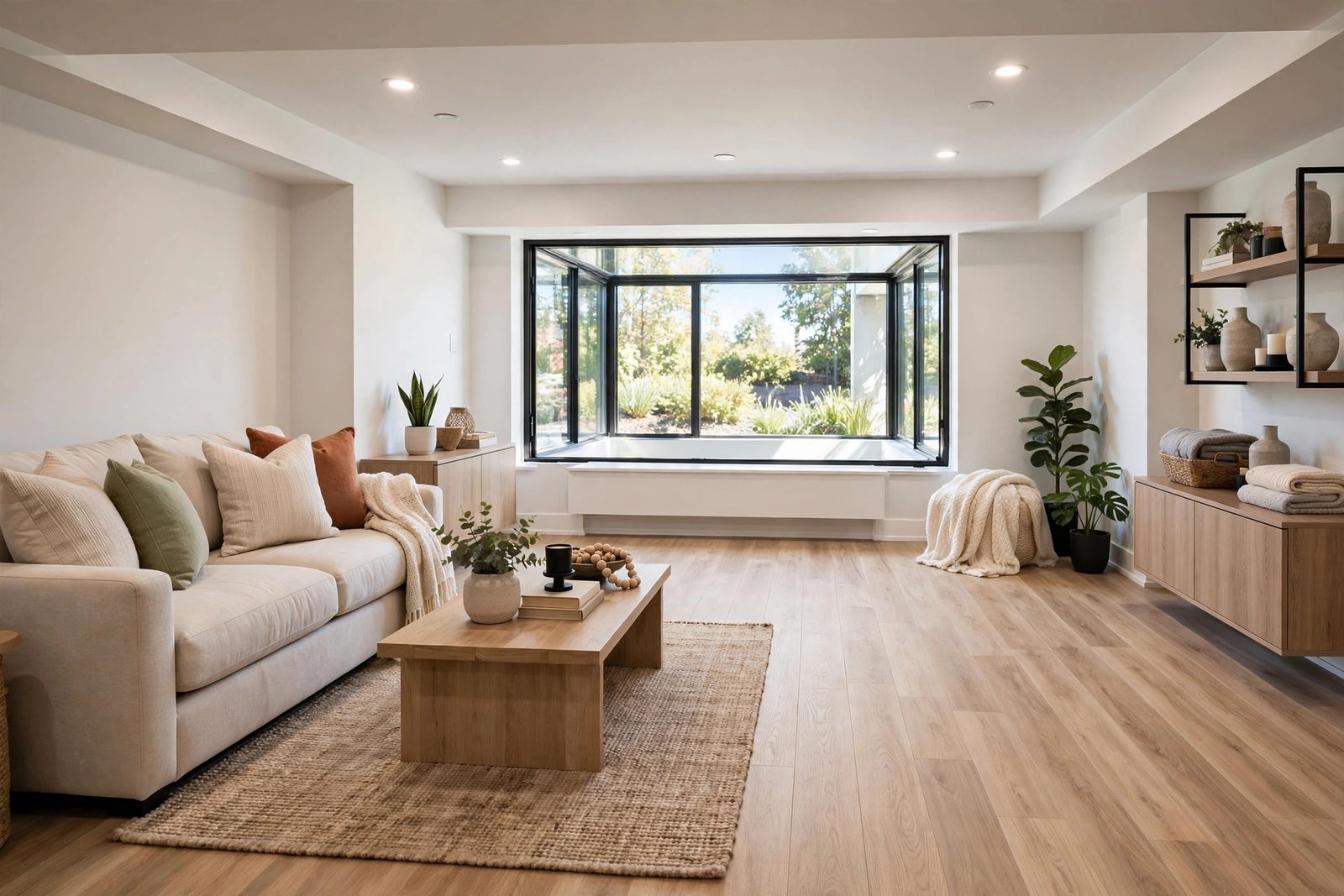
This is the mistake we see most often. A homeowner finishes a beautiful basement — framing, insulation, drywall, flooring — over a foundation with a known moisture issue. The hope is that the finishes will somehow hold. They won’t.
The correct order here is non-negotiable. It goes like this:
- Assess — a professional inspection. Ideally during the rainy season, or just after it — that’s when problems are visible.
- Fix water first — waterproofing, crack repair, grading, downspouts.
- Verify dry — give it one wet season if you can. A moisture meter reading on foundation walls should be consistently low.
- Then finish — framing, insulation, and all the basement finishing ideas you’ve been planning.
Budgeting a basement project? Our per-square-foot cost guide breaks down finishing costs. Add the waterproofing ranges above on top of that — for any home with a moisture history, anyway. And skipping step 2 to save money? It’s the most expensive decision in basement renovation.
Frequently Asked Questions
Can I waterproof my basement myself?
For minor surface dampness, yes — with limits. Off-the-shelf waterproof paints can reduce minor seepage through porous concrete. As a DIY weekend project, they’re reasonable. But hydrostatic pressure? They don’t fix it. Active leaks, failed drainage — not those either. Anything involving drainage systems, sump pits, excavation, or crack injection is professional work.
How long does basement waterproofing last?
A properly installed system typically lasts 10–25 years with minimal maintenance. Interior drainage needs the pump replaced roughly every 7–10 years. Keep the gutters clean. Maintain the grading. Test your sump pump twice a year. Do that, and the system will outlast most other parts of the house.
Will waterproofing increase my home’s value?
It protects value more than it adds it. Buyers in the Fraser Valley know what wet basements mean. A documented waterproofing system — with a transferable warranty — removes a major objection. You won’t recoup the full cost the way you would with a kitchen reno. But you’ll avoid the discount buyers demand when a basement is damp.
Do I need a permit for basement waterproofing in Abbotsford?
It depends on scope. Interior drainage and sump pump work generally falls under plumbing and electrical permits, not a full building permit. Exterior excavation is different. So is structural crack repair — either can trigger building permit requirements. Check our permit guide or call the City’s Building Department before starting.
Why does my basement only leak in fall and winter?
Because that’s when the Fraser Valley water table is highest. Summer’s dry months let the soil drain. By October the rains return. Clay soils saturate. Hydrostatic pressure builds against your foundation. Seasonal leaking tells you something specific: the problem is groundwater pressure, not a broken pipe. And that points toward drainage solutions.
Should I install an interior or exterior system for a finished basement?
Usually interior. If the basement is already finished (or you’re about to finish it), interior drainage avoids tearing up your landscaping and works from inside. Exterior waterproofing is the better fix for severe problems, but it means excavating around a finished home — disruptive and expensive. Many Fraser Valley homes end up with interior systems precisely because the yard, deck, or driveway makes excavation impractical.
Get Your Basement Dry Before You Finish It
A dry basement is the foundation — literally — of every good basement project. Legal suite, home office, or just a rec room that doesn’t smell like a cave: waterproofing comes first. Everything else follows it.
Take a look at our basement finishing services to see what’s possible once the space is dry. And get any moisture issues assessed before you spend a dollar on finishes. The cheapest basement renovation is the one you only do once.
Cost figures in this article are 2026 planning ranges for BC based on published contractor and industry data, not quotes. Every foundation, soil condition, and water problem is different — get 2–3 written estimates from waterproofing specialists for your specific situation.