
Mission Bathroom Numbers for 2026, Without the Guesswork
People in Mission ask a fair question and rarely get a local answer. So what’ll it actually cost you? Here, I mean. Not Vancouver. Not some national average pulled from who knows where, but a real Fraser Valley house, with Fraser Valley trades walking through your door to do the work?
Short version first. And honestly? It’s reassuring. Pricing here doesn’t drift far from the rest of the Valley. It can’t, really. You’ve got the same contractors driving the corridor, the same suppliers, the same tile shops serving everybody. What changes the total is rarely the postal code. It’s your house that does it. How old it is. What’s hiding behind that tub surround, and how far you’re dragging the plumbing from where it already sits, that’s what moves it.
Take a standard full job here. Layout stays put. New tile shower, new vanity, new fixtures, that kind of job, and you’re typically landing between $15,000 and $30,000. Most of them? They cluster tighter than that. Right around $18,000–$24,000, that’s where most standard full renovations here end up. Picture a main bathroom here. Stripped right back to the studs. Then rebuilt, mid-range tile, mid-range fixtures, and nothing’s moved, the toilet stays, the tub stays, the vanity stays right where it was. Hold onto that picture. It’s the centre of this market, really. Keep it in your head and the ranges below? They’ll make a lot more sense.
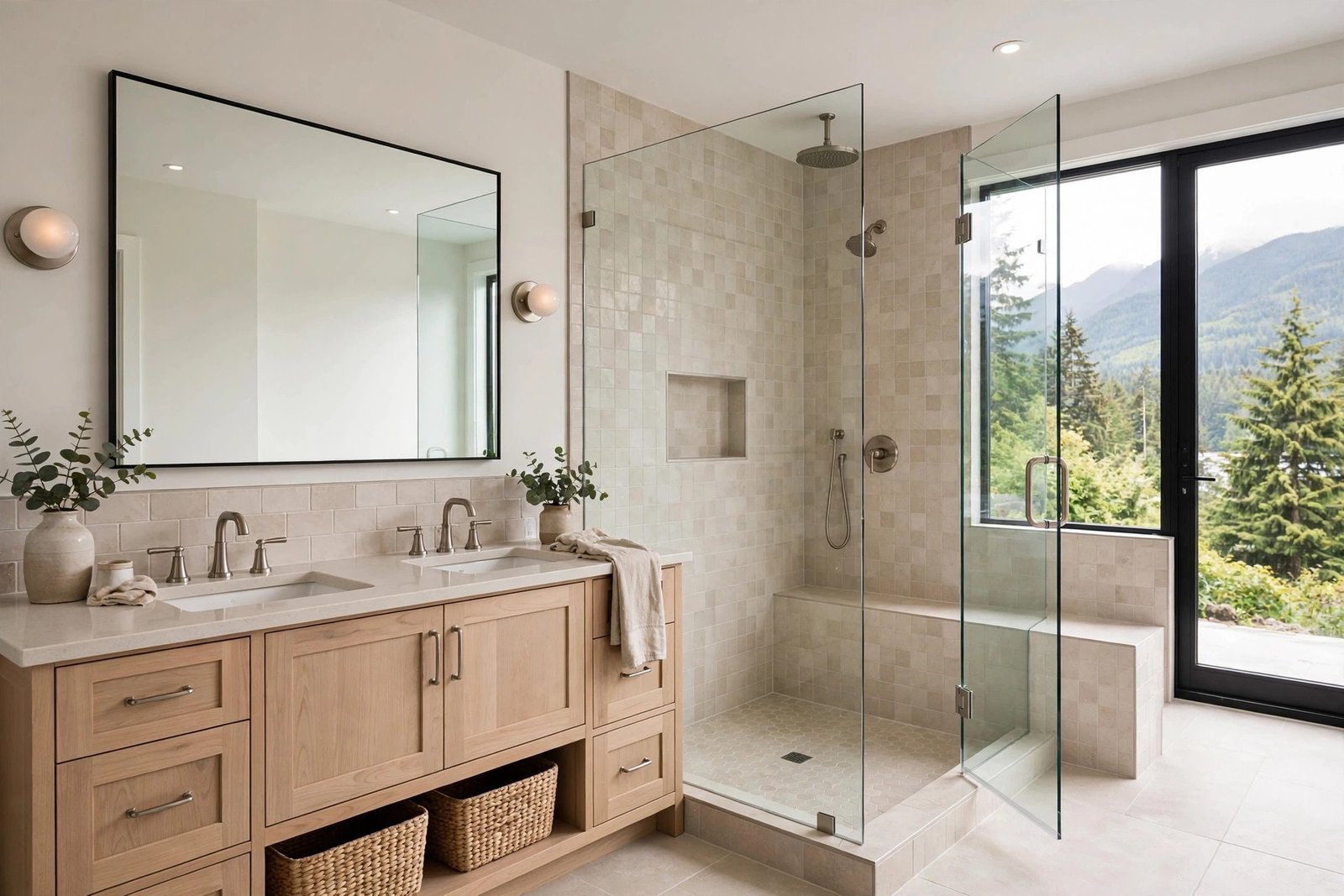
Four Levels of Project, Four Different Conversations
Quotes confuse people. No wonder, either. You’ve got one word, renovation, and it’s covering four jobs that aren’t alike at all. Sort yours early. Get it into the right level right away. Otherwise you’ll waste weeks comparing quotes side by side when they were never pricing the same work to begin with.
| Project level | What it includes | 2026 planning range |
|---|---|---|
| Cosmetic refresh | Paint, new fixtures in the same spots, a vanity swap, flooring over the existing surface | $7,500–$15,000 |
| Standard full renovation | Gut to the studs, new tub or shower, tile, vanity and flooring, layout unchanged | $15,000–$30,000 |
| Primary ensuite upgrade | Larger shower, double vanity, heated floor, modest layout tweaks | $28,000–$45,000 |
| High-end remodel | Layout changes, custom tile shower, premium fixtures, moved plumbing | $45,000–$65,000 |
Look across the river for context. Our Abbotsford bathroom renovation cost guide has a typical full renovation at $14,000–$32,000, and Mission? It’s sitting comfortably inside that same band. Break it down per square foot and it’s roughly $300–$500. That’s steep. Steeper than any other room in the house, actually. Density’s why. Plain and simple. There’s just too much packed into too small a space. Plumbing doesn’t spread out here. Neither does waterproofing. Neither does tile labour, it’s all concentrated in one small footprint, and no, it doesn’t get cheaper just because the room’s tiny.
A refresh can still do a lot. Starts at $7,500, this level. Keep it restrained, don’t go overboard, and it’ll change how that bathroom feels every single morning you walk into it. But it won’t fix a leak. Fresh fixtures won’t. A proper vanity won’t, new flooring and paint won’t either, not if it’s the shower that’s leaking. Got water damage in there? Then you’re out. You’re not in refresh territory anymore, doesn’t matter how fine the surface looks on top.
Breaking Down a Typical Mid-Range Budget
Tables of totals only help so much. You see it clearer another way. Take one typical job. Crack it open, look at the pieces inside, that’s when it starts to make sense. So here’s a standard one. A $20,000 Mission bathroom renovation, pretty typical. And the money? It typically divides up like this.
| Item | Typical share | Planning range |
|---|---|---|
| Shower or tub, including waterproofing | Up to 30% | $4,000–$8,000 |
| Tile for floor and shower walls, supplied and installed | Up to 20% | $3,000–$5,500 |
| Vanity, countertop and fixtures | About 15% | $2,000–$4,500 |
| Plumbing and electrical labour | Up to 20% | $3,000–$5,000 |
| Toilet, flooring, paint, glass and accessories | From 10% | $2,000–$3,500 |
| Permits, disposal and contingency | A smaller slice | $1,000–$2,500 |
Stare at that split long enough and something jumps out. Two patterns, actually. They jump out pretty fast once you’re looking. Biggest line? The shower. By far. And the gap’s wide, really wide, between a custom tiled shower done with proper waterproofing and a prefab tub and shower unit just dropped in. That’s where the weak quotes cheat, too. Right in that gap. Because once tile covers it, waterproofing’s invisible, nobody can see what got skipped. Pattern two? Layout. It’s layout again. Leave everything on its existing rough-in and you’ve found it. The biggest saving in the whole project, that is. Drag a toilet across the room instead and you’re adding $1,500–$3,000, that’s plumbing alone, before tile’s even entered the picture, before fixtures have either.
Totals move around. They do. But a project priced at $15,000–$30,000 with the layout left untouched? It’s still following that same internal logic inside. The proportions hold. The shower leads, tile follows, and the small finishing lines trail behind in a predictable order.
Why Age and Location Matter More Than the Map Pin in Mission
Mission doesn’t price itself in a bubble. It doesn’t. A few local realities nudge quotes this way and that, and you’ll want to know them before demolition starts, not after.
The labour pool is shared. Mission and Abbotsford draw on the same trades, and most Fraser Valley contractors quote both cities from the same rate sheet. Expect no small-town discount. Expect no big-city premium either. What you are really paying for is scope and condition, priced by people who do this work on both sides of the river every week.
Houses, though. Their age, I mean. That’s the bigger story here, bigger than location by a mile. Plenty of homes in the older Mission neighbourhoods date from the seventies through the nineties. That era? It leaves fingerprints. All over the bathrooms, it does. Pull the tub out and you’ll see it. Galvanized plumbing. Shut-off valves that are just tired, subfloors marked up by old water damage, it shows up often once you’re in there. Built before the nineties? Then watch out. You might need a hazardous materials survey before anyone demolishes anything, because WorkSafeBC rules say older materials have to be tested for asbestos, and in a bathroom the usual suspects are joint compound, vinyl flooring and pipe wrap. Testing costs. Safe removal costs too, when it applies. And skipping it? Don’t. It’s not an option worth entertaining, not really.
Out on the outskirts? Different wrinkle. There’s one more out there. Some places beyond the centre of Mission aren’t on sewer at all. They’re on septic. Add fixtures in a renovation like that and suddenly there’s a question, can the septic actually handle it, what’s its capacity? Have that conversation early. At planning, ideally. Not after, not once a second bathroom’s already drawn into the design and the fixtures are already ordered and sitting there.
Permits in Mission, Sorted by Type of Work
Permits sound scary. They do. Sort the work into the right buckets first, though, and they’re usually straightforward, much less intimidating than they sounded. Mission follows standard BC practice here.
Swapping like for like? Generally, you’re fine. No building permit needed for that, generally speaking. New toilet, same spot. That counts. A vanity or a tub swapped for the same fixture in the same place counts too, and so does cosmetic work, paint, flooring, that sort of thing. Move something, though? Add something? Then the picture changes, it changes fast. You’ll need a plumbing permit. Through the City of Mission, that’s where it comes from, if you’re moving plumbing fixtures or adding them, and the work itself has to be done by a licensed plumber, or by you, the owner, if you’re holding an approved homeowner permit.
Structural work? Separate bucket. It sits in its own, entirely. Knock out a wall and you’ll need one. A building permit, that is. Same if you’re changing window sizes, same if you’re reframing, you’ll need one for that too. Electrical’s different again. New circuits, moved outlets, a heat lamp, a heated floor, all of it falls under Technical Safety BC permits, and it’s a licensed electrician’s job, not anyone else’s. Fees move. Timelines move too, they shift over time. So check first, confirm your exact scope with the City of Mission Building Department, and do it before demolition starts, not during. A quick chat up front costs you almost nothing. Think of it as insurance. Cheap insurance, really, against a correction later that’s long and expensive and nobody wants.
The Line Items Homeowners Forget Until Demolition Day
Underneath, there’s another list. Every bathroom budget has one. It’s quieter, it’s hiding under the headline items, but it’s there. You won’t hear them first time round. Rarely, anyway. But run a real project and they show up, they almost always show up in the end.
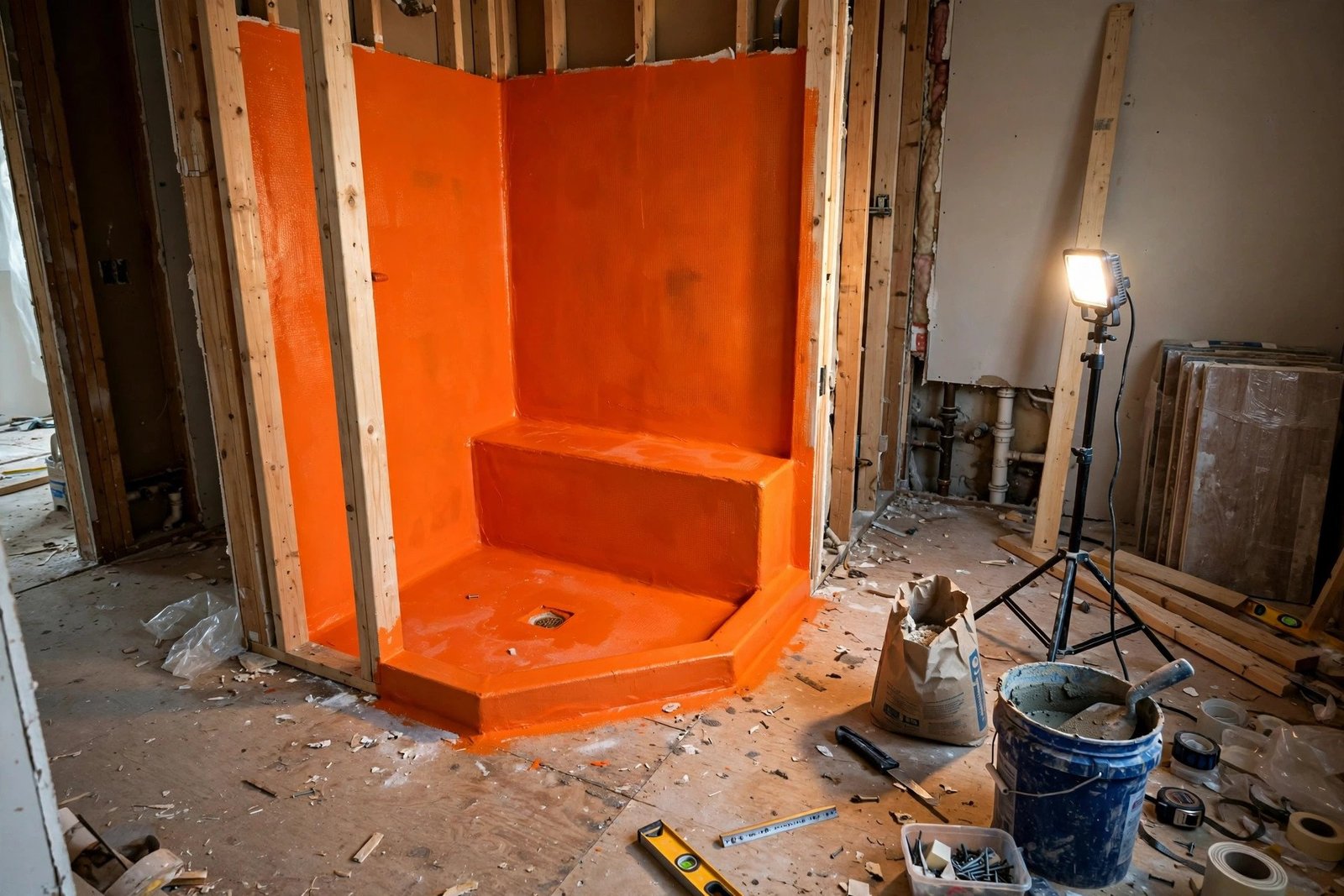
Waterproofing leads that list for good reason. A proper membrane system behind shower tile runs $800–$1,800 in materials and labour. Do it well and guess what? Nobody sees it. Ever. That’s kind of the point. Skip it, though. Or do it poorly. Then it turns into the reason your shower fails, years before it should’ve, and honestly, most bathroom failures trace right back to this line, this exact one.
Next up? Ventilation. It comes next on the list. The BC Building Code’s clear on this. Bathrooms need exhaust ventilation, it requires it. Older Mission homes, though? In practice, they don’t always comply, not even close sometimes. You open things up and the fan’s undersized. Or it’s just not there. Or, and this happens more often than anyone expects, it’s vented straight into the attic. Fixing it adds $400–$1,200. Worth it, though. Because it protects everything else you’ve just paid for, and trapped moisture shows no mercy, it’ll attack your tile, your grout, your paint and your framing without thinking twice.
Subfloor repair deserves its own allowance. Put money aside for it. Budget $500–$1,500, that’s the allowance, and hold it there until the floor’s actually opened and proven sound, not before. Rot? Expect it. Around the toilet flange, along the tub edge, in older bathrooms that’s the rule, it’s not the exception, and if you pretend otherwise you’re just moving the surprise to a worse moment, a much worse one. Heated floors round out the list as the one upgrade people choose for comfort rather than necessity. It’ll run you $1,200–$2,500 installed for a typical bathroom. And here’s the thing. Homeowners almost never regret it, not on a January morning in the Valley, they don’t.
Habits That Keep the Total Under Control
The levers that work? Unglamorous. All of them. Nothing flashy here, not really. Layout first. Keep it. Don’t move the layout if you can help it. Budget’s tight? Go prefab for the base. Pick a prefab shower base, tile the walls, and skip the fully custom pan, you’ll save yourself real money that way. Tile choice matters too. Go large-format. Bigger tiles mean fewer cuts, and fewer cuts mean less labour, it’s that simple. Order before you demolish. Before demolition begins, get it ordered. Because a vanity stuck on a long backorder? It’ll stretch a short renovation into a long one, and your only bathroom just sits there, gutted, while you wait.
Supplying your own fixtures? One caution there. Just one, but it matters. Yes, it can save you money. It can. But it can also open a warranty gap, something fails and suddenly each side’s blaming the other, and you’re stuck in the middle. Going that route anyway? Get it in writing. Who warranties what, spell it out, and do it before anything’s purchased, not after. Planning a kitchen the same season, by the way? Plenty of households do. Compare approaches in our kitchen renovation cost guide for Abbotsford if so. Same driver over there. Layout discipline. Hold the layout steady and the numbers behave, in a kitchen just like in this room.
Last habit? Contingency. And it’s not optional, not in a room like this, a room this good at hiding problems from you. Hold money back. Between 10% and 15% of the project total, hold that back. It’s for what demolition reveals, and demolition always reveals something. You can’t see them yet. Subfloor rot stays invisible, outdated wiring stays invisible, slow leaks too, they all stay hidden until the room’s open, and that money you set aside? That’s the difference, handling it calmly versus scrambling around panicking.
Three Decisions Before You Call Anyone
Three choices. That’s your target. Narrow your project down to them and the quotes coming back will finally line up, comparable at last. Layout. Stays or moves? Decide that one first, lock it in. Base next. Prefab or custom tiled shower? Pick one, decide between them now. And your level. Tile, fixtures, decide what level you’re at and then hold it steady, don’t drift, while contractors are pricing the job for you. With those three fixed, a Mission bathroom becomes one of the most predictable renovations in the house. Want a second set of eyes? If you’d like a hand sanity-checking a quote against the ranges here, call us, we’re at (236) 613-0038, and we’ll happily walk through it with you, where a number looks light, where it looks heavy, all of it.
Frequently Asked Questions
How much does a bathroom renovation cost in Mission, BC in 2026?
Full renovations, the standard kind? Most run $15,000–$30,000. Typical ones land tighter, around $18,000–$24,000, that’s the usual landing spot. A refresh is cheaper, obviously. It starts near $7,500. Go the other way, high-end ensuite, plumbing moved and all, and you can pass $45,000, with Mission tracking Abbotsford closely the whole time, and the wider Fraser Valley too.
Is renovating a bathroom cheaper in Mission than in Abbotsford?
Short answer? No. Not in any way that’d change your budget, it wouldn’t. Same trades work both cities. Same suppliers too, both cities rely on them. So price a comparable scope in either place and you’ll get a comparable quote back, that’s just how it works. What moves your price is closer to home. Literally. Your home’s age, its condition, the layout you’ve chosen and your finish level, they move it far more than which side of the river your house sits on ever will.
When does a Mission bathroom renovation need a permit?
Like-for-like replacement needs nothing, generally. No permit. Cosmetic work too, if you’re just replacing a fixture where it already sits, you’re not pulling one for that. Move plumbing, though? Add plumbing? Then you need a plumbing permit, and structural changes need a building permit, that’s separate, while electrical work needs a Technical Safety BC permit handled by a licensed electrician, so check with the City of Mission first, confirm your scope before you start.
How long does a bathroom renovation take in Mission?
Standard full job? Call it about 5 weeks. That’s on-site work, at the longer end anyway, and that’s once materials are actually on hand and any permits are issued and in your hand. A refresh is quicker. It can finish in 2 weeks, it really can. High-end stuff takes longer, custom glass, custom tile, those remodels can run to 7 weeks before they’re done.
What should I hold back as a contingency for a Mission bathroom?
Hold some back. Between 10% and 15%, that’s the share. Of the project total, hold that back and don’t touch it. Say it’s a $20,000 project. Then you’re keeping $2,000–$3,000 aside, tucked away for what demolition uncovers, subfloor rot, outdated wiring, a slow leak that only shows itself once the room’s open and you can finally see it.