
A sump pump is one of the cheapest insurance policies in a BC basement — and one of the most misunderstood. Homeowners usually meet the idea after a wet winter: water seeping up through the floor, a damp corner that never dries, or a neighbour’s flooded basement during one of the Fraser Valley’s atmospheric rivers. The pump itself is not expensive. What you are really paying for is the pit it sits in, the concrete work to install that pit, and the discharge line that carries the water away. Here is what sump pump installation costs in BC in 2026, and how to tell whether a pump alone solves your problem.
The short version: the pump unit itself runs $250–$600, a full interior installation including a new pit runs $1,500–$3,500, and adding a battery backup system adds $400–$900 in 2026. Exterior systems, which involve excavation around the foundation, cost considerably more and are usually priced as part of a larger waterproofing job.
1. Sump Pump Costs at a Glance
2026 BC planning ranges:
| Job | What it includes | 2026 planning range |
|---|---|---|
| Pump unit only | Submersible pump, 1/3 to 1/2 HP, standard residential grade | $250–$600 |
| Pump replacement (pit already exists) | New pump swapped into an existing pit, check valve, reconnection | $500–$1,100 |
| Full interior install with new pit | Concrete cut, pit basin, gravel bed, pump, check valve, discharge line, sealed lid, concrete repair | $1,500–$3,500 |
| Battery backup system (added to a main pump) | Backup pump, battery, charger and alarm | +$400–$900 |
| Exterior system | Excavation, exterior drain and pit — usually quoted with exterior waterproofing | Several times the interior cost |
Already have a pit with a dead pump in it? The replacement row is your number — it is the cheapest version of this job, and worth doing before the next storm rather than during it. Starting from a bare concrete floor, the full install is where most first-time budgets land.
2. What You Are Actually Paying For
A full interior installation has more moving parts than the price of the pump suggests:
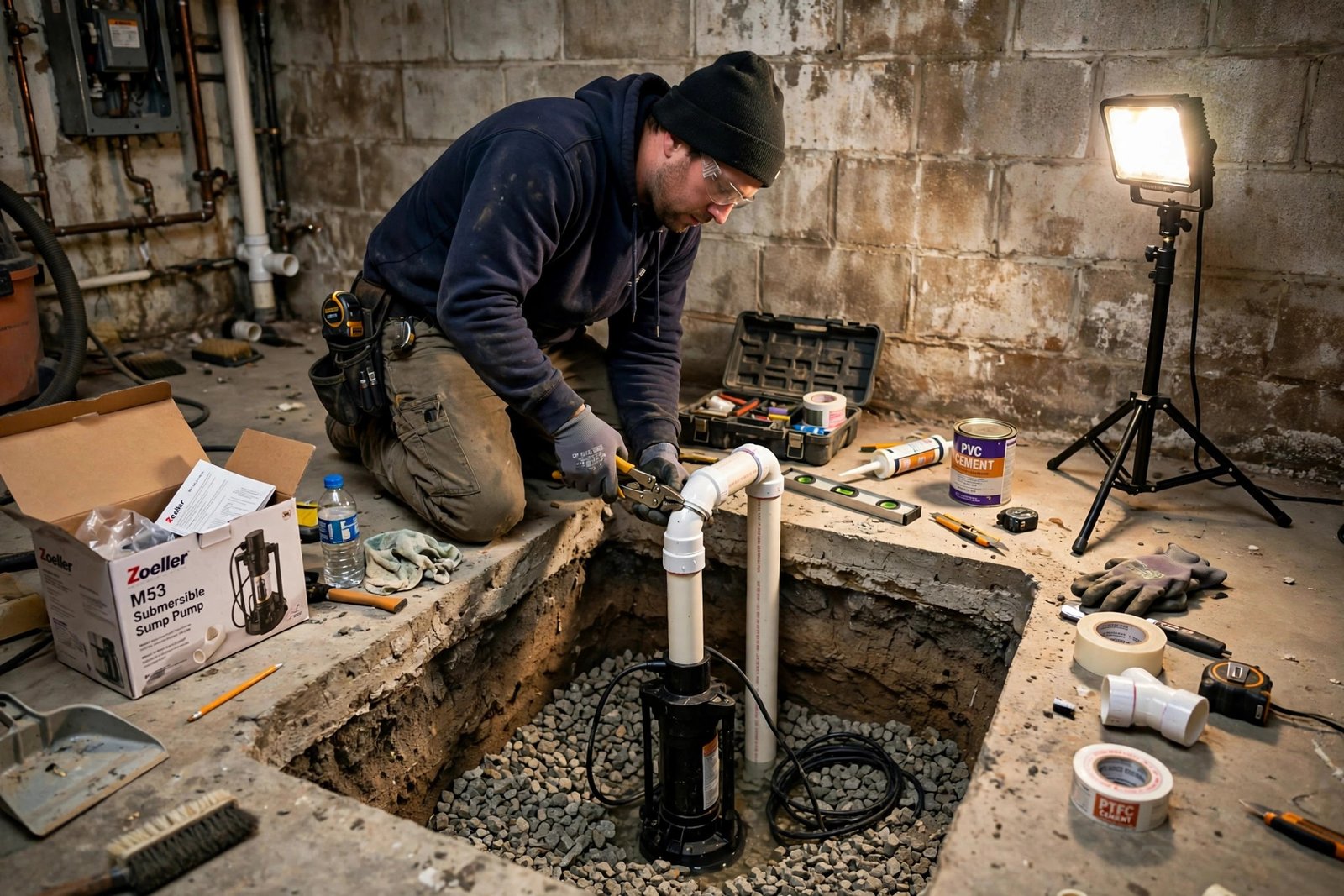
- The pit. A hole roughly 60–75 cm across is cut through the basement slab, dug out, lined with a perforated basin and bedded in washed gravel. This is the labour-heavy part: concrete cutting, digging and hauling spoil out of a finished basement.
- The pump. A submersible pump sits in the pit and switches on automatically when water rises to a set level. Cast-iron pumps cost more than plastic-bodied ones and generally last longer.
- The check valve and discharge line. The valve stops pumped water from flowing back into the pit. The discharge line carries water outside and away from the foundation — where it ends up matters as much as the pump itself.
- The sealed lid. A sealed, gasketed lid keeps moisture and soil gases out of the living space and is a code expectation in many BC municipalities when the pit connects to the drainage system.
- Concrete repair. The slab around the pit is patched and levelled so the floor is usable again.
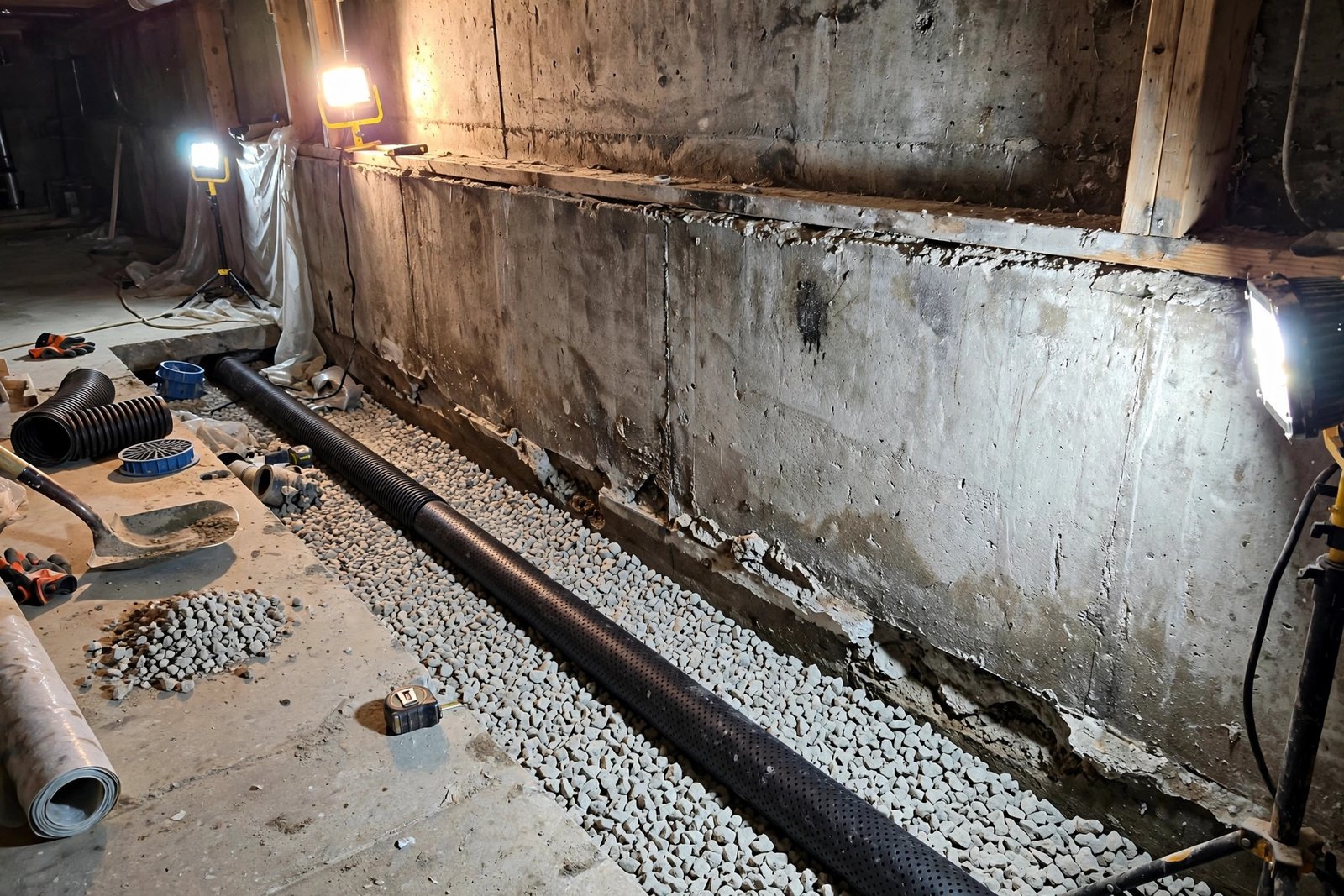
The system works with your home’s perimeter drain (weeping tile): groundwater collects in the tile, flows to the pit, and the pump lifts it out. If the weeping tile itself has failed — crushed, silted or collapsed, common in older Fraser Valley homes — a pump alone cannot fix it, which is where the bigger picture in our basement waterproofing guide for BC comes in.
3. Battery Backup: Cheap Insurance
Here is the uncomfortable pattern in BC: the storms that fill your sump pit fastest are the same storms that knock out power. A sump pump with no power is a bucket with a lid. A battery backup system — a secondary 12-volt pump with its own battery, charger and high-water alarm — keeps pumping through an outage and typically adds $400–$900 to the project.
For an unfinished storage basement, backup is a judgement call. For a finished basement, a legal suite, or any home that has already flooded once, it is close to automatic: the backup costs less than the deductible on most water-damage claims, let alone the damage itself. Budget to replace the battery every 3–5 years, and test the system twice a year — before the fall rains and again in spring.
4. Interior Pump, Exterior System, or Both?
An interior installation manages groundwater after it reaches the drain tile under your floor. It is the standard, affordable fix for a high water table and seasonal seepage, and it can be done any time of year without digging up your yard.
An exterior system intercepts water outside the foundation wall, which means excavation down to the footing, new exterior drainage and usually a membrane on the wall while it is exposed. That is waterproofing-scale work with waterproofing-scale cost — several times the interior price — and it is usually chosen when the foundation wall itself is leaking or the exterior drain has failed outright. Many wet-basement homes end up with both: exterior work on the worst wall, and an interior pit as the collection point. Our BC basement waterproofing cost and methods guide lays out how those bigger jobs are priced.
5. When a Sump Pump Is Not Enough
Call the pump a solution for groundwater pressure, not for every wet basement. Signs the problem is bigger than a pump:
- Water coming through cracks in the middle of the floor, not just at the edges
- A pump that runs almost constantly even in dry weather
- Efflorescence, mould or musty smell that returns after cleaning
- An older home (pre-1980s) whose clay weeping tile has never been inspected
In those cases, spend the first money on diagnosis — a drain camera inspection is cheap information — before committing to either a pump or a full waterproofing job.
6. Permits and Discharge Rules
A straightforward pump swap needs no permit. A new installation that cuts the slab and connects to the home’s drainage may need a plumbing permit depending on the municipality, and the electrical outlet for the pump is permitted work if one has to be added. The rule that catches people: in most BC municipalities you cannot discharge sump water into the sanitary sewer. Discharge goes to grade well away from the foundation, or to a storm connection where the city allows one. Our Abbotsford building permit guide explains how to check what your city requires before work starts.
7. Frequently Asked Questions
How much does it cost to install a sump pump in BC? The pump unit itself costs $250–$600. A full professional interior installation with a new pit, discharge line and sealed lid runs $1,500–$3,500 in 2026. Adding a battery backup system adds $400–$900. Replacing a pump in an existing pit is cheaper, at roughly $500–$1,100. These are planning ranges, not quotes.
How long does a sump pump last? Most residential sump pumps last roughly 7 to 10 years with normal use. Pumps that cycle frequently in high-water-table areas wear out sooner. Testing yours twice a year — pour water into the pit and watch it cycle — catches a failing pump before a storm does.
Is a battery backup worth it for a sump pump? In the Fraser Valley, usually yes. Heavy rain and power outages arrive together here, and a pump that stops during an outage protects nothing. For a finished basement or a rental suite, the $400–$900 backup cost is small next to a single water-damage claim.
Can I install a sump pump myself? Swapping a pump in an existing pit is within reach of a handy homeowner. A new installation is a bigger job — cutting concrete, digging the pit, setting drainage grades and routing the discharge legally — and mistakes usually show up as a flooded basement during the first big storm. Most homeowners hire it out.
Where does the sump pump discharge the water? Outside, to grade well away from the foundation, or into a storm connection where your municipality allows one. Discharging into the sanitary sewer is not permitted in most BC municipalities, and dumping the water right beside the house just recycles it back into the pit.
Planning the whole basement rather than one fix? Our basement finishing in Abbotsford page covers complete basement projects, including legal suites, bathrooms and finishing costs.
Dealing With Water in Your Basement?
Start with the diagnosis: where the water enters decides whether a $1,500–$3,500 pump installation solves it or a larger waterproofing job is needed. If you would like a second set of eyes on your basement, call us at (236) 613-0038 and we will talk through what your home is showing you and the realistic options — no pressure, just straight answers.