
Tile is the biggest single line in most bathroom budgets, and it is the one homeowners understand least. The tile itself is often the cheap part — a box of porcelain might be $4 a square foot, yet the finished wall costs $20. The gap between the box price and the installed price is labour, waterproofing, backer board, demolition and the hundred small decisions a tiler makes that you never see. Here is what tile installation actually costs per square foot in BC in 2026, how the three material families compare, and where the surcharges hide.
The short version: installed in a BC bathroom in 2026, plan on ceramic tile at $10–$20 per square foot, porcelain at $12–$25 per square foot, and natural stone at $20–$40+ per square foot. Labour alone typically runs $8–$15 per square foot for standard floor and wall work, with stone, mosaics and complex patterns pushing above that. Shower work costs more per foot than floors, and waterproofing is always in the number whether your quote itemizes it or not.
1. Bathroom Tile Costs at a Glance
Installed planning ranges per square foot (material + labour + setting materials), 2026 BC figures:
| Material | Tile material per sq ft | Labour per sq ft | Installed total per sq ft |
|---|---|---|---|
| Ceramic | $2–$6 | $8–$14 | $10–$20 |
| Porcelain | $3–$10 | $9–$15 | $12–$25 |
| Natural stone (marble, travertine) | $8–$20+ | $12–$20 | $20–$40+ |
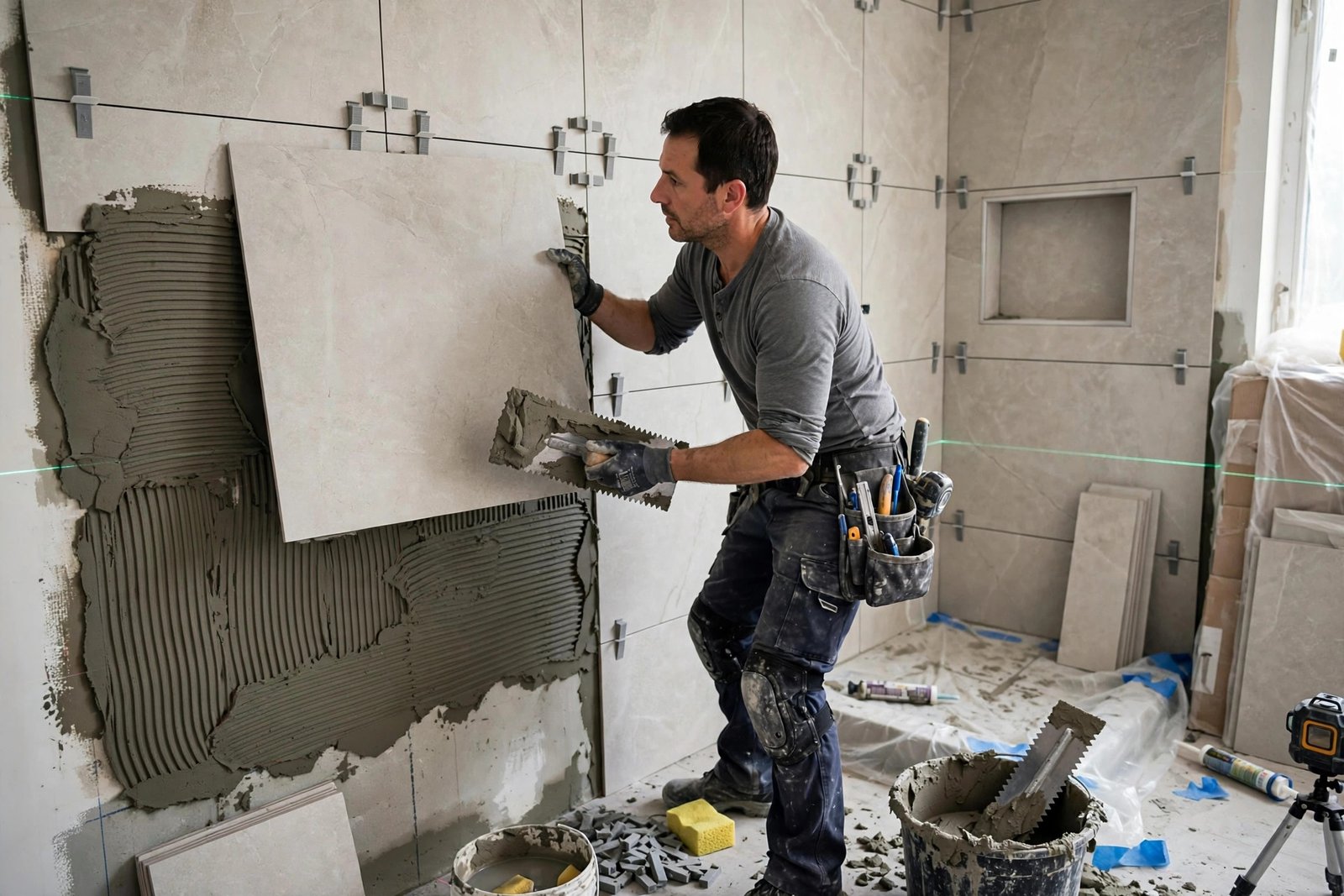
Why porcelain costs more to install than ceramic even at the same size: porcelain is harder and denser, which means slower cutting, better blades, and stronger thinset — and most porcelain going into BC bathrooms right now is large-format, which demands flatter walls and floors and more prep. Stone adds weight, sealing, and a tiler who actually knows stone; that labour premium is real and worth paying.
2. Where the Tile Goes Changes the Price
A square foot is not a square foot. The same porcelain tile prices out very differently depending on where it lands:
- Bathroom floor: the baseline rate. A typical BC bathroom floor is only 35–60 square feet, so even stone stays manageable here.
- Shower walls and shower floor: the premium zone. Shower walls run 70–100 square feet in a standard tiled shower, the work is vertical and detailed, and a membrane waterproofing system (roughly $2–$4 per square foot in materials, plus labour) sits underneath. Shower floors use small tiles for slope and grip, and small tiles are slow to set.
- Tub surround: the middle ground — usually 50–70 square feet, simpler than a full shower build.
- Full-height walls and wainscot: pure area math. Tiling all four walls of even a small bathroom can double or triple the tile area of the project, which is why most designs tile the wet zones fully and paint the rest.
Put together, a typical tiled shower plus floor in a BC bathroom involves 120–160 square feet of tile. At porcelain rates, that is roughly $1,900–$4,000 in tile work alone — which is why tile decisions move a whole bathroom renovation budget more than fixture choices do.
One measurement note before you compare quotes: tilers measure the actual surface to be tiled, including the inside of the niche and the shower curb, and they order 10–15% extra for cuts and breakage. If one quote is based on the room’s floor area and another on the true tiled area, they are not quoting the same job — ask each installer for their measured square footage and compare that number first.
3. The Surcharges: Niches, Curbless Showers and Patterns
This is where quotes surprise people. The extras that most often appear on a BC tile invoice:
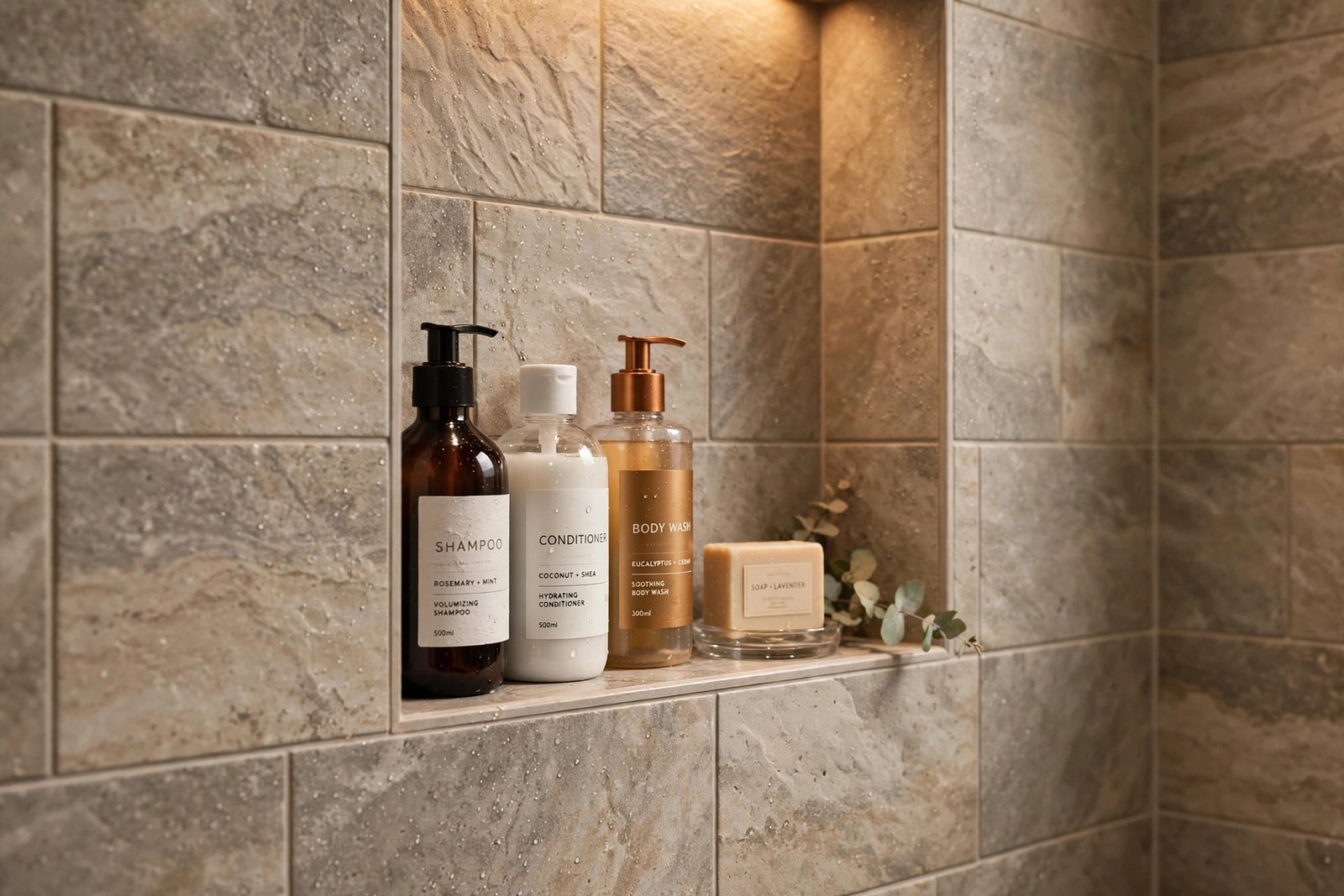
- Shower niche: a built-in shampoo recess runs about $300–$700 per niche installed — it has to be framed, waterproofed and tiled inside, and it interrupts the wall pattern.
- Curbless (barrier-free) shower entry: add roughly $800–$2,000. The floor has to be sloped precisely to a linear or centre drain, the waterproofing detailing is more demanding, and there is no curb to forgive a slope mistake.
- Mosaic and sheet tile: small pieces on mesh sheets install slower and need more grout; expect installed rates at the top of each material band or $15–$30 per square foot for detailed mosaic work.
- Herringbone, chevron and diagonal patterns: more cuts, more waste, more layout time — tilers commonly add 15–30% to the labour for patterned work.
- Heated floor under the tile: an electric radiant mat adds about $10–$20 per square foot installed on top of the tile work. Wonderful on a Fraser Valley January morning; budget it honestly or skip it.
None of these are rip-offs — each one is genuinely more hours and more risk for the installer. The problem is only when they are not discussed until the invoice arrives. Ask for them line by line before work starts.
4. What Else Is in a Tile Quote
Beyond tile and setting labour, a complete BC tile quote usually includes some or all of:
- Demolition and disposal of the old tile and backer: roughly $3–$6 per square foot, and old tile over plaster or multiple layered floors costs more to remove than it looks.
- Backer board and prep: cement board or foam board on walls, self-leveller on out-of-flat floors — large-format tile cannot hide a wavy substrate.
- Waterproofing: membrane systems for showers and wet areas. If a quote has no waterproofing line for a tiled shower, ask where it is hiding — this is the most common corner cut, and it fails expensively a few years later.
- Grout, sealers and trims: stone needs sealing at install and periodically after; metal edge profiles cost more than plastic and look it.
If you are weighing a tiled shower against a tub for resale as well as cost, our walk-in shower vs bathtub comparison covers what buyers in the Fraser Valley actually prefer.
5. Keeping the Tile Budget Under Control
- Use porcelain that looks like stone. Modern porcelain convincingly imitates marble at porcelain material and labour rates, with no sealing schedule. This is the single easiest $5–$15 per square foot to save.
- Spend on the shower, save on the floor. The shower is what you see and what takes the water. A mid-range floor tile underfoot is barely noticed.
- Go bigger to go cheaper. Large-format tiles cover area with fewer pieces and less grout, and usually install at the lower end of the labour band — as long as your walls are flat enough, which your tiler will tell you.
- Limit the pattern to one feature. A herringbone niche back or a single accent wall gives you the look at a fraction of pattern-priced labour everywhere.
- Tile the wet zones, paint the rest. Full-height tile everywhere is a hotel look at a hotel price; most bathrooms do not need it.
A good tiler is worth budgeting for — tile is the finish you touch every day, and bad tile work cannot be hidden. If you are planning the whole room rather than just the tile, our bathroom renovation team can walk you through where tile fits in the full budget.
6. Frequently Asked Questions
How much does it cost to tile a bathroom in BC? For the tile work itself, plan on $10–$20 per square foot installed for ceramic, $12–$25 for porcelain, and $20–$40 or more for natural stone in 2026. A typical bathroom with a tiled shower and floor has 120–160 square feet of tile, so tile work often totals $1,500–$4,500 depending on material and extras. These are planning ranges, not quotes.
How much do tilers charge for labour per square foot? Standard floor and wall tiling labour in BC typically runs $8–$15 per square foot. Natural stone, mosaics, small-format shower floors and patterned layouts push labour to $15–$20 or more per square foot because they are slower and less forgiving.
Why does shower tile cost more than floor tile? Three reasons: the work is vertical and detailed, the area is larger than most people expect (70–100 square feet of wall in a standard shower), and a waterproofing membrane system has to be installed under the tile first. The shower floor also needs small tiles set to a precise slope, which is slow work.
Is porcelain worth the extra cost over ceramic? In wet areas, usually yes. Porcelain absorbs almost no water, handles shower walls and floors better, and holds up to decades of daily use. Ceramic is fine for walls and low-moisture areas and saves money there. Many BC bathrooms mix both: porcelain in the shower and on the floor, ceramic nowhere it stays wet — or porcelain throughout for simplicity.
Does tile installation include waterproofing? It should, in any shower or tub area — but not every quote itemizes it, and some cut-price quotes quietly leave it out. Always confirm that a membrane waterproofing system is included for the shower and wet zones before comparing quotes; it is a small cost now and a very large one to retrofit after a leak.
Planning a Bathroom Renovation in BC?
Tile is where bathroom budgets are won or lost, and the cheapest time to make the right call is before anything is ordered. If you would like help pricing out your bathroom — tile, waterproofing, fixtures and all — call us at (236) 613-0038. We will talk through the materials honestly, including where the premium options are worth it and where they are not.