
A failing driveway is hard to ignore. It cracks. It heaves. It ponds water against the foundation every time it rains. And in the Fraser Valley, it rains a lot. Most Abbotsford homeowners replace it with concrete. Poured properly, concrete outlasts asphalt by a decade or more. It handles our wet winters well, too.
So what does it cost? The honest answer is a per-square-foot range. Driveways vary more than almost any other project. Size. Finish. Thickness. How much demolition sits underneath the old one. Here is the 2026 BC breakdown, finish by finish. Plus the extras that move quotes up or down.
1. The Per-Square-Foot Numbers
For a standard residential pour — 100 mm (4 in) slab, compacted gravel base, broom finish, control joints cut in — Canadian installed prices currently run about $10–$22 per square foot. BC sits at the upper end of that band. Broken down by finish:
| Finish | 2026 planning range (per sq ft, installed) | Notes |
|---|---|---|
| Plain broom finish | $11–$17 | The standard. Clean, grippy, cheapest to repair |
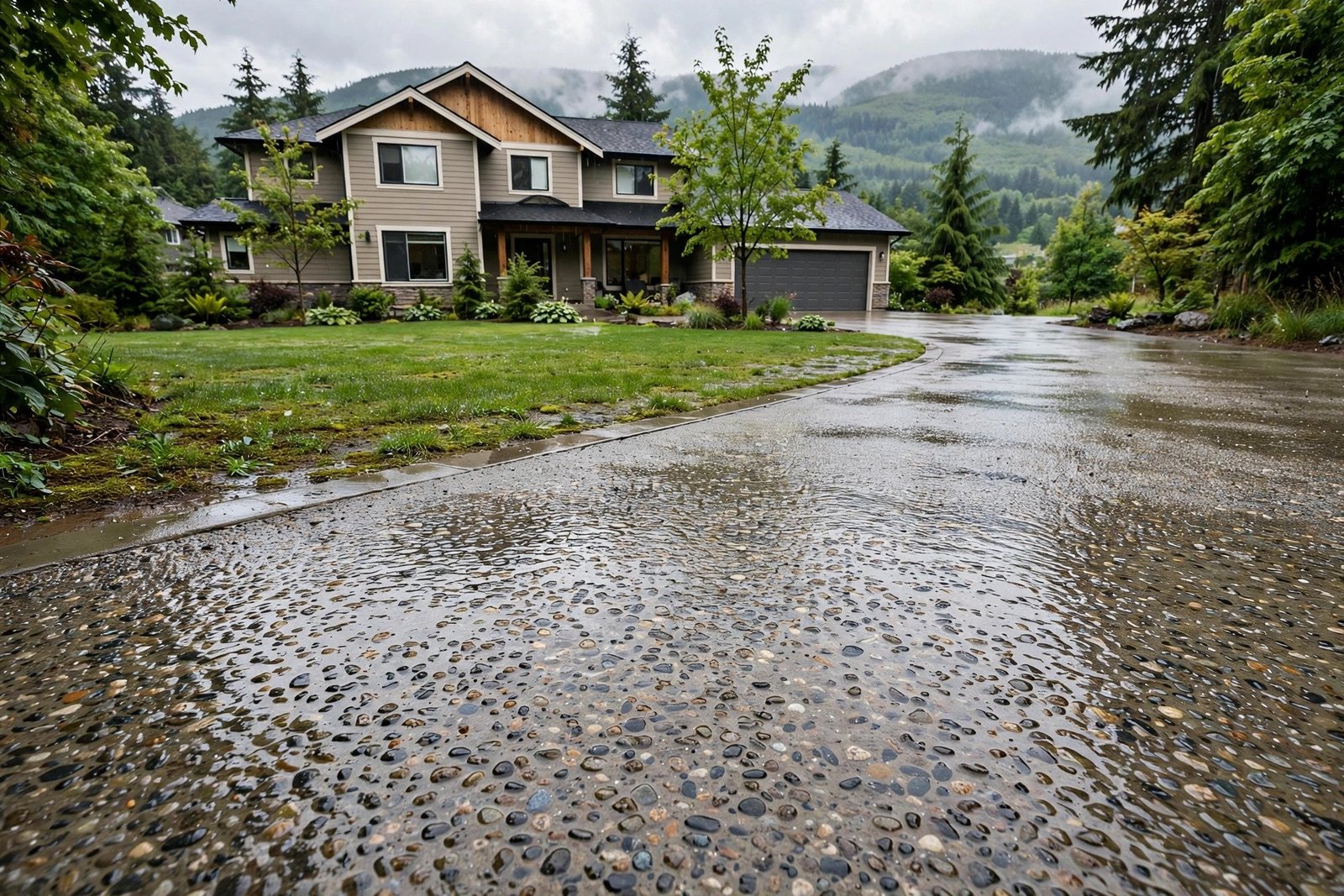
| Exposed aggregate | $15–$21 | Fraser Valley favourite; hides stains and adds traction |
| Coloured concrete | $14–$20 | Integral colour through the slab, not a surface stain |
| Stamped concrete | $17–$25 | Patterned to mimic stone or brick; most labour-intensive |
| Asphalt (for comparison) | $7–$12 | Cheaper up front, roughly half the lifespan |
What those numbers look like on real driveways:
- Single-car driveway (about 200 sq ft): $3,000–$5,500 in plain concrete
- Double-car driveway (about 400 sq ft): $5,500–$10,000 depending on finish
- Large driveway or RV pad (800+ sq ft): $10,000–$18,000+
Decorative finishes widen the spread fast. A stamped double driveway with a coloured border can cost twice the plain pour beside it. Same concrete. Same footprint. Very different labour bill.
2. What Is Included — and What Is Not
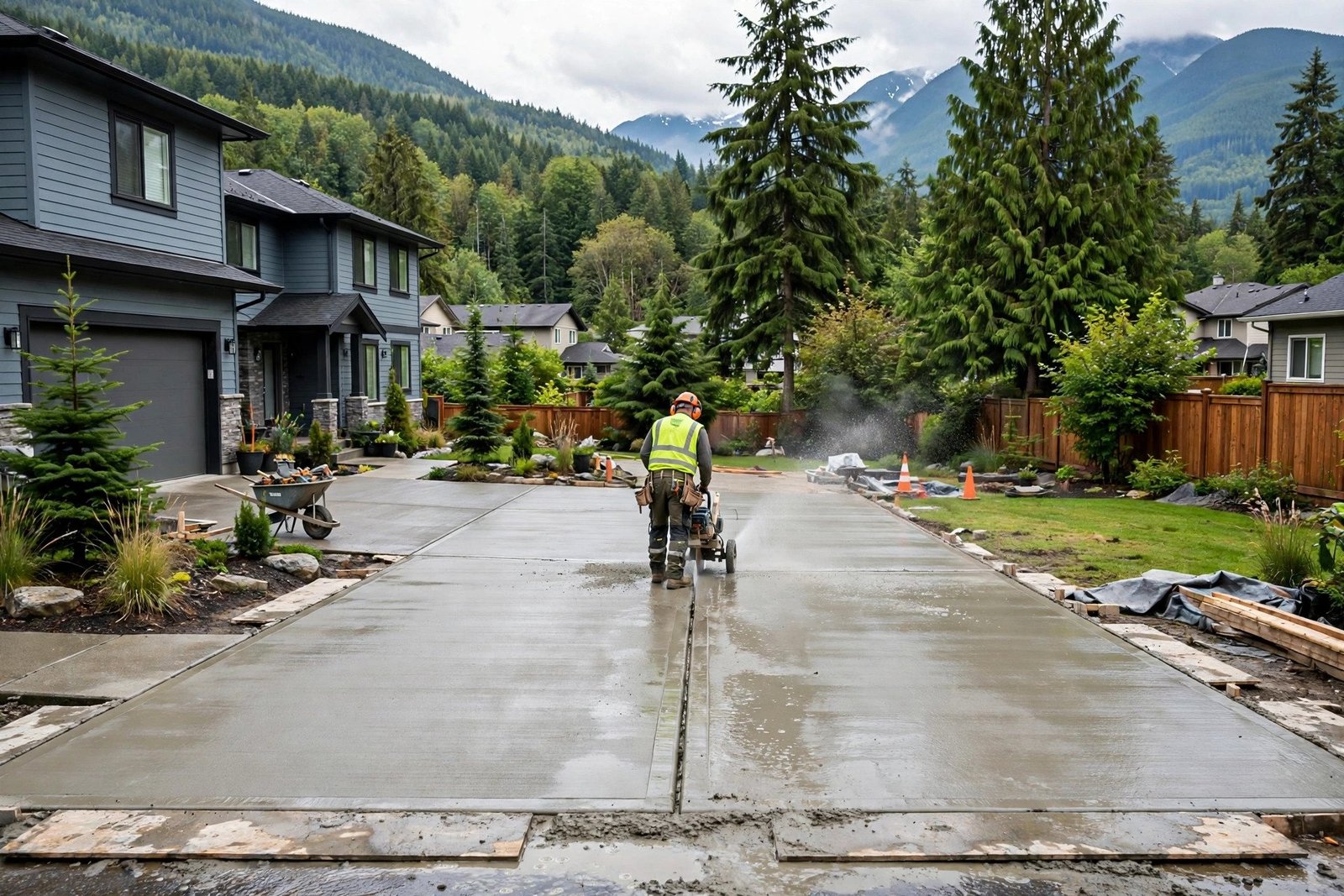
Per-square-foot quotes usually cover the basics. Excavation of the top layer. A compacted gravel base. Formwork. Reinforcement (fibre, mesh, or rebar). The pour, the finishing, the control joints. What they often do not cover:
- Removing the old driveway: the old slab has to be broken out and hauled away. On a standard double driveway, that typically adds $1,000–$2,500. Old concrete is heavy, and disposal fees are real.
- Drainage work: water running toward your garage or foundation? A channel drain or re-grading adds $500–$2,000 to fix it. Money well spent in Abbotsford’s rainfall. A new slab poured over bad drainage fails early.
- Thicker slab: 100 mm is standard for cars. A loaded RV changes things. So does a work truck. So does a future home addition construction route crossing the driveway. Then you want 125–150 mm with rebar. It adds roughly $2–$4 per sq ft.
- Permits and engineering: a like-for-like replacement on your own lot usually needs no building permit in BC municipalities. Widening is different. So is changing the curb cut — the letdown where the driveway meets the street. That’s city infrastructure. Approval typically does apply. Confirm with the City of Abbotsford before widening anything.
3. Why Thickness and Base Matter More Than Finish
Most premature driveway failures in the Fraser Valley trace back to one place. Under the slab. Not on top of it. Our soils hold moisture. Winters bring freeze-thaw cycles at the margins. Pour a slab on soft, uncompacted fill and it will crack. It will settle. No finish, however pretty, saves it.
A proper build looks like this. Excavate to stable soil. Compact a gravel base (typically 100–150 mm). Reinforce. Then pour air-entrained concrete. The air entrainment matters — it’s what lets the slab survive freeze-thaw without scaling. Control joints get cut within the first day. That way the slab cracks where the contractor chose. Invisibly. Not wherever it wants.
One quote comes in far below the others? This is usually where the difference hides. Thinner slab. Thinner base. No reinforcement. Ask every bidder to state slab thickness, base depth, and reinforcement. In writing.
4. Concrete vs Asphalt vs Pavers in the Fraser Valley
- Concrete: the highest upfront cost of the three common options, after pavers. A 25–30+ year lifespan with basic care. And the best performance in constant rain.
- Asphalt: roughly 40% cheaper to install. But the lifespan runs 15–20 years. It softens in summer heat. Resealing comes due every few years. Common on rural Abbotsford acreages with long driveways where concrete pricing gets painful.
- Interlocking pavers: $18–$30+ per sq ft installed. Beautiful. Repairable one unit at a time. Also the most expensive option here — and prone to settling if the base is skimped.
For most suburban Abbotsford homes, plain or exposed-aggregate concrete is the value pick. Mid-range price. The longest service life. No sealing schedule either, beyond an optional reseal every few years.
5. Maintenance Costs After the Pour
Budget small, regularly, rather than large, later:
- Sealing: optional for plain concrete. Worthwhile for exposed aggregate and stamped. A reseal every 2–3 years runs about $0.50–$2 per sq ft professionally applied. Less as a DIY job.
- Crack repair: hairline cracks are cosmetic. Ignore them. Cracks that widen, lift, or offset are different — those signal base failure. Grinding and patching a section runs $300–$800. A symptom fix, though. Not a cure.
- Pressure washing: wash it annually. Fraser Valley moss and algae will turn the surface slick otherwise. That green film is a slipping hazard before it is an eyesore.
One winter note: avoid de-icing salts on a new driveway’s first winter, and go easy on them after that — salt accelerates surface scaling. Sand gives traction without the damage.
6. Timing the Job in BC
Concrete wants mild, dry curing weather. In the Fraser Valley, the reliable window runs roughly May through October. Contractors book out weeks ahead in summer. Pricing is firmest then, too. Shoulder-season pours (April, late October) sometimes price slightly better. But a cold snap mid-cure is a real risk to the finish. So is a week of rain. If your driveway project is part of a bigger exterior refresh, sequence it after any exterior painting — fresh paint and concrete splatter do not mix.
Frequently Asked Questions
How much does a concrete driveway cost in BC in 2026?
Plain broom-finish concrete runs about $11–$17 per square foot installed in BC. Exposed aggregate sits at $15–$21. Stamped concrete, $17–$25. A typical double-car driveway lands between $5,500 and $10,000. Then the extras stack on. Removal of the old driveway. Drainage work. Thicker slabs. All figures are 2026 planning ranges — get at least three local quotes. Ready-mix pricing moves the number. Crew availability moves it too.
How thick should a residential concrete driveway be?
100 mm (4 inches) over a compacted gravel base. That’s the residential standard for cars and light trucks. Carrying an RV? A loaded work vehicle? Construction traffic? Go to 125–150 mm, with rebar. Thickness and base preparation matter more to lifespan than the finish you choose. Much more.
Do I need a permit for a new driveway in Abbotsford?
Replacing a driveway at the same size and location usually does not require a building permit. Widening it is another matter. So is adding a second driveway. Altering the curb cut where it meets the street? City property is involved, and City of Abbotsford approval typically is too. Rules vary another way as well. A protected watercourse on your lot changes them. A registered right-of-way does too. One call to the City before you sign a contract settles it.
How long does a concrete driveway last in the Fraser Valley climate?
25–30 years or more for a properly built slab. Adequate thickness. Compacted base. Air-entrained mix. Control joints. The Fraser Valley’s rain is not the enemy. Poor drainage is. A thin base is. Driveways that fail in 10–15 years almost always failed underground first.
Is exposed aggregate worth the extra cost here?
For most Fraser Valley homes, yes. It costs roughly $4 per sq ft more than plain concrete. In exchange, it grips better in the rain. It hides the staining and tire marks that show on a broom finish. It suits the region’s housing stock, too. One obligation comes with it: resealing every 2–3 years, to keep the surface stones locked in.
Can a new concrete driveway be poured over the old one?
Almost never a good idea. Pour fresh concrete over cracked, settled concrete and the old failures telegraph straight into the new slab. The driveway height rises too. Drainage problems follow. Garage-threshold problems follow. Break out and dispose of the old driveway instead — the $1,000–$2,500 it adds buys you a proper base and a slab that lasts its full lifespan.
Plan the Base, Then Pick the Finish
The quotes that matter spell out thickness, base depth, and reinforcement. Choose your finish after that. Plain for value. Exposed aggregate for Fraser Valley weather and looks. Stamped when the driveway is a design feature. Get the drainage right the first time. Pour in the dry season. A concrete driveway becomes a once-in-three-decades purchase.
If the driveway is one piece of a larger exterior plan, our guide to deck building costs in Abbotsford covers the other half of most backyard budgets, so you can sequence the two projects without surprises.
Permit and curb-cut rules vary by municipality — confirm requirements with the City of Abbotsford before widening or relocating a driveway.