
Your house gets sealed shut. Then a fan pulls air out of it.
That sounds dramatic. It isn’t, really. It’s the calmest part of the whole process. And in twenty minutes it tells a trained advisor more than a decade of utility bills ever could.
You’re trying to pin down the EnerGuide home evaluation cost BC homeowners pay before a retrofit? Short planning answer first. A few hundred dollars. Each visit. Most projects need two visits — one before the work, one after.
But the fee won’t make sense on its own. Not yet. You need to know what actually happens during those visits, because you’re not paying for a walk through. No. You’re paying for a measured rating. How your house uses energy. How it loses it. Built room by room.
An EnerGuide evaluation is a standardised home energy assessment. A registered energy advisor carries it out. They work through a service organization.
It’s sometimes called a home energy audit. The EnerGuide version is more formal, though. A quick audit from a contractor won’t match it. This one produces a rating. A label. Recommendations, too. And they’re based on actual measurements, not guesses.
In BC that matters. A Fraser Valley winter can mean weeks of rain. Wind driving at the walls. A furnace that barely rests. In that kind of weather those measurements do real work — they turn vague worries about drafts and bills into a ranked list. A list you can act on.
What actually happens during the visit
Outside first. Then in.
The advisor notes the age of the house. Its construction. Windows. Doors. Anything obvious about how the building shell is holding together.
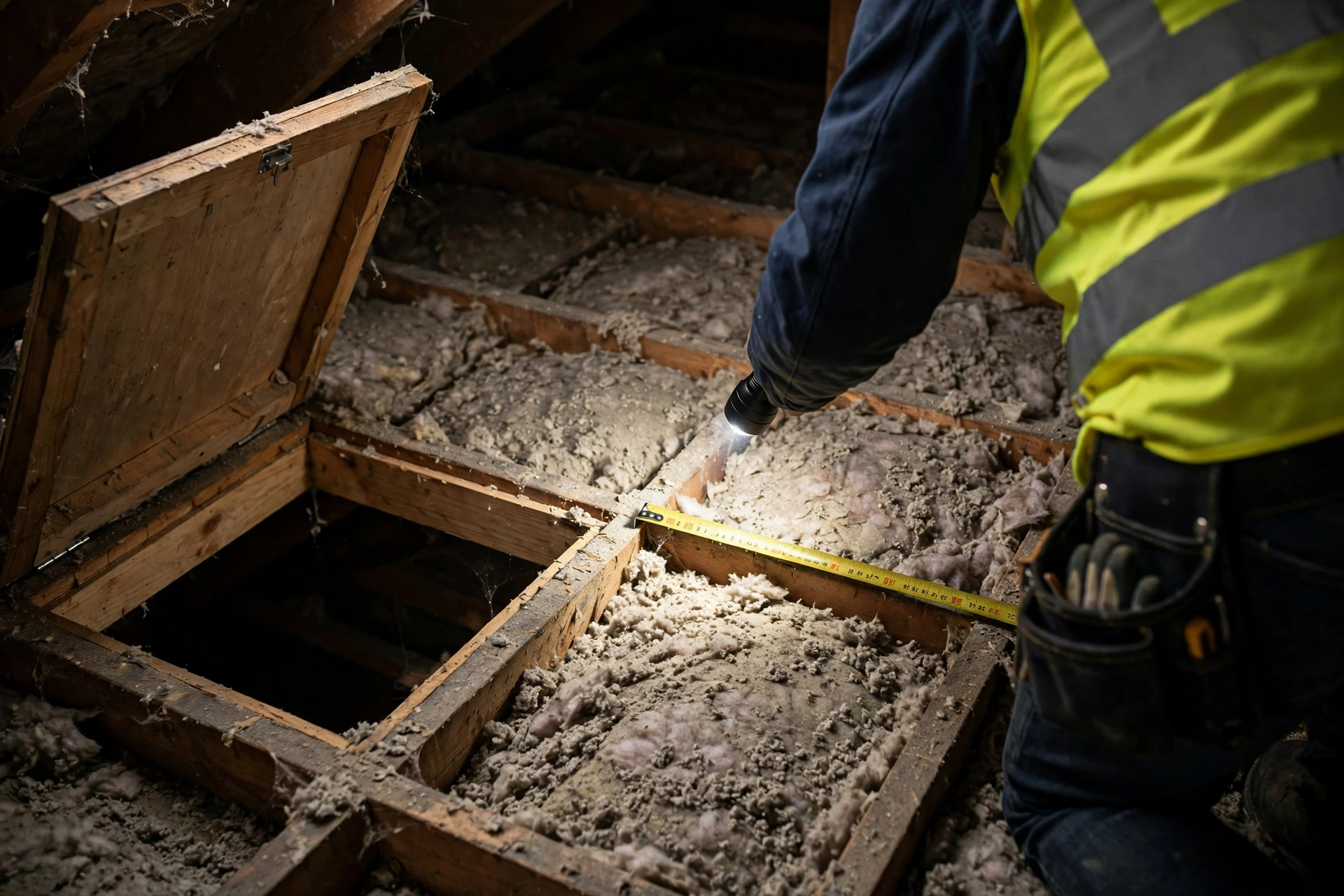
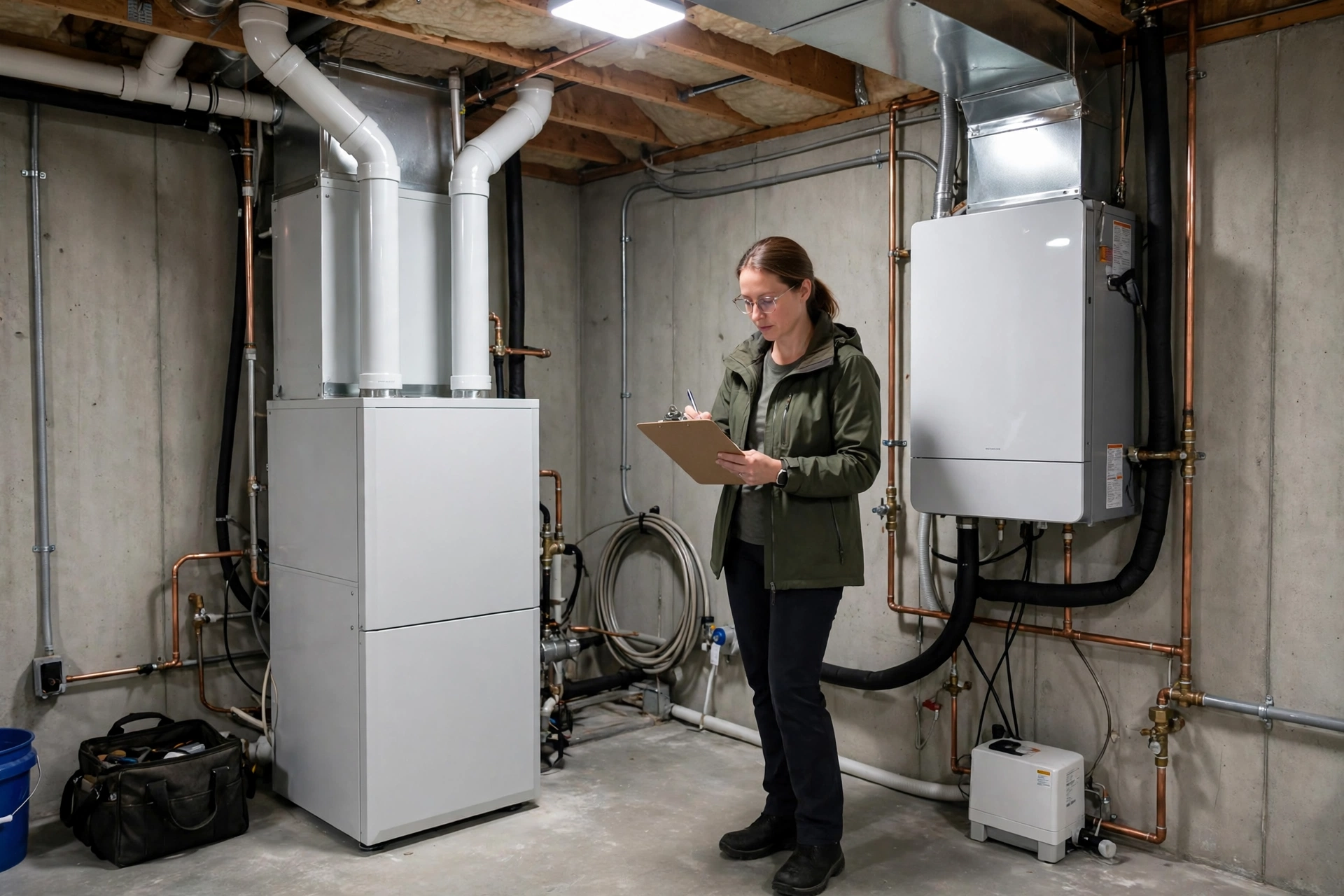
Inside, it gets detailed. Attic insulation gets checked — depth, coverage, all of it. Wall insulation gets assessed where it can be seen. Or where it can be reasonably inferred from the construction. Heating gets reviewed. So does the water heater. Ventilation, too, because a house is a system and the parts push on each other. More than most of us expect, they do.
Then comes the blower door test.
Everyone remembers this part.
The advisor fits a frame into an exterior doorway. Fabric panel, too. A fan gets mounted in it, and the house gets depressurized in a controlled way while instruments measure how much air leaks out.
And here’s the oddly satisfying bit. With the fan running you walk the house with the advisor. You feel the leaks. Back of your hand. Around window latches. At pot lights. Along the attic hatch. At plumbing penetrations. In the rim joist in the basement, where cold air pours in through gaps nobody sealed — because nobody ever sees them.
Homeowners say it all the time. That hour teaches them more than years of living in the place.
All of it feeds into an energy model of your home. The model produces the EnerGuide rating. It estimates your home’s annual energy consumption, and the advisor prepares the label plus a report that lays out recommended upgrades.
Those recommendations matter. They’re specific. Specific to your house, not copied from a generic checklist, and they usually show which changes would move the rating most.
Keep the report.
You’ll want it later. When you’re choosing between insulation, windows, and a heating upgrade, you’ll want it. You’ll definitely want it if you apply to a rebate program.
EnerGuide home evaluation cost BC, broken down
So. The numbers.
The energuide evaluation BC price you’re quoted will vary. Size matters. Complexity matters. The service organization you book through matters, too. So treat the figures below as 2026 planning ranges in Canadian dollars. Not quotes.
A detached house takes longer to model. More storeys, additions, multiple heating systems — all of that adds time compared with a compact rancher. The fee reflects that time.
| Evaluation type | Typical 2026 planning range (CAD) | When it happens |
|---|---|---|
| Pre-retrofit EnerGuide evaluation | $350 to $650 | Before upgrades begin, establishes your baseline rating |
| Post-retrofit EnerGuide evaluation | $250 to $450 | After upgrades are complete, verifies the new rating |
| Combined planning range, both visits | $600 to $1,100 | The full before and after sequence most rebate programs expect |
The post-retrofit visit usually costs less. There’s a simple reason.
The advisor isn’t building a model from scratch. They’re updating one. The visit focuses on verifying what changed — new insulation, a new heating system, air sealing work, whatever you had done gets documented. Then the rating gets recalculated.
That second number is your proof. On paper. It shows what the renovation actually achieved, which is worth having whether or not a rebate is involved.
When you compare a home energy audit cost BC quote against another, don’t just compare totals. Ask what’s included first.
Does the fee cover the full report and label? Or are those extra? Is travel included? Or is it added for homes outside the advisor’s usual area?
And if you’re planning upgrades in stages, ask this. How long does your file stay open?
A slightly higher fee can be the better buy. It can. If the reporting is thorough, it’s the better buy, because that report is the document everything else hangs on.
Rebates need the paperwork, and the rules move
Read this part carefully.
EnerGuide evaluations are commonly required to qualify for federal and provincial retrofit rebate programs. Why? Those programs need a verified before and after picture. Not a homeowner’s say so.
Programs have historically offered a mix of grants and loans to help with retrofit costs. The evaluation is often the doorway into them.
But rules move. Eligible measures change. Amounts change. Sometimes with little warning. And older blog posts cheerfully quoting dollar figures? Poor guide. A poor guide to what’s open today.
So don’t count on any specific amount. Not until you’ve checked. Check the current CleanBC program pages yourself. Check the current federal program pages yourself. Or confirm the details with your service organization before you book.
Our guide to home renovation rebates and grants in BC explains how these programs are structured and what to verify. Read it as a map. Then confirm the live rules at the source.
If a program requires the pre-retrofit evaluation to happen before any work begins, starting your renovation first can close that door. And no amount of paperwork afterwards reopens it.
Sequence isn’t a detail here. Sequence is the whole game.
Why the evaluation comes before the renovation, not after
No rebate in the picture? Doesn’t matter.
An energy assessment before renovation still earns its fee. Same way a good measurement earns its keep on any job. It sequences the upgrades — by payback, by impact.
Without it, homeowners tend to buy the most visible thing first. Usually windows. Meanwhile the house keeps leaking heat. Through a thin attic. Through a drafty rim joist that would’ve cost far less to fix.
The model doesn’t care what looks impressive from the street. It ranks what reduces energy use. In your actual house. And the ranking surprises people often enough that it’s worth the visit on its own.
It also protects you. From upgrades that fight each other.
Tighten a house up with serious air sealing and the ventilation picture changes. Swap a heating system before insulating and you may size the new equipment for a house that no longer exists. Once the insulation goes in, that house is gone.
The evaluation gives your contractors a shared starting point, too. Instead of three trades offering three opinions, everyone works from the same measured baseline.
Want to see where the recommendations lead? our guide to energy efficient home upgrades in BC covers the upgrade side — insulation and air sealing, heating and windows, all of it.
One more reason. A BC specific one.
Older Fraser Valley homes were built for a different era of energy prices. Plenty hide their worst losses where you can’t see them. Not from the living room, you can’t.
A damp crawl space pulling cold air up through the floor. An attic where insulation has slumped. Thinned, too, over decades of wet winters.
You can renovate around those problems for years. Making the house prettier. While it stays expensive to heat.
Or you can measure first. Fix in the right order. Let the cosmetic work follow a house that already performs better.
EnerGuide Evaluation Questions: Frequently Asked Questions
How much does an EnerGuide evaluation cost in BC? For 2026 planning, budget like this. A pre-retrofit evaluation typically runs $350 to $650. A post-retrofit evaluation runs $250 to $450. In Canadian dollars. Most homes that need both visits should budget $600 to $1,100 combined. Your actual fee depends on your home. Its size, its complexity, the service organization you book through — all of it counts, so confirm the price when you book.
Who performs an EnerGuide evaluation? A registered energy advisor performs it. They work through a licensed service organization. The advisor inspects the home, runs the blower door test, and builds the energy model that produces your rating and label. You don’t hire an advisor directly off a classified ad. You book through the service organization. Ask for the advisor’s registration when you book. For peace of mind.
Do I need an evaluation to get renovation rebates in BC? Commonly, yes. Federal and provincial retrofit programs commonly require pre and post retrofit EnerGuide evaluations. Results need to be verified, not estimated — that’s why. Rules change, though. Amounts change, too, so check the current CleanBC and federal program pages before relying on any figure. And don’t start the upgrade work before the pre-retrofit visit. Not if a program requires that order.
How long does an EnerGuide evaluation take? A few hours at the house. That’s typical, depending on its size and how much there is to inspect and measure. The blower door test is only part of that time. The attic gets reviewed. Walls, heating, ventilation — they all get reviewed as well. The written report and rating follow after. After the advisor completes the energy model.
Is an EnerGuide evaluation worth it without a rebate? For most older homes, yes. It ranks upgrades by their actual impact on your house. Not by guesswork. That ordering can save you. It can stop you spending heavily on a visible upgrade while a cheaper fix would’ve cut your losses more. You also finish with a documented rating. And the fee is modest. Modest compared with the cost of renovating in the wrong order.
Book the measurement before the makeover
New insulation in your plans? Windows? Heating gear?
Get the evaluation booked first. Let the results set the order of work.
Knowing the EnerGuide home evaluation cost BC ranges is only the starting point. The rating is what counts — it turns a wish list into a sequence that pays back.
Call (236) 613-0038 with your home’s size, age, and the upgrades you’re considering. That’s enough. Enough to talk through the pre and post evaluation steps and how they should fit around your renovation dates.