
November rain in Abbotsford does not ask permission. It comes sideways off the mountains, it soaks the clay, and it finds the lowest spot on your lot. Usually that spot is right against your foundation. A homeowner in Clearbrook watched it happen one wet week. Puddle by the back steps on Monday. Bigger puddle on Wednesday. By Friday the water was sitting against the basement wall, and the musty smell in the downstairs bedroom had come back for another winter. French drain installation cost BC — that is the search that follows, usually typed with wet shoes still on. And the answer is a per-foot number, not a flat one, because a drain is priced by the metre of trench you dig, and no two lots need the same length.
Here is the number to hold in your head first. In BC in 2026, an exterior french drain, materials plus labour, usually lands between $45 and $100 per linear foot installed. That is the planning range for this guide. Not a quote. A short straight run across a flat front yard sits near the bottom. A long run around a whole house, through clay that fights the shovel, with a sump pump at the end, pushes toward the top. Sometimes past it.
French Drain Installation Cost BC Per Foot: The Table That Decides Your Budget
Start with the per-foot view. It is the clearest way to price a drain, because the job is mostly trench, and trench is priced by length. The table below shows installed ranges per linear foot, including excavation, pipe, gravel, fabric, and backfill. Sump pump and discharge sit outside these numbers. They come next.
| Drain type | What it is | 2026 planning range (installed, per linear foot) |
|---|---|---|
| Exterior french drain, shallow, easy access | Perforated pipe in gravel, 12 to 18 inches deep | $45 to $65 |
| Exterior french drain, deep, around foundation | Perforated pipe in gravel, 24 to 36 inches deep, against footing | $65 to $100 |
| Interior french drain, basement perimeter | Perforated pipe inside, along the footing, under the slab edge | $60 to $120 |
| Curtain drain, across a slope | Shallow interceptor drain uphill of the house | $50 to $80 |
| Downspout drain, buried solid pipe | Solid pipe carrying roof water away from the house | $30 to $55 |
Read that table with your lot in mind. A 40-foot run along one wet side of the house at $65 a foot is $2,600. A full perimeter job, 120 feet around a bungalow at $80 a foot, is $9,600. Length is the multiplier. Everything else is the fine print.
What Is Actually in the Price
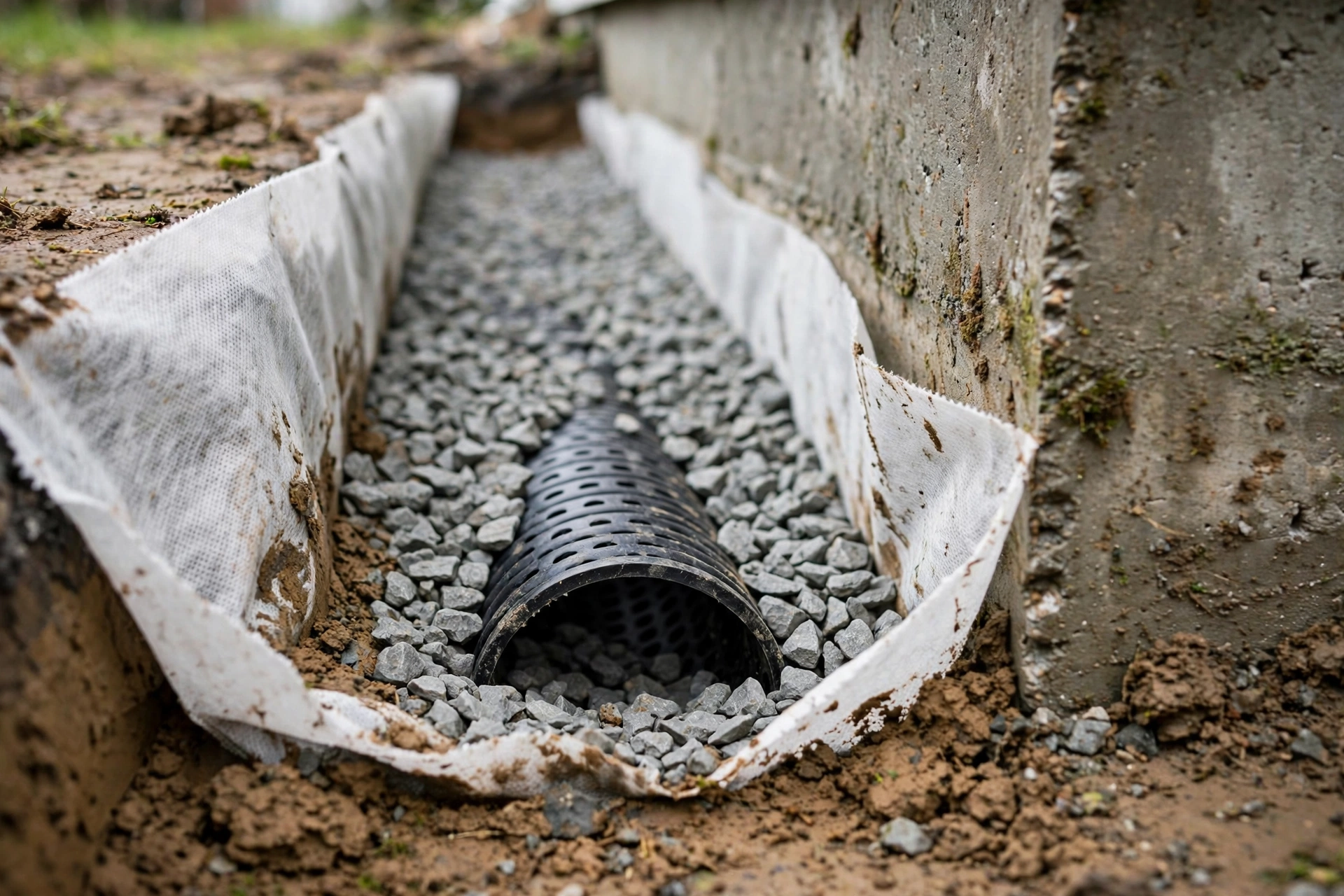
A french drain looks simple from the surface. A trench, some gravel, a pipe. The price is in the layers nobody sees once the grass grows back. First the trench. A crew digs it by hand or with a mini excavator, depending on access, and in Abbotsford clay that digging is slow work in November. Wet clay sticks to everything. It doubles the weight of every shovelful. Second the fabric. A geotextile wrap lines the trench and keeps silt out of the gravel, which is the difference between a drain that works for twenty years and one that clogs in five. Skip the fabric and you save a few dollars a foot. You also buy the job twice. Third the gravel. Clean drain rock, usually 3/4-inch clear gravel, goes in under and around the pipe. No fines. Fines clog. Fourth the pipe. Perforated PVC or flexible HDPE, holes down, laid with a steady slope toward the outlet. Slope matters more than pipe brand. Water does not flow uphill, and a flat run of perforated pipe is a decoration. Fifth the backfill and restore. Topsoil back on top, sod or seed, and the lawn put back the way it was. Or as close as a trench ever gets.
Materials alone for a typical exterior drain run $15 to $30 per linear foot. Pipe, gravel, fabric, fittings. Labour runs $30 to $70 per linear foot, and access decides where in that range you land. A straight run across an open lawn with a machine is fast. A run through a narrow side yard, past a fence, under a deck, with everything dug by hand, is slow. Two people, two days, and a lot of wheelbarrow trips. That is the labour line. It is not padding. It is the digging.
Exterior Drain vs Interior Drain: The Split That Decides It
Here is the fork in the road. Nearly every drainage quote splits here — outside or inside — and that fork decides the price, the mess, and what the drain actually fixes. An exterior drain, sometimes called a weeping tile system when it runs against the foundation, keeps water away from the wall before it gets in. It is the fix for a wet yard, a soggy foundation, and water pooling at the footing. The crew digs outside, the house stays liveable, and the lawn takes the beating instead of your basement floor.
An interior drain is a different animal. It runs inside the basement, along the inside of the footing, under the edge of the slab. The crew cuts the concrete floor, digs a trench inside, lays the pipe, and ties it to a sump pump. It is the fix for water that is already coming through the wall or up through the floor joint, in a house where digging outside is impossible or the foundation is already buried under a deck and a driveway. It costs more per foot, and it means concrete dust and a torn-up basement for a week. But for a finished basement that keeps getting wet, it is often the only fix that actually works. Our guide to basement waterproofing BC covers the full waterproofing picture, and the interior drain is one piece of it.
Which does your house need — outside, inside, or both? Most wet houses need the outside drain first, and the inside drain only if water is still getting in after that. A quote that only prices one half without explaining why is not a full quote. Ask which half it covers. Ask it plainly. The answer tells you more about the final bill than the per-foot price does.
Clay, Water Table, and Why Fraser Valley Drains Cost What They Do
The ground under Abbotsford is not neutral. It is clay in most neighbourhoods, heavy grey clay that holds water like a sponge and lets almost none of it through. A drain in sandy soil is a shallow trench and a quick job. A drain in Abbotsford clay is a deeper trench, more gravel, and a crew that bills for the ground. On the flat farmland around Sumas Prairie and Matsqui, the water table sits high in winter, which means the trench fills with water as fast as it is dug, and the crew pumps while they work. That is real time. Real money. Not a line item anyone shows you in a showroom.
Depth follows the footing. A drain that protects a foundation has to sit at footing level, which on an older Abbotsford house can be three feet down or more. Deeper means more digging, more gravel, more soil to haul away, and a trench wall that needs shoring if it is deep enough to be unsafe. Shallow yard drains, the kind that fix a soggy lawn or a puddle by the patio, sit a foot or two down and cost far less. Know which depth your job needs before you compare quotes. A shallow price for a deep job is not a bargain. It is a different job.
Sump Pump and Discharge: Where the Water Actually Goes
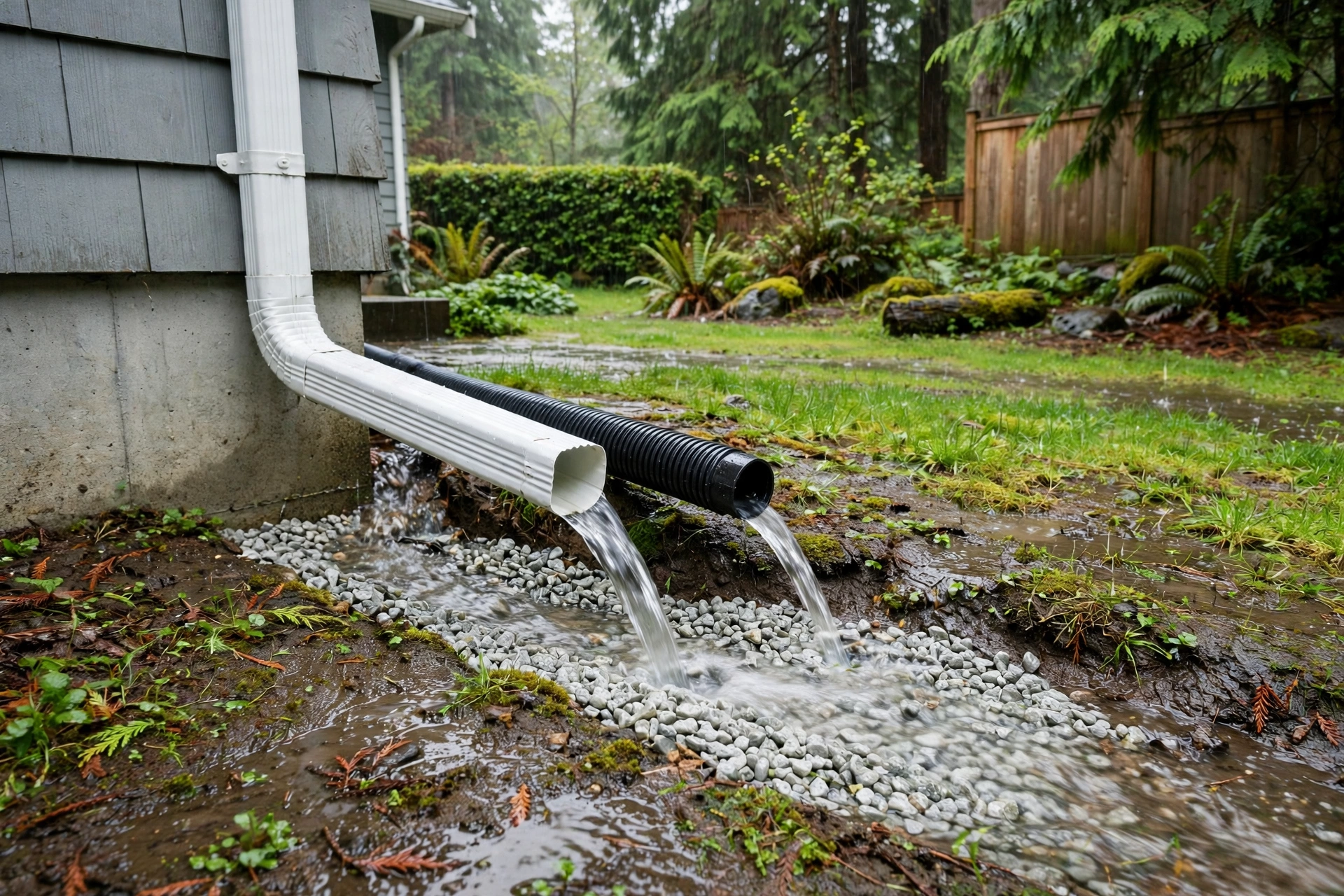
A french drain without an outlet is a gravel-filled ditch. The water has to go somewhere, and that somewhere is either daylight or a sump pump. Daylight is the cheap option. If your lot slopes, the pipe runs downhill and daylights at the curb, a ditch, or a dry well, and gravity does the work forever, for free. Not every lot slopes the right way. A flat lot in Clearbrook, or a house at the bottom of a slope in Auguston, needs a sump pump to lift the water out. The pump sits in a basin at the low end of the drain, switches on when the water rises, and pushes it out through a discharge pipe, well away from the house. Our guide to sump pump installation cost BC covers the pump side in detail.
A sump pump and basin usually adds $1,200 to $3,000 to a drain job, installed, and a battery backup adds $400 to $900 on top of that. Worth it. Power outages in the Fraser Valley love to arrive during the same storms that fill a drain, and a pump with no power during a storm is a very expensive paperweight. The discharge line matters too. It should run to daylight or a storm drain, not to a spot beside the foundation where the water just soaks back in and comes around again. Ask where the water goes. Ask how far. A short discharge line is a drain that feeds itself.
Grading and Downspouts First: The Cheap Wins
Before you pay for a trench, check the cheap stuff. It sounds too simple. It is not. A lot of wet foundations in older Abbotsford neighbourhoods, places like East Abbotsford and Clayburn, trace back to a downspout dumping roof water at the corner for twenty years. One downspout. One corner. Twenty winters of water against the same stretch of wall. Extending that downspout ten feet away from the house costs a few hundred dollars. It can save thousands.
Grading is the same story. Soil should slope away from the house for at least the first two metres, dropping about six inches over that run. Walk your lot after a rain and look at where the water sits. If it pools against the wall, the grade is wrong, and no drain fixes a grade problem as cheaply as a few yards of topsoil and an afternoon of raking. Fix the grading and the downspouts first. Then price the drain for whatever water is left. A contractor who quotes a trench before looking at your downspouts is selling you a trench, not a solution.
What Pushes the Price Up
A few things move a french drain quote fast, and they are worth knowing before the crew arrives. Access is the first. A mini excavator through a wide gate is cheap. Hand digging through a 36-inch side yard, carrying every bucket of clay out by wheelbarrow, is not. Concrete is the second. Cutting a driveway, a patio, or a walkway to run a drain underneath adds $500 to $2,000, and putting it back adds more. Landscaping restore is the third. A drain through a prize garden bed, a mature hedge, or a new interlocking patio costs more to restore than the same drain through plain lawn. Permits are the fourth, and usually the smallest. An exterior yard drain generally needs no permit, but a drain tied into a municipal storm connection or a sump discharge to the street can need one, and the rules vary by city. Check with your municipality before work starts, since Abbotsford’s answer is not Langley’s. And the fifth is the surprise underground. Old concrete, buried rubble, a forgotten oil tank, a gas line nobody marked. A good contractor calls BC 1 Call before digging. A bad one finds the gas line with a shovel.
DIY or Hire It Out
A shallow curtain drain across a lawn is a weekend job for a fit homeowner with a rented trencher, and plenty of people do it. A deep foundation drain is not. Three feet down in wet clay, against a foundation wall, with a slope that has to be right over a hundred feet, is skilled work, and a drain laid flat or backwards does nothing at all except cost money. The other risk is the wall itself. Digging against a foundation without knowing how to shore a trench, or piling excavated clay against the house while you work, can damage the very wall you are trying to protect. Hire the deep work out. Do the downspouts and the grading yourself. That split keeps the money where it matters.
Frequently Asked Questions About French Drain Installation Cost in BC
How much does a french drain cost per linear foot in BC in 2026?
Most exterior french drains land between $45 and $100 per linear foot installed, as a 2026 planning range. Shallow yard drains sit near $45 to $65, deep foundation drains run $65 to $100, and interior basement drains run $60 to $120. A 40-foot run typically totals $2,500 to $5,000, while a full 120-foot perimeter job often totals $6,000 to $12,000.
What is the difference between a french drain and weeping tile?
Weeping tile is the older name for the same idea, from the days when the pipe was clay tile. A modern french drain uses perforated PVC or HDPE pipe in a gravel trench wrapped in fabric, and it does the same job better. The terms get used interchangeably in BC, so ask what pipe the quote actually includes, not what it calls it.
How long does a french drain last?
A properly built drain with fabric wrap, clean gravel, and a clear outlet should last twenty to thirty years or more. A drain built without fabric, or with gravel full of fines, can clog in five to ten years. The fabric is the part that decides the lifespan, and it is the part most often skipped on a cheap quote.
Do I need a permit for a french drain in Abbotsford?
A simple exterior yard drain usually needs no building permit. A drain tied into a municipal storm connection, or a sump discharge to the street, may need one. Check with your municipality before work starts, since the rules vary by city.
Will a french drain fix a wet basement?
It fixes a wet basement when the water is coming from outside, through the wall or the footing joint, and the drain sits at footing level with a working outlet. It does not fix water coming up through the floor slab, a plumbing leak, or a high water table under the house. Those need an interior drain, a sump pump, or a different fix entirely, and a contractor who names the water source before quoting is the one to trust.
A french drain is a trench, a pipe, and a slope, and the price is the length times the ground. Get the water source named first, fix the downspouts and the grade, and then pay for the drain that matches the actual problem, not the biggest one on the quote. French drain installation cost BC rewards the same habit as every other renovation in this valley. Price the ground and the outlet, not just the pipe in the trench, because the digging and the water table move the number. Want a straight answer for your own lot, measured against your ground, not a showroom price? Call (236) 613-0038 and talk it through before you order anything, so the quote fits your yard and your ground.