
A garage door is the largest moving part of a house. The largest. Full stop. And on most Fraser Valley homes it is also the largest single opening in the insulated envelope — a hole in the warm side of the house the size of a small wall, which opens and closes twice a day and is expected, somehow, to seal like one.
Replacement cost in BC depends on three things. The material and style of the door. Whether it is insulated. And whether the opener gets replaced at the same time — three decisions, made in roughly that order, that between them explain nearly the entire spread between the cheapest quote in the pile and the most expensive one. This guide gives the 2026 installed ranges for each door type, explains the insulation decision properly, and lists what a complete installed quote should include — every line, named.
The short version: a basic non-insulated steel sectional door, installed, runs $1,200–$2,500. A mid-range insulated steel door runs $2,000–$4,500. Premium doors (real wood, carriage-house style, or full glass) run $4,500–$9,000+. Replacing the opener at the same time typically adds $400–$900, and doing both together is cheaper than a separate call-out later. All figures are 2026 BC planning ranges, not quotes.
1. Prices by Door Type
The ranges below are installed prices for a standard single door (8×7 ft). Double doors (16×7 ft) run roughly 1.6–1.9 times these numbers — taller, wider, heavier, and priced accordingly.
| Door type | Insulation | 2026 planning range (installed) |
|---|---|---|
| Steel, short or long panel | Non-insulated (single skin) | $1,200–$2,500 |
| Steel, long panel or flush | Insulated (R-8 to R-12) | $2,000–$3,500 |
| Steel, premium insulated | High insulation (R-14 to R-18) | $3,000–$4,500 |
| Carriage-house style steel | Insulated | $3,500–$6,500 |
| Real wood (cedar) | Insulated options limited | $4,500–$9,000+ |
| Full-view glass / aluminum | Insulated glass options | $4,000–$8,000 |
Steel is the most common replacement material in the Fraser Valley. By a wide margin. It handles wet winters — the sideways rain, the months of damp that get into everything — comes in panel styles from plain to carriage-house, and costs less than wood or glass at every insulation level, every single one. Real wood, usually cedar, sits at the top of the range. It needs refinishing on a schedule in this climate; left unmaintained, it weathers quickly — grey, checked, tired-looking. Full-view glass and aluminum doors suit modern exteriors. Their insulation values vary widely by glass package, so check the rating of the specific door rather than the category.
The category will happily mislead you.
Before pricing doors, measure the opening. Width. Height. Headroom above the opening, and side room for the tracks. Quotes are based on those measurements, and a door chosen from a showroom before measuring — chosen by eye, by photograph, by optimism — is one of the most common sources of delays and change orders in the entire business.
2. Insulated or Non-Insulated
The right choice depends on how the garage is used. Entirely. A garage that stores paint cans and a workbench is a different thermal problem from a garage with a bedroom over it, a freezer in the corner and a door straight into the kitchen — three different rooms, really, all wearing the same name.
- Non-insulated doors are a single layer of steel. They cost the least — the least by a distance — and work as a weather and security barrier. They also conduct cold straight through — straight through, as if the steel were not even there — sweat with condensation in cold weather, and let anything stored in the garage ride the full outdoor temperature swing, all winter, every winter.
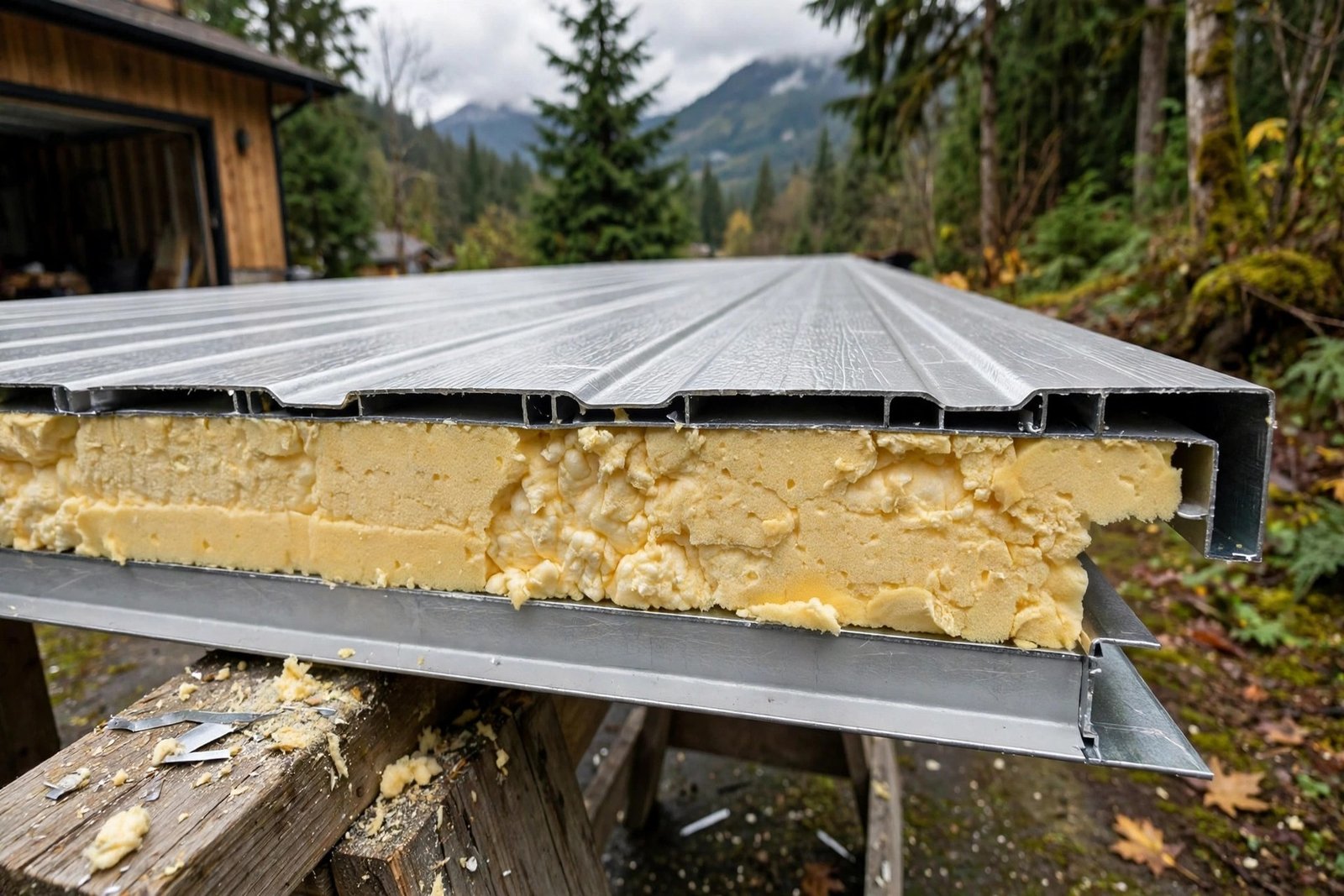
- Insulated doors are a steel-foam-steel sandwich. Polystyrene or polyurethane cores give R-values from R-8 up to R-18 on premium doors. Polyurethane-injected doors are thinner, stiffer and noticeably quieter than polystyrene doors of similar thickness, and they insulate better per inch.
Two rules cover most homes:
- Unheated garage, standard use: a mid-range insulated steel door is the usual value pick. It moderates temperature swings and cuts condensation even without heat in the space.
- Heated or attached garage: treat the door as an exterior wall. Choose a higher-R door and renew the seals at the same time. A $3,000 insulated door with worn weatherstripping performs like a much cheaper door, while a mid-range door with a bottom seal that meets the floor and fresh side seals performs like a premium one. The seal does more work than the spec sheet.
If a garage conversion is a future possibility, insulation matters more, not less. Our garage conversion cost guide for BC covers what turning the garage into living space involves, and an insulated door is usually the first upgrade on that path.
3. Replacing the Opener
About half of garage door replacements in the Fraser Valley start with a failed opener rather than a failed door.
Half.
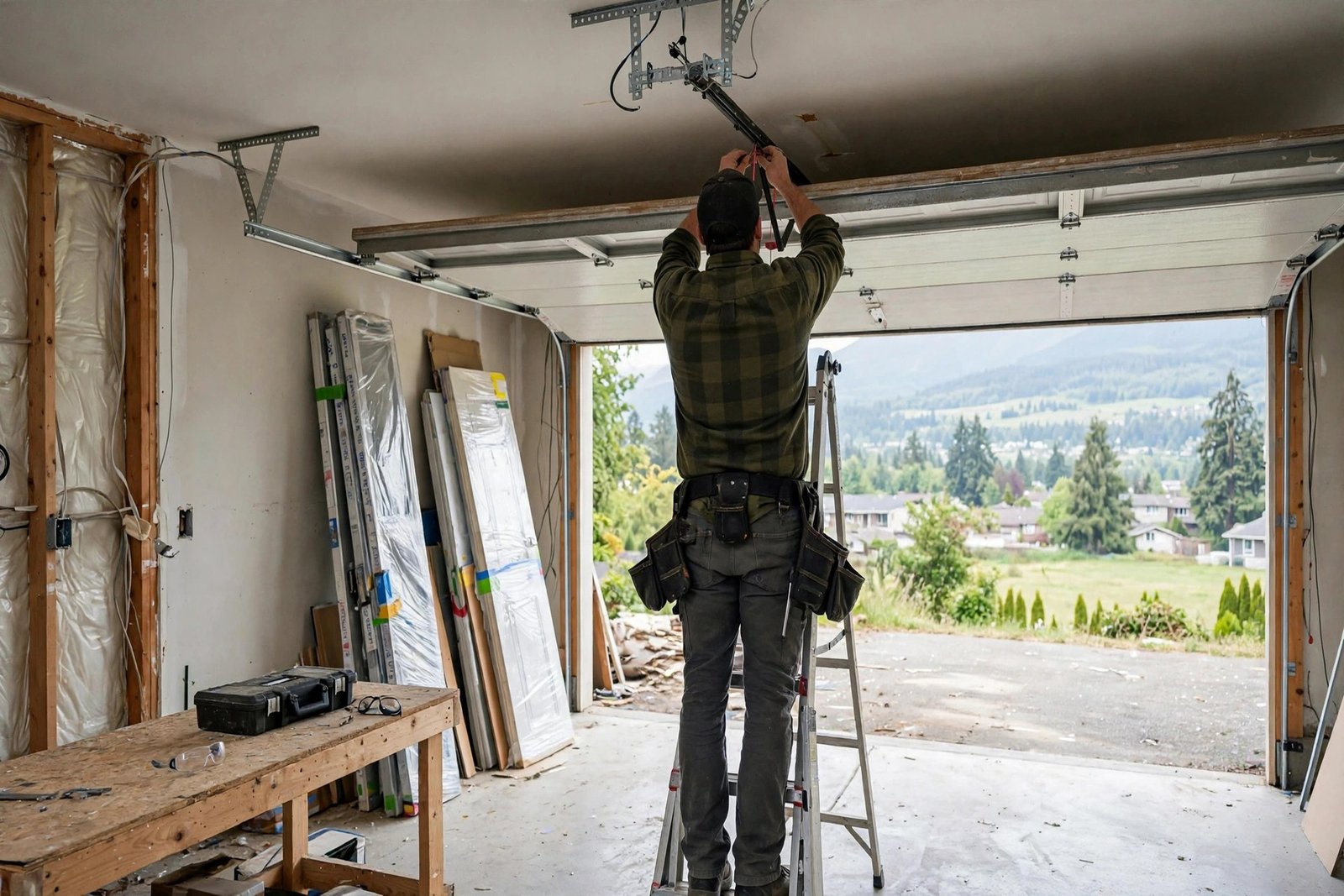
The other half pair a brand-new door with a 15-year-old opener — which then fails within a couple of years, usually on a morning when everybody is already late, and needs a second service call at second-call prices. If the opener is more than ten years old, replacing it during the door installation is the cheaper route: one visit, one labour bill, and the door, springs and opener balanced as one system, the way they were designed to be.
Drive types:
- Chain drive. Lowest cost and loudest operation — properly loud, chain-and-sprocket loud. Suits detached garages where no one sleeps nearby.
- Belt drive. Quiet. The standard recommendation for attached garages, especially where a bedroom sits over or beside the garage.
- Screw drive. Mid-range for noise and cost. It has been losing ground to belt drive for years.
A quality belt-drive opener with installation runs $400–$900 in 2026, depending on the brand, horsepower rating, and options such as battery backup, Wi-Fi control or an exterior keypad. Done during the door installation, the labour folds into the same visit. Done separately later, the same unit costs more — the call-out and the labour charged on top of the unit itself, the quiet penalty for doing one obvious job in two trips.
Safety is part of the decision. Not a footnote to it. Photo-eye sensors, auto-reverse and a manual release are standard on anything sold today — anything — and an older opener without working safety reversal is a genuine hazard, the real kind, the kind with a heavy door that does not stop descending. Installers will not keep one in service once they have seen it. That alone justifies replacement on a pre-safety-era unit.
4. What an Installed Quote Should Include
A replacement quote should be a single installed price, with the same line items named every time so that quotes can be compared against each other — apples to apples, line to line, no fog.
- Removal and disposal of the old door. Confirm it is included. Some quotes leave the old door in the driveway — in the driveway, like a surprise — and charge extra to haul it away.
- New tracks, springs, rollers and hardware. A proper replacement swaps the whole system, not just the panels. Torsion springs are sized to the new door’s weight, and reusing old springs on a heavier insulated door shortens the life of everything.
- Weatherstripping and bottom seal. Top, sides and a fresh bottom seal. Ask for it by name — in writing, on the quote.
- Opener installation and programming, if the opener is being replaced, including remotes and keypad setup.
- A service check a year or two in. Some installers include a free adjustment visit. Springs and tracks settle, and a tune-up keeps the door quiet.
Warning signs in a quote: old springs or tracks reused to shave a few hundred dollars, vague “hardware included” language, no mention of disposal, or a price dramatically lower than two other quotes for the same door. A garage door hangs under serious spring tension — serious, stored-energy, respect-it tension — and the installer matters more than the brand stamped on the panels.
5. Non-Standard Openings and Other Cost Adders
Most Fraser Valley homes have standard openings, and the replacement is straightforward. The complications are predictable, though — and they are exactly where budgets slip, quietly, a few hundred dollars at a time.
- Non-standard opening sizes. Some older homes, especially in established Abbotsford neighbourhoods, have openings that do not match modern standard sizes. A custom-sized door adds hundreds to over a thousand dollars versus a standard door. Measure the opening before choosing a door.
- Low headroom. Limited space above the opening can require a low-headroom track conversion kit. It is routine work — a known kit, a known fix — but it is an add-on.
- Out-of-square openings. Settled garages and older framing can leave an opening out of level. A good installer shims and seals around it. A poor one leaves gaps that are felt every winter. Ask how it will be handled before work starts.
- Door configuration. A 16-foot double door is cheaper than two 8-foot singles, but two singles are more convenient, and a failure in one does not trap both cars. On a replacement, keep the existing configuration unless there is a real reason — a real one, not a showroom one — to change it. Converting the header and framing between the two is a separate construction cost.
If the garage itself is the project rather than the door, our detached garage building cost guide for BC covers full garage builds, where the door is one line item among many — one line, and rarely the biggest one on the page.
6. Frequently Asked Questions
How much does garage door replacement cost in BC?
For 2026, a basic non-insulated steel door installed runs $1,200–$2,500, a mid-range insulated steel door $2,000–$4,500, and premium wood, carriage-house or full-glass doors $4,500–$9,000 or more. A new opener adds $400–$900. Double-wide doors run about 1.6–1.9 times the single-door price. These are planning ranges, not quotes.
Is an insulated garage door worth it in BC?
If it is heated or attached — yes, and it is not close. It is the largest opening in the insulated envelope, a wall-sized hole that has to behave like a wall. For an unheated detached garage, a mid-range insulated door is still the value pick because it cuts condensation and temperature swings. Only the tightest budgets — on truly unheated, truly detached garages — should stay non-insulated.
How long does garage door replacement take?
Fast. The install itself is fast: usually a half day for a standard door with an opener, and a full day for a double door or a tricky opening. Lead time is the real variable. Standard doors are often available in one to three weeks, while custom sizes and premium finishes can take six to ten weeks.
Should I replace the opener at the same time as the door?
Over ten years old, yes. The combined labour is cheaper than a separate call later, the new door gets springs and hardware sized and balanced as one system, and old openers often lack modern safety reversal features. Budget $400–$900 for a quality belt-drive opener installed.
How long does a new garage door last?
Expect 15–25 years from a steel sectional door in the Fraser Valley, depending on exposure and maintenance. Annual lubrication of rollers and hinges, keeping the bottom seal intact, and touching up paint chips before they rust are what push a door toward the long end of that range. Springs — the hard-working, invisible part of the whole system — usually need replacement once in the door’s life, around the 10–15 year mark.
Getting a Garage Door Quote in the Fraser Valley
Know your opening size. Decide insulated or not based on whether the garage is heated — that one answer does most of the deciding for you — and get three quotes that itemize the door, the hardware, the opener and the disposal separately, so the quotes can actually be compared instead of merely admired — because a single lump-sum number, however friendly it looks, tells you nothing at all about what is inside it. If your opener is aging, fold its replacement into the same job. One visit. One bill. If you want a second opinion on a quote, on what the door should include, or on whether your garage is a conversion candidate, call us at (236) 613-0038 — no pressure, just straight answers.