
Why One Surrey Kitchen Lands at $40,000 and the Next at $90,000
Why do Surrey quotes jump around so much? People ask that constantly. And the answer, honestly, it doesn’t live in a catalogue. It lives on a map. By population, Surrey’s the largest city you’ve got in Metro Vancouver. Its housing changes street by street. A quote of $40,000 can be perfectly reasonable for one address while $90,000 is equally reasonable a few neighbourhoods away, because the houses underneath those two kitchens have almost nothing in common.
Picture the range. Whalley holds 1960s bungalows that have lived several lives already. Fleetwood holds family homes from the 1990s with solid bones and tired oak cabinets. South Surrey holds newer builds where the kitchen was large on the day it was framed. Each starting point asks for a different job. One needs wiring and pipe work before a single new cabinet goes in. Another needs doors and counters and little else. The third needs nothing repaired at all, yet the sheer quantity of cabinets and stone pushes the total up on size alone.
Neighbourhood is the theme of this guide, because in Surrey the neighbourhood quietly decides the budget before finishes are even discussed. Read the sections below in that light. The totals, the breakdown, and the permit notes all make more sense once you place your own home on the right part of the map.
Reading Surrey by Neighbourhood
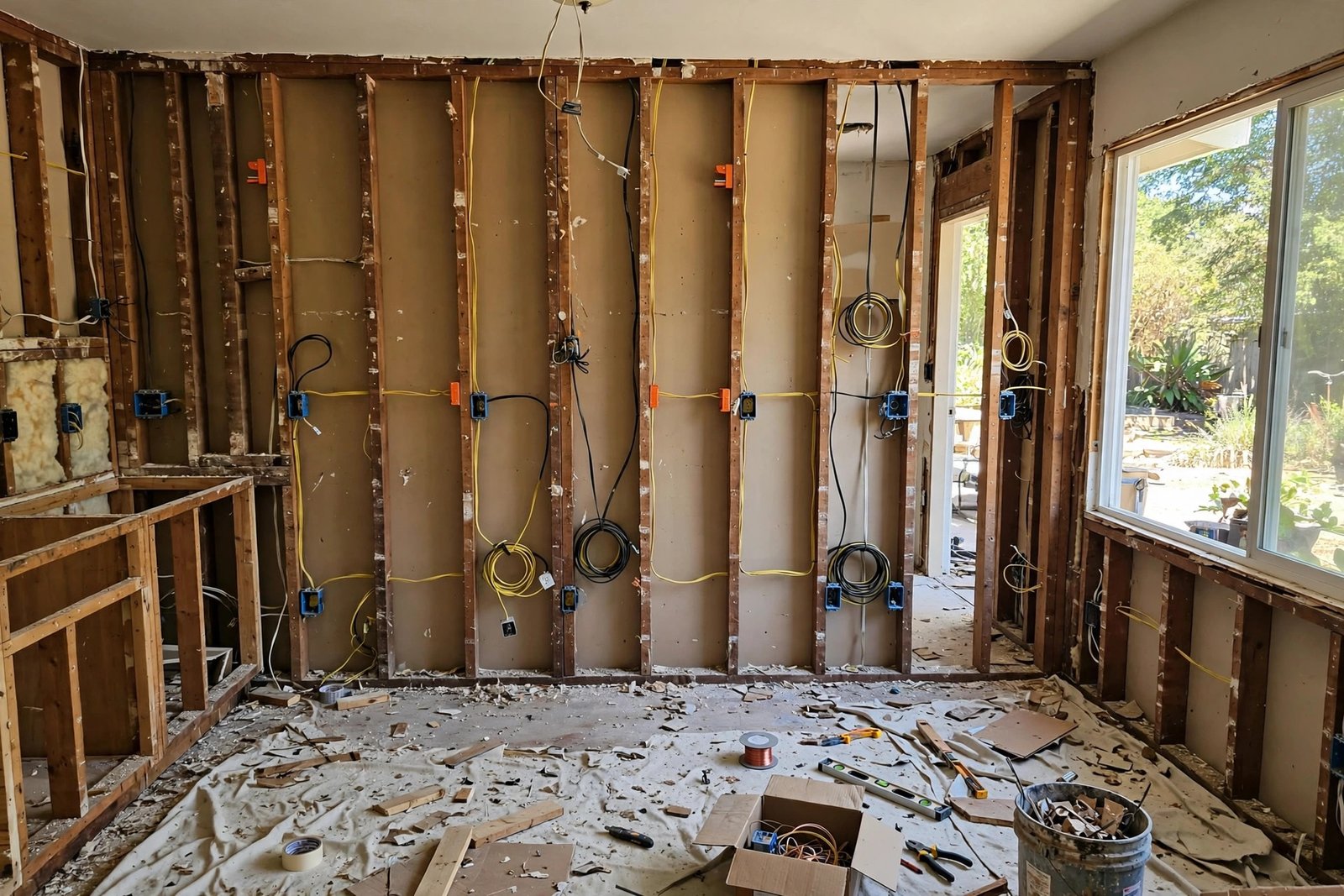
Start in the north. Up in North Surrey and Whalley, that’s where the oldest stock sits. Mostly bungalows. Split-levels too, dating back to the 1960s and the 1970s, and a good chunk of them, they’ve spent years chopped up as rentals. You don’t get much kitchen up there. Pop a wall open in one and you’ll see it fast. Old wiring. Galvanized pipe that’s past it. Stuff you’ve got to deal with first, before any of the pretty work can even start, so that tidy mid-range number you had on paper, it doesn’t stay tidy once the hidden systems get added in. Refresh work often suits this stock best, especially where the cabinet boxes remain solid and the existing layout still functions.
Head into Fleetwood, Newton, Guildford instead. Different era entirely. You’re a couple of decades newer there. It’s mostly subdivisions from the 1980s and 1990s through there. They run a bit bigger, those footprints. And the wiring, it rarely causes the same headaches. What dates these kitchens is the finish, all that original oak and almond cabinetry that buyers now read as a time stamp. Layout is the recurring conversation in this band of the city, because those kitchens were often closed off from the dining room. Opening one up sounds simple at the dinner table. On a quote, it means pricing a wall removal.
Cloverdale and South Surrey mix two stories together. Near Cloverdale’s older core you will find heritage homes with their own quirks and constraints. Further south and west, areas like Grandview Heights, Clayton, and Ocean Park are filled with houses built from the 2000s onward, where kitchens are bigger, plans are more open, and quantities alone lift the price of an otherwise straightforward project. Premium finishes show up more often in this part of Surrey, and local buyers have come to expect them, which feeds back into what owners feel they need to spend.
Two cross-cutting factors sit on top of the map. Labour is one. Surrey prices its trades inside Metro Vancouver, closer to Vancouver rates than to Abbotsford rates, and that gap explains much of the difference between Surrey totals and the ranges quoted further east, with Surrey-based contractors usually pricing most competitively and firms travelling in from Vancouver often adding travel time to a bid. Strata is the other. Townhomes and low-rise condos are spread across the city from Guildford to Clayton to South Surrey, and those buildings layer on approval steps, restricted working hours, and elevator bookings for deliveries, all of which stretch a schedule and add labour cost with it. Secondary suites deserve a mention here too, because they are common across Surrey, and touching a legal suite during a kitchen project can complicate the permit side considerably.
Permits, Suites and Older-Home Checks in Surrey
Administration is simpler here than in some neighbouring cities, at least on paper. Surrey is a single municipality, so every application runs through the City of Surrey rather than a choice of building departments. Volume is the catch. The city pushes through a huge volume of permits. And volume does what volume does. Timelines get wobbly, way less predictable than you’d see in a smaller place, because the backlog shifts as the year goes on.
Where that line falls? It won’t surprise you. Painting doesn’t need one. Neither does swapping out cabinet doors, or putting new counters in where the old ones sat, same layout, or fitting fresh hardware, or adding a backsplash. That whole bunch, it’s cosmetic work, and cosmetic work generally clears without a permit. Touch structure and you’re over it. Same with plumbing. Same with electrical. If you’re moving a wall, or pulling one out, or shifting a sink or a range somewhere new, or adding circuits, or cutting a different window opening, you’ve crossed from cosmetic into permit territory. If it’s structural, you need a building permit. That’s the first one. Then plumbing gets its own trade permit, electrical gets its own too, so before anything starts, check with the city and pin down exactly which permits your scope actually triggers.
Budget 3–5 weeks for processing when you’re building out your calendar. And that top end, those 5 weeks? Treat it like a real planning allowance. Not a worst case you can wave off. It’s not just how long. It’s the order you do it in. Get the permit step done before you order cabinets. Not after. Because cabinets showing up while you’re still waiting on approval? That helps nobody. One warning, and it holds everywhere, not just here. Surrey doesn’t get an exception on this one either. If a contractor tells you a layout-changing job needs no permits, stop right there. That’s a serious red flag. Ask much harder questions, and don’t sign a thing until you’ve got straight answers.
Built before 1990? Then you’ve got an extra check. And it belongs before demolition, not halfway through it. First thing, you ask whether it’s been tested for asbestos. Plenty of Surrey houses from back then have asbestos tucked in places you wouldn’t guess. Drywall mud. Vinyl flooring. Insulation. Disturb it without testing first and a job that was perfectly manageable turns into a genuine problem, fast.
What the Line Items Add Up To
Once you’ve got the neighbourhood sorted, and the paperwork with it, a mid-range Surrey breakdown stops looking mysterious. It’s just arithmetic at that point.
| Item | 2026 planning range |
|---|---|
| Cabinetry | $12,000–$32,000 |
| Quartz countertops, supplied and installed | $4,000–$12,000 |
| Appliances | $6,000–$18,000 |
| Trades and labour across carpentry, plumbing, and electrical | $12,000–$28,000 |
| Flooring, if the project includes it | $3,000–$9,000 |
| Backsplash, lights, fixtures, and paint | $3,000–$8,000 |
| Design, permits, and disposal | $2,000–$5,000 |
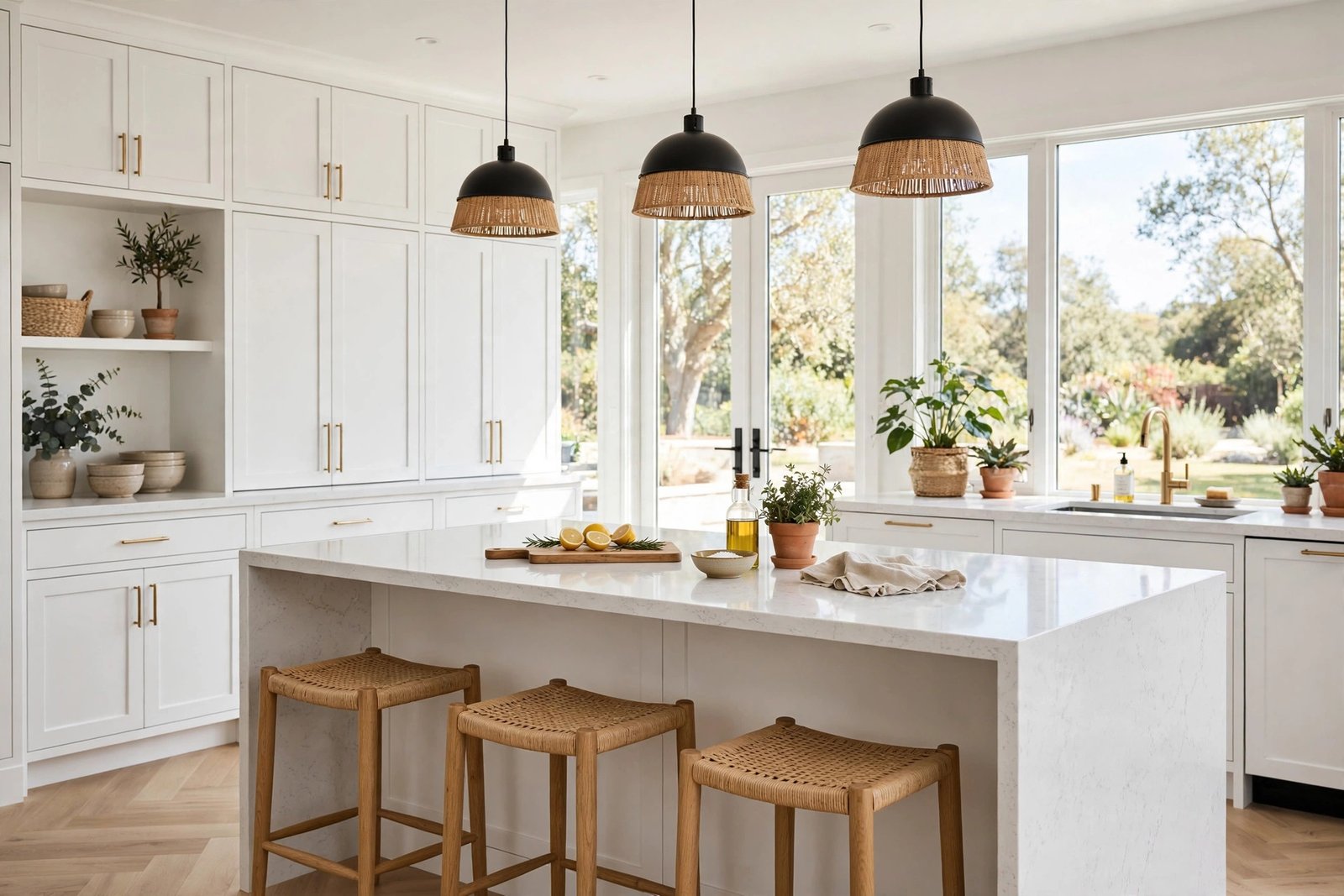
No line moves the total like cabinetry does. Go stock from a big-box retailer and you can cut that number roughly in half. Go the other way, fully custom out of a cabinet shop, and you’ll double it just as fast. Neither one’s hard to do. Semi-custom’s the middle ground. You get standard box sizes, but you’ve still got a real choice of doors and finishes and hardware to pick from, and that’s where most Surrey projects land in the end. It also tends to be the level resale rewards most reliably.
Appliances tell a local story of their own. Down in newer South Surrey, packages lean premium. That’s what does it. It pushes Surrey’s whole appliance band up higher than what you’ll see further east. Go back up to Whalley or Newton, though, and it flips. Owners there often just keep the appliances they’ve already got. The money goes to plumbing and electrical instead. You can’t call either one a mistake. It’s about the house in front of you. What it actually needs. That’s what each choice reflects. For homes where opened walls reveal aging systems, holding a contingency of 10–15% alongside these line items is the habit that keeps a mid-project discovery from derailing the whole budget.
The Three Budget Tiers for 2026
So here are the headline numbers at last. They’ll make more sense now that the context’s already on the table.
| Scope | What it includes | 2026 planning range |
|---|---|---|
| Refresh | New counters with refaced or replaced doors, plus backsplash, paint, and hardware | $15,000–$32,000 |
| Mid-range full renovation | Quartz counters with semi-custom cabinets, new appliances, tile backsplash, and lighting | $38,000–$85,000 |
| High-end or gut renovation | Custom cabinets and premium stone with walls moved, plumbing relocated, and layout changes | $85,000–$150,000 |
That middle band, $38,000–$85,000, that’s where most full Surrey renovations end up. And inside it, your typical mid-range job? It clusters tight, right around $55,000–$60,000. Don’t gloss over that top band either. Start moving the layout and you’re in gut territory. It begins near $85,000. Throw premium finishes and structural work on top and it can push past $150,000 without much trouble.
Comparisons eastward help set expectations. Typical Abbotsford projects sit at $34,000–$72,000, according to the Abbotsford kitchen cost guide, and the Langley kitchen guide puts its mid-range band at $35,000–$80,000. Surrey sits a little above both neighbours. Metro Vancouver labour explains a large share of that premium, and the larger kitchens common in Surrey’s newer neighbourhoods explain much of the rest.
Keeping a Surrey Budget on Track
Your best lever here? It costs you nothing to use it. Don’t touch the footprint. Leave the sink where it is, the range where it is, the walls exactly where they stand today, and you’ll routinely keep $10,000 or more from landing on the bill. Because it’s the plumbing moves and the structural changes that do the damage. They’re what turn a renovation into something that looks a lot more like a rebuild.
Refacing deserves serious consideration next. Solid boxes with a tired face are common in the older parts of the city, and fitting new doors, new drawer fronts, and new veneer onto those boxes commonly runs $4,000–$12,000 in BC. That is a fraction of a new cabinet package, and it needs no permit. If you’re in Whalley or Newton and the bones are sound, that’s often the smartest money you’ll spend in the entire project.
Direct the visible spending with intent. Give the island the one premium surface. That’s where family and guests end up gathering anyway. Then run durable mid-range stuff around the perimeter and don’t overspend out there. An island gets noticed down in South Surrey. At a showing, nobody’s pulling open a pantry cabinet to score how the interior’s finished.
What protects your resale value is discipline. Matching what you spend to the street you’re on. Drop a $140,000 custom kitchen into a Whalley bungalow and you probably won’t see that money back when the place sells. In Grandview Heights, by contrast, a $60,000 semi-custom kitchen is close to the expected standard for the area. Spend up to the level of your neighbourhood and no further, however tempting the showroom makes it.
Close the plan with a contingency and treat it as untouchable. In a home built before 1990, holding 10–15% back is close to non-negotiable, because nobody knows what sits behind a wall until the wall is open and older Surrey stock reliably has something waiting there.
A Note Before Demolition Day
Surrey rewards homeowners who sort the unglamorous questions early. With the City of Surrey, get your permit picture sorted out. If your place was built before 1990, ask about asbestos. And check your path for a suite. Or a strata sitting in the middle of it. Do that groundwork first. Lock your scope down, settle the cabinet call, and the quotes won’t swing wildly from contractor to contractor anymore. They’ll come back tight. Comparable. In a narrow range you can actually judge.
Frequently Asked Questions
How much does a kitchen renovation cost in Surrey, BC in 2026?
Most full kitchens in Surrey land between $38,000 and $85,000. That’s the usual spread. And a typical mid-range one? It lands around $55,000–$60,000 most of the time. Keep the layout you’ve got and do a refresh instead, you’re looking at $15,000–$32,000. A gut job’s a different animal. Once you’re changing the layout it starts near $85,000, and with premium finishes on top it can get past $150,000.
Is a kitchen renovation cheaper in Surrey, Abbotsford, or Chilliwack?
For the same work, Abbotsford costs less. Chilliwack does too. Mid-range in Abbotsford runs roughly $34,000–$72,000. Chilliwack sits at about that level. Maybe a touch below Abbotsford, if anything. Surrey’s different because you’re paying Metro Vancouver labour rates, and that alone adds a few thousand onto the identical scope.
Do I need a permit for a kitchen renovation in Surrey?
If you’re not changing the layout and the work’s purely cosmetic, you generally don’t need one. Cabinets, counters, doors, paint, all done inside the footprint you’ve already got, that’s the kind of work we’re talking about. Move a wall and you need one. Shift the plumbing, add new circuits, same story. Those applications run through the City of Surrey, and processing there commonly takes 3–5 weeks, so don’t wait. Confirm what you need with the city well before you order a single cabinet.
How long does a kitchen renovation take in Surrey?
Once permits are in hand and everything’s arrived, the build itself on a mid-range Surrey kitchen typically takes 6–10 weeks. That’s construction time only. Before that window even opens, you’ve still got permit processing sitting in front of it. And if you’re in a strata building with restricted hours? That stretches things out even further.
What is the cheapest way to update a Surrey kitchen?
Reface the cabinets and put new counters on top. If your boxes are solid and the layout already works for you, that’s the strongest payoff you’ll get for the lowest spend. On its own, refacing usually lands at $4,000–$12,000. Add quartz counters and most refresh jobs still come in under $20,000 all in. And you skip the building permit. You skip weeks of dust too.