
Start With the Table, Then Argue With It
You put money into a house. At sale time, some of it comes back. Some of it doesn’t. It just goes. Into nicer mornings. Into easier cooking. Both can still be worth doing. But they’re not the same decision. Mix them up in the Fraser Valley and it gets expensive. Spend $40,000 on the wrong project and you might see most of it back at resale. Or only $15,000 of it. That gap? It’s the whole subject of this guide. Worth getting straight before any money moves.
Ranking first. Short version up top. Detail follows. Because a table can’t tell you whether your own house can support a suite. Or whether your street can support a high-end kitchen. It just can’t.
| Rank | Project | Planning cost to hold in mind |
|---|---|---|
| 1 | Legal basement suite | $52,000–$98,000 |
| 2 | Mid-range kitchen renovation | $34,000–$72,000 |
| 3 | Bathroom renovation or added bathroom | $14,000–$32,000 |
| 4 | Exterior refresh | $8,000–$25,000 |
| 5 | Flooring replacement across the home | $8,000–$20,000 |
| 6 | Whole-home interior paint | $3,000–$8,000 |
| 7 | Energy upgrades such as windows and a heat pump | $12,000–$30,000 |
Read that as a Fraser Valley pattern. Not a promise for any single address. Buyers in Abbotsford and Chilliwack reward usable space. A kitchen that doesn’t need immediate work. A home that could help carry its own mortgage. That stuff lands. Work that feels personal gets discounted quicker. Fussy work. Hard-to-maintain work. That is the pattern to plan around.
Why a Legal Suite Sits at the Top Here
Nothing else on this list pays you while you own the house. Nothing. Because of that, the maths changes completely. Completely different picture.
A legal suite here rents for $1,000–$1,500 a month. Put two similar houses side by side and a buyer notices that difference fast. Fast. Because rental income changes what a household can carry month to month. It’s not just extra space, either. It’s the same roof working harder. Same lot. Same heating bill logic, split. A home upstairs. A home downstairs. That is a different kind of value.
Typical cost helps explain why it ranks there. For a straightforward legal suite the figure that keeps coming up is $68,000. Inside the wider $52,000–$98,000 range. Where you land in that range? Feasibility decides. Ceiling height has to work, and the entrance does too. Electrical service, fire separation and sound separation all have to meet code. And rural properties on septic need that system checked early. Not late. Early.
Then there is timing. It matters too. Allow about 8 weeks for the permit side before building starts in earnest. Don’t treat that wait as dead time. It isn’t. Drawings belong in that window. Quotes do. Product choices do. Want the deeper breakdown of what the money covers? Our guide to basement renovation cost in Abbotsford walks through the suite build line by line. And the basement finishing overview covers the wider project. Worth the read before you commit.
Legal. That is the word to underline. A permitted suite reads as an asset. Own entrance. Proper fire separation. Buyers see it. Inspectors see it. An unpermitted one reads as a question mark. And question marks get discounted.
The Kitchen Buyers Judge in the First Minute
Walk into a listing with a tired kitchen. Watch what happens. People slow down, noticeably. Then they start adding up work in their heads. And the number they invent? Almost always larger than the real cost would’ve been. It happens fast.
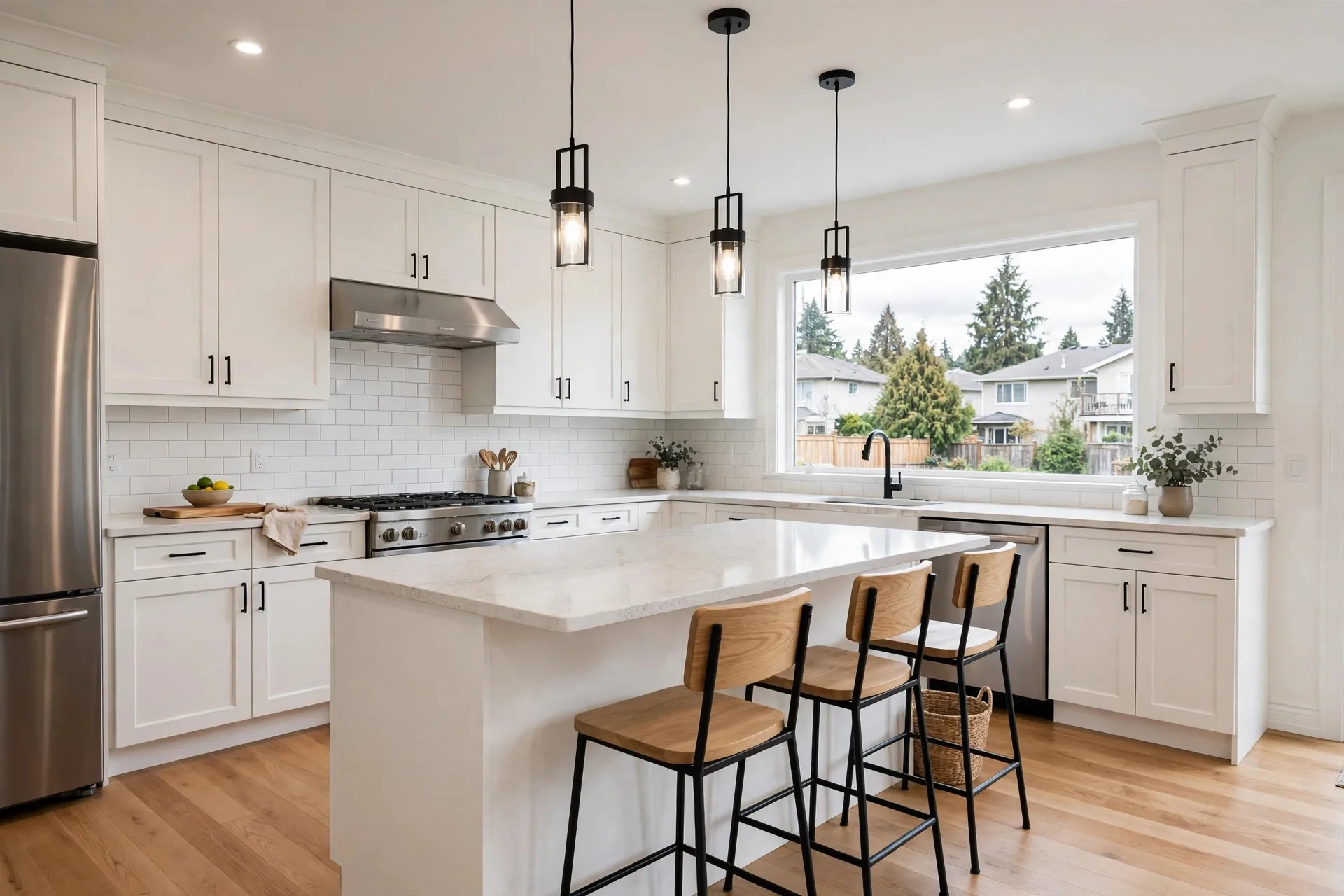
That is why a mid-range kitchen holds its value so well here. At $34,000–$72,000, plan around $48,000 as a useful middle figure. The usual scope? Cabinets and quartz or granite counters. A mid-range appliance package. Flooring, backsplash, lighting. No theatrics. Just a room that works cleanly. And photographs honestly.
Overspend? The logic flips. A kitchen built far above the standard of the street will still be loved. By the person who chose it. The next buyer won’t repay all of it, though. The neighbourhood comes first. Match it. Then spend on layout. On storage. On surfaces that handle daily use without looking worn after two winters.
Staying for years? Enjoyment counts. Selling soon? Restraint counts more. The strongest kitchen projects in this region thread that needle. A better room now. Without pricing the house into a bracket its comparables can’t support. That is the thread to hold.
Bathrooms Do Quiet, Efficient Work
A bathroom renovation costs less than a kitchen. And it still changes how a house feels every single day. The planning range is $14,000–$32,000. A typical full renovation often lands around $20,000.
The sharpest move isn’t always a prettier version of the same bathroom. Sometimes it’s a second bathroom where there was only one. Older bungalows often have the space. Rancher-style homes in Abbotsford too. Perhaps in an oversized bedroom. Perhaps in a laundry area that can be reworked. Going from one bathroom to two changes the listing. The morning routine. The buyer pool. All at once. Hard to overstate that shift.
A lighter refresh? It can still help. Starting around $8,000, it might cover a new vanity. A toilet. Fixtures, tile surround, paint. Keep the plumbing where it already sits and the budget stays far more controlled. Because moving drains and supply lines? That’s where small bathroom budgets stop being small.
What a Buyer Sees Before the Front Door Opens
Curb appeal sounds like something from a magazine. In practice? Arithmetic.
Rain shapes this region. For months at a time. Peeling paint tells a buyer a story. Stained siding does too. A tired entry does. A story about maintenance, told before anyone has seen the kitchen. And that story colours every room that follows. An exterior refresh at $8,000–$25,000 might mean siding repair or paint. A new front door. Better lighting and house numbers. Landscaping tidied back into shape. First impressions stick here.
On its own, full-home exterior painting often falls between $5,000 and $12,000. Plainly, that spend won’t turn a neglected house into a showpiece. What it can do is remove the first objection. So buyers walk in willing to like the place. Not already braced for hidden problems.
Floors, Paint, and the Photograph Test
Photos are where listings live or die now. In those photos, flooring and paint dominate.
Worn carpet through the main living areas dates a home. Instantly. Even when the structure is sound. Even when the layout is good. Replacing it across the main floor with luxury vinyl plank or engineered hardwood generally runs $8,000–$20,000. That is for an average Abbotsford home. Installed luxury vinyl plank often works out to $4–$8 per square foot all in. Labour itself around $2–$4 per square foot. One continuous surface through the living areas makes the space read larger too. In photos. In person. Listings feel it right away.
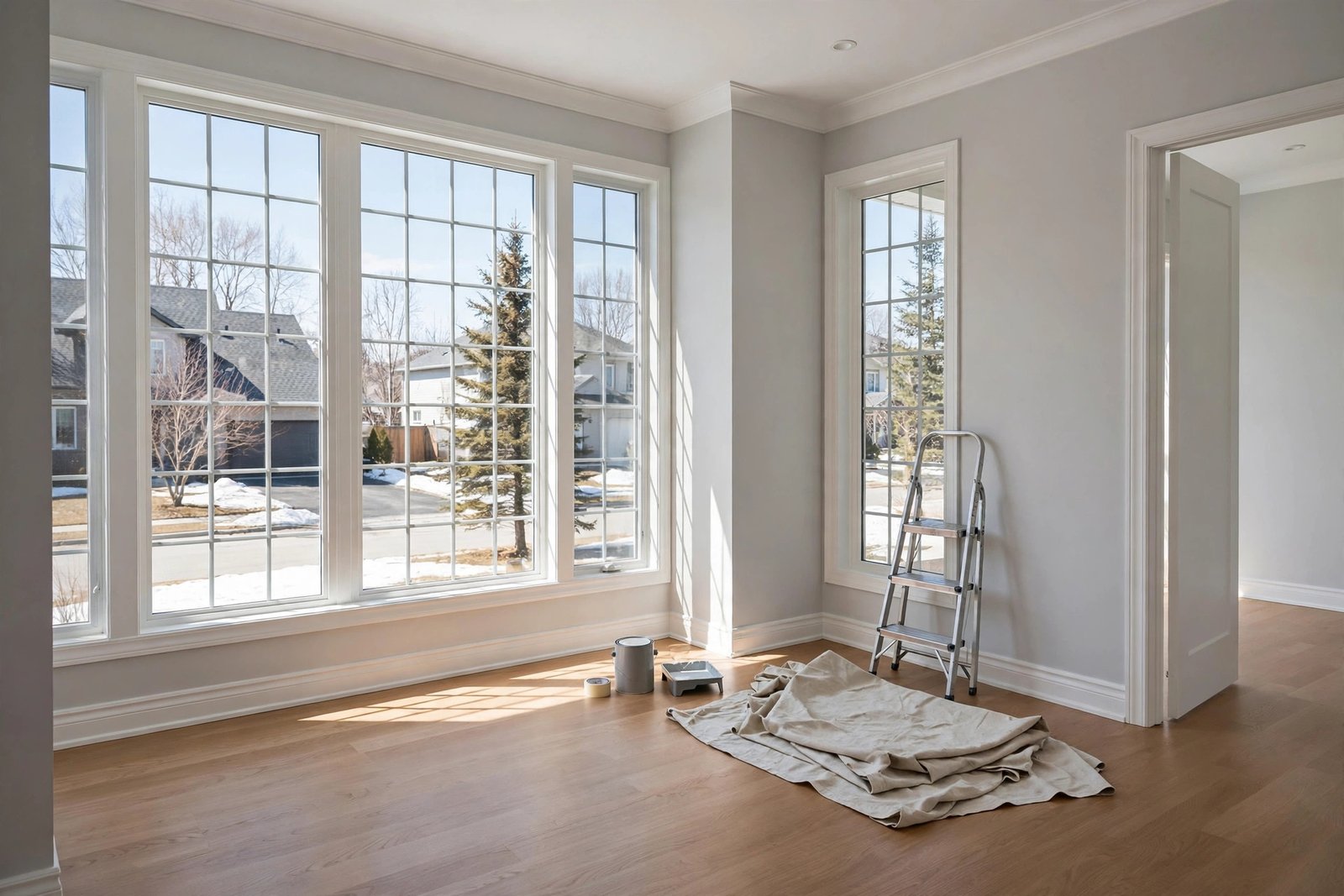
Paint is cheaper still. Dollar for dollar, hard to beat. Whole-home interior paint at $3,000–$8,000 can make rooms feel cleaner. Brighter. More current. Without touching the structure at all. Warm whites give buyers room to imagine their own furniture in the space. Soft greys do too. A bold accent wall does the opposite for many people. It narrows the audience to those who happen to share your taste.
If the sale is close, paint first. It’s the one project on this list that almost always makes sense right before listing. Provided the bigger systems underneath are already sound.
Energy Work Pays Differently
Windows and heat pumps rarely produce a gasp. Not the way a new kitchen does. Their value builds slowly. Through lower operating costs. Through a home that feels more comfortable in January. And in a July heat spell.
For this category, plan on $12,000–$30,000 as the broad bucket. Inside it, new windows for a typical home often sit at $12,000–$20,000. A heat pump conversion often sits at $15,000–$25,000, before any rebates are applied. Rebates can shift the real out-of-pocket figure. So check what’s available when you’re actually ready to proceed. Don’t build a plan around a program that may have changed.
Think of efficiency as comfort plus cost control. With a resale benefit attached. That framing is what keeps expectations honest. Buyers increasingly ask what a house costs to run. A home with credible answers has an edge. Even if the upgrade never becomes the headline feature of the listing. Quiet value, but real.
Projects That Commonly Return Less Than Owners Hope
Plenty of people love living in a luxury primary suite. Buyers will admire it. Then they’ll decline to repay it in full.
Pools face a similar problem in this climate. Maintenance runs long. The swimming season does not. Heavy hardscaping. Another trap. Spending $40,000 on elaborate outdoor stonework may suit one household perfectly. The next buyer sees upkeep. A style they didn’t choose. A highly specific home office built around one job has the same flaw. A flexible spare room serves far more households.
The pattern holds consistently. Work that solves a shared problem travels well at resale. Work that expresses one household’s preferences stays personal. However well it was built. Neither is forbidden. Just budget for them differently. And don’t borrow the language of investment to justify a project you really want for daily life. Keep them apart in your budget.
Three Questions Before You Commit Money
First, ask what nearby homes actually offer. Look at comparable listings. Open houses too. On your own street, in the blocks around it. A showpiece kitchen in yours will struggle to pull its weight if houses priced about $50,000 above yours have modest kitchens. Staying without one may be the gap if they all have suites.
Second question. Are you fixing a problem or choosing a preference? A second bathroom fixes one. So does a legal suite in a house with a suitable basement. So does a failing exterior that makes buyers nervous. Designer tile chosen purely for love? That is a preference. Preferences themselves are fine. What they need is a different budget conversation.
Third question. How long will you stay? Selling within a couple of years points you toward paint, flooring, bathrooms and a sensible kitchen. Staying a decade changes the calculation. You collect years of use from a bigger project. As well as whatever it returns later.
Here is where a few practical timing notes fit in. Smaller kitchen and bathroom work involving plumbing or electrical still needs permits. That approval step can take about 4 weeks in Abbotsford. Get that homework done early. Weighing a major spend? Hold the broad comparison in mind. Many owners frame the choice as a $50,000 decision against homes sitting $50,000–$100,000 higher in value. A useful check. Does the project match the street, or race past it?
One last caution. It concerns sequencing. Fix moisture, roofing and structural trouble before cosmetics. No fresh paint job survives a buyer discovering a failing envelope. And no suite earns its keep if water is getting in behind the new drywall. Start with the house as it is. Not as the brochure would like it to be. Then the ranking above becomes a tool you can actually use. Use it that way.
Frequently Asked Questions
Which renovation adds the most value in the Fraser Valley?
For most Fraser Valley homes that can support one, it’s a legal basement suite. Because it creates rental income. It also adds extra living space. Kitchens and bathrooms follow it. Paint and flooring return strongly too, for a much smaller spend. That is why it sits at the top.
How much does a legal basement suite cost in Abbotsford?
A legal basement suite in Abbotsford is planned at $52,000–$98,000. With $68,000 as a common middle figure. The final cost depends on ceiling height. Entrance work. Plumbing location. Electrical service. And whether any moisture or septic work is needed first.
Is painting a house really worth it before selling?
Yes, in most cases. Whole-home interior paint at $3,000–$8,000 is worth it before selling. It makes rooms feel cleaner and more current for a modest cost. It works best when the roof, structure and moisture issues are already in good shape.
Do energy upgrades such as windows and heat pumps pay back at resale?
Energy upgrades usually return part of their cost at resale. They lower running costs while you live in the home too. Windows at $12,000–$20,000 and a heat pump at $15,000–$25,000 before rebates are best viewed as comfort upgrades. Operating cost upgrades. With a resale benefit. Not the highest returning project on their own.
Which renovations should I avoid if resale value is the goal?
Avoid overbuilding for your neighbourhood. Highly personal luxury finishes too. Pools. Heavy hardscaping. If resale value is the main goal, those are the ones to skip. They can be enjoyable to own. But buyers in the Fraser Valley rarely repay their full cost. Enjoy them with open eyes, or skip them.
What should I expect during a home renovation project in the Fraser Valley?
Expect the unglamorous parts first. Quotes and planning take longer than most owners guess, and any structural, plumbing, electrical, or suite work needs City permits and staged inspections along the way. Once work starts, count on dust, noise, and at least one room out of use — a full kitchen or bathroom job can take the space out of your daily routine for weeks. Older homes hide surprises behind the walls, too. Old wiring. Water damage nobody knew about. That is why a 10–15% contingency belongs in the budget from day one, and why the projects in the table above reward owners who plan the whole job before the first wall opens.
2 Responses