
By three in the afternoon, the hallway needs a lamp.
Not in June. In December — in November, in January, in the long grey tunnel of a Fraser Valley winter, when the light gives up by mid-afternoon and hallways, bathrooms and north-facing rooms sit in gloom for months at a stretch, wearing a darkness no paint colour has ever fixed — none, not the whites, not the warm greiges, not the colour of the year — because paint cannot manufacture daylight and a room that never sees the sky is a room that stays dim no matter how white its walls are.
A skylight is the standard fix for that problem.
It is also — and both things are true at once, which is the whole story of this product — a deliberate hole in the roof, a hole cut on purpose, by professionals, in the one surface of your house whose entire job is keeping water out. Most BC leak stories trace back to how that hole was installed rather than to the unit itself. Not the glass. The installation. This guide gives the 2026 installed ranges by type, explains the flashing work that keeps a skylight dry, and covers how roof age — the variable nobody asks about until it is too late — changes the timing and the budget.
The short version: a fixed skylight, professionally installed, runs $1,500–$3,000 in 2026. A venting skylight runs $2,500–$4,500. A tubular sun tunnel runs $800–$1,800. Replacing a skylight in an existing opening costs $1,000–$2,200. The unit itself is often less than half the total. Less than half — the glass, the frame, the thing you actually chose from a catalogue — while labour, flashing, roofing integration and the interior light shaft make up the rest, which is why the cheapest quote is rarely the one you want on your roof. All figures are planning ranges, not quotes.
1. Costs by Type
2026 BC planning ranges for a standard installation in an asphalt shingle roof:
| Skylight type | What it is | 2026 planning range installed |
|---|---|---|
| Fixed (curb-mounted) | Non-opening unit on a site-built or kit curb; the most common choice | $1,500–$3,000 |
| Fixed (deck-mounted) | Sits lower on the roof deck; sleeker look, fussier flashing | $1,800–$3,500 |
| Venting (manual) | Opens with a hand crank for airflow | $2,500–$4,000 |
| Venting (electric) | Remote or sensor-operated; needs a power run | $3,000–$4,500 |
| Tubular / sun tunnel | Reflective tube that pipes daylight into small rooms | $800–$1,800 |
| Replacement in existing opening | New unit into an existing curb or flashing, no new roof cut | $1,000–$2,200 |
Brand matters less than the installer.
Less. Considerably less — but for reference, a Velux skylight installation cost quote in the Fraser Valley usually sits in the middle to upper part of these bands, since Velux units come with engineered flashing kits matched to the roof type, kits designed by people who have thought very hard about where water goes. Budget brands can shave a few hundred dollars off the unit price. They shave nothing — nothing — off the labour, which is where the job is won or lost.
Size moves the price within each band. A small 2×2 fixed unit and a large 4×4 one can be $800 apart before anyone touches the roof. Roof material matters as well. Asphalt shingles are the straightforward case. Tile, metal and cedar roofs each add labour and sometimes custom flashing, pushing the same skylight several hundred dollars higher — the same glass, the same daylight, a different marriage to a fussier roof.
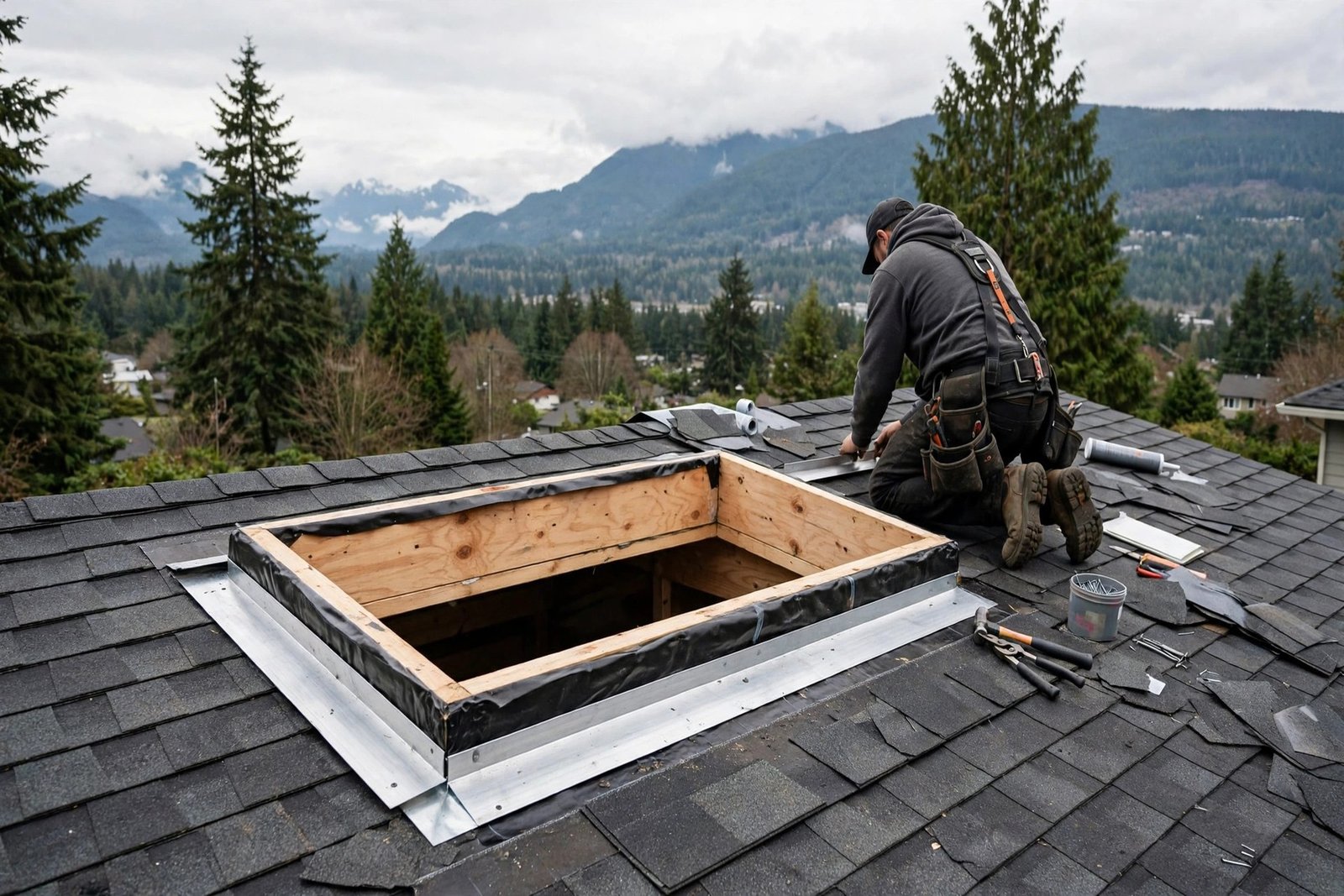
2. Flashing Is What Keeps It Dry
The unit almost never fails.
The flashing does.
A skylight is a hole cut in your roof on purpose, and whether it stays dry for twenty years — through twenty winters of sideways coastal rain, rain that arrives horizontally, rain that tests every lap and seam like it is being paid to — comes down to the metal work around that hole — the unglamorous, bent-by-hand, hidden-under-shingles metal work:
- Step flashing woven into each shingle course.
- A proper curb, tall enough to stay above drifting water.
- Ice-and-water shield membrane lapped correctly under the surrounding roofing.
That assembly is the skylight, functionally speaking. The glass is just the part you look through.
This explains something that confuses a lot of homeowners. Two quotes for the “same” skylight can differ by $1,000 and both be honest. Both. One installer is pricing a careful flashing job with a kit matched to your roof. The other is pricing a fast one. In a climate that delivers months of sideways rain, the difference shows up in year three, not week three — in a stain blooming on the ceiling in February, in drywall going soft in a corner, three winters after the cheque cleared and the guarantee’s fine print has started to matter. When you compare quotes, ask each installer to describe their flashing method in plain language. The good ones can explain it in detail. The others change the subject — and the subject change is the answer.
Condensation is the other BC-specific issue, and it gets misdiagnosed as leaking constantly. Constantly. Warm, moist indoor air hits the cold glass on a January night, water forms, and it drips — down the shaft, onto the floor, in a pattern that looks exactly like a roof leak and is not one, not remotely, which is why no amount of flashing fixes it. Double or triple glazing, a light shaft that allows air circulation, and keeping bathroom humidity under control with a proper exhaust fan all reduce it. If an installer dismisses condensation questions, that tells you plenty. It tells you everything, actually.
3. Roof Age Decides the Timing
A skylight should never outlive the roof around it by much.
Never — because replacing the roof later means disturbing the skylight anyway, lifting it, resealing it, paying to marry an old unit to a new roof and inherit whatever problems that marriage brings. The rule of thumb is simple:
- Roof under ten years old and in good shape: cutting in a skylight now is fine.
- Roof fifteen to twenty years old: that is getting near the end for many BC shingle roofs. Do the skylight and the re-roof together.
Together. The incremental cost of adding skylights during a roof replacement is far lower than doing them as a standalone job five years later, when a roofer has to cut into a roof you just paid to install — a new roof, cut open, by the same industry that sold it to you whole. This is also the moment to think about all the skylights at once. If one original builder-grade skylight is fogging or leaking, its siblings are usually on the same timeline. Same age. Same materials. Same slow decline. Replacing every unit while the roofers are already set up costs much less per unit than coming back for them one at a time, one scaffold rental at a time, one February emergency at a time. Our roof replacement cost guide for BC covers 2026 re-roof pricing, which helps you budget the combined project honestly.
One caution about retrofits into older roofs: every roof penetration is a future maintenance point. Every one. A roof with five skylights and two plumbing vents will always need more attention than a clean one — more seals aging, more flashing interfaces, more places for water to audition. That is not a reason to avoid skylights. It is a reason to place them deliberately, keep the count sensible, and never let a handyman talk you into a bargain install on a roof that should have been replaced first.
4. The Other Things That Move the Price
- Roof pitch and access. Steep pitches slow everything down and may need staging. A low-slope section of roof sometimes cannot take a standard skylight at all and needs a curb built up to shed water, which adds cost.
- The interior shaft. The hole in the roof is only half the job. The light shaft through the attic has to be framed, drywalled and painted, and in a two-storey home that shaft can be long. Interior finishing often adds $400–$1,200 that homeowners forget to budget.
- Structure. Cutting a roof opening means dealing with rafters. In most cases the installer frames around them without drama. But cutting into engineered trusses is a different matter — a serious matter, an engineered product that is not meant to be modified casually — and needs professional assessment first. Mention your roof structure when getting quotes, not after someone starts cutting.
- Wiring and accessories. Electric venting units need a power run to the roof, which an electrician handles. Shades and blinds for skylights, manual or remote, add $200–$600 per unit. They are worth considering for south-facing installations, where a skylight can turn a room into a greenhouse on a July afternoon.
- Condensation control. Glazing quality and ventilation matter in our climate. Triple-glazed units cost more upfront and earn it back in comfort on cold nights.
5. Skylights and Attic Projects
Skylights come up constantly in attic projects.
Constantly — and the two decisions belong together, because if you are finishing an attic into living space, skylights are often the only practical source of natural light, the only way daylight reaches the middle of that floor at all, and, in some layouts, part of the ventilation strategy too. Plan them before the interior framing goes up, not after. Before. The shaft framing and roof work are far cheaper while everything is open — while the attic is still studs and joists and possibilities rather than finished rooms that must be protected from the work.
There is one regulatory point worth knowing early. If the attic will be a bedroom, emergency escape openings have their own requirements, and a standard skylight does not automatically satisfy them. Does not. Sort this out with your designer or your municipality at the planning stage. It is a short conversation. An expensive rework later is the alternative — the conversation is shorter. Our attic conversion cost guide for BC covers the broader budget for turning roof space into living space, including where skylights fit in the sequence.
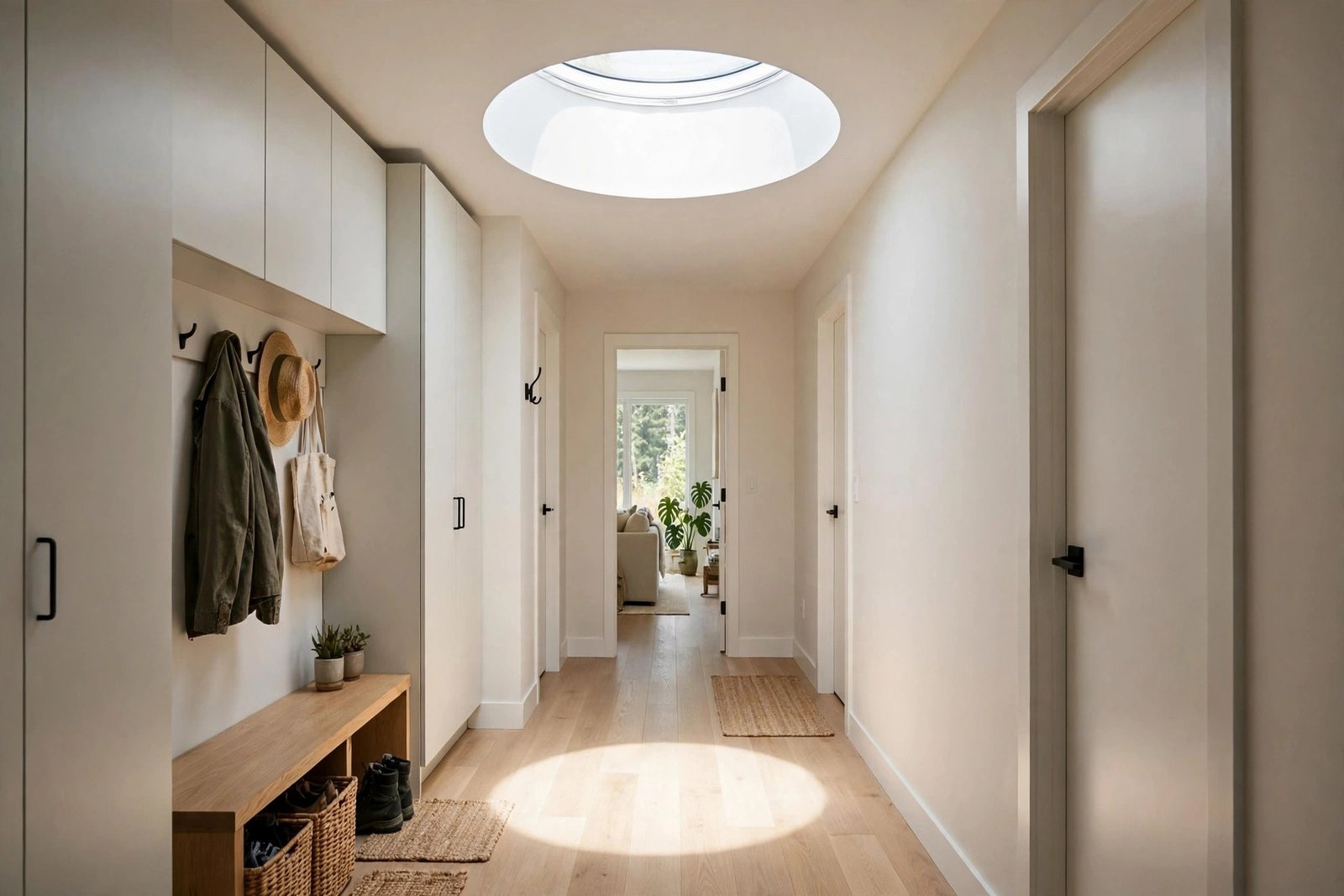
And if there is no attic plan, just a dark hallway or bathroom, give the tubular option a serious look. At $800–$1,800 installed, a sun tunnel delivers a surprising amount of light — a startling amount, the first time you see one on a grey day — with a much smaller roof penetration and a much smaller flashing assembly, which means less to maintain and less to leak.
6. Frequently Asked Questions
How much does skylight installation cost in BC?
For 2026, plan on $1,500–$3,000 installed for a fixed skylight, $2,500–$4,500 for a venting unit, and $800–$1,800 for a tubular sun tunnel. Replacing a unit in an existing opening runs $1,000–$2,200. Roof material, unit size and interior finishing move the price within those bands. These are planning ranges, not quotes.
Do skylights leak in heavy BC rain?
Not when they’re flashed properly, no. Almost every leak story traces back to the flashing or the installation, not the unit itself — the glass is innocent; the metalwork is where guilt lives. Step flashing integrated with the shingle courses, a proper curb and membrane detailing are what keep water out through months of coastal rain. This is why installer quality matters more than brand.
Should I replace my skylights when I replace my roof?
In most cases, yes. The incremental cost during a re-roof is far lower than a standalone replacement later, and old skylights rarely outlast a new roof anyway. If one original skylight is failing, budget to do all of them while the roofers are set up. All of them. The crew is already up there.
How long does skylight installation take?
A single straightforward skylight is usually a one-day job, plus interior finishing of the light shaft, which may add another day or two for drywall and paint. Multiple units or complex roof situations can stretch to three or four days.
Are tubular skylights worth it compared to a real skylight?
For small interior rooms like hallways, closets and bathrooms, often yes. A sun tunnel delivers genuine daylight at roughly half the installed cost of a fixed skylight, with a smaller roof penetration and simpler flashing. It doesn’t provide a view. It doesn’t provide ventilation. So it’s not a substitute where you want either of those — but daylight, it provides, in rooms that have never had any.
Planning a Skylight Installation in BC
Start with the roof, not the catalogue.
Know your roof’s age and condition first — before the showroom, before the brochure, before the photograph of somebody else’s vaulted living room at golden hour — because that decides whether you are booking a skylight job or a roofing job that includes skylights, two projects that look similar from the driveway and are nothing alike on the invoice. Then get quotes from installers who talk about flashing before they talk about brands, and ask each one to walk you through their waterproofing detail. If you are comparing skylight installation cost in BC across quotes, the one that explains the flashing is usually the one worth paying. To talk through your roof, your rooms and what the project would realistically cost, call us at (236) 613-0038 and we will give you straight answers with no pressure.