
Every visitor touches your staircase. Every single one. Hands run along the rail without thinking. So a dated or wobbly railing registers instantly. And a new one changes the whole entry. Getting a handle on stair railing replacement cost BC is refreshingly straightforward. Compared to most renovations, this is a materials-and-labour job with few surprises. And the price moves on two things: the material you choose, and the number of balusters the staircase needs.
The 2026 shape of it: $2,500–$6,000 for a typical straight staircase in wood. $4,000–$10,000 for wrought iron or a wood-and-iron mix. $6,000–$15,000+ for cable rail, glass panels or a staircase with turns and landings. Most Fraser Valley replacements land between $3,000 and $7,000. All in.
Stair Railing Replacement Cost BC: The Material Table
The prices below are installed costs per linear foot. Handrail, balusters or spindles, newel posts and labour included. Based on a standard straight run in 2026.
| Material | Look and feel | 2026 installed range per linear foot |
|---|---|---|
| Painted wood (poplar/MDF) | Clean, modern, matches painted trim | $150–$250 |
| Stained hardwood (oak, maple) | Warm traditional, shows the grain | $200–$350 |
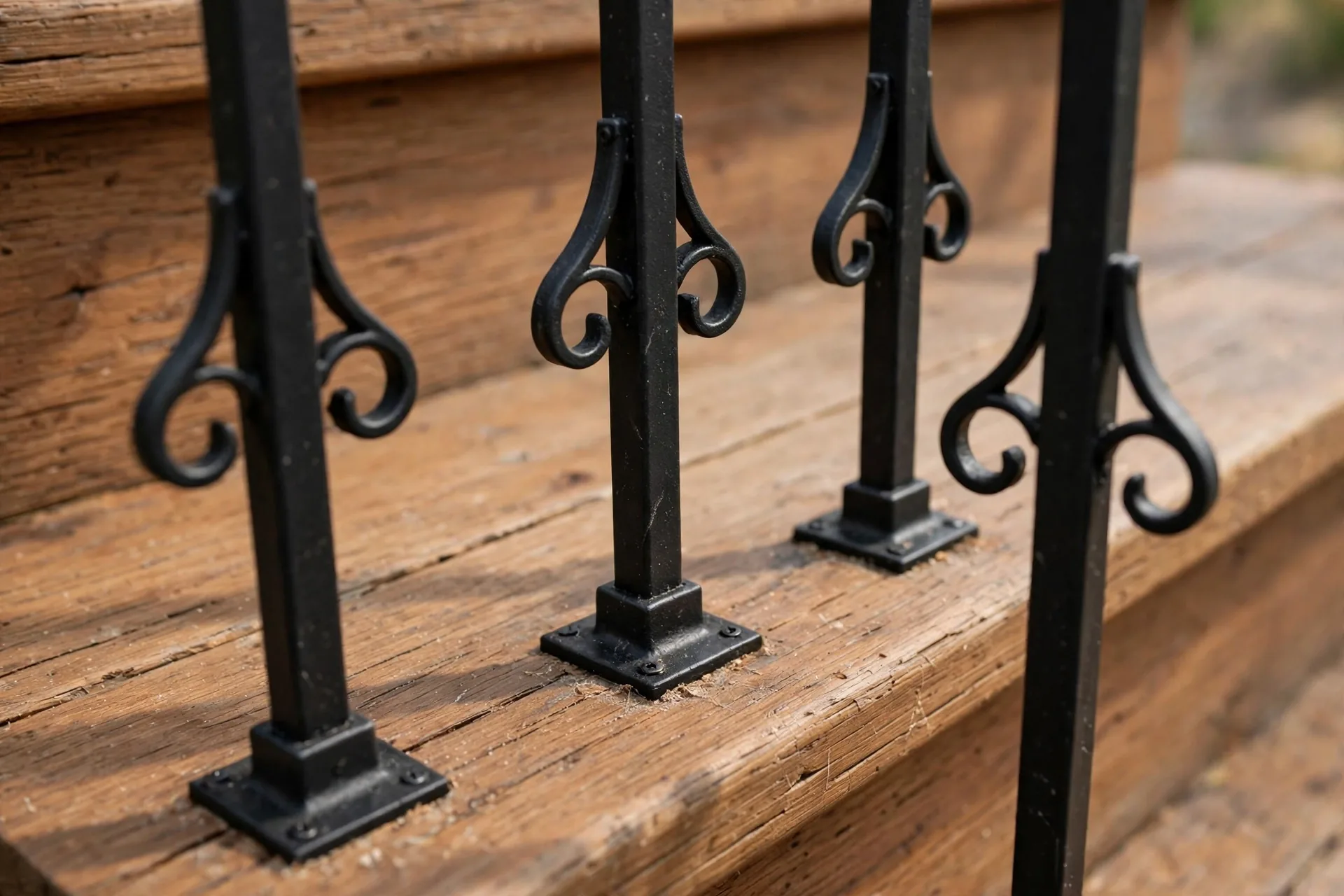
| Wrought iron balusters with wood rail | Classic upgrade, the Valley’s most requested mix | $250–$450 |
| All wrought iron | Formal, heavy, near-indestructible | $350–$550 |
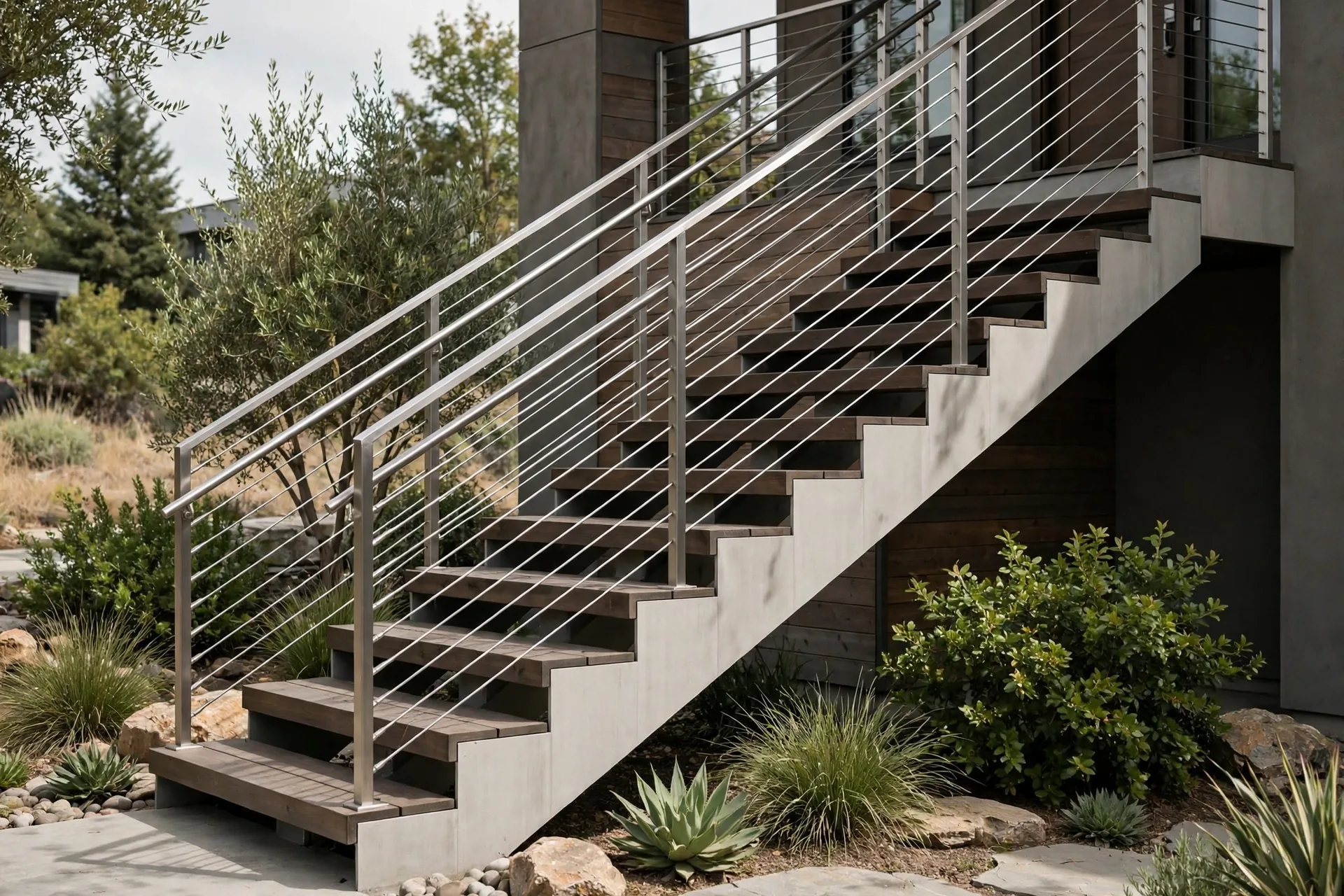
| Cable rail with wood or metal posts | Modern, keeps sightlines open | $400–$650 |
| Glass panel with wood or metal rail | Contemporary, maximum light | $500–$800 |
A typical straight staircase needs 12–16 linear feet of railing on the open side. Plus newel posts at the bottom and top. Multiply the per-foot number by your length. Add $300–$600 per newel post. That’s the budget. A 14-foot run in stained oak with two newel posts: roughly $3,400–$6,100. The same run in cable rail: $6,200–$10,300. The material choice is the budget, almost entirely.
Wrought iron balusters with a wood handrail? It deserves its sweet-spot reputation. It reads as a real upgrade over plain wood spindles. Suits both traditional and transitional interiors. And costs meaningfully less than full iron or glass. Walk through any Abbotsford show home built in the last decade. You’ll see this combination everywhere. There’s a reason.
The Baluster Count: The Cost Driver Nobody Mentions
Now the line item that moves quotes more than homeowners expect.
Building code says balusters must be spaced so a 4-inch sphere can’t pass through. In practice, that’s a baluster every 4 to 5 inches. On a 14-foot run: roughly 35–40 balusters. Each one gets individually cut. Fitted. Fastened. Two open sides, or a landing adding a second run? The count doubles. And the labour doubles right along with it.
This is why two staircases in the same material can price thousands apart. A straight run along a wall needs railing on one side. Only one. An open staircase in a two-storey foyer needs it on both sides, plus the landing overlook. That can triple the baluster count. The material table hands you the per-foot number. The baluster count tells you how many feet, and how many hours, you’re actually buying.
Turns and landings add cost in a second way. Every change of direction needs a newel post, angled fittings and custom-cut rail sections. A simple L-shaped stair with one landing typically adds $1,000–$2,500 over a straight run in the same material. A U-shaped stair with two landings adds more. Curves, the grand curved staircases in older character homes, are custom millwork territory and price accordingly, often $12,000–$25,000 for the full railing.
When comparing quotes, ask each contractor for the baluster count they’re pricing. One quote assumes 30 balusters, another assumes 60? Those prices aren’t comparable. And the cheaper one may simply be the less complete one.
Guard Height and Code: The Note You Need Before You Build
Stair railings are safety equipment. Not just trim. And BC treats them that way.
The general rule under the BC Building Code: guards on stairs and landings must run at least 900 mm (about 36 inches) high, measured vertically from the stair nosing. Handrails sit at 865–965 mm above the nosing. No opening can admit a 100 mm (4-inch) sphere. These are the numbers behind the baluster spacing in every quote.
The softened but important part: code requirements vary with the situation. Keeping the existing layout? Usually straightforward. But changing the configuration, opening up a wall or altering the stair itself can trigger current-code compliance for the whole assembly. Heritage homes and older Valley houses often carry railings that predate current rules. Replacing them is the moment the new rules kick in.
Confirm the specifics with your municipality before work starts. Especially if the project touches the stair structure or the guard layout. A building permit is commonly required when railings are part of a larger stair alteration. Your contractor should know the local practice, and if they wave the question away, that’s information too.
Wood vs Iron vs Cable: Choosing Beyond the Price
Cost narrows the field. But the right choice also has to live in your house.
Painted wood suits homes where the trim’s already painted white. It’s the cheapest option. It looks crisp. And it takes abuse well, since touch-ups need nothing more than a brush and a can of trim paint. Kids and dogs in the house? This is the practical winner.
Stained hardwood wants a house with other stained wood. Floors, doors, maybe ceiling beams. A lone stained railing in an otherwise painted house looks like a transplant. If your floors are being refinished anyway, coordinating the stain is a natural pairing. Our hardwood floor refinishing cost guide for BC covers the timing of doing both together.
Wrought iron balusters bridge the styles. Traditional or transitional, they fit right in. They work with stained rails in traditional homes and with painted rails in transitional ones. They’re also the easiest upgrade from dated wood spindles. The rail and newel posts often stay. Only the spindles get swapped, which cuts the cost roughly in half versus a full replacement.
Cable and glass serve one purpose above all. Sightlines. Where the staircase blocks light or chops up an open floor plan, horizontal cables or glass panels keep the view through. They cost more. They show fingerprints and dust, glass especially. And cable systems need periodic re-tensioning. Buy them for the view. Not for low maintenance.
The Install: What Actually Happens in Your House
A railing replacement is a finish-carpentry job, and it runs cleaner than most renovations.
Day one is demolition: the old rail, balusters and usually the newel posts come out. If the newel posts are staying, the balusters get cut out around them, which is slower but preserves the original posts. Then the new posts go in, shimmed plumb and anchored to the framing below, because a railing is only as solid as what’s underneath it. Loose newel posts are the number-one cause of wobbly railings. And the fix is structural, not cosmetic.
Then the rail goes up, balusters get cut to length one by one (stair angles mean few are identical), and everything gets fastened, filled and sanded. Painted railings get primed and painted on site. Usually two coats. Stained railings arrive prefinished from the shop. Or they get stained on site, which adds days for drying between coats.
Timeline: a straight run takes two to four days. A staircase with landings takes a week. Stained work adds drying time. During the work, the stairs stay usable. The railing isn’t there, though. So plan accordingly with small children or mobility concerns in the house. A temporary clamp-on rail is a reasonable ask.
Dust is modest. Noise is moderate. Compared to a kitchen renovation, your family will barely notice, except that everyone will run their hand along the new rail for the first week. That’s the only review that matters.
Here’s a practical pairing. Staircase walls getting repainted? Doors on the landing being replaced? Do the railing in the same window. The painter is already there, the trim paint already matches, and the per-project disruption stays at one event. Our interior door replacement cost guide for BC covers that companion project.
Frequently Asked Questions
How much does it cost to replace a stair railing in BC?
For 2026, plan on $2,500–$6,000 for a typical straight staircase in wood. Wrought iron balusters with a wood rail, or full iron, runs $4,000–$10,000. Cable rail, glass panels or stairs with landings and turns: $6,000–$15,000 or more. Per linear foot installed, painted wood runs $150–$250. Glass runs $500–$800. Newel posts add $300–$600 each.
How long does stair railing replacement take?
A straight run takes two to four days. Stairs with landings or turns take about a week. Stained finishes add drying time between coats. Sometimes that stretches the job to ten days. The stairs stay usable during the work. The railing itself is off, though, so households with small children or mobility needs should plan for that gap. Or ask about a temporary rail.
Can I just replace the spindles and keep the handrail?
Often, yes. It’s the best value upgrade in this category. Swap dated wood spindles for wrought iron balusters, keep a sound handrail and newel posts, and the job typically costs about half of a full replacement. The existing rail needs to be solid and at the right height. The style of the kept pieces has to work with the new balusters. When both hold true, the transformation is dramatic for the money.
What is the required railing height in BC?
Guards on stairs and landings generally need to run at least 900 mm (about 36 inches) high, measured from the stair nosing. Handrails sit at 865–965 mm above the nosing. And openings won’t pass a 100 mm sphere. These reflect general BC Building Code practice. Requirements vary by situation, though, so confirm with your municipality before work starts. Especially if you’re altering the stair layout rather than replacing like for like.
Is wrought iron or wood railing better?
Neither is better in absolute terms. Wrought iron balusters with a wood handrail cost more than all-wood ($250–$450 per foot versus $150–$350) but read as a bigger upgrade and suit more interior styles. All-wood is cheaper, easier to touch up, and the right call in homes with painted trim. Cable and glass cost the most, $400–$800 per foot, and they exist for sightlines and light. Not for budget. Not for low maintenance. Match the material to the house. Not to the trend.
Replacing Your Stair Railing in the Fraser Valley?
Count the balusters before you count the dollars. The spindle count and the number of open sides move the quote more than most homeowners expect. And match the material to the rest of the house, so the new railing looks inevitable rather than added. Confirm guard-height and permit details with your municipality. If the layout is changing at all, don’t skip this. Want an honest read on stair railing replacement cost BC for your staircase? Call us at (236) 613-0038 any time. We’ll talk through the material, the layout and a realistic installed range.