
A smell. That’s how it starts, most times.
You can’t place it. Or you can. Behind a bathroom vanity, in an older Abbotsford house, there’s a dark patch that wasn’t there in spring. Or an inspector pops an attic hatch in Mission. Goes quiet. Just a second too long.
However you find it, the money question lands first. What does the mold remediation cost BC homeowners actually pay look like when it’s done properly — not wiped down, not painted over, not hoped away?
It doesn’t hinge on the mould itself. Not really.
Where it is matters more. How much there is. What’s feeding it. A patch on bathroom caulking? That’s a Saturday job. Mould spread across attic sheathing is something else. So is mould behind a finished basement wall that’s sat damp through two Fraser Valley winters. That’s containment. That’s testing and removal and repair, stacked on top of each other. Same word — mould. The bills don’t even resemble each other.
What Actually Drives the Mold Remediation Cost BC Homeowners Pay
Containment. It comes first, and it’s not optional if you want it done right.
A proper crew seals the work area. Plastic goes up. Then they run negative air pressure, so spores don’t drift into clean rooms, and they’re in protective gear the whole time. That setup costs time. Material too. Doesn’t matter if the patch is in Yarrow or in Langley.
It’s also what gets skipped on a DIY job. Skip it and a one-room issue can turn into three rooms. Fast.
Size is driver number two.
In BC, professional remediation often lands around $15 to $30 per square foot for the affected area, once you’ve counted everything. Containment. Removal. Cleaning. Disposal. A contained area under 10 square feet might run $500 to $1,500 in total. A whole basement wall system? Different scale entirely.
Then there’s testing. Third driver. And no, it’s not always needed.
An inspection or assessment typically runs $300 to $600. Lab testing, if you use it, adds about $250 to $600. When does it pay off? When you can’t see the full extent. When a sale needs documentation. When mould keeps coming back. If the growth is small and visible and the source is obvious, a good assessor will sometimes tell you to skip the lab work. Put the money into removal instead. That honesty is a good sign.
And then driver four. The one nobody budgets for.
What’s behind the surface.
Mould on paint is one thing. Mould in insulation and drywall and framing is another. You won’t know until you open it. That’s why honest quotes carry a range.
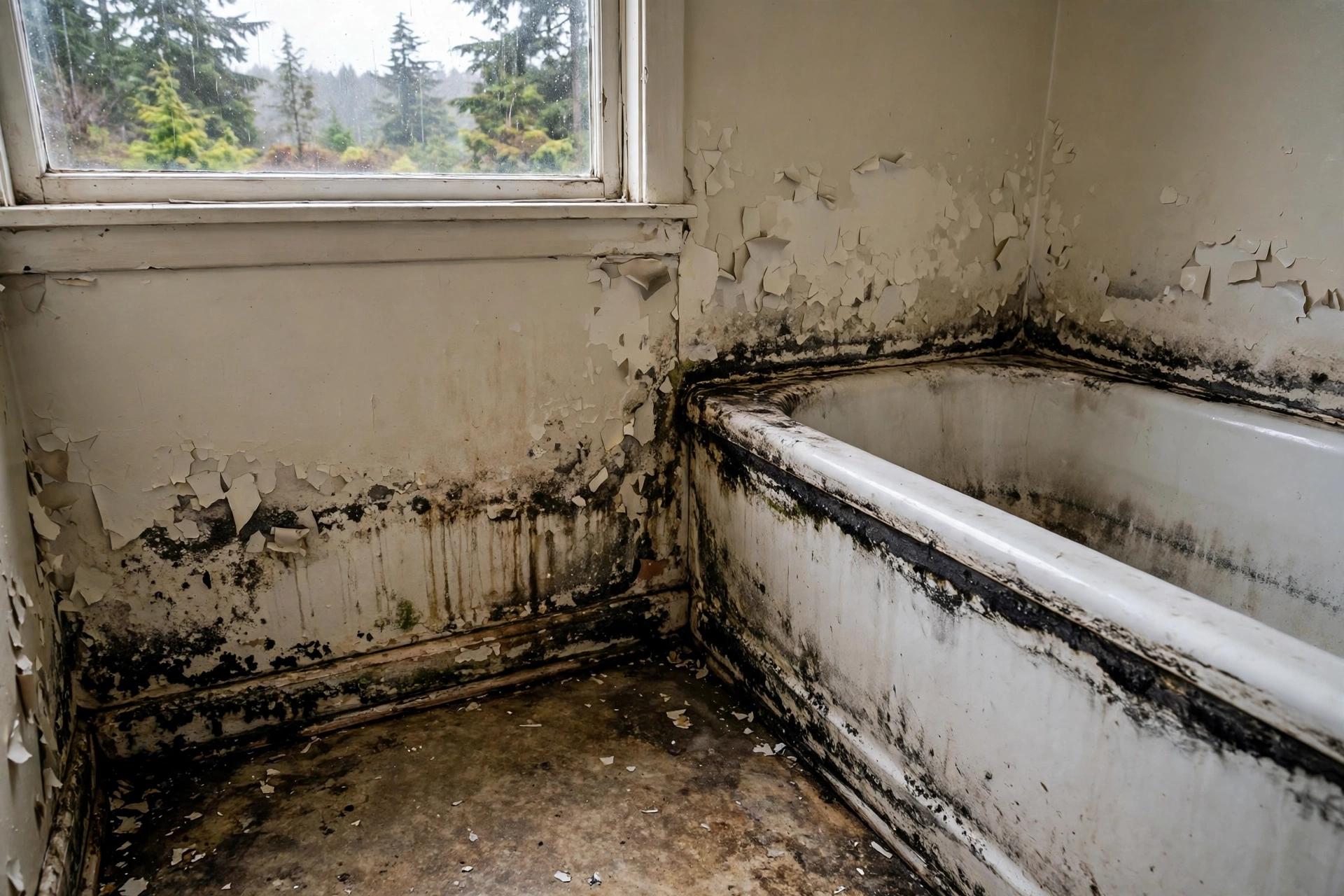
Attic Mould: The Most Common Big Bill
Attic mould in the Fraser Valley? Usually it’s ventilation. Not a leak.
Warm house air rises. Hits cold roof sheathing in winter. Condenses. Bath fans vented into the attic instead of outside make it worse — and plenty of older homes in Abbotsford and Chilliwack were built that way. A few winters. The roof deck turns spotty. Then black.
For a typical house, the attic mold remediation cost often lands between $2,000 and $6,000 or more.
How much sheathing is affected drives that range. So does access — a tight attic is slow, awkward labour, and that shows in the price. If insulation has to come out and be replaced, that pushes it up too.
But removal on its own doesn’t finish an attic job.
If the bath fan still vents into the attic and the soffit vents stay blocked, the mould will be back. Budget for the ventilation fix as part of the real cost.
Basement Mould: Water Finds a Way
Basements are simpler. And worse.
Water gets in. Or damp sits against cool walls, and finished materials trap it. Carpet on a slab. Drywall right down to the floor. A storage room nobody opens for months in a house near Sumas Prairie, where heavy rain is a fact of life.
The basement mold removal cost BC homeowners face often runs $2,500 to $8,000 or more. Finish and area decide most of it.
An unfinished basement is far cheaper. Mould on exposed joists and concrete, you can get at it. A finished one? Drywall comes out. Insulation too. Flooring too, and later it all gets rebuilt. Remediation quotes usually cover removal and cleaning — not putting your recreation room back together. Rebuild is separate.
That’s why basement mould and basement water should always be discussed together. If seepage is the source, look hard at fixing basement water problems at the source before you pay to refinish anything. Remediate while water’s still coming in and you’ve just rented a clean basement. For a season.
Bathroom Mould: Small Room, Sneaky Costs
Bathrooms fool people.
Small room, small bill — that’s the thinking. Sometimes they’re right. Surface mould on grout and caulking, caught early, that can be cleaned for the low end of the range.
Bathroom remediation often lands between $1,000 and $3,500 once the real source shows itself. A slow leak inside a shower wall. A wax ring failing under a toilet for months. Opening a tiled shower to remove mouldy backer board and then retiling is where a small room gets expensive, and the tile work is often the bigger half of the bill.
So ask any contractor to separate the numbers. What is remediation. What is plumbing repair. What is rebuild. Three different costs, three different decisions.
Cost by Scenario and Size
These are 2026 BC planning ranges in Canadian dollars, not quotes.
| Scenario | Typical 2026 BC planning range | Notes |
|---|---|---|
| Inspection and assessment | $300 to $600 | Often the starting point for anything beyond a tiny patch |
| Lab testing, when needed | $250 to $600 | Worth it for hidden growth, sales, or recurring mould |
| Small contained area, under 10 sq ft | $500 to $1,500 | One localized patch with containment |
| Bathroom remediation | $1,000 to $3,500 | Rebuild and tile work are usually extra |
| Attic remediation | $2,000 to $6,000 or more | Ventilation correction is usually extra |
| Basement remediation | $2,500 to $8,000 or more | Depends heavily on finish and affected area |
| Professional remediation, general guide | About $15 to $30 per sq ft | Helps you sanity check a larger quote |
Read that table like a contractor builds a quote.
Start with assessment. Add testing only if your case actually needs it. Then price the scenario you’ve got, and keep the rebuild money separate in your head. Homeowners from Clearbrook to Sardis get into trouble the same way — they budget only the middle line.
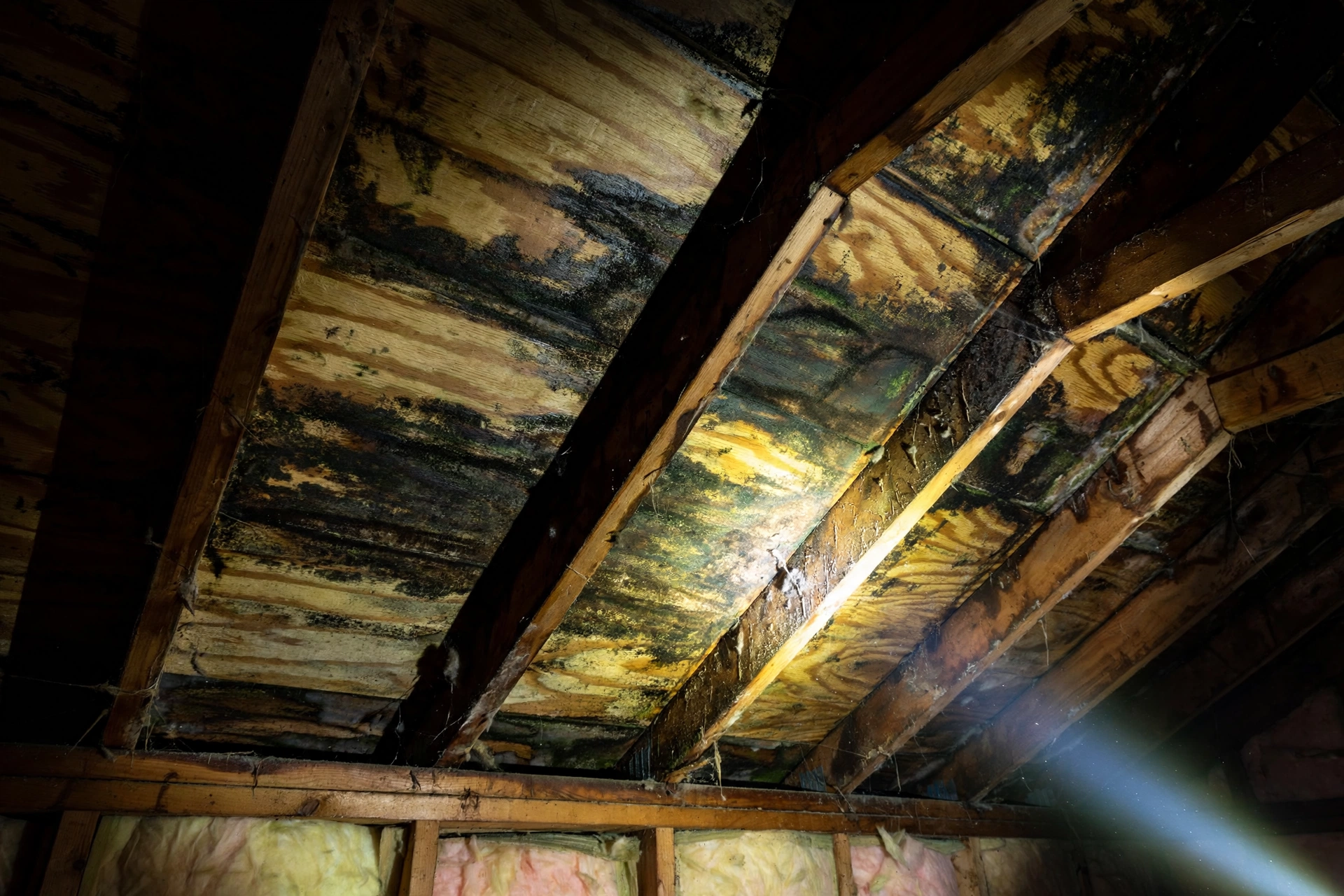
Before Anyone Opens a Wall in an Older Home
This step protects your budget. It protects the people doing the work too. In older BC homes, mould is rarely the only thing in a wall. Rarely. Drywall compound can contain asbestos. So can floor tile. Pipe insulation too, and other older materials. Disturb them during mould removal without knowing and you’ve got a problem you don’t want.
Built decades ago? And the plan means cutting into walls, ceilings, or flooring? Ask about asbestos testing before any removal work starts first. A sample test is modest. Stopping a job mid-stream because suspect material turned up is not. A careful company will raise this themselves for older housing stock. If they don’t, ask why not.
A pro assessment is worth it other times too. Large area. Mould inside a wall or attic system. You’ve cleaned before and it came back. Those aren’t cleaning problems. They’re moisture problems.
Fix the Moisture or the Mould Comes Back
This is the prevention section. It’s also the most important money advice here. Mould needs moisture. That’s it. Remove the mould, leave the moisture, and you’ve bought a repeat bill. Usually within a year or two.
Start with the obvious sources.
Fix plumbing leaks properly. Not with a bead of caulk and a prayer. Vent bath fans outside — and actually run them, during showers and after. Keep soffit vents clear in the attic. In the basement, watch for seepage after heavy Fraser Valley rain, keep gutters moving water away from the foundation, and run a dehumidifier if the space sits damp through winter.
Indoors, fix window condensation before it feeds mould on sills. Wipe up standing water. Don’t store cardboard boxes directly on a basement slab. Small habits. Real effect.
And watch spots you’ve already fixed. Under sinks. At the attic hatch, a few times a year. Costs nothing. Catch a leak at the drip stage and you won’t need this table again.
Mould Questions: Frequently Asked Questions
How do I know if I can clean mould myself or need a pro? Small and visible, on a hard surface, source obvious and already fixed? That’s often manageable for a homeowner. Large areas are different. Mould inside walls or attics too. Mould that keeps returning — that calls for a professional assessment. In doubt, pay for the assessment. Decide from real information.
Is mould testing always necessary before remediation? No. Especially not when growth is visible and the result wouldn’t change the plan. It’s worth it for hidden growth. For recurring problems. For real estate documentation, or disputes about scope. A good company will explain what a test would actually change before charging you. If they can’t, don’t buy it.
Does remediation include repairing and repainting the room? Usually it doesn’t. Remediation is containment. Removal. Cleaning and drying. Drywall, tile, flooring, paint — that’s rebuild, priced separately. Ask for the quote in two parts. Your total is remediation plus rebuild.
Why did I get two very different quotes for the same mould? Scope. That’s usually why they differ — how much hidden material each company expects to remove. Ask what area their price covers. What materials. What happens if more damage is found once it’s open. The cheaper quote isn’t cheaper if it excludes containment you need.
Will mould come back after professional remediation? In the same spot, it shouldn’t. Not if the moisture source was found and fixed in the plan. If the leak remains — or the drainage problem remains — mould can return, even after thorough removal. That’s why the moisture fix matters as much as the cleaning.
Get a Clear Number Before You Tear Anything Open
You don’t need to solve the whole house today. Start with the room that worries you. Get a proper assessment. Ask for a mould removal cost BC breakdown in writing — remediation separate, testing separate, rebuild separate. Once those three numbers are in front of you, the mold remediation cost BC decision stops feeling like a guess. It looks like a plan. One you can budget for. If you want that breakdown for your Abbotsford or Fraser Valley home before you commit to any work, call (236) 613-0038 and ask what an assessment would cover in your case.