
Asphalt driveway cost in BC is the number people ask for when they want the honest budget option.
Not the cheapest possible driveway. Gravel holds that title. This is the cheapest proper driveway you’ll find. Looks finished. Drains right. And it won’t track mud into the house all winter long. Half the driveways in the Fraser Valley are asphalt. Crews here pave nearly year-round, which keeps pricing competitive. Quality, though, runs the full range from excellent to awful. Between the driveway that lasts twenty-five years and the one cracking at three, the difference is rarely the asphalt itself. What sits underneath it decides.
The short version: new asphalt driveway cost in BC runs $4–$7 per square foot installed in 2026, putting a typical double driveway between $3,500 and $7,000. Base preparation is the biggest variable in the job. Skimping on it is the most expensive mistake in paving.
Asphalt Driveway Cost in BC vs Concrete: The Honest Table
Every driveway conversation in BC eventually becomes this comparison. Here it is, without the sales pitch either side usually brings.
| Factor | Asphalt | Concrete |
|---|---|---|
| Installed cost per sq ft | $4–$7 | $8–$14 |
| Typical double driveway total | $3,500–$7,000 | $7,000–$14,000 |
| Lifespan with maintenance | 20–25 years | 30–40 years |
| Freeze-thaw performance | Flexible, forgiving of minor movement | Rigid, cracks if the base shifts |
| Repairs | Patching blends well, cheap | Patches show, expensive |
| Maintenance | Sealcoat every 3–5 years | Occasional sealing of joints |
| Appearance over time | Fades to grey, always looks like asphalt | Holds its look longer, stains show |
| Installation speed | Drive on it in 2–3 days | Cure time of a week or more |
Asphalt wins on price. And on repairability. Concrete wins on lifespan, and on looks. In BC, that freeze-thaw row is the one to study. The Valley’s winter tests driveways exactly the way you’d expect. No deep cold. Just endless cycling around the freezing point. Wet, freeze, thaw, repeat. Asphalt flexes through that cycling. Concrete resists it until the base gives, and then it cracks in ways that cost real money to fix.
For the full concrete picture, our concrete driveway cost guide for BC breaks down the other side of this decision in detail.
Base Prep Is the Budget
If one sentence in this guide matters, it’s this. Asphalt? That’s only the wearing surface. The base is the driveway.
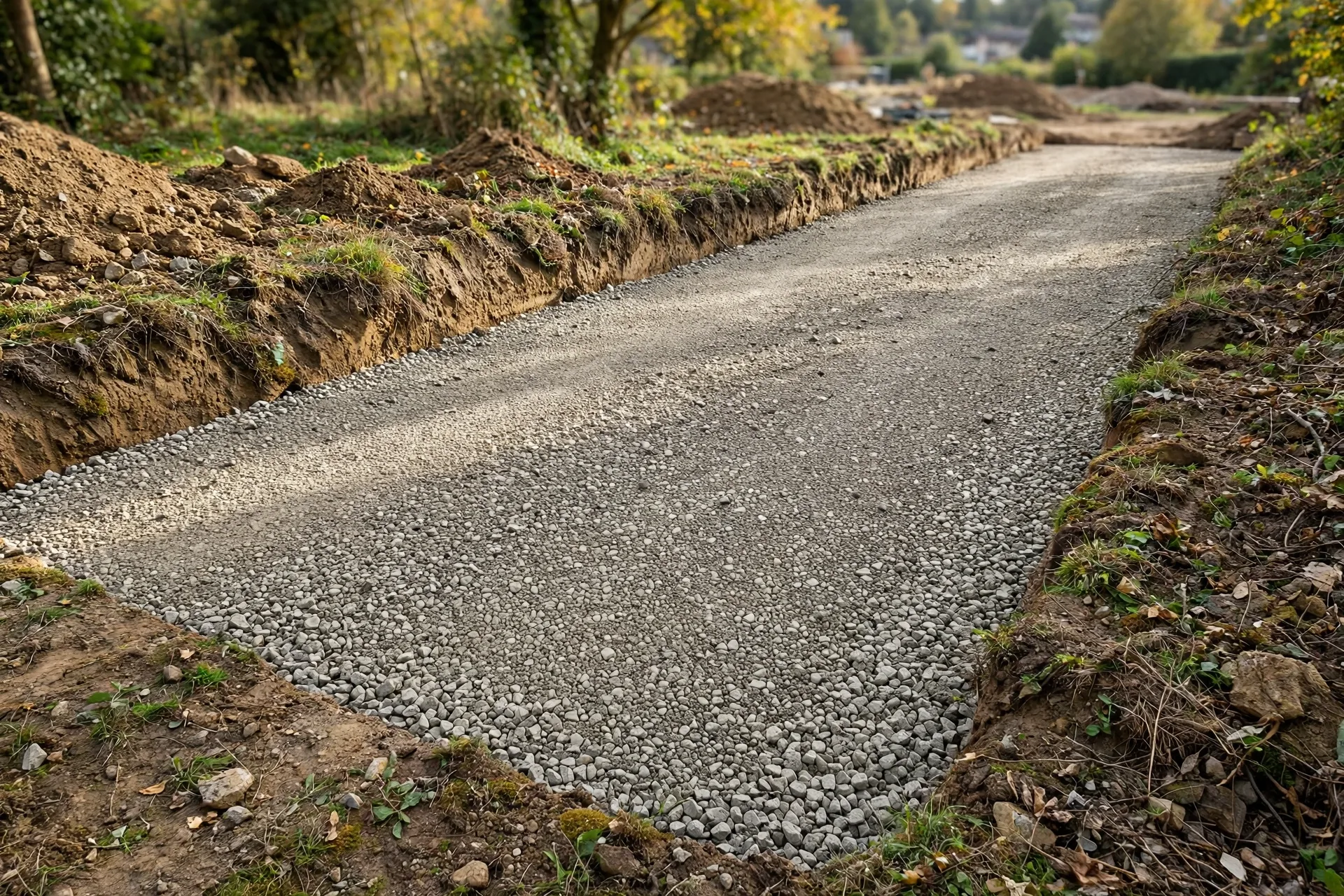
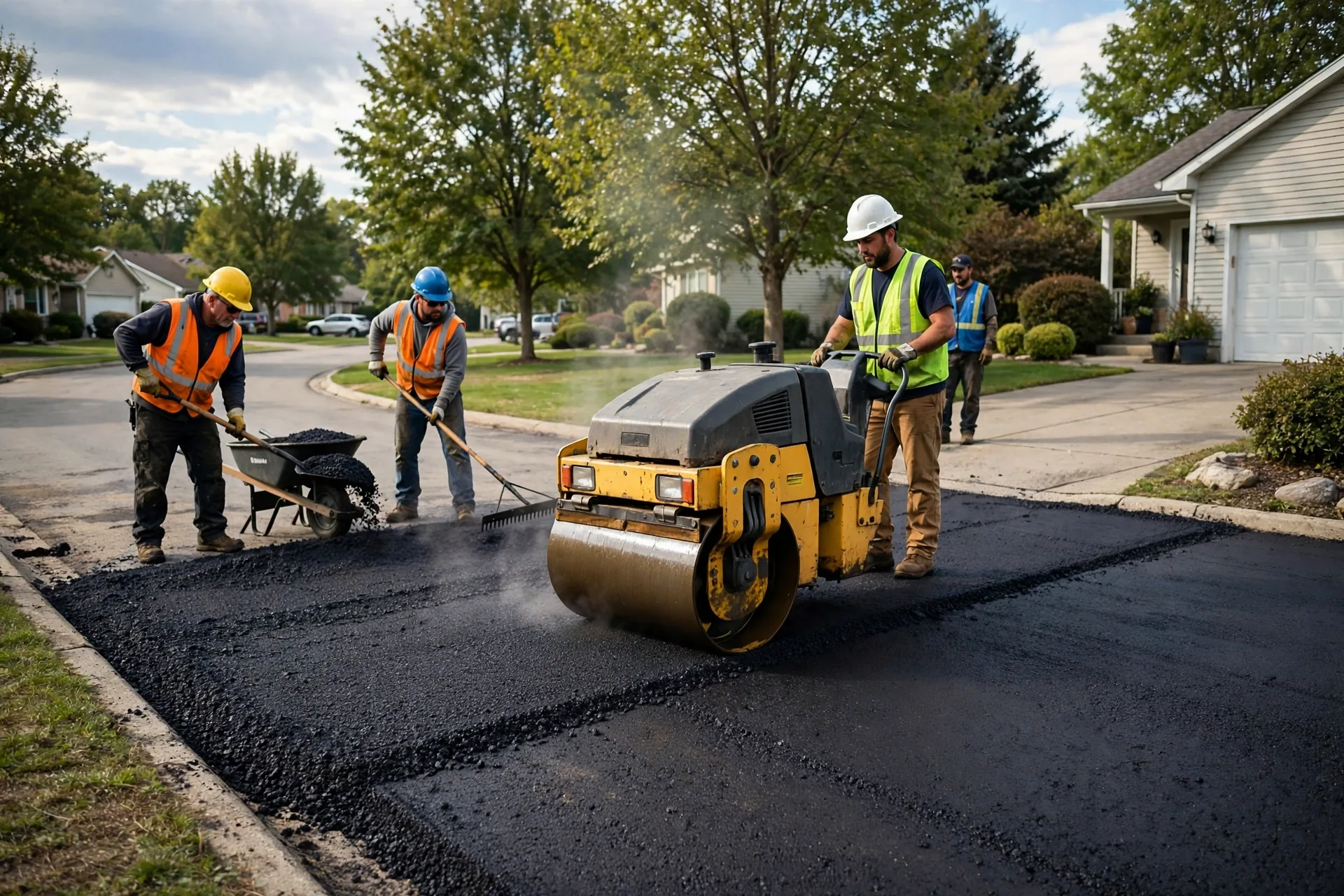
A proper residential asphalt driveway in BC is built like this. First, dig out the old surface and any unsuitable soil. Then lay six to twelve inches of crushed granular base, compacted in lifts with a roller. Never just drive over it once with a truck. Grade everything so water drains off. Two to three inches of hot-mix asphalt goes down next, compacted while it’s hot, edges finished clean. The base work is roughly half the total cost. It is the half you will never see again.
Driveway paving cost in BC varies mostly because base prep varies. Flat lot, good drainage, sandy soil? That’s the minimum scenario. A lot with clay, poor drainage, or an old driveway that has to come out needs the maximum. Tear-out and disposal of an existing failed driveway typically adds $1–$2 per square foot. Need the base to hold a work truck or an RV pad? Thickening it costs more. Two paving quotes land far apart? The base specification is almost always why. Get both contractors to put the base depth and compaction method in writing. That vague quote is the expensive one in a cheap disguise.
One more base note specific to the Valley. In parts of Abbotsford, Mission and Chilliwack, the water table sits high. Clay pockets are common. A contractor who knows the area talks about drainage before talking about asphalt. A contractor who never mentions drainage has told you everything. Everything about that driveway’s next ten years.
What Drives the Per-Square-Foot Price
Size. Scale works in your favour with asphalt pricing. A small single-car pad carries almost the same mobilization cost as a double driveway, so the per-foot rate looks steep. Past a few hundred square feet? The rate settles into the standard band. Very long rural driveways price partly by the tonne of asphalt and the trucking distance, and remote parts of the Valley pay a delivery premium.
Thickness. Two to three inches of compacted asphalt is the typical residential spec. The difference between two inches and three is real money and real lifespan, especially where vehicles turn. Turning tires shear thin asphalt. No compacted thickness on the quote? Ask for it.
Edges. Where the driveway meets the lawn, the edge needs to be clean and compacted. Without that, it crumbles inward within a few years. Concrete curbs cost more. Thickened asphalt edges do too. They add years, though. The cheapest quotes skip edge treatment entirely. Find any five-year-old budget driveway in the Valley and you’ll spot exactly where they skipped the edge.
Drainage and grading. Water must leave the driveway. Not sit on it. Not run toward the house or garage. Regrading, a trench drain at the garage door, or tying into the storm system adds to the quote and subtracts from future problems. Standing water is asphalt’s slow killer. It softens the surface. Finds the weak spots. The freeze-thaw cycles do the rest.
Access. Narrow side yards. Overhead wires. Tight turnarounds for the paving equipment. Crews need room to work, and constrained sites cost more. Homeowners hear this and get surprised. A driveway’s a driveway, they figure, whatever surrounds it. Not quite.
The Freeze-Thaw Reality in the Fraser Valley
BC’s Lower Mainland does not get prairie winters. It gets something arguably harder on pavement: months of hovering around zero, rain instead of snow, dozens of freeze-thaw cycles per season. Water works its way into every tiny crack. Freezes. Expands. Wedges the crack wider. This is why sealcoating matters more here than its price suggests.
Sealcoat every three to five years. Roughly $0.30–$0.60 per square foot. It is the cheapest maintenance in homeownership, a few hundred dollars that doubles the remaining life of the surface. The driveways that look terrible at year eight are almost always the ones that never got sealed. The ones that look fine at year fifteen got sealed on schedule. There is no mystery to it.
Crack filling sits between sealcoats. Small cracks get filled before water gets in. For a fraction of what resurfacing costs. A homeowner with a caulking gun and an afternoon can handle the small ones. The discipline matters more than the technique.
Resurfacing, a new layer of asphalt over a sound base, runs roughly $2.50–$4 per square foot and buys another decade when the base is still good. The right move when the surface is tired but the structure is sound. Full replacement is for driveways where the base has failed, because no surface treatment fixes a failed base. See the theme.
Timing and the Rest of the Project
Paving crews in the Valley work most of the year. Late spring through early fall is prime season. Hot, dry weather makes the best compaction and the cleanest finish. Winter paving happens. Reputable crews will tell you honestly when conditions are wrong for it, rather than laying asphalt into standing water. If a contractor is eager to pave in a downpour, find another contractor.
Driveways rarely happen alone. The garage door. The walkway. The fence line along the property edge. All of it gets looked at with fresh eyes once the blacktop goes down. If the garage door is part of the refresh, our garage door replacement cost guide for BC covers that budget line. And sequence the work sensibly. Heavy equipment for other projects should finish before the new asphalt goes down, not after.
Frequently Asked Questions
How much does an asphalt driveway cost in BC?
For 2026, plan on $4–$7 per square foot installed. That puts a typical double driveway at $3,500–$7,000. Tearing out an old driveway adds roughly $1–$2 per square foot, while difficult soil or drainage work pushes you toward the top of the band. Sealcoat every few years for a few hundred dollars, which is the main ongoing expense. These are 2026 BC planning ranges, not quotes.
Is asphalt or concrete better for a BC driveway?
Asphalt costs roughly half as much upfront and handles the Valley’s freeze-thaw cycling well, because it flexes. Concrete lasts longer, often 30–40 years, and holds its appearance better, but costs $8–$14 per square foot with pricier, more visible repairs. Budget and easy repairs? Asphalt. Longevity and looks? Concrete.
How thick should a residential asphalt driveway be?
Two to three inches of compacted asphalt. Over six to twelve inches of compacted granular base. Base depth matters more than asphalt thickness. Where vehicles turn or heavy trucks park, go thicker on both. Any quote should state the compacted thickness in writing.
How long do asphalt driveways last in BC?
Twenty to twenty-five years. Sealcoat every three to five years and fill cracks promptly. Skip the maintenance and you’ll see visible deterioration within eight to ten years. The Valley’s wet, freeze-thaw climate guarantees it. The base, not the surface, decides whether the driveway reaches the far end of that range.
Can asphalt be installed in winter in BC?
Sometimes. Paving needs two things. Dry conditions. And enough warmth for proper compaction. Good Valley crews pave through mild winter stretches, but they’ll postpone when it’s too wet or cold. Steer clear of any contractor happy to pave in standing water. Late spring through early fall still gives the best results.
Paving a Driveway in the Fraser Valley?
Start with the base specification. Always. That’s where quotes diverge. And where driveways succeed or fail. From every bidder, get the base depth, compaction method and asphalt thickness in writing. Plan drainage before the first truck arrives. Budget for sealcoating from day one. Sequence the paving after any other heavy work on the property. After a realistic read on asphalt driveway cost in BC for your specific lot, call us at (236) 613-0038. We’ll talk through the soil, the drainage, the access, and an honest budget range.