
Start with the mirror, because if it is still white with fog half an hour after the shower ends, your fan has already handed in its review. Then look up. Paint bubbling in the ceiling corners. Black freckles in the caulk that come back two weeks after you scrub them out. That is not a cleaning problem. That is a ventilation problem, usually years old.
The fix is one of the cheaper jobs in the house. In 2026 the bathroom exhaust fan installation cost BC homeowners actually pay runs from a few hundred dollars for a straight swap to the low four figures for a brand-new install with ductwork. Two different jobs. Two different prices. Most of the confusion around this work comes from mixing them up, so they stay separate here.
Maybe the fan is dead. Maybe it spins and moves almost nothing. Or maybe it works fine. This one turns up constantly in older Fraser Valley houses. The fan dumps every litre of shower steam straight into the attic, onto cold roof sheathing. And around here windows stay shut from October to April. Laundry dries indoors. Showers run long. That fan is the only thing between the steam and your drywall.
Bathroom Exhaust Fan Installation Cost BC: Swap or Full Install?
Here’s what actually splits a cheap fan job from a pricey one. It isn’t the fan. It’s the roof. Does somebody have to cut a hole in yours, or not?
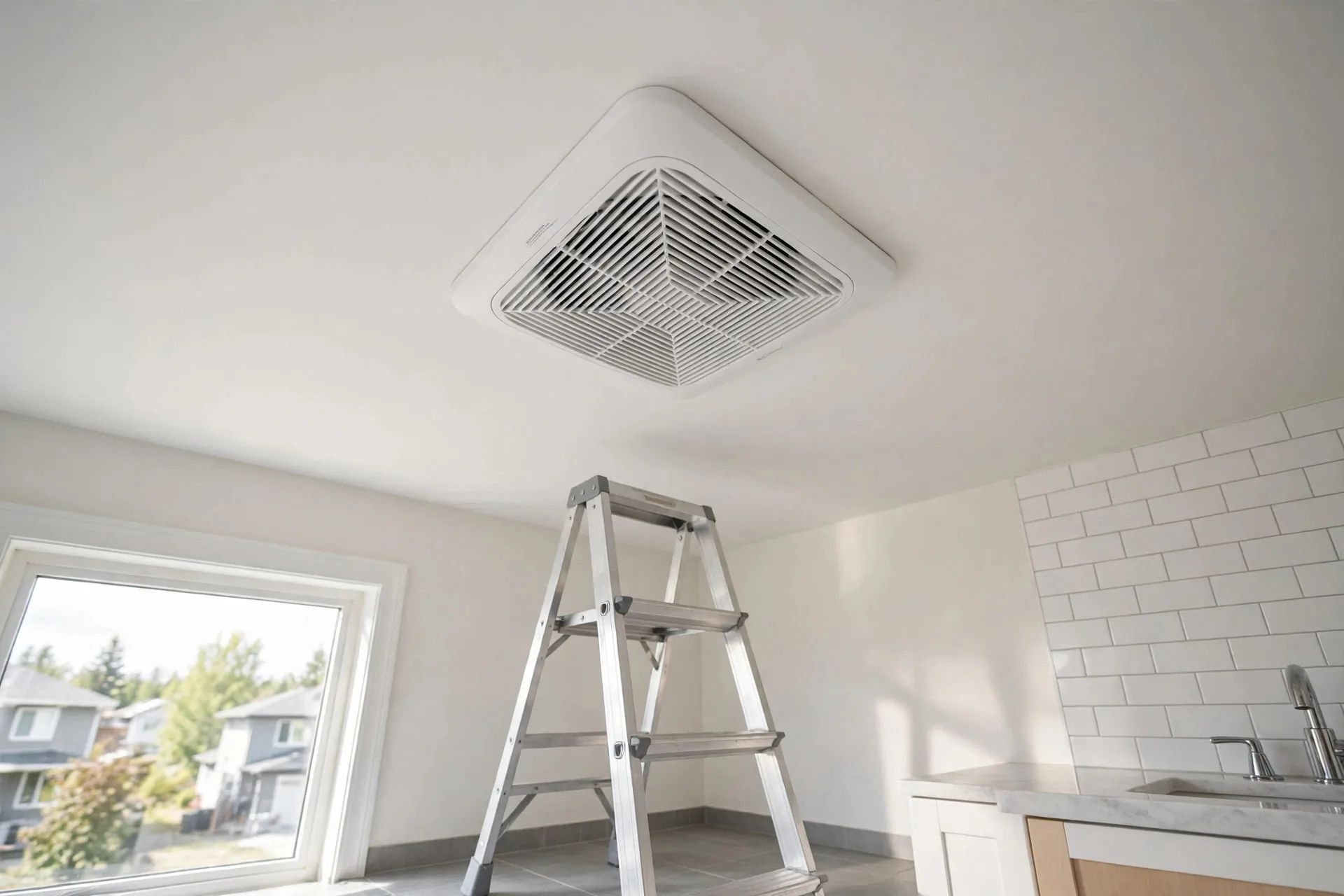
A replacement reuses the expensive stuff. The duct’s already in place. So are the roof or wall cap, the wiring, the switch. Somebody pulls the old unit, seats the new one in the same spot, connects what’s there. An hour or two of labour. Done. A brand-new installation is a different animal. You’re buying all that infrastructure in one visit. Ceiling cut. A duct run across an attic that may fight back. A cap flashed into the roof. New wire. New switch. Same destination. Completely different invoice.
That’s why quote comparisons go sideways. One installer prices a swap at $450. Another prices a from-scratch install at $1,400. The homeowner concludes somebody’s dishonest. Usually nobody is. They’ve priced different work and described it with the same words. So ask first, before the number. First question on any quote: which job is this?
| Job type | What is involved | 2026 planning range |
|---|---|---|
| Like-for-like replacement | New fan in the existing housing location, existing duct and wiring reused | $300 – $700 (unit + labour) |
| Replacement with a bigger or smarter fan | Upsizing the unit, possible housing modification, humidity sensor or timer controls | $500 – $1,000 |
| Brand-new installation | New ceiling opening, new duct run to a roof or wall cap, new wiring and switch | $800 – $1,800 |
| Premium quiet fan or fan/heat/light combo, new install | Higher-end unit, new ducting, sometimes a dedicated circuit | $1,200 – $2,500 |
The unit itself? That’s $80 to $450. And the spread buys real things. Quieter running. A humidity sensor. Build quality that doesn’t rattle loose in three years. Here’s the quiet part, though. The noise rating decides whether anybody actually uses the fan. Noise gets its own section below.
Where does the old fan send its air? Check before you buy anything
First, find out where the current fan exhausts. Not where it should. Where it actually does.
The answer has to be outside. Through a roof cap or a wall cap fitted with a damper. Full stop. In older BC homes, though? Open the ceiling and you’ll still find ducts that end in the attic. Or worse, fans that were never ducted anywhere at all. Every shower then pumps litres of water vapour onto roof sheathing and insulation. Slowly. For years. A large share of the attic mould here traces straight back to that.
Already have that problem? Then you’re not buying a full new install. You’re not buying a plain swap either. The new work is the duct run and the exterior cap. That’s it. So the pricing lands in the partial-installation range, in between the two. Now, the run itself. Short. Straight. Don’t get clever with the routing, because clever is how ducts get into trouble. An uninsulated run across unheated attic space lets vapour condense inside the pipe. It drips back down through the fan. You get a ceiling stain that looks exactly like a roof leak. A complete quote names them all: penetration, flashing, insulated duct, backdraft damper. A quote that lists a fan and an hourly rate? It left the actual job off the page.
Renovating anyway? That’s the cheap moment to sort this out. Ceiling open, correcting a duct costs a fraction of the standalone job. The fan line sits inside our Abbotsford bathroom renovation cost guide. The other half of the moisture fight is priced in our bathroom waterproofing cost guide. Air out. Water stopped.
How Much Air Does It Need to Move, and How Loud Can You Stand?
Sizing a fan isn’t guesswork. Capacity gets rated in CFM, cubic feet of air moved per minute. The rule’s about 1 CFM per square foot of bathroom. Never below roughly 50 CFM, not even for a small bath. A standard 5-by-8? It gets its 50 CFM. Now take a 100-square-foot ensuite. Separate shower. Soaker tub. That room wants 110 CFM or more, and a large jetted tub adds more on top. Then it grows again. Enclosed showers count separately. Tub alcoves count separately. So do separate toilet rooms tucked inside one big ensuite. Add it all up and a sprawling ensuite doesn’t need one heroic unit straining. It needs two fans.
Builders installed the minimum allowed. Historically, that’s what went in. And minimums assume short showers, in a drier climate than this one. So half the fans in the Fraser Valley are undersized for their rooms. Test yours. Mirror still fogged twenty minutes after a shower? Undersized. Clogged with a decade of dust. Or both. Pull the grille and clean it. Cheap experiment.
Then there’s noise. It’s measured in sones, and sones decide whether a fan earns its money. A cheap builder fan at 3 or 4 sones sounds like a small appliance having an argument. People switch it off at the door. A fan that’s off moves no air at all. A quality fan at 1.0 sones or below? Just a background hum. On a timer or a humidity sensor it keeps running after you leave. Then it shuts itself off once the air dries out. Quiet. Automatic. It protects a bathroom the way a loud fan never can. And that extra $100, the low-sones model with a sensor, is easily the best money on this page.
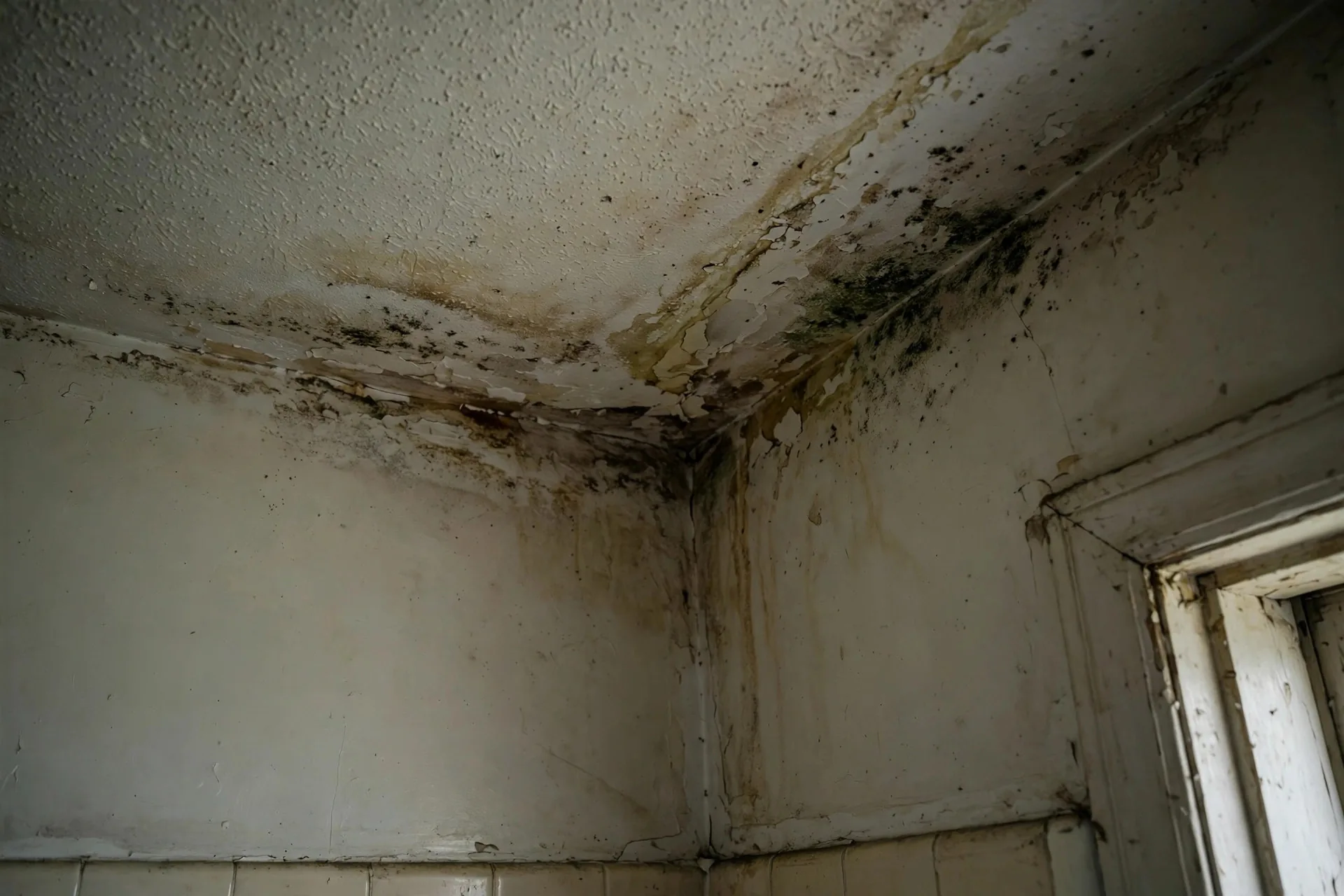
Black Corners, Bubbling Paint: The Room Is Warning You
Mould isn’t mysterious. It needs three things. Moisture. A food source. Time. Your bathroom hands it the first two every day. Shower steam covers the moisture. Drywall paper and dust cover the food. Time’s the only one you control, and you control it with drying speed. Run a correctly sized fan for 30 to 60 minutes after a shower and surfaces stay dry enough that mould never gets a foothold. Cost of that insurance? Pennies of electricity. Set it against remediation bills, which do not start small.
Once you look, the warning signs aren’t subtle. Paint bubbling on the ceiling. Paint peeling. Grout and caulk gone black again within weeks of a scrub. A musty smell that returns every winter. Condensation on windows in rooms sharing the bathroom’s wall. None of that needs panic. All of it means the fan question is no longer a someday item. Fix the ventilation before repainting. Paint over active moisture and you’ve booked the same job again for next year. Peeling paint included.
The Wiring: Who’s Actually Allowed to Touch It
Swapping a fan like-for-like? Same wiring, same switch. That’s within reach of a confident homeowner in some cases. But new wiring changes it. A new circuit changes it. Work inside the panel changes it. Then it stops being a handyman question. In BC, that’s electrical work. You need a licensed electrician. Or a homeowner permit, where your municipality allows one. Done to code either way.
Fans above a tub or shower come with requirements of their own. GFCI protection. Manufacturer clearances. And the switches, timers and humidity controls all live on the same circuit decisions. So it all belongs in one quote. Most people bundle the job sensibly. An electrician handles the replacement in one visit. Or the fan rides along inside a larger bathroom project, with the ceiling already open.
One demand worth making on any quote: the fan’s CFM and sones, in writing. Two numbers. They’re the entire point of the purchase. A quote that won’t state them is asking you to buy a mystery box.
Bathroom Exhaust Fan Questions: Frequently Asked Questions
What is the average bathroom exhaust fan installation cost in BC? It depends which of the two jobs you’re buying. A straight replacement, new fan on the existing duct and wiring, typically comes in at $300 to $700 with labour for 2026. A brand-new installation is the other job. Fresh duct run. New wiring. The works. It runs $800 to $1,800, with the bathroom ventilation fan cost accounting for $80 to $450 inside either figure. Quotes land far apart? Check what’s missing. Ductwork and the exterior cap are the usual suspects. That scope difference explains most gaps between bids.
What size of exhaust fan does my bathroom need? Start with the floor area. Roughly 1 CFM per square foot, with about 50 CFM as the minimum for a small bathroom. So a 40-square-foot bath needs around 50 CFM. A 100-square-foot ensuite needs 110 CFM or more. Separate enclosed showers add to that. Toilet compartments add to that. Choosing between two sizes? Take the step up, in a low-sone model. An oversized quiet fan still gets used. An undersized or loud one doesn’t protect the room.
Can a bathroom fan vent into the attic? It shouldn’t. Older homes turn up vented that way, and it counts as a defect every time. Dumping shower moisture into an attic loads cold sheathing and insulation. It’s a leading cause of attic mould in BC. The fan has to duct to the exterior. Through a roof or wall cap. With a damper. Correcting one usually gets priced like a partial new installation, because the duct run and the cap are the parts that were never installed.
How long should a bathroom fan run after a shower? Thirty to sixty minutes after the shower. That’s the working rule. And nobody’s standing in a bathroom for an hour guarding a switch. That’s why timer switches and humidity-sensing fans earn their premium. A humidity sensor runs the fan until the room’s back to normal moisture levels. Then it stops. Mirror still fogged when it shuts off? Something’s off. It stopped too early. Or the fan’s undersized.
Is a noisy bathroom fan a sign it needs replacing? More often than not, yes. Noise creeps up over the years. Usually it’s worn bearings. Or a failing motor. And a rattling fan moves less air than its rating claims, which is why many working fans sit unused. When you replace, set the sones ratings side by side. Dropping from 3 sones to 1.0 or below? That’s the difference between a fan people tolerate and one they forget is running.
Fogged mirror? Get the room breathing again
The fan is small money. Set it against mould remediation, repainting and drywall repair. And it’s a one-visit job. If your bathroom is showing the warning signs, or a renovation is planned and the ventilation should be sized inside it, call (236) 613-0038 with your bathroom’s dimensions and whether a fan and duct already exist. That places the job in the right row of the table above and matches the fan to the room by CFM and sones.