
The front door does three jobs and gets judged on the fourth.
The three jobs: keep weather out, keep heat in, keep strangers out. The fourth is the one people actually shop for: the look. The first thing a visitor touches. The last thing a buyer sees before the lockbox clicks. A front door replacement is unusual among renovations. It pays in all four currencies at once: comfort, energy, security and curb appeal. Few projects under $5,000 can say that.
In 2026, exterior door replacement cost in BC hinges on the material choice first. Everything else second. Steel, fiberglass and wood are not three versions of the same door. They are three different products with different lifespans, different maintenance, and price bands that barely overlap.
The short version: a steel entry door runs $1,200–$2,800 installed in 2026. Fiberglass: $2,200–$5,500. Wood: $4,000–$9,000+. Sidelites, transoms and high-security hardware add hundreds to thousands on top of any of those.
Steel vs Fiberglass vs Wood: The 2026 Material Table
| Material | Strengths | 2026 installed range (standard single door) |
|---|---|---|
| Steel | Cheapest, strong, good security, takes paint well | $1,200–$2,800 |
| Fiberglass | Best all-rounder: looks like wood, shrugs off weather, low maintenance | $2,200–$5,500 |
| Wood | Beautiful, traditional, heaviest and most repairable | $4,000–$9,000+ |
Steel is the value play. It is not close. A prehung steel door with a foam core, decent weatherstripping and a factory finish is a genuinely good door. Secure. Reasonably insulated. Paintable when the colour trends change. Its weaknesses are honest ones. It dents, a kicked door shows it. And if the finish is breached the steel can rust, which matters on the windward side of a Valley house where the rain comes sideways from October to March. Keep the paint intact and a steel door is a 20-year door. Let the bottom edge go and the Valley will eat it.
Fiberglass is what most door installers in the Fraser Valley recommend when asked straight. The recommendation is not a sales tactic. Fiberglass does not dent, rust, rot or warp. It takes stain convincingly enough that visitors guess wood. It handles the Valley’s freeze-thaw and the wet season without complaint. The maintenance is essentially washing it. The price jump over steel buys the absence of worry, which for a door you will own for decades is a reasonable trade. The mid-range fiberglass door, $3,000–$4,000 installed, prehung, with a mid-tier lockset, is the sweet spot of this entire guide.
Wood is the emotional choice. A real wood entry door, mahogany or fir or oak, has a presence. The other materials imitate it and never quite reach it. It is also the neediest. Wood moves with moisture. The finish needs refreshing every few years (every two to three on a south- or west-facing Valley exposure, where the sun and rain take turns). A neglected wood door looks worse than a neglected anything. Buy wood because you love wood and will maintain it. If that sentence does not describe you, buy fiberglass with a wood stain. Spend the difference on the lockset.
One more material note, because it confuses shoppers: most “wood-look” doors in showrooms are fiberglass with a grained, stained finish. There is no shame in this. The stain technology got good a decade ago. Ask directly what the slab is made of before comparing prices. A $4,500 stained door might be fiberglass (fair). Or it might be wood at a suspicious discount (ask why).
The Energy Angle: What a New Door Actually Saves
Let us be honest about the energy math, because door marketing is not.
A new entry door will not transform your heating bill. The door is a small fraction of the envelope. Even the best-insulated door is a hole in the wall with a U-value worse than the wall around it. What a new door fixes is air leakage. The whistle under the old door on a windy January night. The cold puddle on the floor inside. The weatherstripping compressed to nothing after fifteen years. An old door leaks like a window left cracked. A new prehung door, installed square with fresh weatherstripping and a proper threshold, seals. Properly.
In the Valley’s climate the comfort gain outweighs the bill gain. The entryway stops being the coldest spot in the house. The furnace cycles less on windy nights. If the old door is visibly daylight-leaking around the edges, try the classic test. Hold a lit match near the frame on a windy day and watch the flame lean. Replacement pays back in comfort immediately and in energy over years. Pair it with a storm door in exposed locations and the entry becomes genuinely tight. Though storm doors are their own $400–$900 decision, and not every door needs one.
Glazing changes the energy picture both ways. A door with a large glass insert or full sidelites is dimmer on insulation than a solid door. Glass, even good double-pane, loses more heat than a foam core. If the entry faces north and the house is already chilly, favour a smaller lite or a solid door. If the entry is dark and you want the light, accept the trade and buy the best glazing package offered. Doors are one of the few places where the energy choice and the daylight choice are the same choice. In opposite directions.
Security: The Frame Matters More Than the Door
Here is the sentence that rearranges door budgets: most forced entries do not defeat the door. They defeat the frame.
A $4,000 fiberglass door in a builder-grade frame with half-inch screws is a beautiful decoration on a weak opening. The kick-in happens at the strike plate, where the deadbolt meets the jamb, and the fix is embarrassingly cheap: a reinforced strike box, three-inch screws that bite into the framing stud (not just the jamb), and a solid door slab. The hardware upgrade, quality deadbolt, reinforced strike, long screws, runs $150–$400 installed and does more for real security than jumping from steel to fiberglass ever will.
Locksets themselves price in tiers. The basic keyed entry set that comes with most prehung doors is fine and pickable by anyone with a YouTube education. A mid-range deadbolt from a real lock manufacturer ($150–$300 for the hardware) resists the common attacks. Smart locks ($250–$500) buy convenience, not security. Codes for the kids. No rekeying after a contractor. And in the Valley’s rain, the battery and electronics want a covered entry or at least a storm door. Match the lock to the exposure. An uncovered west-facing door in Abbotsford takes weather that a sheltered north door never sees.
Do not forget the hinges on outswing doors. The door viewer or camera. And the simple fact that a door with a big glass lite next to the lock is a door whose lock can be reached through broken glass. Security is a system: slab, frame, strike, lock, hinges, glazing placement. Spend the money across the system, not all on the slab.
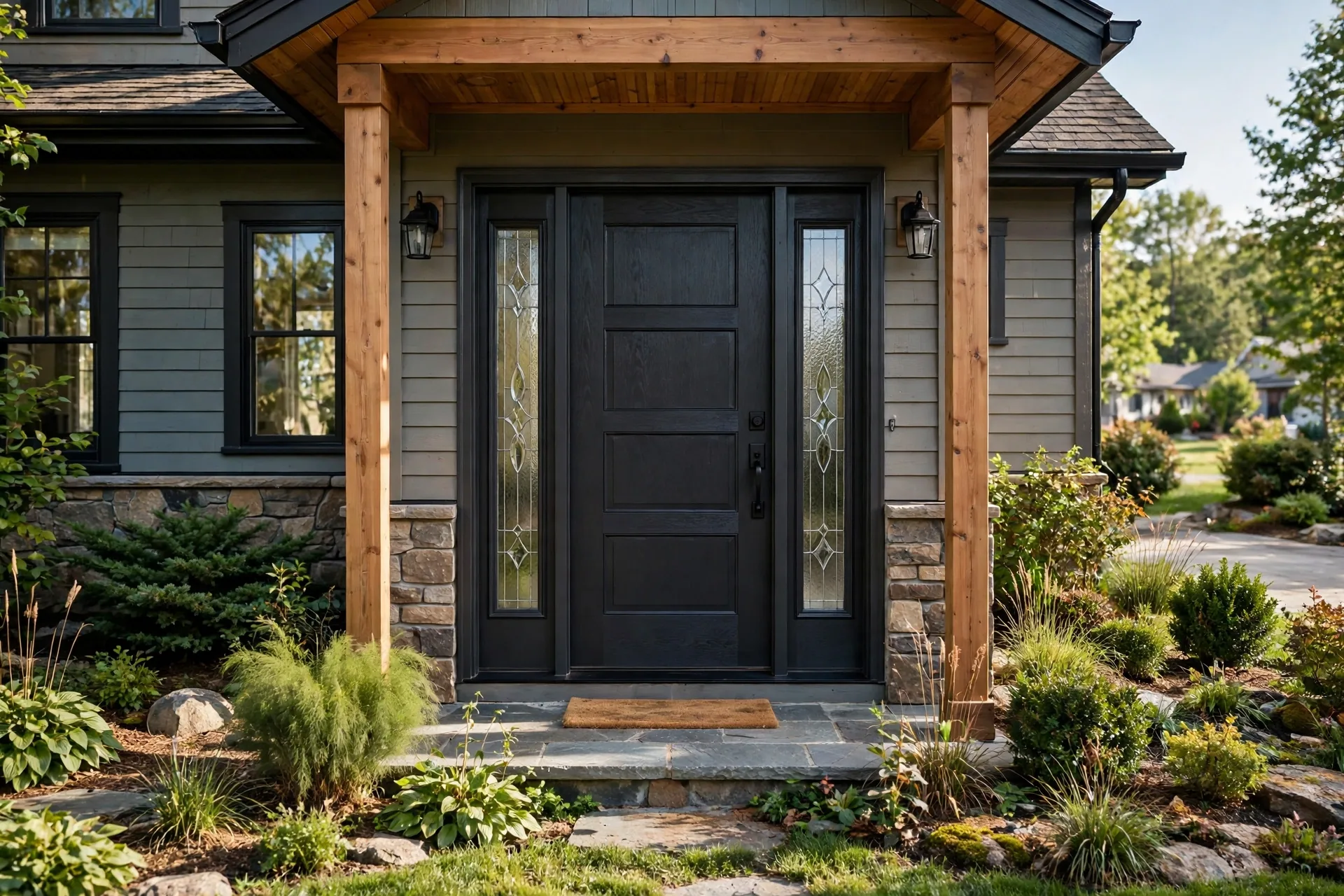
Sidelites, Transoms and the Glass That Doubles the Quote
The door slab is the base price. The glass around it is where front door replacement cost in BC climbs fastest.
A sidelite, the narrow window beside the door, adds $800–$2,000 per side installed. Depending on width, glazing, and whether the framing needs widening to fit it. A transom, the window above the door, adds $600–$1,500. A door with two sidelites and a transom can easily cost double the door alone. And that is before anyone talks about decorative glass, which prices like art because it is.
Widening the opening is the hidden cost. If the existing entry is a single 36-inch door and you want sidelites, the rough opening has to grow. Which means reframing, new header, exterior siding or stucco repair, interior drywall and trim. That structural and finishing work runs $1,500–$4,000 on top of the door package. It is the difference between a one-day door swap and a week-long entry project. Measure the existing rough opening before falling in love with a showroom display. The display is always the wide one. Your house may not be.
Decorative and privacy glass deserves its own warning. It is priced per design. Lead times run long: six to twelve weeks is normal for custom art glass. And it is the part of the order that cannot be changed once placed. Choose the glass in person, in daylight, looking through it, not from a thumbnail. The wavy reeded glass everyone wants in 2026 looks different from every angle. The showroom has the only honest sample.
For the doors inside the house, a different product, a different price band: the interior door replacement cost guide covers slabs, prehung units and the labour math room by room.
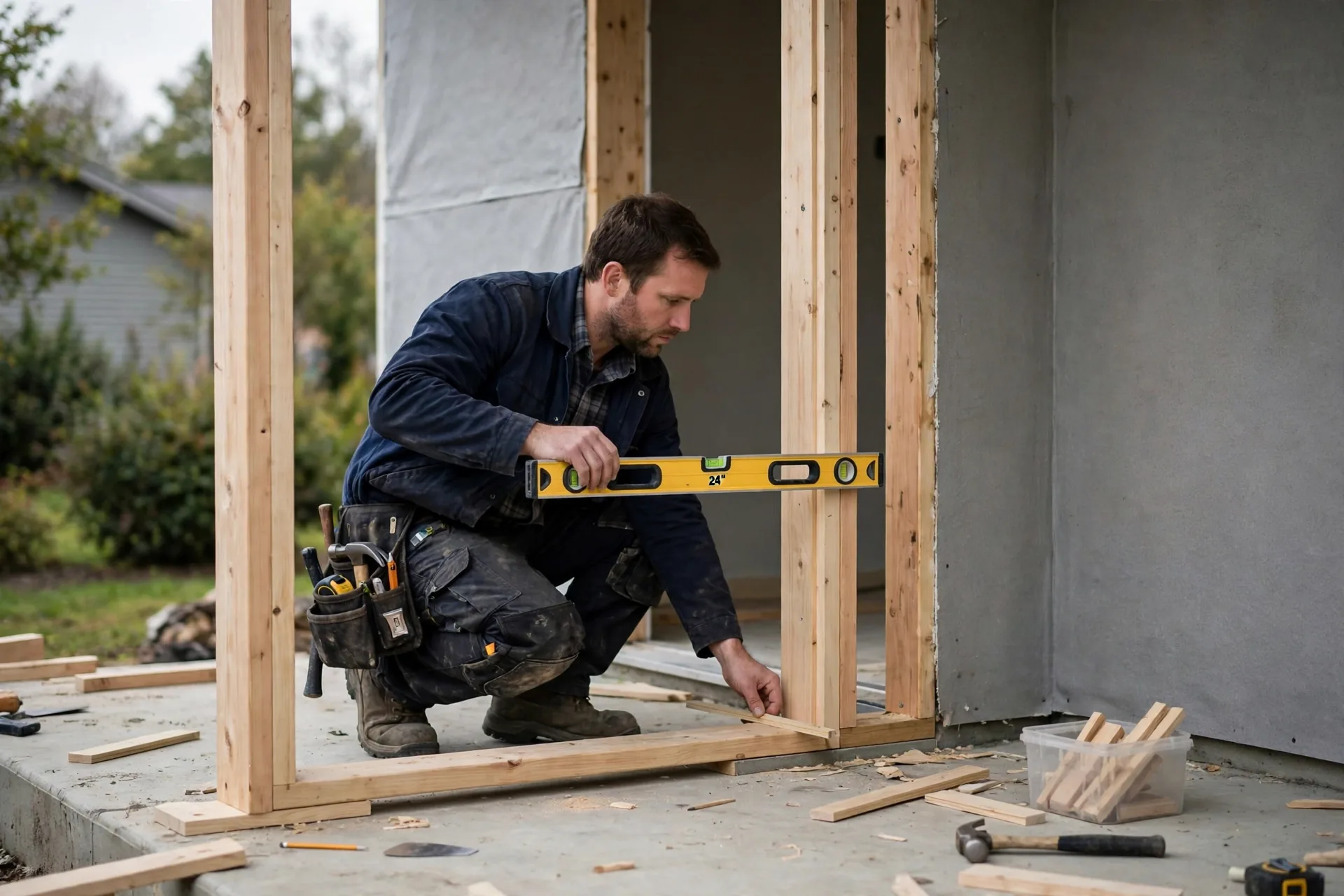
Installation: What the Labour Covers
Standard replacement, old prehung unit out, new prehung unit in, same opening: a half-day to one-day job. The labour typically runs $400–$900 of the total. That buys the careful removal. Old frames come out in pieces, while the surrounding trim and siding stay intact if the installer is good. The levelling and shimming of the new unit. Insulation of the frame cavity (low-expansion foam, not the stuff that bows jambs). Exterior caulking and flashing. The hardware install and adjustment.
The labour grows when the opening fights back. Rot in the sill or framing (common where old doors leaked for years: budget a contingency, because it is found not predicted). Out-of-square openings in older homes. Stucco or siding that needs patching around a new wider unit. A good installer quotes the standard job and names the contingencies. A bad one quotes low and discovers everything on day one.
Retrofit versus full-frame is the terminology to know. Retrofit (insert) installation puts the new door inside the existing frame. Cheaper. Faster. But it keeps the old frame’s weaknesses and slightly narrows the opening. Full-frame replacement removes everything to the studs and starts fresh. The right call when the old frame is rotted, out of square or under-insulated. Most quality-focused installers in the Valley default to full-frame for entry doors. The price difference ($200–$500 in labour) is worth it for a door you will own for twenty years.
The garage door is the other big exterior door on most Valley homes, with its own pricing logic around openers and insulation. Covered in the garage door replacement cost guide.
Frequently Asked Questions
How much does it cost to replace an exterior door in BC?
For 2026: plan on $1,200–$2,800 installed for steel. $2,200–$5,500 for fiberglass. $4,000–$9,000 or more for wood. Sidelites add $800–$2,000 per side. Transoms $600–$1,500. Widening the opening adds $1,500–$4,000 in framing and finishing. 2026 BC planning ranges, not quotes.
Is fiberglass or steel better for a front door in BC?
Fiberglass, for most homeowners. It does not dent, rust or warp. It handles the Valley’s wet winters and freeze-thaw without maintenance beyond washing. Stained fiberglass convincingly imitates wood. Steel costs less and is perfectly good when the paint is maintained. But the windward rain exposure common in the Fraser Valley punishes any breach in a steel door’s finish.
Do I need a permit to replace my front door in BC?
Usually not for a like-for-like replacement in the same opening. It is a fixture swap. If you are widening the opening, altering the framing or header, or changing the entry structure, that is structural work. It generally needs a permit with inspections. Confirm with your municipality before work starts.
How long does exterior door replacement take?
A standard same-opening replacement takes half a day to a full day. Adding sidelites or a transom in an existing wide opening adds a day. Widening the opening with new framing, header and siding repair stretches the project to most of a week. Plus lead time for the door itself: custom and decorative-glass doors typically take four to twelve weeks to arrive.
What is the most secure type of entry door?
The security is in the system, not the slab. A solid door (steel or fiberglass) in a properly installed frame with a reinforced strike plate, three-inch screws into the framing, and a quality deadbolt. That hardware upgrade costs $150–$400. It defeats the kick-in attacks that actually happen. An expensive door in a weak frame is the least secure combination at any price.
Replacing Your Entry Door in the Fraser Valley?
Start with the opening, not the showroom.
Measure the rough opening. Check the frame and sill for rot. Decide whether the sidelites of your dreams fit the house you actually own. Then choose the material for your maintenance temperament, not the brochure. Get quotes that separate the door unit, the glass options, the hardware and the labour. Ask each installer whether they default to full-frame replacement. Confirm permit needs with your municipality if the opening changes at all. Want a realistic read on exterior door replacement cost in BC for your entry? Call us at (236) 613-0038. We will talk through the materials, the opening and an honest budget range.