
A patio door is a window you walk through. The Valley treats it like one.
That instinct serves you well. Glazing, frame, flashing, the way a door meets the rain. Every bit of it is window technology, just scaled up to human size.
Plenty of people still shop for patio doors the way they’d shop for furniture. Handles. Finishes.
Flashing, U-value, track drainage, where the water goes. Those are window questions, and they’re the ones that decide whether the door becomes a joy or a regret.
Sliding patio door installation cost in BC in 2026 runs from a straightforward swap to a wall-of-glass project. The spread between those two is one of the widest in this whole cost-guide series. A standard two-panel slider and a four-panel lift-and-slide are barely the same product. The price knows it.
The short version: a standard two-panel vinyl sliding patio door runs $2,000–$4,500 installed in 2026. A three-panel slider: $4,000–$8,000. Multi-panel and lift-and-slide systems: $8,000–$20,000+, with the flashing and structural work around them adding more.
Standard vs Multi-Panel: The 2026 Cost Table
| Door configuration | Typical size | 2026 installed range |
|---|---|---|
| Two-panel sliding, vinyl | 5–6 ft wide | $2,000–$4,500 |
| Two-panel, fiberglass or clad wood | 5–6 ft wide | $3,500–$7,000 |
| Three-panel sliding, vinyl | 9–12 ft wide | $4,000–$8,000 |
| Four-panel / multi-slide | 12–16 ft wide | $8,000–$15,000 |
| Lift-and-slide, premium | 12–20 ft wide | $12,000–$20,000+ |
The two-panel vinyl slider is the workhorse of Fraser Valley patios. Tens of thousands of them, in every subdivision from Langley to Chilliwack. And the price is honest. The unit itself: $1,200–$2,500. The install labour: $600–$1,200 for a same-opening swap. The rest is trim, caulking and disposal. Exciting it is not. It opens. It closes. It locks. The rain stays out.
For a rental, a basement walkout, or a budget refresh, it’s the correct answer. No shame in it.
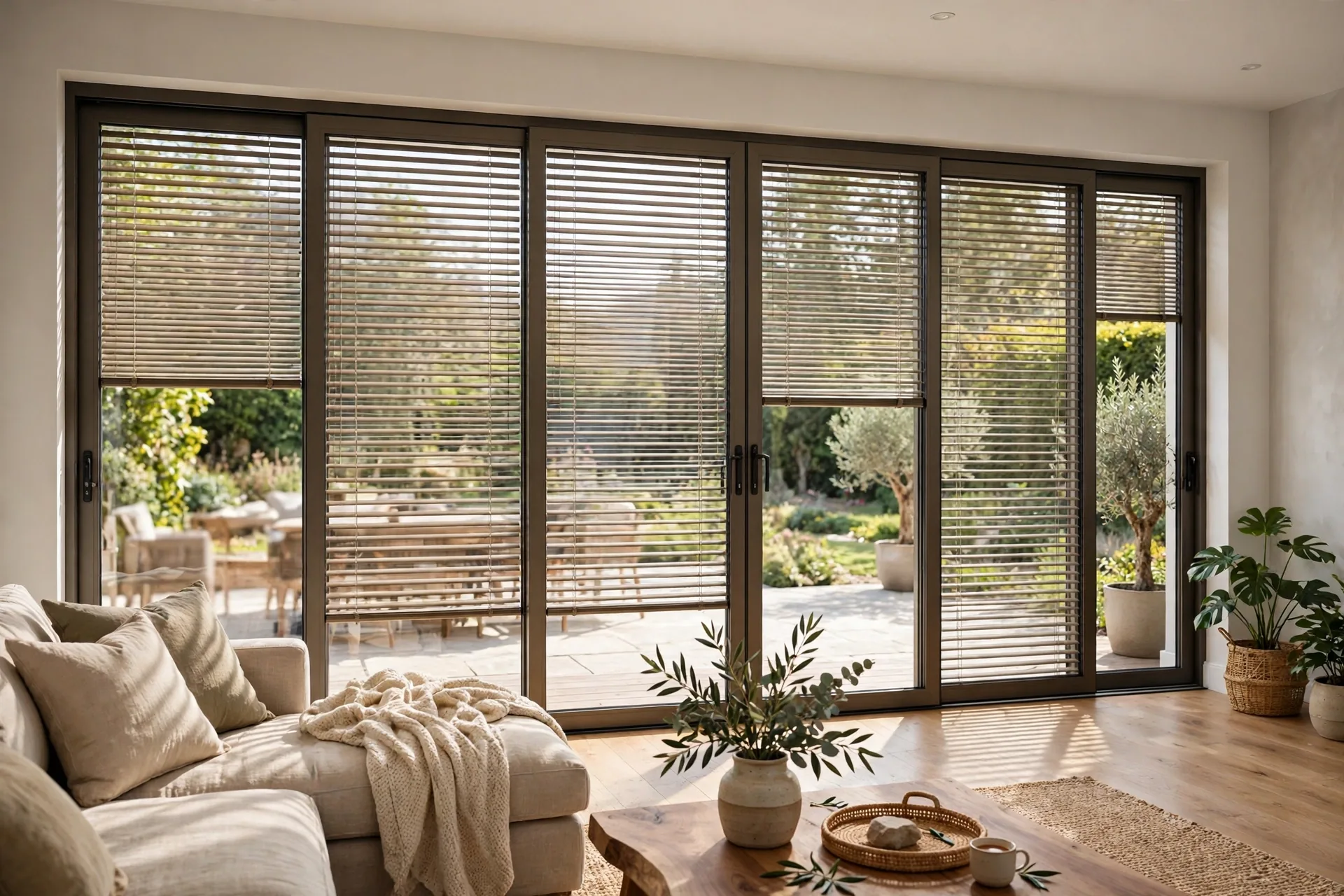
Three-panel sliders are where the feel changes. One fixed panel in the middle, or one sliding panel with two fixed flanks. Nine to twelve feet of glass. The living room suddenly has a view instead of a door. The cost jump is not just the extra panel. Wider openings need bigger headers. The track system gets heavier. Panels that long turn it into a two- or three-person job. They’re awkward, and one dropped corner ruins the day.
Step up to multi-panel and lift-and-slide systems and you’re buying an architectural statement. They are magnificent and they are priced like it. $8,000 to well past $20,000 installed. With the structural work, bigger headers, sometimes new posts, always careful flashing, on top. Turn the handle on a lift-and-slide and the multi-hundred-pound panel rises onto its rollers. Nothing else operates that smoothly. You’re paying for a machine here, not a door. “We want the wall to disappear” — if that’s how the budget talk starts, this is your row of the table, and own it from the start.
Frame material follows the window logic. Vinyl is the value pick. Good insulation. No maintenance. The Valley’s rain does not bother it. Fiberglass frames come stiffer and slimmer. As panels grow, that matters: less frame in the way, more glass doing the work. Clad wood, wood interior, aluminium exterior, is the premium look. Warm wood inside. Weatherproof outside. Priced accordingly. Happiest with an overhang or covered patio protecting it. In the Valley’s sideways rain, fully exposed wood-interior doors want that protection. Give it to them or buy vinyl.
The BC Rain Flashing Angle: Where Patio Doors Fail
Here is the part of patio door installation in Abbotsford and the Valley that separates good installers from the rest.
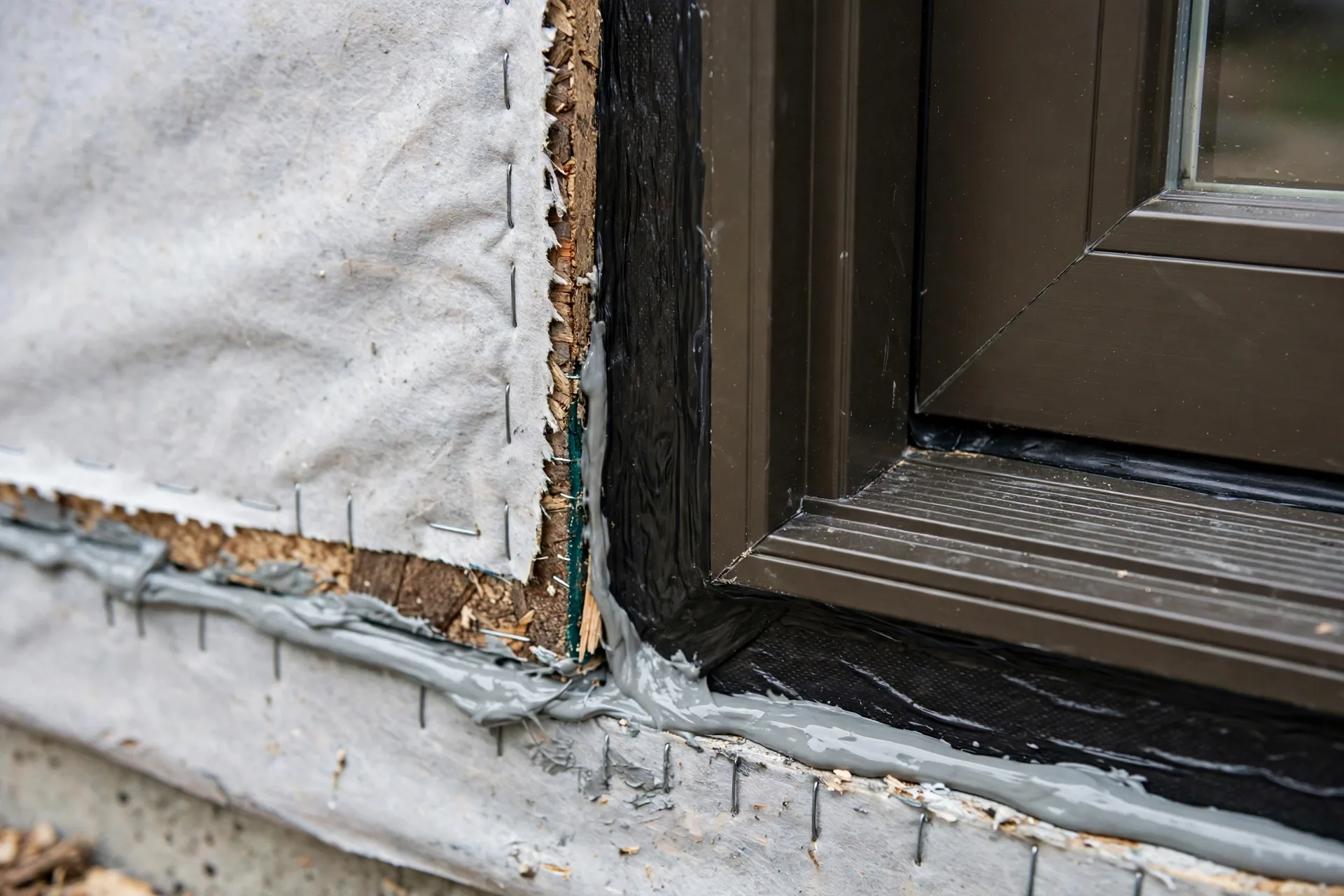
Water management. A sliding patio door is a six-foot-wide hole in the wall at exactly the height where rain hits hardest. And the track, the thing the door slides in, is a horizontal surface that collects water by design. Every patio door track has weep holes. Little drainage paths that let collected water back outside. Every failed patio door install in the Valley is, at root, a story. Water was given a path in and no path out.
A proper install treats the opening like a window and flashes it accordingly. Under the door sits the sill pan flashing, a formed metal or membrane pan that catches anything sneaking past the threshold and drains it outside. Side flashing tape lapped correctly. Head flashing above. House wrap ties in shingle-fashion, upper layers over lower, so the whole assembly gives water a downhill path out. The labour for this is unglamorous and invisible once the trim goes on. Which is exactly why low bidders skip it. The skipped flashing does not leak in July. It leaks in the first November windstorm. By then the trim’s on and the drywall’s up, so the repair means opening the wall.
Don’t forget the deck or patio outside. It matters too. The door threshold needs to sit above the exterior walking surface. Code generally wants the exterior landing at least a couple of inches below the interior floor. The classic Valley failure? A deck built up too high against the door, so water sheets across it and slides under the threshold. If the new door comes with a deck project, sequence them as one job. The door height and the deck height are one decision, not two. Our deck building cost guide covers the project from the other side of that threshold.
One more rain note, specific to replacements. The old door’s flashing, or the absence of it, is visible only when the old door comes out. Budget a contingency for reframing or rot repair around the opening. $500–$2,000 is the typical range when the sill shows damage, because a door that leaked for a decade rarely kept it to itself. The framing tells the truth once exposed.
Energy: Glazing, U-Values and the Big Glass Trade
A patio door is the largest glazed opening in most houses. Which makes its energy performance disproportionately important. And disproportionately misunderstood.
Ask for the U-value. Lower beats higher, because it measures heat loss. Its inverse conversation partner: the R-value. Expect around U-0.30 from a basic double-pane vinyl slider. A good triple-pane, or a high-performance double-pane with low-E coatings and argon fill, reaches U-0.20 or better. Moving from basic to high-performance glazing on a standard slider adds about $400–$900 to the unit. Put that patio door on the north or west side, into the Valley wind, and the comfort gain is real. Less cold radiating off the glass on January evenings. Less condensation on the frame.
But keep the honest math from the entry-door guide in mind. A patio door will never insulate like a wall. What you are buying with better glazing is the reduction of the worst effects. The cold downdraft off the glass. The winter condensation that wets the sill and the flooring beneath it. Condensation deserves a closer look. Plenty of Valley homeowners blame the door, but the real culprit is usually humidity. Warm moist indoor air hits cold glass and condenses. Every time. Better glass solves part of it. Lower indoor humidity solves the rest. A new triple-pane door in a house at 55 percent winter humidity will still weep. Ventilate the house. Run the bathroom fans. Let the new door do its part.
Then there’s the orientation quirk of low-E coatings. A coating that keeps heat in through winter can also cut solar gain. Good on a west-facing door that bakes the living room every August afternoon. Mildly regrettable on a south-facing door where free winter sun is welcome. Mention the door’s orientation to the salesperson. The good ones will spec the glazing accordingly. The bad ones will sell you whatever is in the warehouse.
Security on sliders is a track-and-lock question. The standard latch on a basic slider deters the casual and nobody else: a lifted panel defeats it. Anti-lift blocks, a proper keyed deadbolt or foot lock ($50–$150 in hardware), and a security bar for when you are away do the real work. Multi-panel systems from quality manufacturers come with multi-point locking as standard, which is one of the quiet justifications for their price: the door locks at three or four points along the frame instead of one.
What the Install Labour Covers
A same-opening replacement, old slider out, new slider in, takes a day. The labour portion typically runs $600–$1,200. That covers the removal. Old sliders come out in pieces and the glass goes to disposal. The opening prep and rot check. The sill pan and flashing. Setting and levelling the new unit. Insulating the frame cavity. Interior and exterior trim. Caulking. The lock and roller adjustment that makes the door glide instead of grind.
The labour multiplies when the opening changes. Widening for a three-panel or multi-slide means a new header, reframing, and exterior siding or stucco work. $2,000–$5,000 in structural and finishing labour before the door itself. Converting a window to a patio door, a popular Valley renovation, turning a dark living room toward the backyard, is the same class of work. New header. Opening cut to the floor. Flashing. Interior finishing. Typically $3,000–$6,000 plus the door. In these projects the door quote can look small next to the total. The total’s still worth it. Give a living room a real connection to the yard and it becomes a different room.
Roller and track maintenance is the aftercare nobody mentions at purchase. Slider tracks collect grit. Valley dust. Pollen. The fine silt that blows in every dry August. And grit is what makes a five-year-old door drag. Give the track a vacuum twice a year. Hit the rollers with silicone spray, never oil, once a year. Oil gums. Clear the weep holes with a pipe cleaner. Ten minutes, twice a year. The door glides at year ten the way it did at year one.
Doors inside the house follow simpler math, and the prices come down with it. Slabs and prehung units, room by room, that’s what the interior door replacement cost guide covers.
Frequently Asked Questions
How much does it cost to install a sliding patio door in BC?
For 2026: a standard two-panel vinyl slider runs $2,000–$4,500 installed. A three-panel slider $4,000–$8,000. Multi-panel or lift-and-slide systems $8,000–$20,000 or more. Widening the opening adds $2,000–$5,000 in structural work. 2026 BC planning ranges, not quotes.
Do I need a permit to replace a patio door in BC?
Swapping like-for-like in the same opening? Generally no permit needed. Widening the opening, fitting a new header, or converting a window into a door, that’s structural work. Most BC municipalities want a building permit with inspections for it. Check with your municipality before anything starts.
Vinyl vs fiberglass patio doors: which is better for BC?
On value, vinyl wins. Good insulation. Zero maintenance. The Valley’s rain does not affect it. Fiberglass wins as panels get bigger. Stiffer, slimmer frames mean more glass and less frame, and it handles large multi-panel spans better. For a standard two-panel slider, vinyl is the sensible default. For wide multi-panel systems, fiberglass earns its premium.
Why is my old patio door leaking?
Almost always flashing or drainage, not the door itself. Missing or failed sill pan flashing. Weep holes clogged with debris. A deck built up too high against the threshold so water runs under it. Valley wind-driven rain hunts down every single one. A replacement only fixes it when the new install brings proper sill pan flashing and the right threshold height. Otherwise the new door just inherits the old leak.
How long does patio door installation take?
A same-opening replacement takes one day. Widen the opening or convert a window to a door and you’re looking at three to five days of trade work, plus finishing. Then the door’s own lead time: two to eight weeks for standard sizes, eight to sixteen weeks for multi-panel or custom systems. Order the door first. Book the installer after.
Installing a Patio Door in the Fraser Valley?
Start with the water. Then the glass. Then the price.
Get the flashing plan in writing: sill pan, lapped side flashing, integrated head flashing. Because that invisible work is what stands between your living room and the November rain. Pick the glazing to suit the door’s orientation. Be honest about the opening size your budget allows. And get quotes that split out the door unit, the structural work, and the finishing. Confirm permit needs with your municipality if the opening changes. Want a realistic read on sliding patio door installation cost in BC for your home? Call us at (236) 613-0038. We will talk through the configuration, the flashing and an honest budget range.