
Walk-in shower installation cost in BC depends mainly on the type of shower.
Three types. Three different jobs. Three different labour loads.
A prefab unit, a custom tiled shower with a curb, and a curbless tiled shower are barely cousins — and under the tile, where nobody ever looks again, a tiled shower needs sloped waterproofing, a drain set to the millimetre, and tile work that sheds water for decades, which is why the waterproofing and tile labour, not the fixtures, set most of the price.
The short version: a prefab unit installed runs $4,000–$9,000. A custom tiled shower with a curb runs $9,000–$18,000. A curbless tiled shower with a linear drain and frameless glass runs $15,000–$28,000+. These are 2026 BC planning ranges for the shower as a standalone project, not part of a full bathroom renovation.
1. Prices by Shower Type
| Shower type | What it includes | 2026 planning range |
|---|---|---|
| Prefab acrylic or fiberglass unit | One-piece or multi-piece unit, new valve and trim, basic glass door or curtain | $4,000–$9,000 |
| Custom tiled shower with curb | Tile walls and floor, waterproofing membrane, standard drain, semi-frameless glass | $9,000–$18,000 |
| Curbless tiled shower | Linear or centre drain, recessed or ramped floor, full waterproofing, frameless glass | $15,000–$28,000+ |
Walk-in shower cost in BC lands a little higher than the national Canadian average.
Mostly labour.
Fraser Valley tile setters and plumbers bill at Lower Mainland rates, and the waterproofing work a tiled shower demands is skilled work — slow, exact, unforgiving of a rushed Friday afternoon — and it is not the place to hunt for the cheapest bid. The prefab row is the exception: factory units install fast, with modest labour.
These numbers assume the shower replaces an existing shower or tub in the same spot. If it is part of a tub-to-shower conversion — tub out, space reconfigured, the whole footprint rethought — the project also includes demolition, subfloor repair and often new valve plumbing, and our tub-to-shower conversion cost guide for Abbotsford covers that fuller project and its pricing.
2. Installation Steps and Their Costs
A tiled walk-in shower goes in through a fixed sequence.
Five phases. Each one carries its own cost — and each one waits for the one before it.
- Demolition and prep ($800–$2,000). The old tub or shower comes out, along with the surrounding tile and backer board. The subfloor is inspected and repaired. Water damage around old tubs is common, so a contingency here is standard. If the drain location is moving, this is when the floor opens for the plumber.
- Plumbing rough-in ($1,500–$4,000). The plumber sets the new drain assembly, runs or relocates supply lines, and installs the shower valve body in the wall. A basic pressure-balance valve is a few hundred dollars installed. A thermostatic valve with multiple body sprays can add $1,500–$3,000 in parts alone. The valve body goes in at this stage; the trim waits until the end.
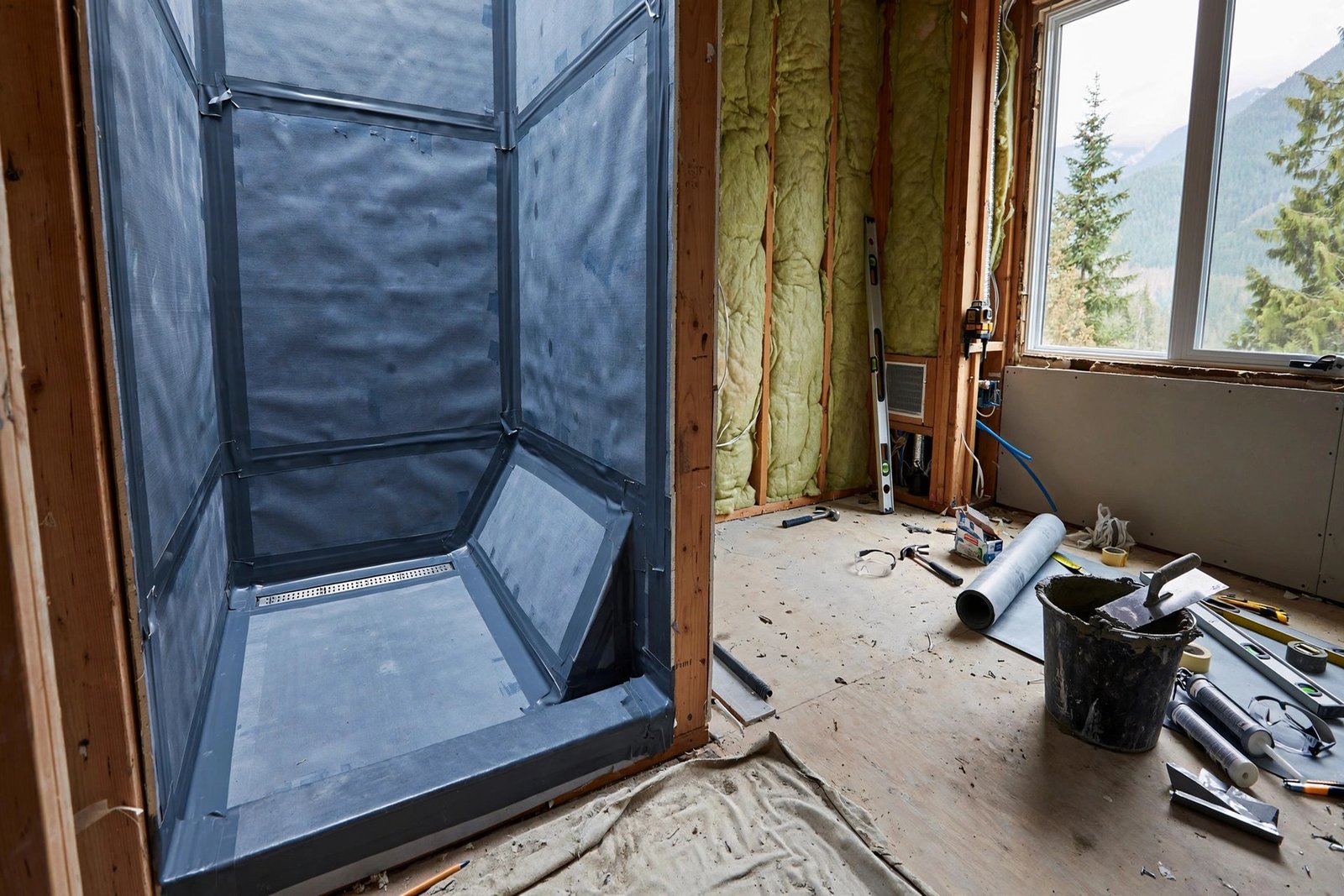
- Waterproofing and the pan ($1,500–$4,000). The shower floor is sloped to the drain — about a quarter inch per foot — and the wet area gets a waterproofing membrane system. Sheet membranes and liquid-applied systems both work when installed to spec. The system must be continuous, with corners and penetrations treated, and the drain integrated with the membrane. A shower that is skimped on here fails from the inside out, years before the tile shows a problem. Our bathroom waterproofing cost guide for BC goes deeper on systems and what the membrane work should include.
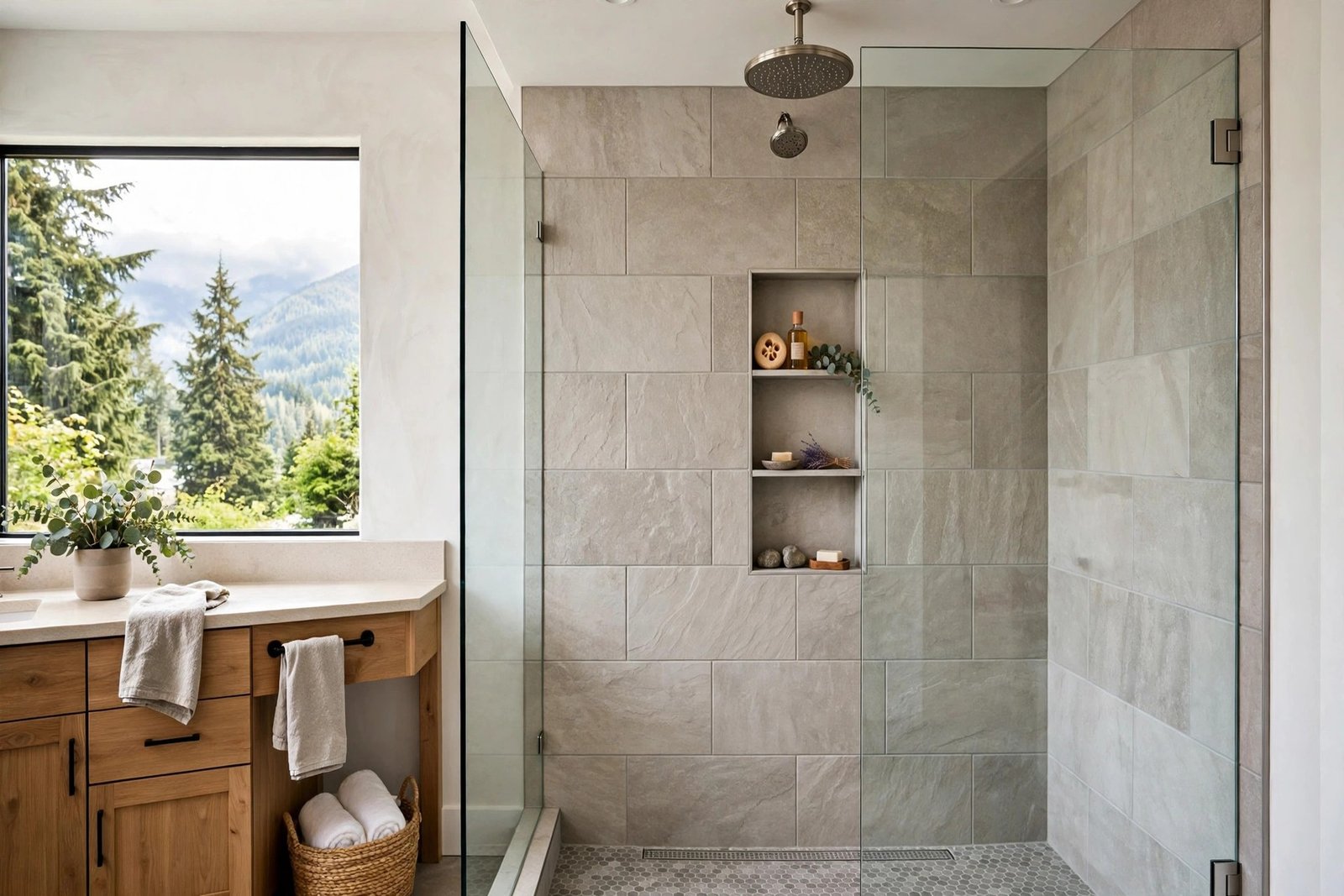
- Tile ($3,000–$9,000). Walls first, then the floor, then grout. Tile labour is the single biggest line in most tiled showers. Setting tile around niches, benches, corners and the drain takes time, and large-format tile or intricate patterns take longer than a standard layout.
- Glass and fixtures ($1,500–$5,000). The frameless glass panel or door is measured after tile is complete — never before, since tile thickness varies — then fabricated and installed. A single fixed panel is the affordable end; a full frameless enclosure with a door is the top. Valve trim, shower head, grab bars and accessories go on last, and the plumber returns for final connections.
A custom tiled walk-in shower typically takes two to four weeks, with glass fabrication lead time — measured late, ordered later, delivered on the glass shop’s schedule and nobody else’s — often setting the finish date. A prefab unit can be in and done in under a week.
3. Curbless vs Curbed
The curbless shower — floor flowing straight in, no lip, water contained by slope and a linear drain — is the premium choice, and curbless shower cost in BC reflects the extra work. Expect to pay $4,000–$10,000 more than an equivalent curbed shower. The premium buys three things:
- Floor work: the subfloor around the shower must drop or ramp so the finished tile sits flush.
- A linear drain and its precise setting.
- More demanding waterproofing that extends well beyond the shower footprint.
Curbless is the right call for accessibility — aging in place, wheelchair access, or simply never stepping over a curb again — and it makes small bathrooms feel larger, since the eye reads the whole floor as one surface, one unbroken plane of tile running from the door to the drain. It is also, in most designers’ eyes, the best-looking option.
The counterpoints are cost, time and installer skill.
A badly sloped curbless shower sends water across the bathroom floor — all of it, every shower, forever, until somebody tears it out — while a curbed shower forgives small errors, quietly, the way a curb has forgiven them for a century. In a home with young kids who splash, or on a tight budget, a well-built curbed shower with a low-profile curb delivers 90 percent of the walk-in experience for substantially less money.
4. Tile and Glass Costs
Tiled shower installation cost spreads widely because material choices do. On materials:
- Standard ceramic tile: $800–$1,500 in tile for a typical shower.
- Large-format porcelain: $1,500–$3,500.
- Natural stone: $3,000–$6,000 or more.
Pattern matters as much as material.
A simple stacked or running bond lays fast — herringbone, chevron or mixed mosaics can add days of labour, days of a setter hunched over a shower floor nudging tiny pieces into lines that have to stay true around corners, niches and a drain that does not move just because the pattern would look better if it did.
Tile setting labour for a shower typically runs $2,500–$6,000 depending on size, tile choice and complexity — niches, benches and shampoo ledges each add time, each one a small excavation in the wall that has to be framed, waterproofed and tiled on four sides — and a recessed niche costs a few hundred dollars in extra labour, while a corner bench or a full-length ledge adds more. These details should be decided before the quote, not discovered mid-project.
Glass pricing is separate.
A fixed frameless panel starts around $1,200–$2,000 installed, while a frameless door-and-panel enclosure runs $2,500–$5,000, and semi-frameless units cost less and suit rental properties or tight budgets — but whatever the style, the glass is measured after tiling, after, always after, and you build two to three weeks of fabrication lead time into the schedule.
5. Other Cost Factors
- Size. A 3×5 shower and a 5×7 wet-room-style shower are very different amounts of tile, glass and waterproofing.
- Drain choice. A standard centre drain is the affordable default. A linear drain adds $500–$1,500 in parts plus more precise floor work.
- Extra fixtures. Multiple shower heads, body sprays and steam units each add plumbing parts and labour. Steam needs a fully sealed enclosure and a dedicated circuit, which puts it in a different price tier.
- Keeping the drain in place. Moving a drain is the most expensive plumbing change on this project. Keeping it where it is is the largest single saving.
- Standard tile, simple pattern. Both hold the tile labour line down.
- Prefab pan with tiled walls. The factory pan removes the highest-risk waterproofing step while keeping the tiled look. It suits homeowners who want custom walls without the full custom price.
Permits for a shower-only project depend on scope.
Swapping fixtures in place generally does not need one — moving drains, adding circuits or altering structure generally does, and it is worth a two-minute call to confirm with your municipality — because the inspection on the rough-in is cheap insurance on the most failure-prone part of the bathroom, the part that fails silently, inside a wall, for years.
Frequently Asked Questions
How much does it cost to install a walk-in shower in BC?
For 2026, plan on $4,000–$9,000 for a prefab unit, $9,000–$18,000 for a custom tiled shower with a curb, and $15,000–$28,000 or more for a curbless tiled shower with a linear drain and frameless glass. These are 2026 BC planning ranges for the shower as a standalone project. Not quotes.
Is a curbless shower worth the extra cost?
If it’s about accessibility, aging in place, or making a small bathroom feel larger — yes. The flush entry and continuous floor are genuinely transformative, and you should expect to pay $4,000–$10,000 more than a comparable curbed shower. If budget is tight or the installer is not experienced with curbless work, a well-built low-curb shower is the safer spend.
How long does it take to install a walk-in shower?
A prefab unit takes three to seven days. A custom tiled shower typically takes two to four weeks, with glass fabrication — measured only after tiling, never before, because tile thickness varies and glass does not forgive a guess — often setting the finish date. Moving the drain or repairing subfloor damage adds time.
Do I need a permit to install a walk-in shower in BC?
Not for a like-for-like swap. Replacing a shower in the same location with no plumbing or electrical changes generally doesn’t require one — moving the drain, relocating supply lines, adding circuits, or altering structure generally does, and confirming the requirements with your municipality before work starts costs nothing but a phone call.
What is the cheapest way to get a walk-in shower?
A prefab acrylic unit in the existing footprint, at $4,000–$9,000 installed. The middle path is a prefab shower pan with tiled walls, which keeps the custom look while removing the riskiest waterproofing step. And on any version of the project — prefab, curbed, curbless, gold-plated — keeping the drain in its current location saves the most.
Planning a Walk-In Shower in BC?
Answer the curb question first.
It sets everything — the budget band, the floor work, the skill level the installer needs — so lock the drain location next, and make sure waterproofing is named explicitly in the quote, not implied, not assumed, spelled out in words. Order the glass only after tile is done, and build the fabrication lead time into the schedule. Want a second opinion on a quote, or a realistic budget for your bathroom? Call us at (236) 613-0038 for straight answers, no pressure.