
The laundry room is usually the last room in the house to get any attention — and the first one that causes real damage when something fails. A split washer hose or a slow drain leak in an upstairs laundry can quietly ruin flooring, ceilings and drywall before anyone notices. That is why a laundry room renovation is really two projects at once: making a hard-working room pleasant to use, and making sure the water in it stays where it belongs. Here is what a laundry room renovation costs in BC in 2026, from a weekend refresh to a full relocation to the main floor.
The short version: a basic refresh with the layout untouched runs $3,000–$7,500, a mid-range remodel with new cabinets, counter and sink runs $8,000–$18,000, and relocating the laundry or building a new main-floor laundry room runs $20,000–$35,000+ in 2026. The single biggest cost driver is whether the plumbing moves. Keep the washer where it is and the budget stays modest; move it across the house and you are paying for a small plumbing project with a room built around it.
1. Laundry Room Renovation Costs at a Glance
2026 BC planning ranges:
| Project level | What it includes | 2026 planning range |
|---|---|---|
| Basic refresh | Paint, new flooring, shelving or stock cabinets, same layout, existing machines kept or swapped | $3,000–$7,500 |
| Mid-range remodel | New cabinets and counter, utility sink, tile or LVP floor, lighting, same plumbing locations | $8,000–$18,000 |
| Relocation or new main-floor laundry | New plumbing supply and drain lines, venting, electrical, floor protection, full finishes in a new location | $20,000–$35,000+ |
The tiers are really about how much of the room you open up. A refresh is surface work — nothing behind the walls changes. A remodel replaces the visible room but keeps every pipe and wire where it already is. A relocation starts from framing and mechanical systems, which is why it costs three to four times a refresh even when the finished room looks similar.
2. Where the Money Goes
For a mid-range remodel, the budget typically splits like this:
| Item | 2026 planning range |
|---|---|
| Cabinets and counter | $1,500–$6,000 |
| Sink and faucet | $300–$1,200 |
| Flooring | $800–$3,000 |
| Washer and dryer pair | $2,000–$4,500 |
| Plumbing changes | $0 (same spot) to $3,500+ (moved) |
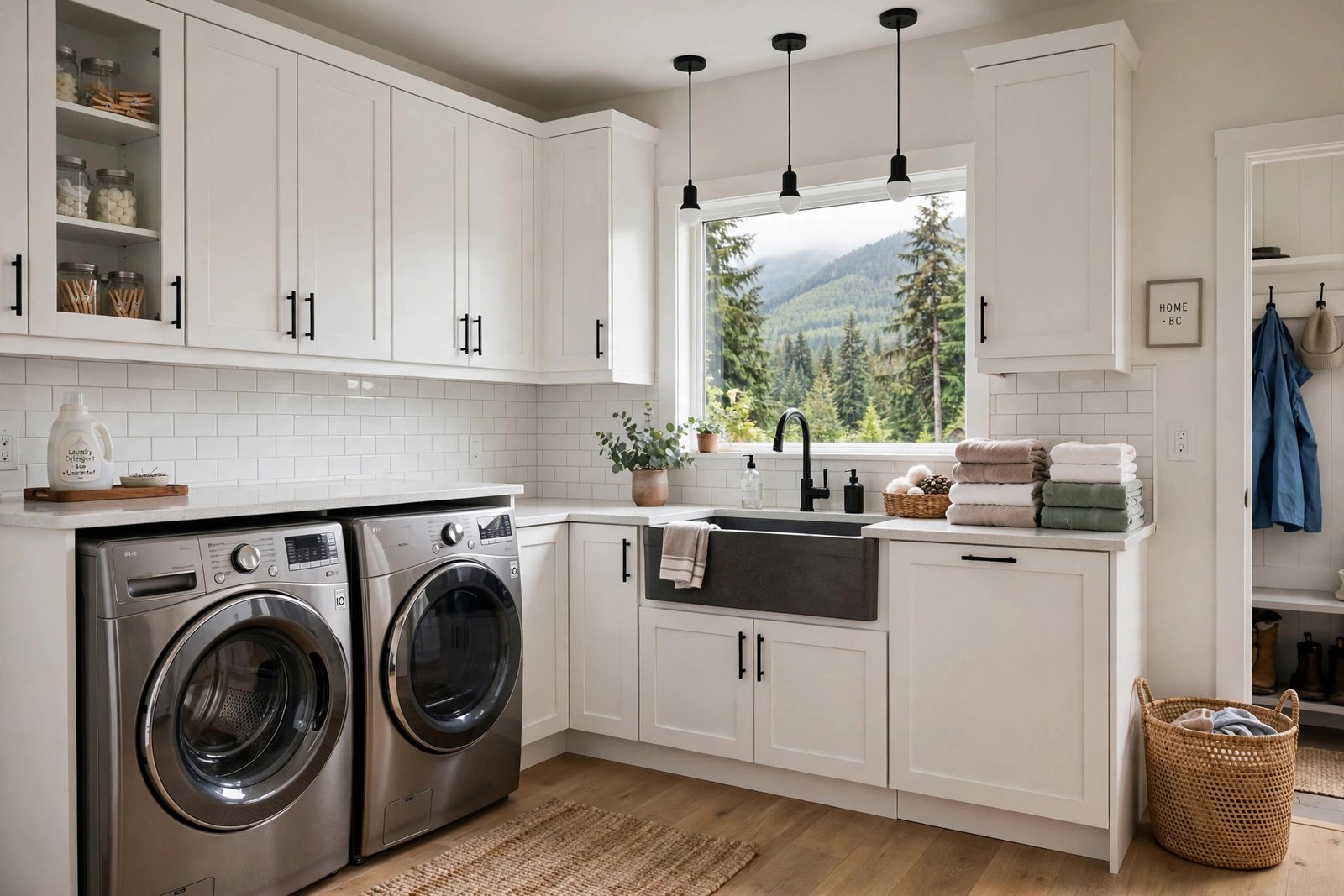
A few notes on the lines that surprise people. Cabinets and counter swing the widest: stock flat-pack cabinets with a laminate counter land at the low end, while custom cabinetry, a stone counter and a tall storage unit for brooms and detergents push toward the top. The counter itself is worth the money — a folding surface over front-load machines is the single most-used feature in most renovated laundry rooms. Flooring in a laundry room has one job above all others: surviving water. Tile with a proper membrane and luxury vinyl plank both handle it well, and our vinyl plank flooring cost guide for BC breaks down how LVP pricing compares by room size. Sheet vinyl is the budget option and still a sensible one in a basement laundry. Plumbing changes are the hinge of the whole budget: $0 when nothing moves, a few hundred dollars for new shutoffs and hoses, and thousands once drain and supply lines have to run somewhere new — the per-fixture numbers in our plumbing rough-in cost guide for BC show why distance and access drive that line so hard.
3. The Relocation Question: Moving Laundry to the Main Floor
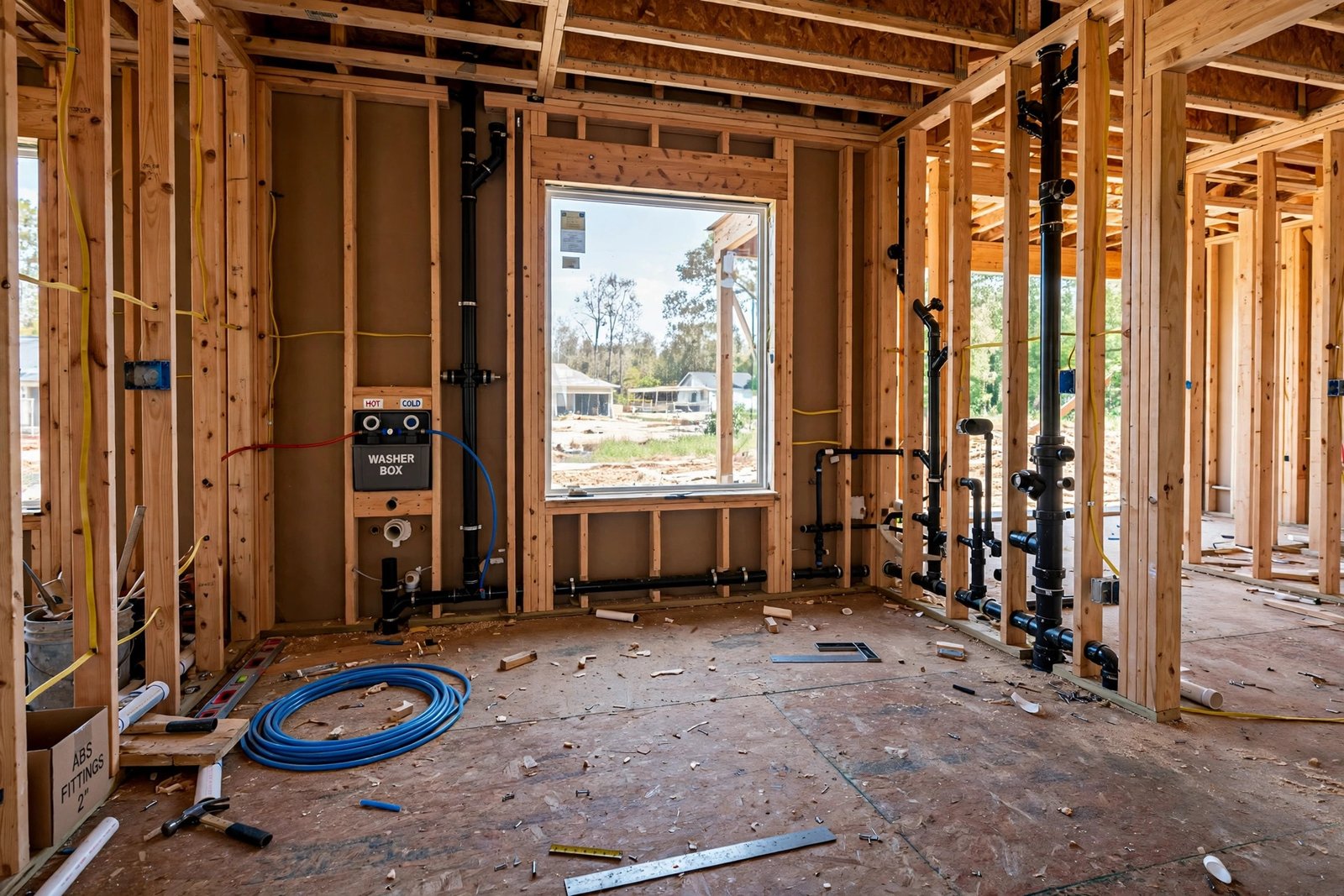
The most common big-ticket request is moving the laundry out of the basement and up to the main floor or beside the bedrooms. The appeal is obvious: no more carrying baskets down two flights of stairs, and in many Fraser Valley homes it frees the basement for finishing. The cost is equally obvious once you list what a new location needs: hot and cold supply lines, a drain with proper slope, a vent through the roof or tied into an existing stack, a dedicated electrical circuit, and — because the machines now sit over finished living space — real floor protection underneath them.
Where the new room sits relative to existing plumbing decides most of the price. A laundry room stacked directly above or beside a bathroom or kitchen, sharing a wet wall, is the affordable version. A laundry room on the opposite side of the house from every pipe is the expensive one. The same logic applies in reverse: adding laundry hookups as part of a basement project, while walls are already open near a bathroom, is far cheaper than doing it standalone later — one reason homeowners bundle it with the kind of work covered in our basement bathroom addition cost guide.
Two practical cautions. First, plumbing and electrical moves generally need permits in BC, and the new drain and vent work will be inspected — confirm the specifics with your municipality before work starts. Second, vibration and noise matter more upstairs: a washer on a wood-framed main floor needs a solid, level base, and many homeowners add sound insulation in the floor or walls while everything is open.
4. Small Details That Prevent Big Water Damage
This section costs a few hundred dollars in total and protects against the most expensive accident a laundry room can have. Treat these as non-negotiable, especially for any laundry above grade:
- A drain pan under the washer. A shallow pan with its own drain line catches the start of a leak and routes it somewhere safe instead of into the floor assembly.
- A floor drain. Standard practice in a well-built laundry room, and cheap insurance while the floor is open — far harder to add later.
- Braided stainless steel hoses. Rubber washer hoses age, bulge and burst. Braided hoses cost little more and are the single cheapest leak prevention you can buy.
- An accessible water shutoff. One clearly reachable valve (or an automatic leak-sensing shutoff) means a burst line becomes a mop-up, not a renovation.
- Proper dryer venting. Rigid or semi-rigid metal duct, run as short and straight as possible, vented outside — never into a wall cavity or attic. Foil flex duct crushed behind the dryer is a lint trap and a fire risk, and lint buildup also makes the dryer work harder on every load.
None of this is glamorous, and none of it shows in photos. It is also the difference between a laundry room that runs quietly for twenty years and one that floods the kitchen below it. If you only upgrade one thing beyond the plan, make it this list.
5. What Pushes the Price Up or Down
- Plumbing distance. Every metre of new drain, supply and vent line adds labour and materials. Rooms near existing wet walls are cheaper; rooms across the house are not.
- Structural and floor work. A main-floor laundry may need the floor reinforced or levelled, and a floor drain sometimes means cutting concrete in a basement.
- Cabinet ambition. Stock cabinets and open shelving keep costs down. Custom cabinetry with a stone counter can double the cabinet line.
- Appliance choice. A standard top-load pair and a high-capacity front-load pair with steam features are thousands of dollars apart before installation.
- Timing the work with other projects. Adding laundry work while a bathroom or basement is already open — trades on site, walls exposed — is consistently cheaper than running it as a standalone job.
6. Frequently Asked Questions
How much does a laundry room renovation cost in BC? For 2026, plan on $3,000–$7,500 for a basic refresh with the layout unchanged, $8,000–$18,000 for a mid-range remodel with new cabinets, counter and sink, and $20,000–$35,000 or more to relocate the laundry or build a new main-floor laundry room. Whether the plumbing moves is the biggest factor. These are planning ranges, not quotes.
How much does it cost to move a laundry room to the main floor? Most main-floor relocations land in the $20,000–$35,000+ range, because the new room needs supply lines, a drain, venting, electrical and floor protection built from scratch. A location that shares a wall with a bathroom or kitchen sits at the low end; a room far from existing plumbing sits at the top or beyond it.
Do I need a permit to renovate my laundry room? A refresh or remodel that leaves plumbing and electrical in place generally does not. Moving or adding plumbing, drains, vents or circuits generally does need permits and inspections in BC. The exact rules vary by municipality, so confirm with your city or district before work starts — it is a short phone call that prevents expensive surprises.
How long does a laundry room renovation take? A refresh takes a few days to a week. A mid-range remodel typically runs one to three weeks depending on cabinet lead times and tile work. A relocation is a three-to-six-week project once permits, rough-in inspections and finishing are all counted.
What flooring is best for a laundry room? Anything that shrugs off water: tile, luxury vinyl plank or sheet vinyl are the usual choices in BC homes. Avoid laminate and hardwood in a laundry room — one slow leak can destroy them, and the room’s whole risk profile argues for a floor that treats water as a nuisance instead of a disaster.
Planning a Laundry Room Renovation in BC?
Start with the layout question: if the machines can stay where they are, you are looking at a refresh or remodel budget and a short timeline. If they have to move, plan it as the plumbing project it really is, and do not skip the drain pan, floor drain and braided hoses wherever the laundry ends up. If you would like a second set of eyes on your plan, call us at (236) 613-0038 and we will talk through your room, your options and a realistic budget — no pressure, just straight answers.